Tanzania Flag
The proportions, colors, and history of Tanzania's flag - a banner that tells Tanzania's own story.
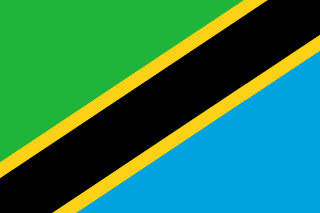
| Flag | Tanzania Flag |
|---|---|
| Country | Tanzania |
| Capital | Dodoma (administrative), Dar es Salaam (economic) |
| Continent | Africa |
| Official Languages | Swahili, English |
| Currency | Tanzanian Shilling (TZS) |
| Dialling Code | +255 |
Tanzania Flag Meaning
Flag Design
The Tanzanian flag was adopted on June 30, 1964, the year Tanganyika and Zanzibar merged. It is rectangular with a 2:3 aspect ratio. The design features a black diagonal band with thin yellow edges extending from the bottom left to the top right. This band divides the flag into two right-angled triangles: green on the upper left and blue on the lower right. The green, blue, black, and yellow colors arranged diagonally create a bold and distinctive pattern among African national flags.
Meaning
Officially, green represents Tanzania’s fertile land, vegetation, and agriculture—the foundation of this agricultural nation. Blue symbolizes the Indian Ocean, Lake Victoria, Lake Tanganyika, and other bodies of water, reflecting Zanzibar’s island identity. Black stands for the majority African population, and yellow signifies the mineral wealth of the land and islands, while also forming rays along the black band’s edges, symbolizing hope. Together, the four colors represent the core elements of the nation: land, people, ocean, and resources.
History and Legal Status
The flag itself symbolizes the union of the two territories: Tanganyika’s original flag had a green background with a central black band and yellow edges, while Zanzibar’s former flag featured horizontal stripes of blue, black, and green. In 1964, the designer merged Tanganyika’s “green background with black band and yellow edges” with Zanzibar’s “blue” representing the ocean, blending them diagonally into the current design to honor both symbols. The Tanzanian Flag and Emblem Act outlines regulations for the flag’s use, respect, and prohibitions against desecration. The flag is flown at government buildings, schools, and embassies, and is prominently displayed on national holidays such as Independence Day (December 9) and Union Day (April 26).
Tanzania Overview
Country Details »Overview of Tanzania
Tanzania (officially the United Republic of Tanzania) is located in East Africa along the western shore of the Indian Ocean. It was formed in 1964 through the union of Tanganyika and Zanzibar, covering an area of approximately 945,000 square kilometers, making it the largest country in East Africa. It borders Kenya and Uganda to the north, Rwanda, Burundi, and the Democratic Republic of the Congo to the west, Zambia, Malawi, and Mozambique to the south, and faces the Indian Ocean to the east. Its administrative capital is Dodoma, while its largest city and economic hub is Dar es Salaam. The country has a population of about 61.7 million, and its official languages are Swahili and English.
Tanzania is one of Africa’s politically stable countries with a highly developed tourism industry. The word “safari” originates from Swahili, meaning “journey.” The northern wildlife circuit, climbing Mount Kilimanjaro, and island holidays in Zanzibar make up the globally recognized trio of East African travel experiences.
Geography and Climate
Tanzania boasts extremely diverse terrain: northeastern Africa’s highest peak, Mount Kilimanjaro (5,895 meters), towers over the vast Arusha Plains; the Great Rift Valley runs through the west, studded with Africa’s largest lake, Lake Victoria, and the world’s longest freshwater lake, Lake Tanganyika; the central region is home to the expansive Serengeti Plains; and the eastern coastal areas along with the islands of Zanzibar, Pemba, and Mafia face the Indian Ocean. The Ngorongoro Crater is the world’s largest intact volcanic caldera, spanning about 18 kilometers in diameter with a self-contained ecosystem within its walls.
The coastal region features a tropical maritime climate, warm year-round; the inland savannah is dry and hot; the mountainous highlands are cool and pleasant. The long rainy season occurs from March to May, and the short rainy season from November to December. The dry season from June to October sees sparse vegetation and animals congregating around water sources, making it the prime wildlife-viewing season. January and February offer the spectacular sight of wildebeest calving on the Serengeti’s southern short-grass plains.
Historical Background
Tanzania is one of the cradles of humanity. Ancient human fossils unearthed in the Olduvai Gorge are over 1.75 million years old. Around the turn of the Common Era, trade waves from Arab and Persian merchants along the Indian Ocean gave rise to prosperous city-states such as Kilwa along the Swahili Coast, blending into the unique Swahili culture. In the 19th century, the Sultanate of Oman moved its capital to Zanzibar, where clove cultivation and the slave trade peaked. By the 1880s, German colonists established German East Africa, which came under British mandate after World War I.
In 1961, Tanganyika gained independence under the leadership of Julius Nyerere. Zanzibar followed in 1963, and the two united in 1964 to form the United Republic of Tanzania. Since then, the country has maintained long-term political stability. Though Nyerere’s “Ujamaa” socialist experiment did not succeed economically, it fostered a strong national identity and helped establish Swahili as a common linguistic bond across East Africa.
Economy and Currency
Tanzania’s economy is rooted in agriculture, with cash crops such as cashews, coffee, cloves, sisal, and tobacco being major exports. The mining sector is growing in importance—gold production ranks among the top in Africa, and tanzanite, a rare blue-violet gemstone mined exclusively in the Merelani Hills, is Tanzania’s “national stone.” Tourism, alongside mining and agriculture, forms one of the three main pillars of the economy, bringing in substantial foreign exchange. The official currency is the Tanzanian Shilling (TZS), issued by the Bank of Tanzania. The exchange rate is freely floating, with cash transactions dominating domestic consumption.
Culture and Society
Tanzania is home to more than 120 ethnic groups. Swahili serves as a unifying lingua franca, and the degree of linguistic and cultural integration is exemplary in Africa. The semi-nomadic Maasai, known for their red attire, tall stature, and spear-carrying herders’ image, have become cultural icons of the East African savannah. Zanzibar retains a strong flavor of Arab and Indian trading port heritage, with Taarab music and spice farms telling stories of millennia-old maritime trade. Religiously, Christianity dominates the inland areas, while Islam is prevalent along the coast and in Zanzibar, with the two coexisting peacefully. The phrase “Hakuna Matata,” made famous by animation, is a common Swahili expression meaning “no problem” or “don’t worry.”
Tourism Overview
Tanzania is Sub-Saharan Africa’s premier safari destination: the Serengeti National Park hosts the annual Great Migration of about 1.5 million wildebeest and hundreds of thousands of zebras and antelopes, a UNESCO World Heritage Site; the Ngorongoro Crater offers a unique “zoo in a box” wildlife experience; Tarangire’s baobabs and elephant herds, as well as the remote southern wildernesses of Ruaha and Selous (Nyerere National Park), attract fewer crowds. There are five classic routes to climb Mount Kilimanjaro—Machame, Marangu, Lemosho, Rongai, and Umbwe—with higher summit success rates than other continents’ peaks. After the savannah experience, many travelers fly to Zanzibar to conclude their trip amid the alleyways of Stone Town and the white sands of Nungwi. The “savannah plus island” combination is Tanzania’s most iconic travel style. Most foreign visitors can enter with an eVisa, but it’s advisable to book campsites and domestic flights two to three months in advance during peak seasons.
Tanzania Travel Guide
All Guides »Tanzania Travel Quick Guide: eVisa, Dry Season, Safari Budget & Etiquette
How to get a visa, when to see the Great Migration, how much a day on safari cos...
Classic 8-Day Tanzania Itinerary: Tarangire – Serengeti – Ngorongoro – Zanzibar 8 days
The most reliable combination of northern circuit and Zanzibar island: baobabs i...
Tanzania 4-Day Zanzibar Short Trip: Stone Town, Spice Gardens, and North & South Coasts 4 days
Explore Tanzania Without the Savannah: Based on Zanzibar Island, this itinerary ...
A must-visit attractions list in Tanzania: Serengeti grasslands, volcanic craters, and Zanzibar islands
From the Serengeti plains to Zanzibar’s white sands, we’ve outlined Tanzania’s t...
Tanzania Food Guide: Ugali, Pilau Rice, and Zanzibar Night Market Feasts
How to Eat in the Swahili Kitchen: Main staples like ugali and pilau, grilled me...
The Complete Guide to Transportation in Tanzania: Domestic Flights, Ferries, and Daladalas
How to get to and from Kilimanjaro and other major airports, how to fly from the...