Gabon Flag
The proportions, colors, and history of Gabon's flag - a banner that tells Gabon's own story.
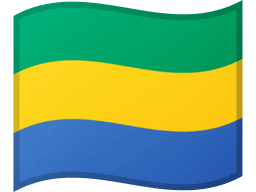
| Flag | Gabon Flag |
|---|---|
| Country | Gabon |
| Capital | Libreville |
| Continent | Africa |
| Official Languages | French |
| Currency | Central African CFA franc (XAF) |
| Dialling Code | +241 |
Gabon Flag Meaning
National Flag Design
The flag of Gabon is rectangular, composed of three equal horizontal bands of green, yellow, and blue, in a 3:4 ratio. The three colors are arranged horizontally in a simple and bright style. The yellow band is in the center, with the upper and lower bands of equal width, creating a visually balanced and striking flag. This design was established around the time of Gabon’s independence in 1960 and is one of the most representative tricolor flags of the African independence movement.
Meaning
Green symbolizes Gabon’s dense tropical rainforests and abundant natural resources, reflecting the country’s forestry and ecological image. Yellow represents the equatorial sunlight and the equator that crosses the country, as well as the mineral wealth within its borders. Blue stands for the Atlantic coast to the west and the Gulf of Guinea, symbolizing the ocean and Gabon’s connections with the outside world. Together, the three colors summarize Gabon’s geographical identity of “rainforest, equator, and ocean,” while also expressing hopes for the nation’s development.
History and Legal Status
Gabon officially adopted the green, yellow, and blue tricolor flag upon gaining independence in 1960. In earlier versions, the yellow band was narrower, but it was later adjusted to be of equal width with the other bands, resulting in the current design to better reflect the equal importance of the three colors. As a national symbol, this flag is widely displayed at government buildings, military installations, embassies and consulates abroad, schools, and sports events. Along the equator and in coastal cities, the three colors of the flag also resonate visually with the local natural landscape, making it an important emblem of Gabonese national identity and often regarded as the most concise visual representation of “forest, equator, and ocean.”
Gabon Overview
Country Details »About Gabon
Gabon (officially the Gabonese Republic) is located on the west coast of central Africa, straddling the equator. It borders the Gulf of Guinea of the Atlantic Ocean to the west, Equatorial Guinea and Cameroon to the north, and the Republic of the Congo to the east and south. The country covers an area of approximately 268,000 square kilometers. Its capital, Libreville, is situated on an estuarine bay and serves as the political, economic, and cultural center of the nation. French is the official language. With a population of about 2.4 million, Gabon is one of the countries in Africa with the lowest population density and one of the highest urbanization rates.
About 88% of Gabon’s land area is covered by tropical rainforests, where forests and rivers largely define the country’s landscape. The government has integrated ecological conservation into its development strategy, designating large-scale national parks and marine protected areas. As a result, Gabon is one of the best-preserved regions of primary rainforest in Central Africa and an emerging destination for observing African wildlife.
Geography and Climate
Gabon’s terrain transitions from coastal plains to inland hills and plateau mountains. The Ogooué River, the longest and most important river in the country, winds from the eastern plateau westward to the Atlantic Ocean, connecting rainforests, lakes, and wetlands along the way. It also serves as the main axis for water transport and eco-tourism. Coastal lagoons and mangroves are widespread, while the inland areas feature pristine forests and waterfall clusters in the Ivindo River basin.
The climate is classified as equatorial tropical rainforest, characterized by high temperatures and humidity year-round, with an average annual temperature of around 26°C and abundant rainfall. The year is roughly divided into a long dry season from June to September, a short rainy season from October to November, a short dry season from December to January, and a heavy rainy season from March to May. Traveling during the dry season is more comfortable, and wildlife is easier to spot near water sources. However, the rainy season brings risks such as muddy roads and flight delays.
Historical Background
Early inhabitants of Gabon included the Pygmy people, followed by the migration and settlement of Bantu ethnic groups, who established various chieftaincies. Starting in the 15th century, Portuguese navigators arrived on the coast, and the name “Gabon” is derived from the Portuguese term for the hooded cloaks worn by local sailors. Later, Dutch, British, and French traders came to engage in timber and ivory trade. In the mid-19th century, the French established a foothold here, and from 1885, Gabon became part of French Equatorial Africa.
Gabon gained independence in 1960. From 1967, Omar Bongo ruled for a long period, succeeded by his son Ali Bongo in 2009. During this era, the country leveraged oil revenues to develop infrastructure and, in 2002, established 13 national parks in one go, elevating ecological conservation to a national strategic priority. In 2023, the country underwent a political transition, entering a phase of political transformation. While overall social order remains stable, travelers should stay updated on the latest developments and official advisories.
Economy and Currency
Gabon is a relatively economically developed country in Central Africa with a higher per capita income. Oil has long been the largest export, but recent production declines have prompted the country to diversify its economy. Gabon is among the world’s top manganese producers, with world-renowned deposits around Moanda. Iron ore, timber, uranium, and fisheries also play significant roles. The dense forests are both a resource and a national symbol, and the timber industry is gradually becoming more standardized under strict conservation policies.
The official currency is the Central African CFA franc (currency code: XAF, symbol: FCFA), which is pegged to the euro at a fixed exchange rate of approximately 655.957 CFA francs per euro. This fixed rate provides relative stability for foreign settlements and exchange rate expectations, but it also means that monetary policy is largely determined by regional mechanisms.
Culture and Society
Gabon is home to over 40 ethnic groups, with the Fang being the most populous, along with others such as the Mpongwe and Myene. Traditional art is highly distinctive: the Fang’s ngil masks and the Kota’s reliquary guardian figures, made from copper sheets and wood, are classics in African art history and have deeply influenced modern abstract art. Oral epics, drumming, and dance remain active during rural festivals, while French literature and pop music form part of contemporary cultural expression.
Due to its high level of urbanization, most residents live in Libreville and Port-Gentil. River transport and logging culture shape the rhythm of life in inland areas. Christianity is the dominant religion, though some traditional beliefs and customs are still practiced. The relationship between humans and nature is deeply rooted in rainforest communities.
Tourism Overview
Gabon is a promising destination for ecotourism, with experiences centered around its national parks. Loango National Park is known for its unique landscape where the Atlantic coast, lagoons, and forests converge, making it an excellent spot for observing elephants, hippos, and turtles. Local lore tells of hippos surfing the waves, earning them the nickname “surfing hippos.” Ivindo National Park features the majestic Kongou Falls, a UNESCO World Heritage Site. Lopé National Park is famous for its mosaic of savannah and rainforest landscapes and troops of mandrills (Mandrillus sphinx), and it is also part of the UNESCO World Heritage-listed Lopé-Okanda ecosystem and cultural landscape. Akanda National Park, close to Libreville, offers short trips to mangroves and coastal areas.
Tourism in Gabon is not highly developed, with relatively high costs and limited transportation options mainly consisting of small aircraft and chartered vehicles. It is better suited for travelers with experience in ecotourism seeking authentic and pristine experiences. It is recommended to arrange trips through qualified local tour operators, take precautions against mosquitoes and malaria, and respect wildlife protection regulations by not feeding or disturbing animals.
Gabon Travel Guide
All Guides »Gabon Travel Quick Guide: E-Visa, Dry Season, Rainforest Budget & Wildlife Protection
How to prepare your visa and yellow fever certificate, which dry season is best ...
Gabon 6-Day Classic Itinerary: Rainforest, Waterfalls, and Turtle Coast 6 days
Departing from Libreville, this route connects Ivindo Falls, the mandrills of Lo...
Gabon 4-Day Itinerary: Libreville and Nearby Rainforest Experiences 4 days
Even with limited time, experience Gabon’s rainforests and coastline: base yours...
Essential Attractions in Gabon: National Parks and Rainforest Coastlines
Centered around 13 national parks, this guide highlights top destinations such a...
Gabon Food Guide: Palm Nut Chicken and Rainforest Ingredients
Gabonese cuisine blends Bantu traditions with French influences. From palm nut c...
Gabon Travel Guide: Airports, Small Aircraft, and Rainforest Transfers
Understand how to get to and from Libreville Airport, use domestic small aircraf...