El Salvador Flag
The proportions, colors, and history of El Salvador's flag - a banner that tells El Salvador's own story.
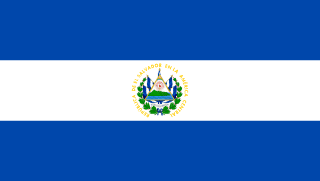
| Flag | El Salvador Flag |
|---|---|
| Country | El Salvador |
| Capital | San Salvador |
| Continent | North America |
| Official Languages | Spanish |
| Currency | US Dollar (USD) |
| Dialling Code | +503 |
El Salvador Flag Meaning
Flag Design
The flag of El Salvador is a horizontal tricolor, consisting of three equal blue, white, and blue stripes. The central white stripe features the national coat of arms (only present on the official flag; simplified versions used on civilian boats and general occasions omit the emblem). The flag’s aspect ratio is approximately 189:335, close to 5:9. The blue and white colors originate from the flag of the Federal Republic of Central America and have been the most enduring color scheme since El Salvador’s independence.
Meaning
The two blue stripes represent the oceans bordering El Salvador—the Atlantic (Caribbean Sea) to the north and the Pacific Ocean to the south—while the white stripe symbolizes peace and purity. The central coat of arms includes a rising sun, blue sky with a rainbow, five volcanoes, a triangle, and crossed flags, encircled by a laurel wreath inscribed with the words “Republica del Salvador en la América Central” (Republic of El Salvador in Central America), and a ribbon at the bottom indicating the date of the republic’s founding. The five volcanoes represent the country’s volcanic landscape, while the sun and rainbow signify hope and renewal.
History and Legal Status
The current blue-white-blue tricolor flag traces its origins to the flag used by the Federal Republic of Central America after Central America’s independence from Spain in 1821. El Salvador retained this color scheme after independence, though the flag design underwent several changes. The blue-white-blue flag with the coat of arms was officially adopted in 1912, and the emblem and proportions were revised in 1972 to create the current design. The flag is regulated by the National Symbols Law, with the official version featuring the coat of arms used by government agencies, the military, and embassies, while simplified versions without the emblem are commonly used on civilian ships and in informal settings. Disrespecting the flag is discouraged, and travelers should treat it with respect.
El Salvador Overview
Country Details »Overview of El Salvador
El Salvador (officially the Republic of El Salvador) is located in northern Central America and is the smallest country in the region, covering approximately 21,041 square kilometers. It borders Guatemala to the north, Honduras to the northeast, and the Pacific Ocean to the south, making it the only Central American country without a Caribbean coastline. The capital, San Salvador, is situated in a volcanic valley on the central plateau and serves as the nation’s political, economic, and transportation hub, with its metropolitan area accounting for about one-third of the national population.
The country is divided into 14 departments, with Spanish as the official language and the US dollar as its currency. With a population of around 6.3 million, it is one of the most densely populated countries in Central America. Due to its numerous volcanoes and frequent earthquakes, El Salvador is known as the “Land of Volcanoes” and also called the “Beacon of Central America” (El Faro de Centroamérica).
Geography and Climate
El Salvador lies at the heart of the Central American Volcanic Arc, characterized by a landscape of plateaus, mountains, and volcanoes. The country has over 20 volcanoes, among which Santa Ana Volcano (2,381 meters) is one of the tallest and most active, alongside San Miguel and Izalco Volcanoes. Volcanic activity has created numerous crater lakes, including Lago de Coatepeque, a striking emerald-green lake surrounded by volcanoes. The Lempa River, the longest in the country, flows across the central region and empties into the Pacific Ocean.
The climate is tropical, with distinct dry and rainy seasons: November to April is dry and sunny, making it peak travel season, while May to October sees frequent afternoon downpours. Coastal areas are hot and humid, whereas the central plateau, at higher elevations, enjoys mild and pleasant temperatures. San Salvador remains warm year-round with minimal temperature variation between day and night.
Historical Background
El Salvador was originally inhabited by Maya-related indigenous groups, such as the Pipil. In 1524, Spanish conquistador Pedro de Alvarado led the conquest of the region. It gained independence from Spain along with other Central American nations in 1821, joined the Federal Republic of Central America in 1823, and became an independent republic in 1841. In the late 19th century, coffee cultivation emerged as a dominant industry, leading to high economic and land concentration in the hands of a few elites, which planted the seeds for long-term social tensions.
In the 20th century, El Salvador experienced the 1932 peasant uprising and subsequent crackdown, prolonged military rule, and a devastating 12-year civil war from 1980 to 1992. The Chapultepec Peace Accords were signed in 1992, ending the armed conflict and initiating a period of peace and reconstruction. In 2001, the country replaced its national currency, the colón, with the US dollar, and in 2021, it made global headlines by becoming the first nation to adopt Bitcoin as legal tender, sparking widespread attention.
Economy and Currency
El Salvador’s economy relies on agriculture, manufacturing, and remittances. Key exports include coffee, sugar, and textiles, while remittances from Salvadorans abroad—primarily in the United States—account for about one-fifth of GDP and serve as a vital income source for many families. Since dollarization in 2001, the US dollar has been the sole legal tender, with the former national currency, the colón, no longer in circulation. In September 2021, El Salvador passed the Bitcoin Law, designating Bitcoin as legal tender alongside the dollar and launching the state-backed wallet Chivo. However, due to concerns raised by institutions like the International Monetary Fund and market volatility, related mandatory acceptance rules were adjusted around 2025, making Bitcoin use optional for merchants, while the dollar remains the primary currency for everyday transactions and pricing.
Culture and Society
Salvadoran culture is a blend of indigenous Maya traditions and Spanish colonial influences. The population is predominantly mestizo (of mixed heritage), with Spanish as the common language. The predominant religion is Catholicism, though there is also an active Protestant community. Folk customs related to corn, cacao, and traditional weaving remain part of daily life. The eastern town of Ilobasco is renowned for its intricate miniature pottery, a standout handicraft.
Cuisine centers on corn, with pupusas—the national dish—being thick corn tortillas stuffed with cheese, beans, or pork, served with pickled cabbage and tomato salsa. Football (soccer) is the most popular sport, with national team matches drawing nationwide attention. In literature and music, poet Roque Dalton stands out as one of the most important Latin American writers of the 20th century.
Tourism Overview
El Salvador’s tourism highlights revolve around “volcanoes, surfing, and colonial towns.” The combination of Santa Ana Volcano and Lago de Coatepeque forms one of the most iconic natural landscapes. The Flower Route (Ruta de las Flores) links colorful towns like Juayúa, Apaneca, and Ataco, known for weekend food markets and coffee plantations. The Pacific coast’s surf spots, such as El Tunco and El Zonte, attract surfers from around the world. Suchitoto preserves colonial-era white-walled, red-tiled streets, while the Maya site Joya de Cerén—preserved under volcanic ash and dubbed the “Pompeii of the Americas”—is a UNESCO World Heritage Site.
In terms of safety, El Salvador historically faced significant security challenges, but recent years have seen a notable decline in violent crime due to tough law enforcement measures. While tourist areas and major attractions are generally safe, visitors should avoid venturing alone into isolated neighborhoods at night, carry only essential cash, and stay updated with advisories from their home country’s foreign affairs department. Security and related policies are domestic matters, so travelers should stay objectively informed and take standard precautions.
El Salvador Travel Guide
All Guides »El Salvador Travel Quick Guide: Visa, Seasons, Budget & Safety Essentials
How do you plan for volcanoes, surfing, and the Flower Route? Start by getting c...
Classic 7-Day El Salvador Itinerary: Volcanoes, Flower Route, and Surf Coast 7 days
Starting from the capital, connect Santa Ana Volcano, an emerald volcanic crater...
El Salvador 4-Day Itinerary: Highlights of the Capital, Volcanoes, and the Flower Route 4 days
Even with just four days, you can explore crater lakes, colorful towns, and enjo...
Must-visit attractions in El Salvador: volcanoes, lakes, and colonial towns
From Santa Ana Volcano to Lago de Coatepeque, the Flower Route, and Maya ruins—e...
El Salvador Food Guide: From the National Snack Pupusa to Seafood by the Coast
Corn, cheese, and refried beans form the everyday flavors of El Salvador, and th...
El Salvador Transportation Guide: Airport Transfers, Local Transport, and Private Car Options
Getting from El Salvador International Airport to the city, plus long-distance i...