Philippines Flag
The proportions, colors, and history of Philippines's flag - a banner that tells Philippines's own story.
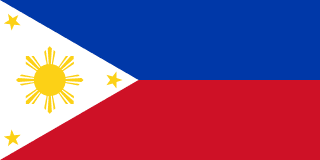
| Flag | Philippines Flag |
|---|---|
| Country | Philippines |
| Capital | Manila |
| Continent | Asia |
| Official Languages | Filipino, English |
| Currency | Philippine Peso (PHP) |
| Dialling Code | +63 |
Philippines Flag Meaning
Flag Design
The Philippine flag consists of a horizontal blue and red stripe with a white equilateral triangle at the hoist side, in a 1:2 ratio. At the center of the white triangle is a golden sun with eight rays, and each corner of the triangle features a golden five-pointed star. The design is symmetrical and dignified, with strong blue-red contrast and bright gold patterns against the white background.
The blue is deep, the red is pure, and the golden sun and stars appear bright yellow in sunlight. This combination of blue, red, white, and gold is also common in Philippine official emblems and festive decorations.
Meaning
Blue represents peace, truth, and justice; red symbolizes patriotism and courage; white stands for peace and purity. The eight rays of the golden sun represent the eight provinces that first rose against Spanish colonial rule. The three stars symbolize the three main island groups—Luzon, Visayas, and Mindanao—embodying national unity and reflecting the country’s archipelagic geography.
The sun and stars express the historical pursuit of freedom and independence, as well as aspirations for national unity and reconciliation. They are central symbols during Philippine Independence Day and other national celebrations.
History and Legal Status
The Philippine flag was first raised on June 12, 1898, when the country declared independence. Designed by Emilio Aguinaldo and others, its colors and proportions have been adjusted over time. In 1998, the current blue and red shades were standardized, and the design of the golden sun was officially defined.
The Philippine flag has a unique global distinction: in peacetime, the blue stripe is on top, but during wartime, the president may declare a state of war and legally fly the flag with the red stripe on top. This happened during World War II and the 1986 People Power Revolution. This rule makes the Philippine flag one of the few whose orientation changes with the nation’s status. Therefore, its display direction is a serious national symbol issue in the Philippines, and visitors should never reverse or disrespect it.
Philippines Overview
Country Details »Overview of the Philippines
The Philippines (officially the Republic of the Philippines) is an archipelagic country in the western Pacific Ocean, made up of more than 7,000 islands across three main island groups: Luzon, Visayas, and Mindanao. It covers an area of approximately 300,000 square kilometers, making it the world’s second-largest archipelagic country after Indonesia. It is separated from Taiwan by the Bashi Channel to the north, faces the South China Sea to the west, the Pacific Ocean to the east, and is adjacent to Malaysia and Indonesia across the sea to the south. The capital, Manila, located in the central part of Luzon Island, is the country’s political, economic, and cultural center, with the Greater Manila Area having a population of over 13 million. The national population is approximately 110 million, making it the second most populous country in Southeast Asia. The country is a presidential republic, with the president serving as both head of state and government for a single six-year term.
The Philippines is also a major global source of overseas labor, with millions of Filipino workers employed around the world. Remittances from these workers form a significant pillar of the national economy.
Geography and Climate
The Philippines lies along the Pacific Ring of Fire, with numerous volcanoes, including notable active ones such as Mount Mayon, Taal Volcano, and Mount Apo. Earthquakes and typhoons are frequent. The Banaue Rice Terraces in northern Luzon, carved by ancestors over 2,000 years ago, are a UNESCO World Heritage Site. The archipelago has a coastline exceeding 36,000 kilometers, featuring numerous white-sand beaches, coral reefs, and diving spots.
The climate is tropical maritime, with high temperatures year-round and an average annual temperature of about 27°C. The year is broadly divided into two seasons: the rainy season from June to November, influenced by the southwest monsoon with concentrated rainfall; and the dry season from December to May, influenced by the northeast monsoon, which is drier, with the hottest months being March to May. The Philippines is one of the countries most frequently hit by typhoons, with more occurrences from July to October. Check weather forecasts and flight or ferry schedules closely three days before traveling.
Historical Background
The earliest inhabitants of the Philippines were the Negritos, followed by successive migrations of Malay peoples. In 1521, Ferdinand Magellan's expedition arrived in the archipelago, and Spanish colonial rule began in 1565, lasting over 300 years. During this period, Catholicism became deeply rooted, with colonial-era architecture such as Manila's San Agustin Church still standing today. After the Spanish-American War in 1898, the Philippines came under American rule. It was occupied by Japan from 1942 to 1945 and gained independence on July 4, 1946.
The country subsequently experienced authoritarian rule under Ferdinand Marcos. In 1986, the peaceful "People Power Revolution" overthrew the regime and gradually established a democratic system. Filipino culture reflects a blend of indigenous Malay, Spanish, Chinese, and American influences, making it one of the most culturally diverse countries in Asia.
Economy and Currency
The Philippines is an emerging market economy, with services accounting for over half of GDP. Business process outsourcing (BPO) and remittances from overseas workers are major sources of foreign exchange. Agriculture focuses on coconuts, bananas, sugarcane, and rice, and the country is rich in mineral resources. Electronics manufacturing and semiconductor packaging and testing are also important export industries. The official currency is the Philippine Peso (PHP, symbol ₱), issued by the Bangko Sentral ng Pilipinas (BSP). One peso equals 100 centavos (sentimo). In recent years, the economy has maintained relatively rapid growth, but weak infrastructure and income inequality remain long-term challenges.
Culture and Society
The Philippines is the only predominantly Catholic country in Asia, with about 80% of the population adhering to Catholicism. Churches are found throughout urban and rural areas. The Christmas season extends from September to January of the following year, earning the reputation as the longest Christmas celebration in the world. Family ties are strong, and social life is warm and optimistic. The politeness and service mindset of the people are national hallmarks. English is widely spoken, and the country has one of the highest English proficiency levels in Asia.
The cuisine blends Malay, Spanish, Chinese, and American influences, with a balance of sour, salty, and sweet flavors. National dishes include adobo, sinigang (sour soup), and lechon (roast pig), while halo-halo is a summer favorite. Festivals are numerous, with the Sinulog Festival in Cebu and the Dinagyang Festival in Iloilo being the most prominent.
Tourism Overview
The Philippines is world-renowned for its island getaways: Boracay's white-sand beaches, El Nido and Coron in Palawan, diving and whale shark encounters in Cebu and Bohol, and waterfalls and cliff diving in Siquijor create a highly affordable tropical island paradise. Manila's Intramuros and San Agustin Church reflect colonial history, while the Banaue Rice Terraces and Bohol's Chocolate Hills showcase natural and cultural beauty. The Philippines offers affordable prices, a well-developed diving and resort infrastructure, and is suitable for budget-conscious travelers seeking island experiences. However, inter-island transportation and infrastructure can be limited, requiring extra travel time.
In addition, diving and island vacation costs in the Philippines are significantly lower than in many other Southeast Asian destinations. Many islands retain unspoiled natural beauty, appealing to travelers looking to avoid crowds and seeking value. English proficiency is very high, making it easy to ask for directions, order food, or join local tours, and it is relatively beginner-friendly for independent travelers.
Philippines Travel Guide
All Guides »Quick Guide to Independent Travel in the Philippines: Visa, Best Seasons, Budget, and Safety Reminders
How to choose between the dry and rainy seasons, how to get a visa, how much you...
Classic 7-Day Itinerary in the Philippines: Exploring Manila, Boracay, and Cebu 7 days
Experience Manila’s colonial history, Boracay’s white-sand beaches, and Cebu’s d...
4-Day Short Trip Itinerary in the Philippines: Whale Sharks in Cebu and the Best of Bohol’s Land and Sea 4 Days
Focus your 4 days on the Visayas archipelago to see whale sharks, sardine runs, ...
Complete list of must-visit attractions in the Philippines: covering islands, natural wonders, and colonial history
From Boracay to Palawan, from Chocolate Hills to Intramuros in Manila, this guid...
The Ultimate Guide to Filipino Cuisine: Adobo, Lechon, and the National Dessert Halo-Halo Explained
Explore Filipino food, a blend of Malay, Spanish, and American influences, with ...
Complete Guide to Transportation in the Philippines: Jeepneys, Ferries, Inter-island Flights, and Ride-Hailing Explained
From jeepneys and LRT in Manila, to fast ferries in Cebu, inter-island domestic ...