Israel Flag
The proportions, colors, and history of Israel's flag - a banner that tells Israel's own story.
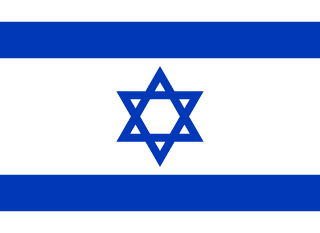
| Flag | Israel Flag |
|---|---|
| Country | Israel |
| Capital | Jerusalem (status disputed; most embassies are located in Tel Aviv) |
| Continent | Asia |
| Official Languages | Hebrew, Arabic |
| Currency | Israeli New Shekel (ILS) |
| Dialling Code | +972 |
Israel Flag Meaning
Flag Design
The flag of Israel is a white rectangle with two horizontal blue bands, one at the top and one at the bottom. In the center is a blue Star of David (Magen David). The flag’s aspect ratio is 8:11. Each blue band is one-eighth the height of the flag, and the Star of David is formed by the intersection of two equilateral triangles, with its center aligned with the center of the flag. The officially designated blue is a deep indigo, similar to the color of traditional dyes.
Meaning
The white background and blue bands are inspired by the traditional Jewish prayer shawl. Blue and white have long been traditional colors of the Jewish people, with blue symbolizing the sky and faith, and white representing purity and light. The central Star of David has been a widespread symbol of the Jewish people and Judaism since the Middle Ages, with its six points representing the connection between heaven and earth, and above and below. The flag as a whole embodies the Jewish aspiration to return to their homeland and rebuild their nation.
History and Legal Status
The design of the blue and white flag dates back to the late 19th-century Zionist movement. It was proposed and gradually finalized by David Wolffsohn and others in 1891. After the establishment of Israel in May 1948, the provisional State Council officially adopted the flag in October of the same year. In 1949, relevant laws were passed to confirm its legal status, and subsequent regulations standardized its dimensions, colors, and methods of display.
Today, the flag is widely used in Israeli government buildings, schools, military facilities, and overseas embassies, and is a common symbol in Jewish communities and during religious festivals. Respect for the flag holds both legal and social significance in Israel, and visitors are expected to understand and show respect.
Israel Overview
Country Details »Overview of Israel
Israel (State of Israel) is located in the western part of Asia, on the eastern coast of the Mediterranean Sea. It borders Lebanon to the north, Syria to the northeast, Jordan to the east, Egypt to the southwest, and faces the Mediterranean Sea to the west. According to Israeli statistics, the area under its actual control is about 22,000 square kilometers, with a population of approximately 9.8 million. It is a small yet demographically diverse country. Israel declared independence in 1948 and operates as a parliamentary republic, with the Knesset as the supreme legislative body and the Prime Minister holding executive power.
Regarding its capital, Israel has declared Jerusalem as its capital since 1950, but the status of Jerusalem remains internationally disputed, and most foreign embassies are located in Tel Aviv. Travelers should refer to their own country’s embassies and official statements when planning itineraries. Israeli society is composed of Jewish citizens, Arab citizens, and various other groups including Druze and Christians. Both Hebrew and Arabic are official languages, and English is widely spoken in tourism and business settings.
Geography and Climate
Israel has a narrow geography and can be divided into four geographical zones from west to east: the coastal plain along the Mediterranean Sea in the west, which is the most densely populated and agriculturally active region, where cities such as Tel Aviv and Haifa are located; the central region consisting of hills and mountains, with Jerusalem situated on the Judaean Mountains; the eastern region, which includes the Jordan Valley and the rift valley formed by the Sea of Galilee (Lake Tiberias) and the Dead Sea—the Dead Sea surface is about 430 meters below sea level, making it the lowest point on Earth's land surface; and the southern Negev Desert, which covers more than half of the country’s area and is being gradually developed for drip irrigation agriculture and solar energy industries.
The climate is typically Mediterranean, with hot and dry summers (June to September), especially humid along the coast, and mild, rainy winters (November to March). The northern Galilee region receives more precipitation, while the southern desert remains arid year-round. The months of March to May and October to November offer moderate temperatures and ample sunshine, making them the best windows for travel. The areas around the Dead Sea and the Red Sea coast at Eilat remain warm in winter, making them good options for winter escapes.
Historical Background
This land is one of the oldest regions of human civilization, and Jerusalem is a holy site for Judaism, Christianity, and Islam. In ancient times, the kingdoms of Israel and Judah existed here, followed by rule under the Assyrians, Babylonians, Persians, Greeks, Romans, and Byzantines. In 70 AD, after the Romans destroyed the Second Temple, Jews were dispersed across the world for centuries. The region was subsequently ruled by the Arab Caliphates, Crusaders, Mamluks, and the Ottoman Empire, and became part of the Ottoman Empire in 1517 for nearly four hundred years.
After World War I, the League of Nations placed Palestine under British Mandate. In 1947, the United Nations passed a partition resolution, and in May 1948, Israel declared independence, leading to the First Arab-Israeli War. Since then, the region has experienced multiple conflicts and wars. In 1979, Israel signed a peace treaty with Egypt, established diplomatic relations with Jordan in 1994, and began normalizing relations with some Arab states starting in 2020. The regional situation remains complex, and security conditions significantly impact tourism—always check the latest information before traveling.
Economy and Currency
Israel is recognized as a developed economy, driven by its high-tech industry. It leads the world in fields such as cybersecurity, semiconductors, medical equipment, agricultural technology, and water management, and is often referred to as the “Start-Up Nation.” Technologies such as drip irrigation, seawater desalination, and solar energy utilization have enabled high-yield agriculture in an arid environment. Tourism is also a significant sector, attracting many religious pilgrims and cultural travelers each year.
The official currency is the Israeli New Shekel (ILS, symbol ₪), issued by the Bank of Israel. The cost of living in Israel is relatively high, with expenses for dining, accommodation, and transportation generally higher than in most Asian countries. Travel budgets should be prepared accordingly.
Culture and Society
Israeli culture is diverse and multifaceted, with Jewish, Islamic, and Christian traditions coexisting in the same land. The Sabbath (from Friday sunset to Saturday sunset) is the most notable rhythm of daily life. During the Sabbath, public transportation in parts of Jerusalem may be suspended, and many shops, restaurants, and markets close, although hotels, Arab neighborhoods, and some areas of Tel Aviv usually remain open—plan ahead before traveling.
The cuisine is influenced by Mediterranean, Middle Eastern, and Eastern European Jewish immigrant traditions. Common staples include hummus, falafel, shakshuka, grilled meats, and various salads, with kosher dietary laws affecting ingredients and combinations. The overall education level is high, and there is a strong café culture and beach culture. Tel Aviv is known for its nightlife and open atmosphere.
Tourism Overview
Israel’s tourism resources are highly concentrated and diverse: the Old City of Jerusalem houses sacred sites such as the Western Wall, Church of the Holy Sepulchre, and Dome of the Rock; Tel Aviv is famed for its Bauhaus architecture “White City,” seaside promenade, and vibrant nightlife; Haifa features the terraced Bahá’í Gardens; the Dead Sea offers experiences like floating and mud bathing; Masada Fortress witnesses ancient history; the northern Sea of Galilee, Nazareth, and the ancient city of Acre are ideal for religious and historical themes; and southern Eilat is a premier destination for Red Sea diving.
A special note: the security situation in Israel and surrounding areas remains uncertain and may change over time. Before traveling, consult your government’s travel advisory website and local embassies or consulates for the latest safety advisories. Avoid sensitive areas, carry identification at all times, and purchase travel insurance that includes emergency medical care and trip disruption coverage.
Israel Travel Guide
All Guides »Israel Travel Quick Guide: Visa Requirements, Best Seasons, Budget, and Shabbat Etiquette
Before traveling to Israel, get familiar with visa and entry procedures, the bes...
Classic 7-Day Israel Itinerary: Jerusalem – Dead Sea – Galilee – Haifa – Tel Aviv 7 days
Covering the holy city, Dead Sea floating, northern religious sites, and a coast...
Israel 4-Day Short Trip: A Tale of Two Cities – Jerusalem and Tel Aviv 4 days
Combine the religious and historical essence of the Old City with the modern and...
Essential Attractions in Israel: From Jerusalem to the Red Sea
A city-by-city guide to Israel’s top attractions, with highlights and recommende...
A Guide to Israeli Cuisine: From Hummus to Market Snacks
A Culinary Crossroads of the Mediterranean and the Middle East: Vegetarian sides...
Israel Transportation Guide: Airport Express, Trains, and Getting Around the City
Practical ways to get into the city from Ben Gurion Airport, take intercity trai...