India Flag
The proportions, colors, and history of India's flag - a banner that tells India's own story.
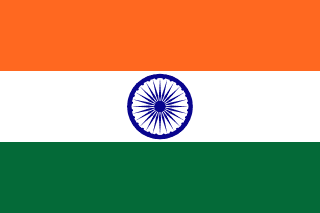
| Flag | India Flag |
|---|---|
| Country | India |
| Capital | New Delhi |
| Continent | Asia |
| Official Languages | Hindi, English |
| Currency | Indian Rupee (INR) |
| Dialling Code | +91 |
India Flag Meaning
Flag Design
The Indian flag, also known as the Tiranga (Tricolor), consists of three equal horizontal bands of saffron (deep orange), white, and green. The flag’s aspect ratio is approximately 2:3, with a navy blue Ashoka Chakra (wheel) in the center of the white band. The wheel has 24 evenly spaced spokes and a diameter approximately three-quarters of the flag’s height, positioned centrally.
Meaning
Saffron symbolizes courage, sacrifice, and dedication; white represents truth, peace, and purity; and green stands for life, prosperity, and faith. The central Ashoka Chakra is derived from the lion capital of the Ashoka Pillar erected in Sarnath during the 3rd century BCE and signifies “Dharma” (righteousness) and justice. The 24 spokes represent the 24 hours of a day, symbolizing continuous forward progress. Together, the three colors embody the ideals of religious diversity and social harmony.
History and Legal Status
The Indian flag was designed by leaders of the independence movement and underwent several modifications. The current version was officially adopted by the Constituent Assembly in July 1947, replacing Gandhi’s proposed spinning wheel design with the Ashoka Chakra to reflect a secular and inclusive national identity. India has specific legislation, the Flag Code, which governs the flag’s dimensions, colors, materials, and display protocols. The flag cannot be used for commercial purposes or treated disrespectfully, and there are strict guidelines for half-mast displays.
Today, the Tiranga is prominently displayed during national celebrations like Independence Day (August 15) and Republic Day (January 26), and serves as an important national symbol at government buildings, schools, and sporting events.
India Overview
Country Details »Overview of India
India (officially the Republic of India) is located in southern Asia and is the largest country on the South Asian subcontinent, covering approximately 2.98 million square kilometers. It borders the Himalayas to the north and shares land borders with Pakistan, China, Nepal, Bhutan, Bangladesh, and Myanmar. To the south lies the Indian Ocean, to the east the Bay of Bengal, and to the west the Arabian Sea. The capital, New Delhi, is situated on the western side of the northern Ganges Plain and, together with the historic city of Old Delhi, forms the country’s political and cultural center. The largest city is Mumbai on the western coast.
India is a parliamentary republic, with the president as the head of state and the prime minister holding executive power. The country is divided into 28 states and 8 union territories, each with distinct languages, cuisines, and customs. With a population of about 1.43 billion, India has the largest population in the world. Its official languages are Hindi and English, in addition to hundreds of regional languages.
Geography and Climate
India’s terrain can be broadly divided into three parts: the northern Himalayan mountain range and foothills, the central Indo-Gangetic Plain formed by the Indus and Ganges rivers, and the southern Deccan Plateau along with narrow coastal plains on either side. The Ganges River, considered sacred, flows from the Himalayas to the Bay of Bengal, passing through ancient cities like Varanasi and Patna. The Thar Desert lies in the west, while the northeastern state of Meghalaya’s Cherrapunji was once the wettest place on Earth.
The climate is predominantly tropical monsoon: the southwest monsoon brings heavy rainfall nationwide from June to September; the cool season from October to February offers clear, dry weather and is the peak travel period; the hot season from March to May sees temperatures in the northern plains often exceeding 40°C. The southern coastal areas remain warm and humid year-round, the Himalayan region and northern areas are cold in winter, and the Rajasthan desert experiences extreme day-night temperature variations.
Historical Background
India is one of the cradles of human civilization. The Indus Valley Civilization (Harappan Civilization), which flourished around 2600 BCE, already featured urban planning and drainage systems. Around 1500 BCE, the arrival of the Aryans led to the formation of Vedic culture and the early foundations of the caste system. In the 3rd century BCE, Emperor Ashoka of the Maurya Dynasty unified much of the South Asian subcontinent and promoted Buddhism extensively, leaving behind enduring monuments such as stone pillars and the Dharma wheel.
Later, the Gupta Dynasty ushered in a golden age of classical culture. From the 8th century onward, Islamic influences entered the region, and in 1526, the Mughal Empire was established. Iconic structures like the Taj Mahal and Red Fort were built during this period. Starting in the 17th century, the British East India Company gradually expanded its control, and in 1858, India became a direct British colony. It gained independence in 1947 through the nonviolent resistance movement, which also led to the partition of India and Pakistan. The Republic of India was founded in 1950 and has since grown into the most significant economy and most populous nation in South Asia.
Economy and Currency
India has one of the world’s largest economies, with services as the dominant sector. Its information technology, software outsourcing, pharmaceuticals, automotive manufacturing, and textile industries are globally competitive. Bangalore and Hyderabad are renowned tech hubs. Agriculture still employs a large portion of the workforce, and India is a major global producer of rice, wheat, cotton, and spices.
The official currency is the Indian Rupee (INR, symbol ₹), issued by the Reserve Bank of India (RBI). Rupee denominations are relatively high, and exchange rates fluctuate noticeably, so travelers should monitor real-time rates. India has been actively promoting cashless payments, with the Unified Payments Interface (UPI) widely adopted, but foreign visitors will generally rely on cash and credit cards for daily expenses.
Culture and Society
India is a vibrant tapestry of religions and cultures: around 80% of the population practices Hinduism, alongside Islam, Buddhism, Sikhism, Jainism, and Christianity. Temples, mosques, churches, and Sikh gurdwaras create a rich spiritual landscape. Caste concepts, family structures, and traditional festivals continue to deeply influence social life. Major celebrations like Diwali, Holi (Festival of Colors), and Ganesh Chaturthi offer vivid glimpses into Indian society’s energy.
Indian cuisine centers around spices, with well-known dishes including curry, naan, roti, thali meals, and a strong vegetarian tradition. Regional flavors vary significantly between north and south. India is also the birthplace of yoga and Ayurvedic medicine. Bollywood is the world’s largest film industry by production volume and has a profound influence on South Asian pop culture.
Tourism Overview
India is the most captivating travel destination in South Asia. The “Golden Triangle” route in the north, connecting the Taj Mahal, Agra Fort, and Jaipur, is a classic itinerary. The Ganges River morning rituals in Varanasi are profoundly moving. The deserts and palaces of Udaipur and Jaisalmer in Rajasthan offer a unique charm, while the beaches of Goa, Kerala backwaters, and ruins of Hampi in the south present a completely different experience.
India’s transport network is extensive but crowded. For intercity travel, a combination of domestic flights and trains is recommended. Pay close attention to food and water hygiene, and opt for bottled water and reputable restaurants whenever possible. Female travelers and first-time visitors should choose well-reviewed accommodations and private transfers, and allow ample flexible time in their itineraries.
India Travel Guide
All Guides »India Travel Quick Guide: e-Visa, Best Seasons, Budget Reference & Etiquette Taboos
Get clear on these key points—e-visa, best travel seasons, budget estimates, and...
Classic 8-Day India Itinerary: Delhi—Agra—Jaipur—Varanasi 8 days
This route connects the three historic cities of the Golden Triangle with the sa...
India 4-Day Short Trip Itinerary: Essential Routes Through Delhi and Agra 4 Days
See India Even with Limited Time: This dual-city route combines the capital’s hi...
Essential Attractions in India: A Complete Guide from the Taj Mahal to the Ganges Aarti in Varanasi
A city-by-city guide to India’s must-see sights, covering Delhi, Agra, Jaipur, a...
A Guide to Indian Cuisine: Must-Try Dishes of Curries, Thali Meals, and Street Food
A Culinary Map of the Spice Kingdom: From North India’s Tandoori Grills and Naan...
India Transportation Guide: Tips for Taking Trains, Metro, and Auto-rickshaws
India’s trains, metro, auto-rickshaws, and ride-hailing services each have their...