Sweden Flag
The proportions, colors, and history of Sweden's flag - a banner that tells Sweden's own story.
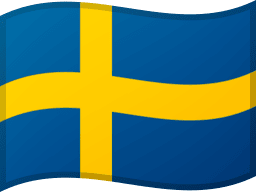
| Flag | Sweden Flag |
|---|---|
| Country | Sweden |
| Capital | Stockholm |
| Continent | Europe |
| Official Languages | Swedish |
| Currency | Swedish Krona (SEK) |
| Dialling Code | +46 |
Sweden Flag Meaning
Flag Design
The flag of Sweden is a blue field with a yellow Nordic cross. The flag’s proportions are 5:8, though a 10:16 ratio is also used. The yellow cross is slightly offset toward the hoist side. The blue and yellow colors are derived from the Swedish royal coat of arms, which features three gold crowns on a blue background. The width, placement, and spacing of the cross follow precise specifications outlined in the Swedish Flag Law.
Meaning
Blue symbolizes the sky and loyalty, while yellow (gold) represents light and wealth, also reflecting the three gold crowns on the royal arms. The Nordic cross design originates from the Christian cross and signifies faith. It is shared by other Nordic countries—Denmark, Norway, Finland, and Iceland—becoming a common cultural symbol of the region. Legend says that in the 12th century, King Erik IX of Sweden saw a golden cross in the blue sky while on a crusade to Finland and adopted it as the national flag. Though not historically confirmed, the story remains popular, adding to the flag’s symbolic status. The cross is positioned slightly left to ensure visual balance when hung.
History and Legal Status
The blue field with a yellow cross has been used by the Swedish royal family and military since at least the 16th century and became widespread during the reign of Gustav Vasa in 1523. The flag’s design was legally formalized in 1906. The current Flag Law was enacted in 1982, specifying the flag’s proportions, colors, and proper display. There are also royal and naval versions of the Swedish flag, featuring the royal coat of arms or a swallowtail design. On national holidays like Swedish National Day (June 6), Midsummer, and royal celebrations, the blue and yellow flag is prominently displayed as a powerful symbol of national identity.
Sweden Overview
Country Details »Overview of Sweden
Sweden (the Kingdom of Sweden) is located in the eastern part of the Scandinavian Peninsula in Northern Europe. It borders Norway to the west, Finland to the northeast, the Baltic Sea and the Gulf of Bothnia to the east, and faces Denmark across the Øresund Strait to the southwest. The country stretches over 1,500 kilometers from north to south, covering an area of about 450,000 square kilometers, making it one of the largest countries in Western Europe. The capital, Stockholm, is situated on an archipelago where the Baltic Sea meets Lake Mälaren, comprising 14 islands, and is known as the Venice of the North.
Sweden is a constitutional monarchy, with King Carl XVI Gustaf serving as the head of state (ascended to the throne in 1973). Executive power is exercised by the Riksdag (parliament) and the cabinet led by the Prime Minister. The country is divided into 21 counties and has a comprehensive social welfare system. It consistently ranks high globally in human development, innovation, and gender equality.
Geography and Climate
Sweden’s terrain is higher in the west and lower in the east. The western border with Norway features the Scandinavian Mountains, with the highest peak, Kebnekaise, reaching 2,096 meters. The east consists of vast hills and coastal plains. Forests cover about 70% of the country, and lakes are abundant. Lake Vänern, with an area of approximately 5,650 square kilometers, is the largest lake in the EU. Thousands of islands form archipelagos off the coasts of Stockholm and Gothenburg. The Arctic Circle crosses northern Lapland, and the country has around 260,000 islands in total.
The climate varies significantly between the south and the north: the south has a temperate oceanic-to-continental transitional climate with mild winters and cool summers; the north has a subarctic climate with long, harsh winters and abundant snow. Due to the high latitude, the north experiences the midnight sun and white nights in summer, and the aurora borealis in winter. June to August is the most comfortable travel season, while December to March is perfect for snow and aurora activities. April to May and September offer fewer crowds, lower prices, and clear scenery.
Historical Background
Sweden has a long history. During the Viking Age from the 8th to 11th centuries, Swedes traveled eastward via the Baltic Sea and Russian rivers for trade and expeditions. Christianity was introduced in the 11th century, gradually leading to the establishment of a unified kingdom. In 1397, Sweden joined the Kalmar Union with Denmark and Norway. In 1523, Gustav Vasa led the country to independence and established the Vasa dynasty. In the 17th century, Sweden became a great power, with the Baltic Sea once serving as its inland sea. After the 18th century, its power declined. It lost Finland in 1809, formed a union with Norway in 1814, and peacefully separated in 1905.
Sweden remained neutral in both World Wars. Throughout the 20th century, it developed into a welfare state characterized by high taxes and extensive welfare programs. It joined the European Union in 1995, voted against adopting the euro in a 2003 referendum, and officially joined NATO in 2024. The Nobel Prize has been awarded in Stockholm since 1901 (with the Peace Prize awarded in Oslo), making it Sweden’s most internationally recognized cultural hallmark.
Economy and Currency
Sweden is a highly developed export-oriented economy. Key sectors include engineering and manufacturing (Volvo, Scania, Ericsson, SKF), telecommunications, clean energy, and forestry and mining (such as the iron mines in Kiruna). In recent years, gaming, music streaming (Spotify), fintech, and green technology have also shown strong growth. Sweden consistently ranks among the world leaders in innovation investment and patent numbers. Inventions such as the three-point seatbelt and Bluetooth technology originated in Sweden.
The official currency is the Swedish Krona (SEK), issued by Sveriges Riksbank, founded in 1668, which is the world’s oldest central bank. As Sweden has not adopted the euro, travelers need to use kronor. Currency exchange may be required when entering from eurozone countries.
Culture and Society
Swedish society values equality, simplicity, and pragmatism. The concepts of “lagom” (just enough) and “fika” (the habit of taking a break to enjoy coffee and pastries) are key to understanding Swedish life. The legal right of public access (allemansrätten) allows people to freely hike, camp, and forage in nature, reflecting the Swedish relationship with the environment. Festivals include Midsummer, Lucia, and crayfish parties.
In culture, Sweden is a global force in pop music, with artists like ABBA, Roxette, and Avicii having had a major impact. Literature includes Pippi Longstocking author Astrid Lindgren and crime novelists like Stieg Larsson. Design is known for brands like IKEA, minimalism, and functionalism. The indigenous Sami people maintain traditional reindeer herding culture, showcased at events like the Jokkmokk Market.
Tourism Overview
Sweden is ideal for travelers who enjoy both nature and urban experiences. Stockholm’s Old Town, the Vasa Museum, the ABBA Museum, and its artistic metro stations form the city’s highlights, with nearby archipelagos and Drottningholm Palace offering great day trips. Gothenburg boasts attractions like Liseberg amusement park and its canals, while Malmö features the Øresund Bridge and the Turning Torso. In the north, Kiruna, Abisko, and the Icehotel in Jukkasjärvi are top spots for aurora viewing and winter experiences.
From summer hiking and foraging to winter skiing and aurora tours, Sweden has excellent public transportation and a high level of English proficiency, making it one of the easiest Nordic destinations for independent travel. Compared to Norway’s fjords, Sweden stands out more for its forests, lakes, design-forward cities, and music culture. It works well in multi-country itineraries with Denmark and Finland.
Sweden Travel Guide
All Guides »Sweden Travel Quick Guide: Schengen Visa, Northern Lights Season, Budget, and Swedish Social Etiquette
How to get your visa, when to see the Northern Lights, how much money you’ll spe...
Classic 7-Day Sweden Itinerary: Stockholm’s Old Town & Abisko’s Aurora & Ice Adventures 7 days
Pack design cities and polar skies into one trip: start with Stockholm’s metro a...
Sweden 4-Day Itinerary: Gamla Stan, Metro Art & Archipelago Day Trip 4 days
Even a short stay in Stockholm can be packed with highlights: explore the Old To...
Must-visit attractions in Sweden: the Vasa Museum, Stockholm Metro Art, and Abisko Aurora
From urban museums and metro art to northern polar national parks, this guide or...
A Guide to Swedish Cuisine: Meatballs, Cinnamon Buns, Herring, and the Fika Coffee Culture
Swedish cuisine emphasizes fresh, seasonal ingredients. From the national dish o...
Sweden Transportation Guide: All About SJ Trains, SL Transport Cards, and Airport Transfers
Sweden has an efficient public transport system with clear English signage. Unde...