Kenya Flag
The proportions, colors, and history of Kenya's flag - a banner that tells Kenya's own story.
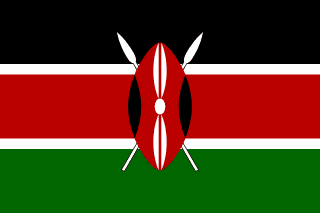
| Flag | Kenya Flag |
|---|---|
| Country | Kenya |
| Capital | Nairobi |
| Continent | Africa |
| Official Languages | Swahili, English |
| Currency | Kenyan Shilling (KES) |
| Dialling Code | +254 |
Kenya Flag Meaning
Flag Design
The Kenyan flag is a horizontal tricolor with equal black, red, and green bands separated by thin white stripes, in a 3:2 aspect ratio. At the center is a traditional Maasai shield crossed with two white spears. The color scheme originates from the flag of the Kenya African National Union (KANU), with the shield and spears added at independence to represent both historical and national symbolism.
Meaning
Black represents the people of Kenya, red symbolizes the blood shed in the struggle for independence and freedom, green stands for the land and natural resources, and white denotes peace and unity. The central shield and spears signify the defense of the nation’s freedom and the unity of all ethnic groups. The flag embodies the nation’s people, nature, history, and commitment to sovereignty, making it one of the most recognizable in East Africa.
History and Legal Status
The Kenyan flag was first raised on December 12, 1963, the day of independence, established by the first president, Jomo Kenyatta, and the independence movement. Based on the KANU flag, it incorporated the Maasai shield and spears to symbolize the birth of a new nation. The 2010 constitution further defined the flag’s specifications, colors, and usage, prohibiting disrespectful treatment. Today, the flag is displayed at government buildings, schools, sporting events, and wildlife reserve campsites, serving as a key symbol of national identity.
Kenya Overview
Country Details »Overview of Kenya
Kenya (officially the Republic of Kenya) is located in East Africa, with the equator crossing the central and southern parts of the country. It borders the Indian Ocean to the southeast and shares land borders with Tanzania, Uganda, South Sudan, Ethiopia, and Somalia. The country covers an area of approximately 583,000 square kilometers and has a population of around 55 million. Its capital, Nairobi, is the political, economic, and transportation hub of the nation and an important international city in East Africa. Kenya is a key member of the East African Community and the Horn of Africa region, renowned for its wildlife tourism and long-distance running.
The official languages are Swahili and English, with Swahili widely used as a common lingua franca. Kenya is a presidential republic divided into 47 counties and is globally recognized as a leading exporter of black tea and flowers.
Geography and Climate
Kenya’s terrain is characterized by highlands and rift valleys. The Great Rift Valley runs from north to south, creating a series of lakes and steep cliffs, with vast savannahs on either side. Mount Kenya, the second-highest peak in Africa at 5,199 meters, is located in central Kenya. The southwestern part includes part of Lake Victoria (Africa’s largest lake), while the northern region features Lake Turkana and semi-arid deserts. The coastal area consists of a narrow tropical strip with white sandy beaches and coral reefs near Mombasa and Diani.
The climate is significantly influenced by altitude: the coast is hot and humid, while the highland areas (such as Nairobi) enjoy mild and pleasant weather year-round with distinct dry and rainy seasons. The long rains occur from March to May, and the short rains from October to December, with the rest of the year being dry. The best time for wildlife viewing is usually during the dry seasons when vegetation is sparse, and animals gather near water sources.
Historical Background
Kenya’s coastal region has been engaged in trade with Arab, Persian, Indian, and even Chinese merchants since ancient times, giving rise to the Swahili city-state civilization. Port cities such as Mombasa, Malindi, and Lamu feature numerous coral stone buildings and Islamic cultural influences. In the 16th century, the Portuguese controlled the coast, followed by the influence of the Omani Sultanate. By the late 19th century, the British established the East Africa Protectorate and built the railway connecting Mombasa and Lake Victoria between 1896 and 1901, spurring inland development and migration.
In the mid-20th century, the Mau Mau uprising, centered on land and freedom, propelled the independence movement. Kenya gained independence on December 12, 1963, with Jomo Kenyatta becoming its first president. The country subsequently went through the eras of Moi, Kibaki, and Kenyatta, adopted a new constitution in 2010, and elected William Ruto as president in 2022. Kenya’s economy and infrastructure are relatively advanced in the East African region.
Economy and Currency
Kenya is the largest economy in East Africa, with key sectors including agriculture (tea, coffee, flowers, and vegetables), tourism, telecommunications, and financial services. It is a major global exporter of black tea and flowers, particularly roses. Nairobi is known as the “Silicon Savannah” due to its vibrant tech startup scene, and mobile payment service M-Pesa is widely used across Africa. The official currency is the Kenyan Shilling (KES, symbol KSh), issued by the Central Bank of Kenya, with 1 shilling equal to 100 cents.
Culture and Society
Kenya is home to over 40 ethnic groups, including the Kikuyu, Luhya, Luo, Kalenjin, and Kamba, each with their own languages and traditions. The Maasai, known for their red shukas, beadwork, and jumping dance, are iconic symbols of East African grassland culture. The coastal region is predominantly Swahili, blending African, Arab, and Islamic elements. The staple diet includes ugali (cornmeal), nyama choma (grilled meat), sukuma wiki (collard greens), and stews, with Indian communities contributing curries and flatbreads. Kenyan coffee, tea, and Tusker beer are also national highlights.
Tourism Overview
Kenya is synonymous with the “wildlife kingdom.” The Maasai Mara National Reserve hosts the annual Great Migration from July to October, where wildebeest and zebras cross the Mara River. Amboseli National Park is famous for its elephant herds with Mount Kilimanjaro in the background. Lake Nakuru and Lake Naivasha are prime spots for flamingo and waterbird sightings. Other unique reserves include Samburu, Tsavo, and Laikipia. Nairobi offers a rare urban national park, along with opportunities to get up close with animals at the Giraffe Centre and Elephant Orphanage. Coastal destinations like Mombasa, Diani, Watamu, and Lamu are ideal for beach holidays, diving, and experiencing Swahili history.
While Kenya is generally safe for tourists, cities like Nairobi have risks of pickpocketing and robbery, especially at night in secluded areas. The northeastern region near Somalia and some coastal areas pose security concerns, so it’s essential to check official advisories and travel with reputable operators and licensed guides. With proper preparation and vigilance, Kenya’s savannahs and coasts offer unforgettable experiences.
Kenya Travel Guide
All Guides »Kenya Pre-Trip Guide: eTA, Best Seasons, Budget & Safari Etiquette
Get your electronic travel authorization, choose the right wildlife viewing seas...
Classic 7-Day Kenya Itinerary: Nairobi, Maasai Mara, Lake Nakuru, and Amboseli 7 days
This route covers three of Kenya’s most iconic safari destinations, taking you f...
Kenya 4-Day Short Trip: Highlights of Nairobi and Maasai Mara 4 days
Limited Time, Big Experiences: Wildlife Conservation in the Capital Plus Safari ...
Essential Attractions in Kenya: Savannas, Lakes, and the Indian Ocean Coast
From the Great Migration river crossings in Maasai Mara to the white sands of Di...
Kenya Food Guide: Nyama Choma, Ugali, and Coastal Swahili Cuisine
With grilled meat in one hand, a lump of stiff porridge in the other, and spicy ...
Kenya Transportation Guide: Airports, Matatus, Ride-Hailing, and Safari Shuttles
From getting into town from the airport to booking shuttles to the savannah — we...