Burkina Faso Flag
The proportions, colors, and history of Burkina Faso's flag - a banner that tells Burkina Faso's own story.
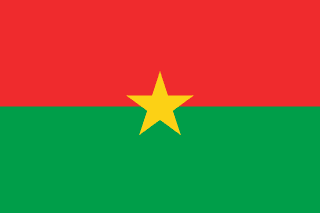
| Flag | Burkina Faso Flag |
|---|---|
| Country | Burkina Faso |
| Capital | Ouagadougou |
| Continent | Africa |
| Official Languages | French |
| Currency | West African CFA franc (XOF) |
| Dialling Code | +226 |
Burkina Faso Flag Meaning
Flag Design
The flag of Burkina Faso consists of two equal horizontal bands, red on top and green on the bottom, with a golden five-pointed star in the center. The flag has a 2:3 aspect ratio, with each color band taking up half the height of the flag, and the star having a diameter of about one-third of the flag’s height. The design is extremely simple and striking, using only red, green, and gold.
Meaning
Red symbolizes the blood shed by those who fought for national liberation and revolution, representing the spirit of sacrifice; green stands for the country’s agriculture, hope, and fertile land; the golden star symbolizes the guiding light of the revolution and is also commonly interpreted as a representation of mineral wealth—as Burkina Faso is known for its gold potential, the star reflects this resource endowment.
History and Legal Status
The current flag was adopted on August 4, 1984, the same day the country changed its name. Previously called Upper Volta, it used a tricolor of black, white, and red (similar to the German flag but with a different color order). The revolutionary government led by Sankara viewed the old name and flag as colonial symbols, and thus replaced them with the new Mossi name Burkina Faso (“Land of Incorruptible People”) and the new flag. Though the Sankara regime was ousted in 1987, the flag and the new name have remained in use, becoming enduring national symbols. Today, the red-green-gold flag is widely displayed at government buildings, schools, border posts, and international events such as FESPACO. Its minimalist design is also often featured in local handicrafts and textiles. As a national emblem, it is illegal to burn, damage, or use the flag in a disrespectful manner, with legal penalties for violations.
Burkina Faso Overview
Country Details »Burkina Faso Overview
Burkina Faso is a landlocked, highland country in West Africa. It is bordered by Ivory Coast, Ghana, Togo, and Benin to the south, and Mali and Niger to the north. With an area of approximately 274,200 square kilometers, it is classified by the United Nations as one of the least developed countries. The capital, Ouagadougou, located on a central plateau, is the country’s political and economic centre. It is also known as the “Capital of African Cinema” because it hosts the biennial Pan-African Film and Television Festival of Ouagadougou (FESPACO). The country’s name, meaning “Land of Incorruptible People,” comes from the Mossi language and was adopted in 1984, replacing the colonial name Upper Volta.
With a population of around 23 million, the Mossi people form the majority (over half), alongside more than 60 other ethnic groups, including Fulani, Bobo, and Lobi. French is the official language, but Mossi (Mòoré), Dioula, and Fulfulde are also commonly spoken in daily life.
Geography and Climate
Located in the transitional zone between the Sahel and the tropical savanna of West Africa, Burkina Faso features mostly flat terrain with undulating plateaus in the central and northern regions. The southwestern part is home to scenic spots such as the Banfora waterfalls, the sandstone pillars of Sindou Peak, and Lake Tengrela. Wildlife reserves like the Nazinga Protected Area are found in the southeastern and southern border regions. The country has limited major rivers, the main ones being the Black Volta, White Volta, and Red Volta. Some eastern rivers eventually flow into the Niger River, which relates to the former colonial name “Upper Volta.”
The country experiences a tropical climate with distinct wet and dry seasons. The rainy season lasts from June to October, with heavier rainfall occurring in the southwest. The cool season from November to February is marked by dry, sunny weather due to the northeast trade winds, making it the most favourable time for travel. The hot season from March to May can see temperatures rising above 40 degrees Celsius, especially in the north, where conditions are more Sahelian and arid.
Historical Background
The region has a history of early civilizations dating back thousands of years. The Loropéni stone ruins, built around the 11th century in the southwest, are among the best-preserved ancient stone structures in West Africa and were designated a UNESCO World Heritage Site in 2009. By the late 14th century, the Mossi people established several kingdoms on the central plateau, including Ouagadougou and Yatenga. These kingdoms operated under a centralized theocratic monarchy known as the Moro-Naba system. The Mossi used cavalry to resist external influences for centuries, and their royal legacy remains a meaningful cultural symbol.
French colonial powers gradually took control of the region during the late 19th century and established the colony of Upper Volta in 1919, which was later integrated into and then re-established within French West Africa. Upper Volta gained independence in 1960 but underwent frequent political changes. In 1983, a revolution led by Thomas Sankara resulted in the country being renamed Burkina Faso in 1984, along with the adoption of a new flag. The 1990s marked the start of a multiparty political system. In 2014, widespread protests led to the overthrow of President Blaise Compaoré’s long-standing regime. In recent years, parts of the northern and eastern border regions have faced threats from extremist militant activity, contributing to ongoing security challenges during the country’s political transition.
Economy and Currency
Burkina Faso is predominantly an agricultural nation, with roughly 80% of the population involved in farming and livestock. Major exports include cotton, sesame, cashews, and shea nuts. Gold is the country’s most important natural resource, and in recent years, Burkina Faso has emerged as one of Africa’s leading gold producers. The official currency is the West African CFA franc (XOF), issued by the Central Bank of West African States (BCEAO). It is pegged to the euro and used by eight West African countries, including Burkina Faso, Ivory Coast, and Senegal.
Culture and Society
Despite economic difficulties, Burkina Faso maintains a dynamic cultural and artistic environment. The Pan-African Film and Television Festival (FESPACO), founded in 1969 in Ouagadougou, is Africa’s oldest and largest film festival, presenting the Golden Stallion of Yennenga award every two years. The city also hosts a Pan-African documentary film festival and the Laongo International Sculpture Symposium. Traditional arts include wood carving, bronze casting, and masked dances, such as those seen at Bobo and Senufo festivals. The Le F art school has nurtured internationally recognised modern sculptors.
The population mainly follows Islam (approximately 60%), alongside Christianity and indigenous beliefs, with generally peaceful interethnic relations. The typical diet features grain-based porridges, often accompanied by okra or peanut sauces. A festive dish called riz gras—rice cooked with vegetables and meat—is commonly served during celebrations.
Tourism Overview
Burkina Faso offers unique and less-touristed attractions, such as Ouagadougou’s film-related culture, artisan markets, and the stone sculpture village created by Mossi women. Other highlights include Bobo-Dioulasso’s Sudanese-Sahelian style Great Mosque and rich musical traditions, the Banfora waterfalls and Sindou Peak, the nearby Loropéni UNESCO World Heritage Site, and the wild elephants in the Nazinga Protected Area—all of which appeal to adventurous and culturally curious travellers. However, it is important to note that there have been frequent armed attacks in the northern, northeastern, and eastern border areas in recent years, resulting in ongoing safety concerns. Many regions are considered high risk, and it is advisable for most travellers to focus on the relatively more stable southwestern cities and attractions, such as Ouagadougou, Bobo-Dioulasso, and Banfora. Avoid long-distance road travel at night. Always review the latest security updates and ensure you have comprehensive travel insurance, including provisions for emergency evacuation.
Burkina Faso Travel Guide
All Guides »Quick Guide to Burkina Faso Before You Go: Visas, Safety Tips, Seasons, Budget & Etiquette
Pre-departure checklist for this lesser-known West African landlocked country: h...
Classic 7-Day Burkina Faso Itinerary: Ouagadougou – Bobo-Dioulasso – Banfora – Loropéni 7 days
Connect Africa’s film capital, music city, waterfalls, rock formations, and UNES...
Burkina Faso 4-Day Short Trip: A Cultural Snapshot of Two Cities (Ouagadougou + Bobo-Dioulasso) 4 days
An in-depth cultural route for limited time: two days in the City of Cinema and ...
A must-visit attractions list for Burkina Faso: from Sahelian mud-brick mosques to ancient stone walls dating back millennia
Explore Burkina Faso’s 12 most worthwhile attractions by city: mud-brick mosques...
Burkina Faso Food Guide: Staple Grains Tô, Rice with Oil, and West African Street BBQ
Understanding the Sahel Table: How to Eat Grain Paste Tô, How Riz Gras Differs f...
Burkina Faso Transport Guide: Flights In and Out, Intercity Buses, Private Transfers, and City Taxis
How to get in and out amid limited airport connectivity, how to choose between i...