Barbados Flag
The proportions, colors, and history of Barbados's flag - a banner that tells Barbados's own story.
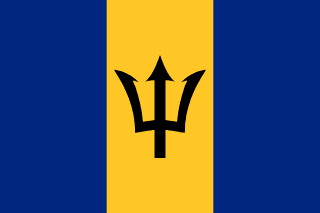
| Flag | Barbados Flag |
|---|---|
| Country | Barbados |
| Capital | Bridgetown |
| Continent | North America |
| Official Languages | English |
| Currency | Barbadian Dollar (BBD) |
| Dialling Code | +1 246 |
Barbados Flag Meaning
Flag Design
The Barbadian flag is rectangular with a 2:3 aspect ratio, consisting of three equal vertical stripes of dark blue, gold, and dark blue from left to right. At the center of the gold stripe is a black trident head. The blue is a deep "navy blue," and the gold is a bright sandy hue, creating a striking yet balanced contrast.
The trident is head-only, without a shaft. This "broken shaft" design is the most recognizable feature of the Barbadian flag and the clearest visual distinction from British maritime symbols.
Meaning
The blue stripes on either side represent the Caribbean Sea and the Atlantic Ocean surrounding the island, as well as the blue sky above. The central gold stripe symbolizes the island’s famous golden beaches and echoes Barbados’ image as the "Sunshine Island," signifying a land nurtured by sun and sea. The black trident originates from the trident of Poseidon, rendered in black against gold for a powerful visual impact.
The trident’s shaft is intentionally omitted, symbolizing Barbados’ complete break from colonial rule and its emergence as an independent nation standing firmly in the Caribbean. The three vertical stripes are also interpreted as representing harmony among the ocean, land, and people.
History and Legal Status
The Barbadian flag was officially adopted on November 30, 1966, the day of independence. Previously, a national design competition was held, and the winning entry by local art teacher Grantley W. Prescod has been in use ever since.
When Barbados became a republic on November 30, 2021, the flag and coat of arms remained unchanged. The trident flag continues to serve as a national symbol, prominently displayed at government buildings, embassies, sporting events, and national celebrations such as Independence Day on November 30, serving as an important emblem of national identity.
Barbados Overview
Country Details »Overview of Barbados
Barbados is located at the easternmost end of the Lesser Antilles in the Caribbean Sea, making it the easternmost island nation in the Eastern Caribbean and one of the most developed countries in the West Indies. With a land area of about 431 square kilometers and a coastline of approximately 97 kilometers, its capital, Bridgetown, is situated on the southwestern coast of the island and serves as the national center for politics, commerce, and cruise ports. The population is around 280,000, with about 90% of African descent. The official language is English, and the local Bajan dialect, heavily influenced by West Indian culture, is commonly spoken.
Barbados was formerly a British colony, gaining independence on November 30, 1966, and becoming a republic on November 30, 2021, with a Barbadian president replacing the British monarch as head of state while remaining within the Commonwealth. Today, Barbados is one of the Caribbean’s most politically stable, economically developed, and infrastructure-complete nations, with its economy supported by tourism, offshore financial services, light industry, and rum production. Its per capita income consistently ranks among the highest in the Caribbean.
Geography and Climate
Barbados is a coral limestone island with generally flat terrain, slightly elevated in the center, where its highest point, Mount Hillaby, rises to about 340 meters. The island’s surrounding sea conditions vary significantly: the west coast faces the Caribbean Sea, with calmer waves and bluer waters, home to the island’s most famous white-sand beaches and resort hotels; the east coast faces the Atlantic Ocean, with rougher surf and rugged rocks, making it a paradise for surfers and wave watchers; the south coast has gentle beaches and a vibrant nightlife scene; the north features extensive limestone coasts and sea caves.
The climate is tropical maritime, with an average annual temperature of around 27°C and minimal day-night temperature variation. The year-round sea breeze keeps the heat comfortable. The dry season from December to May offers sunny, low-humidity weather, making it the prime travel period. The rainy season from June to November mainly brings short afternoon showers, with plenty of sunshine. Located south of the main hurricane belt, Barbados has a relatively low chance of direct hurricane hits, contributing to its long tourism season.
Historical Background
Before European arrival, the island was inhabited by the Arawak and Carib peoples. Spanish and Portuguese navigators arrived in succession, and it is said that the name "Barbados" comes from a Portuguese or Spanish word meaning "bearded," possibly referring to the hanging aerial roots of the island’s fig trees. In 1625, Britain claimed sovereignty over the island, and in 1627, the first permanent settlement was established. Sugarcane cultivation and large numbers of African slaves were introduced, forming a plantation-based economic and social structure.
In 1816, the island saw a major slave uprising led by Bussa, the largest act of resistance in Barbadian history. Slavery was abolished in 1834, and the plantation economy gradually transformed. After a long process of self-governance, Barbados officially gained independence on November 30, 1966, and became a republic on November 30, 2021. Sandra Mason became the first president, retaining the country’s symbols and Commonwealth membership.
Economy and Currency
Barbados does not have a large manufacturing sector. Its economy is based on tourism, international financial services, light industry, and agriculture. Sugarcane and rum were once the cornerstones of the national economy. The Mount Gay Rum Distillery, founded in 1703 on the island, is recognized as one of the oldest commercial rum distilleries in the world, earning Barbados the title "birthplace of rum." The island still preserves many sugarcane fields, vintage windmills, and small rum bars, creating a unique rural landscape.
The official currency is the Barbadian Dollar (currency code BBD, symbol Bds$), issued by the Central Bank of Barbados. It has maintained a fixed exchange rate of 2 Barbadian Dollars to 1 US Dollar for decades, making it one of the most stable currencies in the Caribbean. The stable exchange rate allows US dollars to circulate widely, and budgeting for travelers is straightforward.
Culture and Society
Barbadian culture blends British traditions with West African and Caribbean influences. Cricket is the most beloved sport, and British afternoon tea coexists with fried fish meals. The streets resonate with the rhythms of soca, calypso, and reggae. The annual Crop Over Festival from June to August is the most important celebration of the year, with the colorful and lively Kadooment Day parade being the best time to experience local enthusiasm.
The national dish, "cou-cou and flying fish," is a staple at family gatherings and festivals. Rum shops scattered across the streets are popular local social venues. International pop star Rihanna, born in Saint Michael Parish, Barbados, was awarded the title of "National Hero" in 2021, becoming one of the island’s most iconic cultural figures.
Tourism Overview
Barbados tourism highlights "island scenery and British charm": the historic Bridgetown old town and military sites are UNESCO World Heritage Sites, considered among the best-preserved British colonial architecture in the Caribbean. The calm, shallow waters of the west coast are ideal for swimming, catamaran sailing, and green sea turtle snorkeling. The rugged rocks and "soup bowl" waves of Bathsheba on the east coast host international surfing competitions. The Friday fish markets in Saint Lawrence Gap and Oistins are hubs for nightlife and food.
Other attractions include the underground stalactites of Harrison’s Cave, the historic plantations of St. Nicholas Abbey, the animal flower cave at the northern tip, and the pristine coastline near Hastings Beach on the southeast coast, all favored by in-depth travelers. The island has well-developed roads, generally good security, and widespread English usage, making it perfect for independent travel, family vacations, and honeymoons.
Barbados Travel Guide
All Guides »Quick Guide to Barbados Before You Go: Visas, Seasons, Budget & Island Etiquette
Visa-free for 30 days, best times to visit in the dry season, how to estimate yo...
7-Day Barbados Island Route: West Coast Beaches, East Coast Reef Waves & South Coast Night Markets 7 Days
From the capital’s historic old town to the green sea turtles of the west coast,...
Barbados 4-Day Itinerary: Island Highlights and Capital Culture 4 days
Even with limited time, you can see it all: the itinerary is divided into four z...
Must-Visit Attractions in Barbados: From World Heritage Old Towns to Reef Wave Coastlines
A regional breakdown of over ten top attractions in Barbados, including highligh...
Barbados Food Guide: Flying Fish, Cou-Cou, and Rum
From the national dish of flying fish with cou-cou to Friday fish markets, explo...
Barbados Transportation Guide: Buses, ZR Vans, and Car Rentals
How to get from the airport into town, how to ride the blue and yellow buses, an...