Antigua and Barbuda Flag
The proportions, colors, and history of Antigua and Barbuda's flag - a banner that tells Antigua and Barbuda's own story.
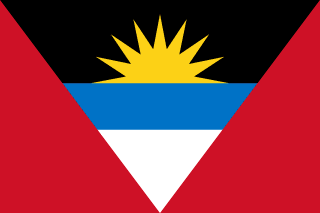
| Flag | Antigua and Barbuda Flag |
|---|---|
| Country | Antigua and Barbuda |
| Capital | St. John’s |
| Continent | North America |
| Official Languages | English |
| Currency | East Caribbean Dollar (XCD) |
| Dialling Code | +1-268 |
Antigua and Barbuda Flag Meaning
Flag Design
The flag of Antigua and Barbuda is a red rectangle with a 2:3 aspect ratio. The top and bottom edges are red bands. The central area features diagonal color bands originating from the upper left and upper right corners, converging in the center to form a “V” shape. The bands are arranged from top to bottom in black, white, blue, white, and black. Within the “V,” in the upper triangular area, there is a golden rising sun with radiating rays, symbolizing a new dawn. The rays are stylized in a geometric pattern, adding a decorative touch. The overall design is simple, with the red background encompassing all elements.
Meaning
Red symbolizes the vitality of the people and the spirit of sacrifice in the struggle for independence; black represents African heritage and the earth; white stands for the sea, the sandy beaches, and purity; blue signifies hope and the Caribbean Sea. The “V” shape represents the first letter of “Victory,” symbolizing the triumph that brought a new era. The golden sun represents the dawn and hope of a new nation, with its multiple rays signifying the unity of the Caribbean peoples. The flag is seen as a declaration of emerging from darkness into light and of a new sun rising above the sea.
History and Legal Status
The flag was designed by Antiguan artist Reginald Samuels and was first adopted when Antigua achieved associated statehood with the United Kingdom in 1967. It continued to be used after the country gained full independence on November 1, 1981. The flag’s colors and proportions are officially regulated and are displayed on Independence Day, at government buildings, school ceremonies, and international events. The imagery of the red background and golden sun is also commonly featured in the logos of the national tourism authority and in Carnival visual designs, becoming a frequently reimagined element of the island nation’s identity.
Antigua and Barbuda Overview
Country Details »Overview of Antigua and Barbuda
Antigua and Barbuda is an island nation located at the northern end of the Leeward Islands in the Lesser Antilles of the Caribbean Sea. It consists of the island of Antigua (approximately 280 square kilometers), the island of Barbuda (approximately 161 square kilometers), and the uninhabited island of Redonda, with a total area of about 442 square kilometers and a population of around 94,000, making it one of the countries with the smallest populations. The capital, St. John’s, is situated on the northwest coast of Antigua, where brightly colored colonial-style buildings and a cruise ship terminal form the first impression. The official language is English, and it is a member of the Commonwealth with the British monarch serving as the head of state. As a small island nation, tourism and financial services are the main pillars of the economy, and sailing holds a prominent place in national life.
Geography and Climate
Antigua has a generally flat terrain, with its highest point, Mount Obama (formerly Boggy Peak), rising to just about 402 meters. Its coastline is rugged, with the Atlantic side on the east often windswept and good for surfing and sailing, while the Caribbean Sea side on the west is calmer and warmer, ideal for swimming. The country famously promotes itself as having 365 beaches—one for each day of the year—which is its most well-known tourism slogan. Barbuda is more pristine and flat, with Codrington Lagoon hosting the largest frigatebird breeding colony in the Western Hemisphere. The island’s pink sand beaches and pristine coral shores are a haven for photography enthusiasts. The climate is tropical maritime, with temperatures typically ranging from 24–30°C year-round. The dry season from December to April is the peak tourist period, while the hurricane season runs from June to November.
Historical Background
The original inhabitants were the Arawak and later the Carib peoples. In 1493, Christopher Columbus passed the islands during his second voyage and named them after the Santa Maria La Antigua church in Seville, Spain. British settlers began arriving in 1632, introducing sugarcane plantations that relied heavily on enslaved Africans, and today the vast majority of the population is of African descent. Nelson’s Dockyard served as a British Royal Navy base in the 18th century, where Admiral Horatio Nelson was stationed. Antigua and Barbuda gained independence on November 1, 1981, and in 2016, Nelson’s Dockyard and its surrounding archaeological sites were inscribed as a UNESCO World Heritage Site, making it a notable cultural landmark in the Caribbean.
Economy and Currency
Tourism accounts for over 60% of GDP, generating steady income through high-end resorts, cruises, and sailing events. The Citizenship by Investment (CIP) program and international financial services are also important revenue sources. Agriculture is limited, mainly producing a small amount of fruits and vegetables for local consumption, with most food imported. The official currency is the East Caribbean Dollar (XCD, symbol EC$), issued by the Eastern Caribbean Central Bank. It has been pegged at a fixed rate of 2.7 XCD to 1 USD for decades, making it one of the world’s most stable exchange rates. This stability makes currency exchange and budgeting very convenient for travelers.
Culture and Society
Antiguan society moves at a relaxed pace, with church, cricket, and sailing serving as key social unifiers. Antigua Sailing Week, held annually from late April to early May, is one of the most prestigious sailing events in the Caribbean, drawing hundreds of yachts to English Harbour. Carnival in early August features vibrant street parades and music in the Calypso and Soca styles, energizing the entire nation. The cuisine highlights seafood and stews, with fungee and pepperpot (a spicy cornmeal and pigeon pea dish) considered the national dish. Lobster meals and rum tastings are also not to be missed.
Tourism Overview
Antigua is a classic high-end Caribbean holiday destination. Resorts in Dickenson Bay, Jolly Beach, and Half Moon Bay offer well-developed facilities, with crystal-clear waters and fine white sands as their hallmark. Snorkeling trips around Jolly Beach often allow close encounters with green sea turtles. Shirley Heights provides panoramic views over English Harbour. Barbuda can be reached by small plane or ferry for day trips to explore frigatebird sanctuaries, pink-sand beaches, and shipwreck snorkeling spots. VC Bird International Airport connects with the United States, the United Kingdom, and several other Caribbean nations, and the cruise terminal is a major hub on the Eastern Caribbean cruise circuit, making transportation relatively convenient among Eastern Caribbean nations.
Antigua and Barbuda Travel Guide
All Guides »Antigua and Barbuda Travel Quick Guide: Visa-Free Entry, Best Time to Visit, Budget, and Etiquette
Travelers can enter Antigua and Barbuda visa-free for up to 30 days. With 365 be...
Classic 7-Day Antigua Itinerary: Beaches – Nelson’s Dockyard UNESCO Site – Barbuda Island Hopping 7 Days
Combine 365 Beach, Nelson’s Dockyard, and Barbuda’s pink-sand islands into a wee...
4-Day Short Trip to Antigua: Northwest Beaches & English Harbour Culture 4 Days
Limited time? Stick to the highlights: St. John’s city, two top beaches, and Nel...
Must-visit attractions in Antigua: 365 beaches and the Nelson’s Dockyard UNESCO World Heritage Site
From the UNESCO-listed Nelson’s Dockyard to the largest frigatebird sanctuary in...
Antigua Food Guide: Lobster Rice, National Dish Fungee, and Dining Experiences During Sailing Week
Caribbean Seafood and Afro-British Fusion Flavors: How to Eat the National Dish,...
Complete Guide to Transportation in Antigua: Airport Transfers, Island Shuttles, and Getting to Barbuda
How to get in and out of VC Bird Airport, how to get a temporary driving permit ...