Botswana Flag
The proportions, colors, and history of Botswana's flag - a banner that tells Botswana's own story.
| Flag | Botswana Flag |
|---|---|
| Country | Botswana |
| Capital | Gaborone |
| Continent | Africa |
| Official Languages | English, Setswana |
| Currency | Botswana Pula (BWP) |
| Dialling Code | +267 |
Botswana Flag Meaning
Flag Design
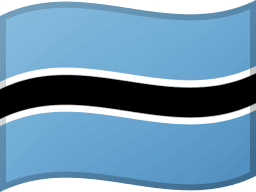
The flag of Botswana is rectangular with a 3:2 aspect ratio, officially adopted on September 30, 1966, the day of the country’s independence. The flag features a light blue background with a black horizontal stripe in the center, flanked by thin white stripes above and below, creating a 'white-black-white' centered design. The layout is simple, without any emblems, stars, or crescents, using only three colors: light blue, black, and white.
Symbolism
The light blue represents water and rain, which are precious natural resources in drought-prone Southern Africa. The national currency 'Pula' is also related to 'rain'. The central black stripe and the surrounding white stripes are widely interpreted as symbols of harmony and coexistence among people of different skin tones, representing peaceful cohabitation among the black majority and other ethnic groups. This symbolism is echoed in the zebra pattern on the country’s coat of arms—where the black and white stripes of the zebra also signify unity among diverse communities. As a result, the Botswana flag is often associated with the imagery of a zebra.
History and Legal Status
Prior to independence, Botswana was a British protectorate and used the colonial flag of Britain. Upon gaining independence in 1966, the country designed this new flag with light blue, black, and white as its main colors to reflect its unique geographical features and aspirations for ethnic harmony. As the flag created at the dawn of independence, it has remained unchanged ever since, becoming an important symbol of national identity. The dimensions, display protocols, and etiquette for the flag are regulated by relevant laws and conventions. It is widely displayed on national holidays, at government buildings, schools, and sporting events, and can be flown in public spaces with due respect.
Botswana Overview
Country Details »Overview of Botswana
Botswana (officially the Republic of Botswana) is a landlocked country in Southern Africa, bordered by Zambia and Zimbabwe to the north, Namibia to the west, and South Africa to the south and southeast. Covering an area of about 581,700 square kilometers, its capital Gaborone is located in the southeastern hilly region near the South African border and serves as the political, economic, and cultural center. Most of Botswana is covered by the Kalahari Desert, yet it is globally renowned as a wildlife paradise thanks to the Okavango Delta in the north and the Chobe River wetlands.
Botswana is one of the more politically stable and well-governed countries in sub-Saharan Africa, operating under a multi-party parliamentary system with English and Setswana as its official languages. Since the discovery of diamonds in the 1960s, the country has achieved rapid economic and infrastructure development, supported by mining revenues, often referred to as 'Africa’s success story'.
Geography and Climate
Located on the inland plateau of Southern Africa, Botswana has an average elevation of about 1,000 meters. The Okavango River in the northwest fans out across the desert to form the world’s largest inland delta—the Okavango Delta—a maze of wetlands, waterways, and islands teeming with wildlife. The Chobe River and Chobe National Park in the northeast are famed for their vast elephant population. The Makgadikgadi Pans in the central region are among the world’s largest salt flats, filling with water in the rainy season and drying up in the dry season. The Kalahari Desert in the southwest is the traditional homeland of the San people (Bushmen), while the Tsodilo Hills in the northwest preserve numerous ancient rock paintings.
The climate is predominantly tropical savanna and semi-arid. The dry season from May to September (local winter) features cool, dry weather with significant temperature variations between day and night, sparse vegetation, and wildlife gathering around water sources—making it the prime time for wildlife viewing. The rainy season from October to April (local summer) brings higher temperatures, greener landscapes, and excellent birdwatching opportunities, but some dirt roads may become impassable, and water levels in the Delta as well as access methods vary with the seasons.
Historical Background
The earliest inhabitants of Botswana were the San people (also known as Bushmen), later joined by various Tswana tribes who shaped the region’s culture. In the 19th century, facing pressure from Boer settlers and colonial forces, Tswana chiefs sought British protection, leading to the establishment of the Bechuanaland Protectorate in 1885. On September 30, 1966, Botswana gained peaceful independence, with Seretse Khama becoming its first president.
At independence, Botswana was one of the poorest countries in the world. However, the discovery of large diamond deposits in Orapa and other areas in 1967 led to rapid growth in national income. The government-formed Debswana company, a joint venture with De Beers, has long dominated diamond mining. Diamond revenues have been reinvested in infrastructure, education, and healthcare, enabling Botswana to achieve rapid development while maintaining political stability, earning it recognition as a model of governance and economic progress in Africa.
Economy and Currency
The diamond industry is the cornerstone of Botswana’s economy. The government and mining companies generate substantial revenue through profit-sharing and joint ventures. Other minerals include copper-nickel and soda ash. In recent years, Botswana has actively pursued economic diversification, developing high-end tourism, livestock farming, and financial services to reduce dependence on diamonds. Low-volume, high-value luxury safari tourism is a key highlight, emphasizing minimal environmental impact and small visitor numbers.
The official currency is the Pula (currency code BWP, symbol P), with 1 Pula equal to 100 thebe. Introduced in 1976 to replace the South African Rand, the Pula marked a significant step in establishing Botswana’s independent monetary system. 'Pula' means 'rain' in Setswana, and for drought-prone Botswana, rain is the most precious blessing. The currency’s name reflects the nation’s hope for rainfall and prosperity.
Culture and Society
Botswana’s society is predominantly Tswana, with several other ethnic groups including the San people. Traditionally, tribal communities discuss public affairs and resolve disputes at the 'kgotla' (communal meeting place), a practice of consensus-based governance that remains a cultural foundation for the country’s political stability. English is the official language, while Setswana is widely spoken in daily life, often blending with English in conversation.
The diet mainly includes cornmeal porridge (bogobe or pap), stewed beef or lamb, beans, and pumpkin. Grilled meats (seswaa and braai) are common during festivals and gatherings. Cattle hold deep cultural significance, symbolizing wealth and status. Botswana is also known for its wildlife conservation efforts and low-density tourism, emphasizing sustainable use of natural resources.
Tourism Overview
Botswana is a global leader in high-end luxury safari tourism, offering small-group, low-impact, and immersive travel experiences. The Okavango Delta and Moremi Game Reserve are highlights, where visitors can explore waterways by mokoro (dugout canoe) to observe elephants, hippos, and lion prides up close. Chobe National Park is home to one of the world’s largest elephant populations, with options to view wildlife by boat or vehicle. The Central Kalahari Game Reserve and Tsodilo Hills showcase desert landscapes, ancient rock art, and San culture.
The dry season (May to September) is the peak time for wildlife viewing and the busiest period, requiring advance bookings for camps and domestic flights. The rainy season (November to April) is ideal for birdwatching, photography, and enjoying lush scenery, with relatively lower prices, though some roads and Delta activities may be limited. Botswana is a high-cost destination, with most itineraries centered around packaged safari tours.
Botswana Travel Guide
All Guides »Botswana Travel Quick Guide: Visas, Best Time to Visit, Safari Budget & Etiquette
Understand visas, seasons, budgets, and camp etiquette to enjoy a hassle-free lo...
8-Day Botswana Itinerary: Maun — Okavango — Salt Pans — Chobe 8 days
Connecting Maun and Kasane, this classic safari route links the Delta, salt pans...
Botswana 4-Day Short Trip: Elephant Viewing in Kasane and Chobe 4 days
See Plenty of Elephants Even with Limited Time: Base Yourself in Kasane, Focus o...
Essential Attractions in Botswana: Deltas, Salt Flats, and Desert Rock Art
From the world’s largest inland delta to San rock art and Chobe’s elephant herds...
Botswana Food Guide: Braai, Pap, and Bush Camp Meals
The flavors of Botswana—centered around pap (maize porridge), stews, and grilled...
Travel Guide to Transportation in Botswana: Light Aircraft, 4x4s, and Self-Driving Tips
Accessing the delta and protected areas mostly relies on light aircraft and 4x4 ...