Nigeria Flag
The proportions, colors, and history of Nigeria's flag - a banner that tells Nigeria's own story.
| Flag | Nigeria Flag |
|---|---|
| Country | Nigeria |
| Capital | Abuja |
| Continent | Africa |
| Official Languages | English |
| Currency | Nigerian Naira (NGN) |
| Dialling Code | +234 |
Nigeria Flag Meaning
Flag Design
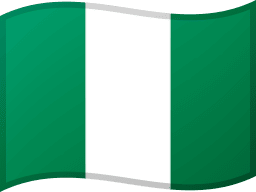
The Nigerian flag consists of three vertical equal green-white-green stripes with a 1:2 width-to-length ratio. The central stripe is white, flanked by two green stripes of equal width. There are no emblems or additional patterns on the flag, giving it a very simple and clean design that distinguishes it from many other African flags that incorporate national coats of arms. Because of its simplicity, the flag is highly recognizable and often appears on local clothing and various souvenirs.
Meaning
The green color symbolizes Nigeria’s agriculture and abundant natural resources, as well as the land and forests that sustain the nation. The white in the center represents peace and unity. The equal arrangement of the three colors signifies equality and coexistence among Nigeria’s diverse ethnic groups, religions, and regions, reflecting the collective aspiration of this multicultural nation for harmony and solidarity. Unlike many African flags, Nigeria’s does not feature a national emblem or weapon imagery, a restraint seen as a reflection of its commitment to simplicity and neutrality.
History and Legal Status
The Nigerian flag was designed shortly before independence. In 1959, a design by then-student Michael Taiwo Akinkunmi won a national competition. His original submission featured a red sun on a green background, but the judging committee removed the sun, adopting the simplified green-white-green design. On October 1, 1960, Nigeria’s Independence Day, the flag was officially hoisted and has been in use ever since. Relevant laws and official guidelines specify the proportions, colors, and proper methods for displaying the flag. The flag’s designer, Akinkunmi, is remembered fondly by Nigerians, and commemorative statues and events honoring his contribution continue to be referenced.
Nigeria Overview
Country Details »Nigeria Overview
Nigeria (officially the Federal Republic of Nigeria) is located on the northern coast of the Gulf of Guinea in West Africa, bordered by Benin to the west, Niger to the north, Chad to the northeast, Cameroon to the east, and the Atlantic Ocean’s Gulf of Guinea to the south. With a land area of about 924,000 square kilometers and a population of approximately 220 million, it is the most populous country in Africa. The capital is Abuja, which replaced coastal Lagos in 1991; Lagos remains the country’s largest city and commercial hub and is one of Africa’s biggest metropolitan areas. Nigeria operates as a federal system, consisting of 36 states and the Federal Capital Territory, with English as the official language.
Nigeria is a classic multi-ethnic nation, home to over 250 ethnic groups and more than 500 languages. The three dominant ethnic blocs are the Yoruba, Igbo, and Hausa-Fulani. This diverse makeup brings a rich variety of languages, religions, cuisines, and festivals, contributing to strong cultural diversity across the country.
Geography and Climate
Nigeria’s terrain shows distinct zonal differences from south to north: the south consists of tropical rainforests and the Niger Delta, the main oil and gas producing regions; the central part includes hills and the Jos Plateau, featuring higher elevation and cooler climates; the north is made up of savannas and semi-arid zones, nearing the edge of the Sahara Desert. The Niger and Benue Rivers converge within Nigeria and flow southward into the Gulf of Guinea, serving as vital lifelines for agriculture and urban development along their banks.
The climate is generally hot, varying by latitude: the southern tropical rainforest zone is humid and rainy year-round; the central savanna zone has distinct dry and wet seasons; the north is semi-arid with long dry seasons. The dry season runs from November to March, when the Harmattan winds from the Sahara bring dry, dusty conditions. The rainy season lasts from April to October, with the heaviest rainfall in the south. Travel is generally more comfortable during the dry season, though travelers should be aware of significant temperature drops at night and in the early morning in the north during this period.
Historical Background
The region now known as Nigeria has a long and ancient history. The Nok culture of the first millennium AD, known for its terracotta sculptures and early ironworking, is considered an important origin of West African civilization. Later, the Benin Kingdom became famous for its exquisite bronze art, while empires such as Oyo, Kanem-Bornu, and the Sokoto Caliphate rose to prominence. Starting in the 15th century, European traders and powers—especially the Portuguese and British—arrived, and the coastal regions were heavily involved in the transatlantic slave trade for centuries.
By the late 19th century, Britain gradually took control of the area and merged the Northern and Southern Protectorates into the Colony of Nigeria in 1914. Nigeria gained independence on October 1, 1960, and became a republic in 1963. Since then, the country experienced the Biafran Civil War from 1967 to 1970 and a prolonged period of military rule, until the restoration of civilian government in 1999, which continues to this day. The discovery and export of oil significantly transformed Nigeria’s economy but also led to heavy dependence on volatile global oil prices.
Economy and Currency
Nigeria is one of Africa’s leading economies, with petroleum and natural gas being the most important sources of foreign exchange. It is also a member of the Organization of the Petroleum Exporting Countries (OPEC). In addition to energy, sectors such as agriculture (cassava, yams, cocoa, peanuts), telecommunications, wholesale and retail trade, finance, and the creative industries—including the globally recognized Nollywood film industry and Afrobeat music—play significant roles. The official currency is the Nigerian Naira (NGN), issued by the Central Bank of Nigeria. In recent years, the Naira has experienced significant exchange rate fluctuations and high inflation, so travelers should monitor real-time rates and plan cash needs accordingly.
Culture and Society
Nigerian culture is known for its dynamism and diversity. Nollywood is one of the world’s most prolific film industries, and Afrobeat music continues to gain international popularity, with Fela Kuti’s pioneering Afrobeat sound having a lasting global influence. Cultural highlights include the Osun-Osogbo Sacred Grove and mask festivals of the Yoruba, Islamic traditions in the Hausa regions, and the festivals and masquerade dances of the Igbo. Traditional cuisine centers around rice, cassava-based dishes, and spicy stews. Street scenes are enlivened by colorful wax-print fabrics, flowing traditional garments, and vibrant headwraps.
Tourism Overview
Nigeria boasts a wealth of natural and cultural attractions: Zuma Rock near Abuja is a massive freestanding monolith; the Osun-Osogbo Sacred Grove and Sukur Cultural Landscape are UNESCO World Heritage Sites; Kano preserves ancient city walls and palaces; and Lagos features a lively music, arts, and seaside scene. However, it’s important to note that Nigeria’s security situation varies significantly by region. States in the northeast such as Borno, Yobe, and Adamawa, as well as parts of the northwest and central-north, face elevated risks of terrorist attacks, armed kidnappings, and intercommunal violence. The Niger Delta region also presents security and kidnapping concerns. The Ministry of Foreign Affairs’ Consular Protection Center has issued multiple warnings advising against travel to high-risk areas. If travel is essential, stick to safer cities and established routes, stay updated on consular advisories, purchase insurance covering emergency medical care and evacuation, and avoid traveling alone at night or in remote areas.
Nigeria Travel Guide
All Guides »Nigeria Travel Quick Guide: Visa Application, Best Time to Visit, Budget, and Safety Tips
Find out how to apply for a Nigerian visa, the best time of year to visit, your ...
Classic 8-Day Nigeria Itinerary: Lagos, Osun-Osogbo Sacred Grove & Abuja 8 days
Centered around Lagos and Abuja, this itinerary weaves together urban life, art,...
Nigeria 4-Day Itinerary: In-Depth Exploration of Lagos – City, Art, and Coastline 4 Days
Short on time? Focus on Lagos: Break the city into zones—Island, New Town, Beach...
Essential Attractions in Nigeria: Lagos Metropolis, Osun Sacred Grove, and Ancient Cities
Explore Nigeria’s top attractions by city—from the vibrant Lagos metropolis and ...
A Guide to Nigerian Cuisine: Jollof Rice, Suya, and Cassava-Based Dishes
Discover Nigeria’s most iconic flavors—from jollof rice and suya to cassava-base...
Complete Guide to Transportation in Nigeria: Airport Transfers, Ride-Hailing, and Domestic Flights
Understanding how to get from the airport to the city, using ride-hailing apps, ...