Puerto Rico Flag
The proportions, colors, and history of Puerto Rico's flag - a banner that tells Puerto Rico's own story.
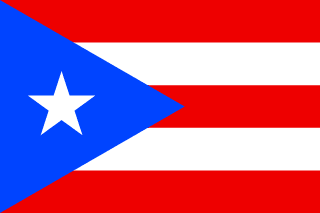
| Flag | Puerto Rico Flag |
|---|---|
| Country | Puerto Rico |
| Capital | San Juan |
| Continent | North America |
| Official Languages | Spanish, English |
| Currency | U.S. Dollar (USD) |
| Dialling Code | +1-787、+1-939 |
Puerto Rico Flag Meaning
Flag Design
The flag of Puerto Rico is rectangular, with a 2:3 aspect ratio. It features five alternating red horizontal stripes and four white horizontal stripes, with a blue equilateral triangle on the hoist side. The triangle’s base aligns with the hoist edge, and its apex points toward the center of the flag, rendered in a deep navy blue. At the center of the triangle is a white five-pointed star, pointing upward. The design shares lineage with the U.S. Stars and Stripes but is instantly recognizable due to its deeper blue tones and single star.
Meaning
The red stripes symbolize the blood shed for freedom and the people’s passion; the white stripes represent human rights, liberty, and the victories and peace of citizens; the blue triangle stands for the surrounding Caribbean Sea and sky; and the white star symbolizes Puerto Rico itself—a star of freedom rising between sea and sky. Together, the flag embodies the people’s aspirations for liberty and dignity.
History and Legal Status
The flag was designed in 1895 by Puerto Rican revolutionaries in New York, drawing inspiration from Cuban and Dominican flags and echoing the traditions of the 1868 Grito de Lares revolt. Long banned as a symbol of the independence movement, it gained official status alongside the national anthem upon the establishment of the commonwealth in 1952. In 1995, legislation further standardized its color specifications. Today, the red-white-blue single-star flag is ubiquitous across government buildings, sporting events, street art, and pop culture, serving as the most vivid emblem of Puerto Rican identity. In Old San Juan, it also appears frequently in murals and souvenirs.
Puerto Rico Overview
Country Details »Puerto Rico Overview
Puerto Rico is an island entity located at the eastern end of the Greater Antilles in the Caribbean Sea, separated from the U.S. Virgin Islands by a strait to the east and about 100 kilometers across the sea from the Dominican Republic to the west. It is important to note that Puerto Rico is not an independent sovereign state but a U.S. unincorporated territory: its residents are U.S. citizens, but the territory has only one non-voting resident commissioner in the U.S. House of Representatives, and its inhabitants do not pay federal income tax nor can they vote in U.S. presidential elections. Entry and customs follow U.S. regulations, meaning that for foreign tourists, visiting Puerto Rico is considered entering U.S. territory. Covering an area of about 9,104 square kilometers, it has a population of about 3.2 million. Its capital, San Juan, is one of the oldest European colonial cities in the Caribbean and a regional hub for shipping and finance.
Geography and Climate
Puerto Rico is primarily a mountainous island stretching about 170 kilometers from east to west, with the Central Mountain Range reaching its highest peak, Cerro de Punta, at approximately 1,338 meters. The northern coast features plains and karst hills rich in caves. Northeastern El Yunque National Forest is the only tropical rainforest in the U.S. National Forest System, home to numerous waterfalls and observation towers. Nearby Vieques Island boasts Mosquito Bay, known as the brightest bioluminescent bay in the world, while Culebra Island’s Flamenco Beach consistently ranks among the world’s best beaches. The climate is tropical marine, with temperatures typically ranging from 24–31°C year-round. The dry season runs from December to April, while the hurricane season spans June to November (Hurricane Maria devastated the island in 2017, though power grids and infrastructure have since been gradually restored).
Historical Background
The island was originally inhabited by the Taíno indigenous people. Christopher Columbus arrived during his second voyage in 1493 and named it San Juan Bautista. Spain ruled the territory for over four centuries, constructing the Morro Fort and San Cristóbal Fort in Old San Juan in the 16th century—some of the oldest European fortifications in the Western Hemisphere, designated a UNESCO World Heritage Site in 1983. Following the Spanish-American War in 1898, Spain ceded Puerto Rico to the United States. In 1917, islanders were granted U.S. citizenship, and in 1952, Puerto Rico established its current status as a commonwealth (Estado Libre Asociado in Spanish). Over recent decades, the political status debate (maintaining the status quo, becoming a U.S. state, or seeking independence) has remained a central issue in local public life, with referendums failing to resolve the matter conclusively.
Economy and Currency
Puerto Rico has one of the largest economies in the Caribbean, with pharmaceutical and medical device manufacturing as key industries. Tourism, rum exports, and the rapidly growing digital economy also make significant contributions. The territory does not have an independent currency; the legal tender is the U.S. dollar (USD, symbol $), regulated by the Federal Reserve system, making ATMs, credit cards, and mobile payments identical to those on the U.S. mainland. Apps like Venmo and Zelle are also widely used among residents. Recent fiscal crises and emigration have driven intensified tourism marketing, and prices are generally lower than in major U.S. metropolitan areas.
Culture and Society
Puerto Rico is a hub of Spanish-Caribbean culture: Spanish and English are both official languages, though Spanish dominates daily life. It is one of the birthplaces of salsa music and the global cradle of reggaeton, with global superstars like Bad Bunny and Daddy Yankee hailing from the island. The cuisine blends Spanish, African, and Taíno elements, with mofongo (garlic plantain fritters), lechón (roast suckling pig), and arroz con gandules (pigeon peas and rice) forming the culinary core. The world’s largest rum distillery, Bacardi, is located across the bay from San Juan, where the piña colada cocktail was also invented.
Tourism Overview
Puerto Rico combines American convenience with Caribbean flair, offering a “two-in-one” travel experience. Must-sees include the blue cobblestone streets and colorful colonial buildings of Old San Juan, as well as the kite-flying lawn at El Morro Fort. Just an hour east lies El Yunque Rainforest for hiking, while a night ferry from Fajardo takes you into Mosquito Bay to watch oars stir up blue light. A 20-minute flight away are Vieques Island’s wild horses and bioluminescent bays, plus Culebra Island’s snorkeling paradise. With convenient car rentals, a well-developed road network, and U.S.-standard services minus the visa hassle, it’s a top choice for Caribbean independent travel.
Puerto Rico Travel Guide
All Guides »Puerto Rico Travel Quick Guide: U.S. Visa Requirements, Best Time to Visit, Budget, and Etiquette
Understand the commonwealth status and U.S. visa rules first, then check out dut...
Classic 7-day Puerto Rico itinerary: Old San Juan Forts — El Yunque Rainforest — Bioluminescent Bays of Vieques 7 days
A three-part week-long journey: historic Old San Juan, El Yunque Rainforest and ...
Puerto Rico 4-Day Short Trip: Old San Juan Fortresses & Eastern Rainforest Highlights 4 days
Limited vacation time? Focus on two top draws: the UNESCO-listed Old San Juan fo...
Must-visit attractions in Puerto Rico: A guide to forts, rainforests, and bioluminescent bays
From the oldest fort in the Western Hemisphere to the world’s brightest biolumin...
Puerto Rico Food Guide: Mofongo, Lechón Asado, and Piña Coladas
A Caribbean Kitchen of West African, Taino, and Spanish Fusion: How to Order Mof...
Complete Guide to Transportation in Puerto Rico: Car Rental, Old San Juan Transit, and Island Hopping
What documents are needed to rent a car, how to get around Old San Juan, whether...