Ghana Flag
The proportions, colors, and history of Ghana's flag - a banner that tells Ghana's own story.
| Flag | Ghana Flag |
|---|---|
| Country | Ghana |
| Capital | Accra |
| Continent | Africa |
| Official Languages | English |
| Currency | Ghanaian Cedi (GHS) |
| Dialling Code | +233 |
Ghana Flag Meaning
Flag Design
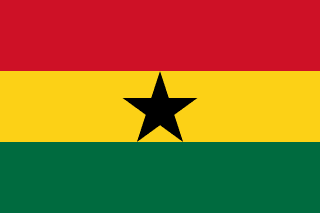
The flag of Ghana consists of three equal horizontal stripes of red, yellow, and green from top to bottom, with a black five-pointed star in the centre of the yellow stripe. The flag has a 2:3 aspect ratio. The three equal horizontal bands and the centrally placed black star make it highly recognisable and one of the most iconic flags in Africa. The flag’s clean layout and straight edges ensure easy identification whether flown or printed.
Meaning
The red symbolises the blood shed for independence, yellow represents Ghana’s rich gold and mineral resources, and green stands for the lush forests and fertile land. The black star symbolises African freedom and the dignity of the African continent and its people. The red, yellow, and green colour scheme has been adopted by many other African nations and is known as the Pan-African colours, with Ghana’s flag often considered one of the sources of Pan-African symbolism. For Ghanaians, the black star is both a national emblem and a spiritual symbol of African unity and pride.
History and Legal Status
The Ghanaian flag was first adopted upon the country’s independence in 1957. Its design was heavily influenced by the flag of the Black Star Line, founded by Pan-Africanist Marcus Garvey, with the black star thus becoming a symbol of African freedom and self-determination. Ghana retained the flag after becoming a republic in 1960, and although there have been minor adjustments over the years, the current red-yellow-green horizontal design with the black star has remained unchanged. Today, the flag is prominently displayed on Independence Day, at government buildings, and during sporting events. The black star is also incorporated into imagery such as the Ghana national football team. As the first independent national flag in sub-Saharan Africa, its design has had a lasting influence and has been emulated by many other countries.
Ghana Overview
Country Details »Ghana Overview
Ghana is located in West Africa along the northern coast of the Gulf of Guinea, bordered by Côte d'Ivoire to the west, Burkina Faso to the north, Togo to the east, and the Atlantic Ocean to the south. Covering an area of approximately 238,500 square kilometres, its capital Accra is the largest city and the political and economic hub. The official language is English, with many local languages such as Ewe and Twi also widely spoken. Originally called the "Gold Coast," Ghana became the first country in sub-Saharan Africa to gain independence from colonial rule in 1957 under the leadership of Kwame Nkrumah, marking a significant moment in African modern history.
Ghana has enjoyed long-term relative political stability and is regarded as one of the models for governance and economic development in West Africa. The country is divided into 16 regions, with major ethnic groups including the Ashanti, Ewe, and Ga-Dangme. It is known for its high level of social inclusiveness, making it a relatively friendly travel destination in West Africa.
Geography and Climate
Ghana has generally flat terrain, with some hilly areas in the east and the Ashanti Highlands. The highest peak is Mount Afadja at around 885 metres. One of the country’s most important geographical features is Lake Volta, the world’s largest artificial lake, created by the Akosombo Dam on the Volta River. The lake covers about 8,500 square kilometres and serves purposes such as power generation, irrigation, and transportation, forming a vital part of Ghana’s energy and transport infrastructure.
The climate is tropical, with the southern coastal and forest areas being hot and humid, while the north experiences a tropical savanna climate and is hotter during the dry season. The rainy season generally runs from April to October, and the dry season from November to March. In the north, the dry season is often affected by the Harmattan winds from the Sahara, bringing dry air and dust. The most comfortable time to visit is from November to March, with smaller temperature variations throughout the year in the south.
Historical Background
The region now known as Ghana was historically influenced by the Ghana Empire, Mali Empire, and Songhai Empire, and has been involved in trans-Saharan trade of gold and salt since the Middle Ages. In the 17th century, the Ashanti Kingdom rose in Kumasi, with its royal symbol, the Golden Stool, regarded as the embodiment of the Ashanti nation’s soul and remaining one of Ghana’s most important cultural symbols. Portuguese explorers arrived on the coast in 1471, followed by the Dutch, British, and others who established trading posts. The trade of gold, ivory, and slaves profoundly shaped local society.
In the 19th century, the British gradually established the area as the Gold Coast colony. On March 6, 1957, Ghana declared independence under Kwame Nkrumah, becoming the first sub-Saharan African country to break free from colonial rule and a key symbol of the Pan-African movement. Since then, Ghana has undergone multiple changes in government, but since 1992 it has operated under a multi-party system with growing political stability. In 2019, the government launched the "Year of Return" initiative to encourage members of the African diaspora to return to their ancestral lands, drawing global attention as a model for African diaspora policy.
Economy and Currency
Ghana’s economy is based on agriculture, mining, and services. Gold, cocoa, and oil are the three main exports. Ghana has long been one of the world’s leading producers and exporters of cocoa, and its gold production ranks among the highest in Africa. In recent years, growth in the oil, gas, and service sectors has accelerated, though currency fluctuations and inflation continue to impact daily life. The national currency is the Ghanaian Cedi (GHS), issued by the Bank of Ghana, and travellers should be mindful of exchange rate volatility.
Culture and Society
Ghana is home to diverse ethnic groups. The Ashanti royal court traditions, handwoven Kente cloth, Adinkra symbols representing proverbs and wisdom, and various drumming and ceremonial practices create a rich cultural tapestry. Kente cloth is renowned for its vibrant colours and intricate patterns, with each design often conveying a proverb, making it one of Ghana’s most iconic handicrafts. The main religions are Christianity, Islam, and traditional beliefs. Ghanaians are generally warm, outgoing, musical, and dance is common during festivals and funerals.
The staple diet includes cassava, plantains, and yams. Dishes like fufu (pounded cassava and plantain dough served with soup) and jollof rice (tomato-spiced rice) are national favourites, often accompanied by peanut soup, palm nut soup, or spicy fish stews. Street food such as roasted sweet potatoes, corn, and fried plantains are affordable and offer a great way to experience local life.
Tourism Overview
Ghana is one of the more developed tourism destinations in West Africa. The capital Accra features landmarks such as Independence Square, the Black Star Gate, Jamestown Lighthouse, and the historic city centre, as well as lively districts like Makola and Osu. The castles in Cape Coast and Elmina are UNESCO World Heritage Sites that bear witness to the dark history of the transatlantic slave trade. Kakum National Park’s canopy walkway, Lake Volta and the Akosombo Dam, and the Ashanti palaces and Golden Stool Museum in Kumasi showcase the country’s natural beauty and cultural depth. With its coastal charm, rich culture, and relatively convenient transport, Ghana is becoming a popular starting point for independent travel in West Africa.
Ghana Travel Guide
All Guides »Ghana Travel Quick Guide: Visa, Seasons, Budget & Social Etiquette
Get all the essentials—visa requirements, best travel times, daily costs, and We...
Ghana 7-Day Classic Route: Accra – Cape Coast – Kumasi – Lake Volta 7 days
From the capital to a UNESCO World Heritage Site of the transatlantic slave trad...
Ghana 4-Day Short Trip: Accra and the Cape Coast World Heritage Tour 4 days
Even with limited time, you can explore both the capital’s culture and two slave...
Essential Attractions in Ghana: Accra, the Cape Coast, and Kumasi
A city-by-city guide to Ghana’s top sights, from Independence Square to slave tr...
Ghana Food Guide: Fufu, Jollof Rice, and Street Eats
From national staples to roadside grilled delights, explore Ghana’s bold flavors...
Ghana Transport Guide: Kotoka Airport, Tro-Tros, and Intercity Buses
A complete guide to getting from the airport into town, using local minibuses, a...