Afghanistan Flag
The proportions, colors, and history of Afghanistan's flag - a banner that tells Afghanistan's own story.
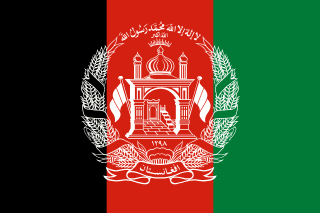
| Flag | Afghanistan Flag |
|---|---|
| Country | Afghanistan |
| Capital | Kabul |
| Continent | Asia |
| Official Languages | Pashto, Dari |
| Currency | Afghani (AFN) |
| Dialling Code | +93 |
Afghanistan Flag Meaning
National Flag Design
Afghanistan has changed its national flag more frequently than almost any other country in modern history, using over twenty different flags in the approximately 120 years since 1901. From 2004 to 2021, the Islamic Republic of Afghanistan used a flag with three vertical black, red, and green bands of equal width, featuring a white national emblem in the center. The emblem included a mosque with a mihrab and minbar, surrounded by wheat sheaves, a rising sun above, and a ribbon with the Islamic calendar year below. After the August 2021 regime change, the de facto authorities adopted a white flag with the Islamic declaration of faith (Shahada) written in the center. This flag currently has varying levels of international recognition, with differing attitudes among countries. This description is purely factual.
Symbolism
In the traditional black-red-green tricolor flag, black is often interpreted as commemorating historical suffering and dark times, also associated with the Abbasid Caliphate. Red symbolizes the blood and struggle for national independence and freedom, while green represents Islamic faith, as well as land and hope. The mosque and minbar in the emblem signify religious faith and worship spaces, wheat sheaves symbolize agriculture and abundance, the rising sun signifies light and renewal, and the ribbon’s year references key historical moments. Different versions of the flag vary slightly in detail and symbolism, reflecting Afghanistan’s turbulent modern history.
History and Legal Status
The frequent changes to Afghanistan’s flag are closely tied to its political shifts in modern times. The black-red-green tricolor was first adopted during the reforms of Amanullah Khan in the 1920s. Subsequent regime changes often adjusted the flag’s band orientation, proportions, and insignia. New flag designs appeared in 1992, 1996, 2001, and 2004. Since August 2021, the actual use and legal status of the flag remain subject to differing interpretations domestically and internationally, with no consensus yet reached. Understanding this history helps explain Afghanistan’s complex and recurring national journey.
Afghanistan Overview
Country Details »Overview of Afghanistan
Afghanistan (written as افغانستان in both Pashto and Dari) is a landlocked country in south-central Asia, located at the crossroads of Central and South Asia, with an area of approximately 652,000 square kilometers. It borders Pakistan to the east and south, Iran to the west, and Turkmenistan, Uzbekistan, and Tajikistan from west to east to the north. The Wakhan Corridor in the northeast shares a border with China’s Xinjiang Uygur Autonomous Region in the Pamir Mountains. Afghanistan has no coastline, and its capital is Kabul, located in a basin at the southern foot of the Hindu Kush Mountains, serving as the national center for politics, economy, and culture.
The official languages are Pashto and Dari (Dari is a written variant of Persian), both belonging to the Iranian branch of the Indo-European language family. The country has a population of about 40 million, comprising various ethnic groups such as Pashtuns, Tajiks, Hazaras, and Uzbeks. Islam is the faith of the vast majority of residents. As a mountainous, multi-ethnic country at a key transportation hub, Afghanistan has historically been a meeting point of diverse civilizations, empires, and trade routes.
Geography and Climate
Afghanistan's terrain is dominated by mountains and plateaus, with about three-quarters of the country covered by mountains and hills. The Hindu Kush mountain range runs diagonally from the northeast to the southwest, roughly dividing the country into northern and southern parts. Most mountain passes are over 3,000 meters above sea level, with year-round snow on high peaks. Noshaq Peak (7,492 meters) is the highest point in the country. The north consists of fertile plains and foothills along the upper Amu Darya River, which are the main agricultural areas. The central region is the Hazarajat Plateau, while the southwest includes the Registan Desert and arid zones along the lower Helmand River.
The climate is a typical continental, arid, and semi-arid type, with scarce precipitation and strong evaporation. Winters in the mountains are harsh and snowy, while summers on the plains and in valleys are hot and dry, with large diurnal temperature variations. Spring and autumn are the most temperate seasons of the year. Elevation changes create significant vertical climate differences, profoundly influencing local agricultural practices and lifestyles.
Historical Background
Afghanistan is located at the crossroads of the ancient Silk Road and has a long history. In ancient times, it was part of important regions of the Bactria (Daxia) and Kushan Empires, with Gandharan art profoundly influencing Buddhist spread. It later experienced the rule of the Sassanian Persians, Hephthalites, Arabs and Islamic forces, as well as dynasties such as the Turks and Mongols. From the 9th to 10th centuries, it became a significant stage for Persian and Islamic cultures. In 1504, Babur, the founder of the Mughal Empire, made Kabul his capital.
In 1747, Ahmad Shah Durrani established the Durrani Empire, widely regarded as the foundation of the modern Afghan state. In the 19th century, Afghanistan resisted external forces during the three Anglo-Afghan Wars, becoming a buffer zone in the Great Game between Britain and Russia. In 1979, Soviet troops entered Afghanistan, leading to prolonged conflict. After the civil war in the 1990s, the Taliban came to power in 1996. Governance changed after 2001, with international forces and the national government jointly managing the country for the next two decades. In August 2021, there was another change in governance, with the Taliban returning to power, marking a new phase of national management. These are objective historical facts, and no political evaluation is provided here.
Economy and Currency
Afghanistan's economy is primarily agricultural, with key products including wheat, rice, grapes, pomegranates, apricots, nuts, and saffron. Pomegranates from Kandahar and saffron from Herat are particularly renowned. Handicrafts such as handmade carpets, especially those woven by Turkmen and Afghan tribes, have a long history and are produced in globally recognised carpet-making regions. In mining, Afghanistan is believed to have resources such as copper, iron, lithium, and rare earth elements, but infrastructure and investment constraints limit development. Long-term instability has made the national economy highly reliant on foreign aid, and the financial and banking systems are relatively weak.
The official currency of Afghanistan is the Afghani (currency code AFN, symbol ؋), with 1 Afghani equal to 100 pul (pul), though pul is largely out of circulation due to its low value.
Culture and Society
Afghan culture is deeply influenced by Islamic traditions and tribal social structures. The Pashtun people follow a traditional code of conduct called Pashtunwali, emphasizing hospitality, sanctuary, and honor. Different ethnic groups have unique languages, clothing, music, and festivals but share a strong emphasis on poetry, hospitality, and family ties. Poetry remains an important means of emotional expression for many, and teahouses and markets are key places to observe local social life.
The diet mainly consists of naan (flatbread), pilaf, and grilled meat. The most representative dish is Kabul pilaf (Kabuli pulao), made with rice, lamb, carrot shreds, raisins, and almonds, serving as a festive and guest-hosting staple. Other dishes include steamed dumplings (mantu), baked pastries, kebabs, yogurt products, and fruits and dried fruits play a significant role in meals. Serving tea to guests is common, with a sweet cup often marking the start of a conversation.
Tourism Overview
Afghanistan boasts unique and profound historical and natural landscapes. The Bamiyan Valley once featured two giant standing Buddha statues, destroyed in 2001. The site, along with its caves, mural remnants, and surrounding natural scenery, is now a UNESCO World Heritage Site. Band-e Amir is Afghanistan's first national park, famous for its deep blue barrier lakes in the plateau. The Great Mosque and Citadel in Herat, the Blue Mosque in Mazar-i-Sharif, the ruins in Kandahar and Ghazni, and the alpine scenery of the Wakhan Corridor are also appealing.
It must be objectively stated that Afghanistan's security situation is long-standing and complex. Government authorities in several countries have issued safety advisories recommending that travellers avoid visiting the country. Road, accommodation, medical, and security conditions are unstable, posing high travel risks. Travel is not advised unless necessary. If essential, stay updated with the latest consular alerts from your home country’s foreign ministry and the Afghan embassy or consulate, assess the security risks carefully, choose arrangements with reliable security and credentials, and purchase travel insurance that covers emergency medical treatment and evacuation. Personal safety should always be the top priority.
Afghanistan Travel Guide
All Guides »Afghanistan Travel Quick Guide: Visa, Safety Alerts, Seasons, Budget & Local Etiquette
Before traveling to Afghanistan, it’s essential to understand the security situa...
7-Day Cultural Heritage Route in Afghanistan: Kabul – Bamiyan – Band-e Amir – Herat 7 days
This classic long itinerary starts in Kabul, connects the ruins of the Bamiyan B...
4-Day Short Trip in Afghanistan: Essential Highlights of Kabul City and Nearby Historic Sites 4 days
This short trip, based in Kabul and organized by thematic areas—museums, gardens...
Must-visit attractions in Afghanistan: Bamiyan ruins, Band-e Amir Lake, and Silk Road ancient cities
Categorized by natural wonders, ancient ruins, and Islamic historic cities, this...
Afghanistan Food Guide: Kabul Pulao, Kebabs, Naan, and Saffron-Pomegranate Flavors
From the national dish Kabul Pulao to street kebabs and sweet tea, this guide co...
Complete Guide to Transportation in Afghanistan: Airport Transfers, Private Car Hire, and Road Travel Tips
This guide covers Afghanistan’s main airports and how to get into town, options ...