Iran Flag
The proportions, colors, and history of Iran's flag - a banner that tells Iran's own story.
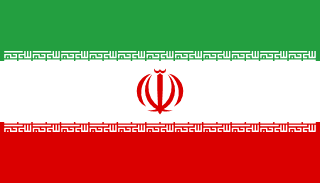
| Flag | Iran Flag |
|---|---|
| Country | Iran |
| Capital | Tehran |
| Continent | Asia |
| Official Languages | Persian |
| Currency | Iranian Rial (IRR) |
| Dialling Code | +98 |
Iran Flag Meaning
Flag Design
The Iranian flag consists of three equal horizontal bands of green, white, and red, in a 4:7 ratio. At the center is the red emblem of Iran. On the borders between green-white and white-red, the phrase "Allahu Akbar" (God is Great) is inscribed in white Kufic script, repeated 11 times on each border, totaling 22 times to represent the 22nd day of the Iranian month Bahman, when the Islamic Revolution succeeded. The white script is legible against both the green and red backgrounds.
The central emblem is an abstract representation of four crescents and a sword, forming a symmetrical design. The upper part resembles two opposing crescents with a vertical sword in the middle, and two more crescents below, which is also interpreted as a calligraphic representation of the word "Allah."
Meaning
Green symbolizes Islam and also represents life and prosperity; white stands for peace and purity; red signifies courage and the blood of martyrs. The central red emblem with its four crescents and sword is seen as a symbol of Islamic faith and sacrifice, with the sword often associated with the defense of justice and belief. The repeated "Allahu Akbar" between the color borders underscores the centrality of religion in national identity and is one of the most distinctive elements of the flag.
History and Legal Status
The green, white, and red colors of the Iranian flag date back to the Constitutional Revolution of the early 20th century. The original flag featured the "Lion and Sun" emblem, a symbol used in Persian flags since the Safavid era and retained during the Pahlavi dynasty. After the 1979 Islamic Revolution, the Lion and Sun was removed. On July 29, 1980, the current flag with the emblem and "Allahu Akbar" inscriptions was officially adopted.
Iran’s constitution governs the use of national symbols. The flag and emblem are prominently displayed at government buildings, schools, military installations, and embassies. Respect for the flag is enforced by law and social custom, and travelers should observe these norms.
Iran Overview
Country Details »Overview of Iran
Iran (Islamic Republic of Iran) is located in the southwest of Asia, in the heart of the Middle East. It borders the Caspian Sea to the north, the Persian Gulf and the Gulf of Oman to the south, Iraq and Turkey to the west, and Afghanistan and Pakistan to the east. It also shares borders with Armenia, Azerbaijan, and Turkmenistan to the north. The country covers an area of about 1.645 million square kilometers, making it one of the larger nations in the Middle East. Its capital, Tehran, is situated at the southern foothills of the Alborz Mountains and serves as the political, economic, and cultural center of the country, with a metropolitan population exceeding 14 million. The official language is Persian, and the population is predominantly Persian, alongside ethnic groups such as Azeris, Kurds, Lurs, and Balochs, forming a diverse society. Shia Islam is the state religion.
Iran is an Islamic republic, with the Supreme Leader holding the highest authority, while the President and Parliament handle executive and legislative functions. The country is rich in oil and natural gas resources and has long been a significant power in the Middle East. After the 1979 Islamic Revolution, the current political system was established. Due to international sanctions related to nuclear issues, Iran faces restrictions in financial and trade interactions with the outside world, which directly affects payment methods and the spending experience for foreign travelers.
Geography and Climate
Most of Iran lies on the Iranian Plateau, characterized by plateaus, mountains, and desert basins. The Zagros Mountain range extends over 1,500 kilometers in the west and southwest, while the Alborz Mountains lie to the north, with Mount Damavand, the highest peak in Iran and the Middle East, rising to 5,610 meters. The central region features the vast Kavir and Lut deserts, with the Lut Desert recording some of the highest land surface temperatures on Earth. The Caspian coast has a narrow strip of humid plains, while the Persian Gulf coast is hot and humid.
The climate is predominantly arid and semi-arid, with significant regional and altitude variations: the Caspian coast receives over 1,000 millimeters of rainfall annually, while central desert areas get less than 100 millimeters. Summers (June–August) in central and southern regions are extremely hot, often exceeding 40°C, while winters (December–February) in the north and western mountains are cold and snowy. Spring and autumn offer mild weather, making them the best times to visit.
Historical Background
Iran is one of the oldest cradles of civilization in the world, historically known as Persia. In the 6th century BCE, Cyrus the Great founded the Achaemenid Empire, creating a vast realm spanning three continents, with its capital Persepolis remaining a significant UNESCO World Heritage Site. The empire was later ruled by the Parthian and Sassanian dynasties before being conquered by Arabs in the 7th century, leading to the gradual spread of Islam. In 1501, the Safavid dynasty established Shia Islam as the state religion, and Shah Abbas moved the capital to Isfahan, constructing magnificent complexes like Imam Square, ushering in a new peak of Persian civilization.
From the 19th to early 20th century, Iran was influenced by and contested among major powers like Britain and Russia. The Pahlavi dynasty was established in 1925, implementing Western-style reforms. The 1979 Islamic Revolution overthrew the monarchy and established the Islamic Republic. From 1980 to 1988, Iran fought an eight-year war with Iraq and has since faced prolonged international sanctions, affecting its economic and social development under significant pressure.
Economy and Currency
Iran’s economy is heavily reliant on oil and natural gas exports, with the country ranking among the top globally in reserves of both. Other sectors, such as automobile manufacturing, petrochemicals, steel, cement, agriculture, and carpet weaving, also have notable presence. Long-standing international sanctions have limited Iran’s access to advanced technology, foreign investment, and international financial services, resulting in high inflation and currency devaluation pressures, with significant gaps between official and market exchange rates.
The official currency is the Iranian Rial (IRR, symbol ﷼). Due to large numerical denominations, locals commonly use the term "toman" (1 toman = 10 rials) in daily transactions. Always confirm whether prices are quoted in rials or tomans to avoid overpaying by tenfold. Sanctions mean international credit and debit cards, including UnionPay, are almost unusable in Iran, so travelers must carry sufficient cash and rely on local exchange services.
Culture and Society
Persian culture has a deep heritage, with poetry being the most revered art form. Works like Ferdowsi’s Shahnameh and collections by Hafez and Saadi are widely known in Iran. Cultural landmarks include the tombs of Hafez and Saadi in Shiraz. Traditional crafts include Persian carpets, miniature paintings, metalwork, and glazed tiles. Iranians place great importance on etiquette, with "taarof" (a form of polite refusal and humility) being a key social custom. Hosts may repeatedly offer and decline hospitality, requiring polite navigation.
The diet centers around rice, grilled meats, stews, and flatbreads. Popular dishes include saffron rice, kebabs, khoresh (stews), and yogurt drinks, while tea is the core beverage for social gatherings. By Iranian law and custom, women must wear headscarves and modest clothing in public, a rule foreign female travelers must also follow. Alcohol is prohibited in public places, and this restriction must be respected.
Tourism Overview
Iran boasts a wealth of historical and architectural heritage: Imam Square (also known as Naghsh-e Jahan Square) in Isfahan is one of the largest city squares in the world, surrounded by the Imam Mosque, Sheikh Lotfollah Mosque, and Ali Qapu Palace. Shiraz’s Pink Mosque (Nasir al-Mulk Mosque) is famous for the interplay of colored light through stained-glass windows. The ruins of Persepolis showcase the grandeur of the Achaemenid Empire. Kashan’s Tabatabaei House and Fin Garden, Yazd’s windcatchers and Zoroastrian Fire Temple, and Tehran’s Golestan Palace and National Museum together paint a vivid picture of this ancient civilization.
It is important to note that due to international sanctions and regional security concerns, travel to Iran involves challenges in payment, visas, and international transport. Some countries have issued travel advisories for the region. Before traveling, consult the latest safety notices from your national foreign affairs department, assess the risks of your itinerary, and prepare adequately in terms of cash, insurance, and communication.
Iran Travel Guide
All Guides »Iran Travel Quick Guide: Visas, Seasons, Budget, Payment Challenges, and Etiquette Taboos
Essential pre-trip information for traveling to Iran: visas and visa on arrival,...
7-day Classic Iran Itinerary: Tehran – Kashan – Isfahan – Yazd – Shiraz 7 days
Traveling south from the capital and connecting Persepolis, Imam Square, the Pin...
Iran 4-Day Short Trip: Classic Ancient Sites in Isfahan and Shiraz 4 days
Limited time? Focus on the highlights: Imam Square and Si-o-se-pol Bridge in Isf...
Must-visit attractions in Iran: Isfahan, Shiraz, Yazd, and Tehran
A city-by-city guide to Iran’s most worthwhile mosques, palaces, ancient cities,...
Iranian Cuisine Guide: A Flavor Map of Saffron Rice, Kebabs, and Stews
From saffron rice with kebabs to slow-cooked stews and street naan bread, this g...
Iran Transportation Guide: Airport Transfers, Domestic Flights, Long-Distance Buses, and Urban Metro Networks
Information on getting from Tehran’s airports to the city, flights between citie...