Serbia Flag
The proportions, colors, and history of Serbia's flag - a banner that tells Serbia's own story.
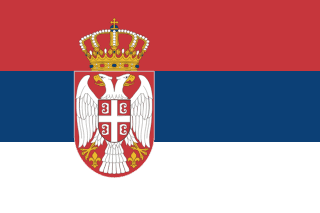
| Flag | Serbia Flag |
|---|---|
| Country | Serbia |
| Capital | Belgrade |
| Continent | Europe |
| Official Languages | Serbian |
| Currency | Serbian Dinar (RSD) |
| Dialling Code | +381 |
Serbia Flag Meaning
Flag Design
The Serbian flag is a horizontal tricolor, with equal-width bands of red, blue, and white from top to bottom, in a 2:3 ratio. On the left side (near the hoist), slightly off-center, is the Serbian coat of arms: a red shield with a white double-headed eagle, beneath which is a smaller shield showing a white cross with four firesteels (ocila) in each quadrant, and a royal crown above the eagle. This emblem distinguishes the flag in official and governmental contexts from similar tricolors.
Meaning
The red, blue, and white colors are Pan-Slavic and have been traditionally used by the Serbian people. They are often interpreted as representing freedom, justice, and peace—or symbolizing the blood shed for nation and faith, the sky, and purity. The white double-headed eagle comes from the medieval Serbian royal heraldry, symbolizing sovereignty, vigilance, and protection. The cross and firesteels on the eagle’s chest reflect Serbia’s Eastern Orthodox heritage, while the crown represents the historical Serbian monarchy. Together, these elements combine national colors, religious roots, and dynastic legacy into one design.
History and Legal Status
The red-blue-white tricolor was widely used during Serbia’s 19th-century struggle for independence and statehood, and it was largely standardized during the Kingdom of Serbia in 1882. After 1945, as part of the Socialist Federal Republic of Yugoslavia, Serbia’s flag included a communist-era red star superimposed on the traditional tricolor. In the 1990s, Serbia reverted to the tricolor without the star, and legal acts in 2004 and 2010 formally defined the flag’s design, proportions, and usage guidelines, specifying that the version with the coat of arms should be used in official contexts.
Today, the flag is prominently displayed at government buildings, schools, sporting events, and national celebrations, especially during Orthodox holidays and international matches. For visitors, it is important to show respect for the flag and emblem, which hold deep meaning for the Serbian people.
Serbia Overview
Country Details »Serbia Overview
Serbia (Serbian: Србија) is a landlocked country in the central part of the Balkan Peninsula in southeastern Europe. It borders Hungary to the north, Romania and Bulgaria to the east, North Macedonia to the south, Montenegro and Bosnia and Herzegovina to the southwest, and Croatia to the west. The country covers an area of approximately 77,400 square kilometers (excluding Kosovo) and has a population of about 6.6 million. Its capital, Belgrade, is located at the confluence of the Sava and Danube rivers. It serves as the national center for politics, economy, culture, and transportation, and is one of the largest cities in the Balkans.
The Serbian ethnic group makes up the majority of the population, while the northern Autonomous Province of Vojvodina is more ethnically diverse, including communities of Hungarians, Slovaks, Croats, and others. The official language is Serbian, which uses both the Cyrillic and Latin alphabets. The dominant religion is Eastern Orthodoxy, and the country’s social culture is strongly influenced by Byzantine and Orthodox traditions. Serbia is a multi-party parliamentary republic and has expressed ambitions to join the European Union. The national currency is the Serbian Dinar (RSD).
Geography and Climate
Serbia’s landscape varies significantly between the north and the south. The northern region of Vojvodina lies within the flat Pannonian Plain, where the Danube, Sava, and Tisza rivers meet. This area is known for its fertile farmland and strong agricultural sector. The central and southern regions consist of hills and mountains, with ranges such as Kopaonik, Tara, and Zlatibor offering typical Balkan scenery of forests and canyons, ideal for hiking and winter sports. The Danube River flows through the country and is an important waterway and national symbol.
Climatically, the north has a temperate continental climate with cold winters and hot summers, and fairly consistent rainfall. The southern and mountainous areas are cooler and wetter, with heavy snowfall in winter. Summers (June to August) can see temperatures in cities exceeding 30°C, making riverside nightlife and music festivals popular seasonal activities. Spring and autumn offer mild, pleasant weather, suitable for both city tours and countryside trips. Winters (December to February) are cold, and the mountain ski resorts are fully operational during this period.
Historical Background
The Serbian people founded the influential Nemanjić Dynasty during the Middle Ages. Under the rule of Stefan Dušan in the 14th century, the Serbian Empire expanded across much of the Balkans, leading to a flourishing of Orthodox monasteries and religious art. The 1389 Battle of Kosovo marked a pivotal moment in Serbian history, after which the region gradually came under Ottoman rule. From the mid-15th century, Serbia endured nearly four centuries of foreign domination, an experience that has deeply influenced its national identity and cultural heritage.
In the early 19th century, Serbia staged two major uprisings, gradually achieving autonomy and formal independence in 1878. A kingdom was established in 1882. The assassination of Archduke Franz Ferdinand in Sarajevo in 1914 triggered the outbreak of World War I. After the war, Serbia played a leading role in forming the Kingdom of Serbs, Croats, and Slovenes, which was later renamed the Kingdom of Yugoslavia. Following World War II, Josip Broz Tito established the Socialist Federal Republic of Yugoslavia, with Belgrade as its capital. This era saw significant industrial growth and modernization.
In the early 1990s, Yugoslavia dissolved, and Serbia became part of the Federal Republic of Yugoslavia and later Serbia and Montenegro. In 1999, the Kosovo conflict led to NATO intervention, resulting in political instability. Montenegro declared independence in 2006, leaving Serbia as a sovereign state. In 2008, Kosovo unilaterally declared independence, although Serbia does not recognize this move, and the issue remains unresolved. In the 21st century, Serbia has worked towards greater stability. Since 2017, it has had a mutual visa exemption agreement with several countries, supporting increased tourism and regional cooperation.
Economy and Currency
Serbia has a service-based economy, with manufacturing, agriculture, and information technology as key sectors. In recent years, industries such as automotive components, food processing, and software outsourcing have grown rapidly. Cities like Belgrade and Novi Sad host a number of technology companies and startups. The official currency is the Serbian Dinar (RSD, symbol дин), issued by the National Bank of Serbia. Its value fluctuates according to market conditions and is generally lower than that of most Western European currencies, making it relatively affordable for visitors.
Culture and Society
Serbian society is known for being friendly and sociable, with a strong coffeehouse culture, lively nightlife along the rivers, and a rich tradition of festivals. Belgrade is often referred to as the “city that never sleeps.” Eastern Orthodox Christianity plays a central role in cultural life, with holidays such as Christmas (celebrated on January 7th according to the Julian calendar), Easter, and Slava (a celebration of the family’s patron saint) being widely observed. Serbian cuisine features grilled meats, baked goods, and dairy products. Popular dishes include pljeskavica (grilled meat patty), ćevapi (grilled minced meat sausages), sarma (cabbage rolls), and gibanica (cheese pie). Rakija (a strong fruit brandy) is commonly served with meals and as a gesture of hospitality.
Tourism Overview
Serbia offers a wide variety of travel experiences. Belgrade combines historic landmarks such as Kalemegdan Fortress, which overlooks the confluence of two major rivers, with the trendy restaurants and live music venues of Skadarlija. Ada Ciganlija, an island in the Sava River, is a favorite urban destination for swimming and relaxation in the summer. Novi Sad, located in the north, is well known for its Petrovaradin Fortress and the popular EXIT music festival, earning it the nickname “Athens of Serbia.” Other attractions include the Art Nouveau architecture of Subotica, Roman and Ottoman ruins in Niš, the mountainous landscapes of Zlatibor and Tara National Park, and the traditional wooden houses along the Drina River.
With visa-free travel options, affordable prices, and a welcoming atmosphere, Serbia is a popular destination on the Balkan travel route. Travelers can enjoy city exploration, music festivals, or outdoor adventures in the mountains.
Serbia Travel Guide
All Guides »Serbia Travel Quick Guide: Visa-Free Entry, Best Seasons, Budget & Orthodox Etiquette
How Serbia’s visa exemption works, the best time to visit, daily costs, and loca...
Serbia 7-Day Classic Itinerary: Belgrade, Novi Sad, and Mountain Leisure 7 days
From a castle at the confluence of two rivers to a city of music festivals and s...
Serbia 4-Day Short Trip: A Dual-City Tour of Belgrade and Novi Sad 4 days
Connect the capital and the city of festivals into a breezy short itinerary. Exp...
A Must-Visit Attractions List in Serbia: Riverside Castles, Music Festival Cities, and Mountain Scenery
Discover Serbia’s top attractions organized by city and region, with highlights ...
A Guide to Serbian Specialty Foods: Charcoal-Grilled Meat Patties, Grilled Sausages, and Pomace Brandy
From pljeskavica meat patties and ćevapi grilled sausages to rakija pomace brand...
Complete Guide to Transportation in Serbia: Airport Transfers, Intercity Trains & Buses, and Local Transit
From getting into the city from Belgrade Airport, to intercity trains and buses,...