Panama Flag
The proportions, colors, and history of Panama's flag - a banner that tells Panama's own story.
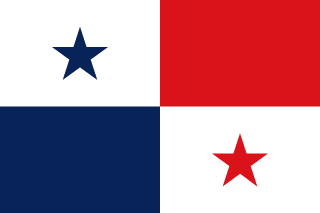
| Flag | Panama Flag |
|---|---|
| Country | Panama |
| Capital | Panama City |
| Continent | North America |
| Official Languages | Spanish |
| Currency | Panamanian balboa (PAB) |
| Dialling Code | +507 |
Panama Flag Meaning
Flag Design
The Panamanian flag is rectangular, with a 2:3 aspect ratio. The flag is divided into four equal smaller rectangles in a checkerboard pattern: the top left is white with a blue five-pointed star, the top right is red, the bottom left is blue, and the bottom right is white with a red five-pointed star. The entire flag consists of the colors blue, red, and white, along with the two blue and red stars, featuring a symmetrical and highly recognizable design.
The four smaller squares are of equal size, with the two white squares diagonally opposite each other, and the two five-pointed stars placed at the centers of the white squares. Red and blue occupy opposite corners, with strong yet balanced contrast, giving a chessboard-like appearance from a distance, while the relationship between the stars and color blocks can be clearly distinguished up close.
Meaning
Blue and red symbolize the two traditional political forces in Panama—the Conservative Party and the Liberal Party—and also represent their cooperation during the nation-building process. White symbolizes peace and purity, positioned diagonally on the flag, signifying the two parties working together to maintain national peace. The white square with the blue star in the top left and the white square with the red star in the bottom right represent the ideals and virtues of the two parties, as well as the country’s unique position between two oceans. The symmetrical four-grid layout reflects unity and balance.
History and Legal Status
The current Panamanian flag was designed by the son of the first President, Manuel Amador Guerrero, and was adopted after Panama’s independence in 1903. It was officially legislated in 1904, and its specifications and usage were further clarified by law in 1949, after which it has remained largely unchanged. The flag is widely displayed on Independence Day (November 3), Flag Day (November 4), and various official and sporting occasions, as well as on passports and government documents, serving as an important symbol of Panamanian national identity.
Panama Overview
Country Details »Panama Overview
Panama is located at the southernmost end of the Central American isthmus, bordered by Colombia to the east, Costa Rica to the west, the Caribbean Sea to the north, and the Pacific Ocean to the south. It covers an area of approximately 75,500 square kilometers and is world-renowned for the Panama Canal, which connects the Atlantic and Pacific Oceans. The capital, Panama City, is situated on the Pacific side and serves as the country’s political, economic, and financial center. Its skyline filled with high-rise buildings makes it an important international shipping and financial hub in Latin America, with a population of around 4.4 million.
Panama is a presidential republic, divided into provinces and indigenous autonomous regions. Among them, Guna Yala (also known as the San Blas Islands) on the Caribbean side is an autonomous region of the Guna people, enjoying a high degree of internal autonomy and preserving distinct cultural traditions.
Geography and Climate
Panama’s terrain is mainly mountainous and hilly, with the central mountain range running through the country. The Darién region near the border with Colombia in the west is covered by vast virgin rainforests, where the Pan-American Highway is interrupted, forming the famous Darién Gap. The highest peak in the country, Volcán Barú (approximately 3,475 meters above sea level), is located in the Chiriquí Province in the west. The highlands have a cool climate and are a renowned coffee-growing area.
Panama is located in the tropics, with high temperatures and abundant rainfall throughout the year, divided into dry and wet seasons: the dry season from January to April and the wet season from May to December. The Caribbean side receives significantly more rainfall than the Pacific side throughout the year, with areas such as Bocas del Toro and San Blas being particularly rainy, so weather differences should be considered when planning itineraries.
Historical Background
Panama was originally inhabited by indigenous groups such as the Kuna and Emberá. In 1501, the Spanish arrived, and in 1519, Panama City was established as an important transit port for Spain to transport silver from South America to Europe. After gaining independence from Spain in 1821, it joined Gran Colombia. Starting in the mid-19th century, the United States became deeply involved in the construction of a trans-isthmus railway and canal. In 1903, with US support, Panama gained independence from Colombia and subsequently signed a treaty with the US, allowing the Americans to build and manage the canal for a long time.
The canal opened in 1914, and on December 31, 1999, Panama officially regained full sovereignty over the canal. Since then, the country has developed its economy around the canal, focusing on shipping, finance, logistics, and tourism, becoming one of the faster-growing economies in Latin America.
Economy and Currency
Panama’s economy is primarily service-based, with the Panama Canal, the Colón Free Trade Zone, international financial centers, and ship registry services as its pillars. Canal tolls and related logistics revenue are significant sources of fiscal income. Agriculture mainly includes bananas, coffee, and sugarcane.
Panama does not have its own paper currency system: US dollar bills are the legal tender, and the country only issues balboa coins (currency code PAB, symbol B/.) of equivalent value to the US dollar for small transactions, earning it the reputation of being a fully dollarized economy. This arrangement aligns local prices with international trade but also creates a reliance on US dollar reserves.
Culture and Society
Panamanian culture blends elements of Spanish, African, Caribbean, and Indigenous American heritage. The official language is Spanish, while English is widely spoken in business and tourist areas. Music and dance such as tamborito and cumbia are vibrant, and Carnival is most lively in Las Tablas and Panama City.
The cuisine features rice, beans, cornmeal, and plantains, with common dishes including sancocho (chicken soup), ropa vieja (shredded beef), ceviche (seafood ceviche), patacones (fried plantain slices), and hojaldres (fried sweet dough). The Chinese community has a long history in Panama, and Chinese cuisine blends with local flavors, creating a unique culinary landscape.
Tourism Overview
Panama’s tourism highlights include both engineering marvels and natural islands: the Miraflores Locks viewpoint offers close-up views of massive ships passing through the canal; the colonial architecture and street bars of Casco Viejo, a UNESCO World Heritage Site, coexist; the Bocas del Toro archipelago on the Caribbean side is known for Red Frog Beach, dolphins, and coral reefs; the San Blas Islands of Guna Yala feature hundreds of white-sand islands and indigenous culture; and the western highlands of Boquete offer experiences in coffee plantations and cloud forest hiking.
Activities such as whale watching, diving, and rainforest exploration are well-developed. Coupled with the use of the US dollar, numerous flights, visa-free and transit conveniences, Panama has become an important destination and transit hub in Central America. While Panama City is generally safe, it is advisable to watch your belongings around the old town and bus hubs.
Panama Travel Guide
All Guides »Panama Travel Quick Guide: Visas, Seasons, Budget, and Key Tips
Visa policies, wet and dry season differences, daily spending estimates, and pra...
Panama 7-Day Classic Itinerary: Canal, Old Town & Caribbean Islands 7 days
Link up engineering wonders, colonial cities, and Caribbean islands in one seaml...
Panama 4-Day Short Trip: In-Depth Exploration of Panama City and the Canal 4 days
Centered around Panama City, this 4-day itinerary leisurely covers the canal, th...
Essential Attractions in Panama: Canal, Old Town, and Islands
From the Miraflores Locks to the San Blas Archipelago, here’s a guide to Panama’...
Panama Food Guide: Sancocho and Plantain Flavors
From the chicken stew sancocho to fried plantain chips, sample Panama’s blend of...
Panama Transportation Guide: Airports, Metro, Buses, and Island Flights
Getting from Tocumen Airport into the city, plus details on metro, Metrobus, and...