Italy Flag
The proportions, colors, and history of Italy's flag - a banner that tells Italy's own story.
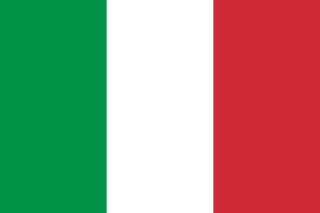
| Flag | Italy Flag |
|---|---|
| Country | Italy |
| Capital | Rome |
| Continent | Europe |
| Official Languages | Italian |
| Currency | Euro (EUR) |
| Dialling Code | +39 |
Italy Flag Meaning
Flag Design
The Italian flag is a vertical tricolor of green, white, and red, known in Italian as the “Tricolore.” The three equal-width vertical stripes are arranged from left to right, with a 2:3 aspect ratio. The flag has no emblem or text and features a clean, simple design. The official color definitions are roughly: green (grass green), white (pure white), and red (brick red). In recent years, brighter versions have also been used. This design is often distinguished from the horizontal or vertical tricolor flags of Mexico and Hungary—Italy’s defining feature is the vertical arrangement with green on the left.
Meaning
There are several common interpretations of the flag’s colors. One explanation is that green represents the plains and vegetation of the Apennine Peninsula and also symbolizes hope; white stands for the snow-capped Alps and also signifies peace and purity; red symbolizes the blood shed for unification and independence, as well as passion, vitality, and patriotism. Another interpretation with religious connotations links the colors to the theological virtues: hope (green), faith (white), and charity (red). Regardless of interpretation, the colors embody Italians’ ideals of freedom, unity, and republicanism, and have become the nation’s most emotionally resonant symbol.
History and Legal Status
The origins of the tricolor flag date back to 1797, when the Cispadane Republic, supported by Napoleon, first adopted the green, white, and red flag in Reggio Emilia, partly inspired by the French tricolor. The flag later became a symbol of the Italian unification movement (Risorgimento). In 1848, the Kingdom of Sardinia officially adopted the tricolor with the Savoy coat of arms. After the establishment of the Kingdom of Italy in 1861, the flag was retained. In 1946, Italy abolished the monarchy and became a republic. In 1948, Article 12 of the Constitution of the Italian Republic formally designated the green, white, and red tricolor as the national flag, affirming its status at the constitutional level.
Today, the tricolor flag is widely displayed on national holidays (such as June 2, Republic Day), at sporting events, government buildings, and on the streets. The green-white-red colors also extend into Italian cuisine and daily life, serving as one of the most visible symbols of national identity.
Italy Overview
Country Details »Overview of Italy
Italy (Italian Republic) is located on the northern shore of the Mediterranean in southern Europe. Its territory consists mainly of the Apennine Peninsula, the Po Plain, and the two large islands of Sicily and Sardinia, covering an area of about 301,300 square kilometers with a population of approximately 58.9 million. It borders France, Switzerland, Austria, and Slovenia to the north across the Alps, faces the Adriatic Sea to the east, the Tyrrhenian Sea to the west, and looks toward Tunisia and Malta to the south. The capital, Rome (Roma), is situated along the Tiber River in the central-western part of the peninsula and serves as the nation’s political, cultural, and tourism hub. It is also one of the cities with the highest density of UNESCO World Heritage Sites in the world.
Italy operates as a parliamentary republic, with the president as the head of state and the prime minister holding executive power. The country is divided into 20 regions, five of which are autonomous special regions with greater self-governance. As a founding member of the European Union, as well as a member of the Schengen Area and the Eurozone, Italy is also part of the Group of Seven (G7) and NATO. Its economy consistently ranks among the top in Europe.
Geography and Climate
Italy’s geography varies greatly between the north and the south: the north features the Alps and the Po Plain, with the Po River being the longest in the country and the plain supporting highly developed agriculture; the central and southern parts are traversed by the Apennine Mountains, characterized by rolling hills; the south and the islands are home to active volcanoes, including Mount Etna on Sicily, the highest and most active volcano in Europe, and Mount Vesuvius near Naples, which erupted in 79 AD and buried the ancient city of Pompeii. The peninsula has a rugged and intricate coastline, featuring famous coastal landscapes such as the Amalfi Coast and Cinque Terre. The Dolomites, known for their limestone peaks, are a UNESCO World Natural Heritage Site.
Climatically, the Po Plain experiences a temperate continental climate, with cold, foggy winters and hot summers. The central region, including Tuscany, enjoys a mild climate. The south and the islands have a typical Mediterranean climate, with hot, dry summers and warm, humid winters. The Alpine regions in the north receive ample snowfall in winter, making them popular ski destinations like the Dolomites. The best times to visit are April–June and September–October, when the weather is pleasant and the summer crowds are avoided. July–August can be extremely hot in the south, with many local shops closing for holidays. During the national holiday Ferragosto around August 15, cities may feel particularly empty.
Historical Background
Italy is a cradle of European civilization. In 753 BC, Rome was founded, transitioning from a monarchy to a republic, and then under Julius Caesar and Augustus, it became a vast empire spanning Europe, Asia, and Africa, leaving behind grand legacies such as the Colosseum, Pantheon, and Pompeii. After the fall of the Western Roman Empire in 476 AD, the peninsula entered the medieval period, marked by numerous city-states. Maritime and commercial republics such as Venice, Florence, Genoa, and Milan rose to prominence. Between the 14th and 16th centuries, the Renaissance began in Florence, producing cultural giants like Leonardo da Vinci, Michelangelo, Raphael, and Dante, who profoundly influenced European thought and art.
In the 19th century, driven by figures like Count Cavour and Giuseppe Garibaldi, the Kingdom of Italy was unified in 1861, with Rome becoming the capital in 1871. In the first half of the 20th century, Benito Mussolini established a fascist regime and involved Italy in World War II. In 1946, a national referendum abolished the monarchy, and the Italian Republic was established. After the war, Italy rapidly industrialized, becoming one of the world’s major economies and a strong advocate for European integration.
Economy and Currency
Italy is a highly developed industrial nation, excelling in sectors such as machinery manufacturing, automotive production (Fiat, Ferrari, Lamborghini), shipbuilding, fashion (Milan), furniture design, chemicals, and food processing, with a strong presence of small and medium-sized enterprises. In agriculture, Italy is a leading producer of wine, olive oil, and cheese, with iconic foods like Parma ham, Parmesan cheese, pasta, and espresso. The service and tourism sectors make up a significant portion of the national economy, with Milan being a major hub for fashion and finance in Europe.
As a member of the Eurozone, Italy’s official currency is the euro (EUR, symbol €). The euro was introduced as a virtual currency in 1999 and officially circulated in banknotes and coins starting January 1, 2002, replacing the former Italian lira. One euro equals 100 cents (cent), and the euro symbol € is also one of the most recognizable symbols of the EU and the Eurozone. For details on euro banknote denominations, coin designs, and payment habits, see the currency section.
Culture and Society
Italian culture is profoundly rich: the country is home to approximately 60 UNESCO World Heritage Sites, the highest number in the world. Opera originated here, with timeless works by Verdi, Puccini, Rossini, and others. Milan’s La Scala is a global opera mecca. Football is the national sport, and Serie A has a far-reaching influence. In daily life, espresso is at the heart of social interactions, and standing at the bar for a quick coffee is a local custom. The Slow Food movement, originating in Italy in 1986, has since influenced global attitudes toward food and tradition.
Society places great importance on family and community ties. Meals follow structured courses (starter, first course, main course, dessert), and dining times are long, especially dinners. Catholic culture permeates festivals and the urban-rural landscape, and the independent city-state of Vatican City lies within Rome. Etiquette emphasizes dressing appropriately; greetings often involve handshakes or cheek kisses, and modest attire (long pants or knee-length skirts with shoulders covered) is required when entering churches.
Tourism Overview
Italy is one of the world’s most popular tourist destinations, offering an incredibly dense array of attractions: the Colosseum and Roman Forum in Rome, St. Peter’s Basilica and the Sistine Chapel in Vatican City, the Uffizi Gallery and Florence Cathedral in Florence, Venice’s canals and St. Mark’s Square, Milan’s cathedral and “The Last Supper,” the countryside and medieval hill towns of Tuscany, Cinque Terre, the Amalfi Coast, the ruins of Pompeii, and the island landscapes of Sicily and Sardinia—all forming a comprehensive destination covering history, art, cuisine, and nature.
Italy’s high-speed rail network (Frecciarossa, Italo) connects major cities such as Rome, Florence, Bologna, Milan, Venice, and Naples, making intercity travel efficient and convenient. There is also a dense network of regional trains and long-distance buses. Whether for a classic first trip to Europe or an in-depth journey through art and cuisine, Italy is an excellent choice.
Italy Travel Guide
All Guides »Italy Travel Quick Guide: Visa, Seasons, Budget & Local Etiquette
Before you go, get familiar with your Schengen visa, the best travel season, dai...
Classic 7-Day Italy Itinerary: Rome – Florence – Venice – Milan 7 days
The most reliable first-time itinerary in Italy: Ancient Rome, the Renaissance, ...
Italy 4-Day Itinerary: In-Depth Tour of Rome and the Vatican 4 Days
Even with limited time, you can fully experience Rome: explore by theme—Ancient ...
Essential Attractions in Italy: From Ancient Rome to the Cinque Terre
A curated list of Italy’s top classic sights organized by northern, central, and...
A Guide to Italian Cuisine: From Pasta and Pizza to Handmade Gelato
Savor Italy layer by layer: from €1 espresso to regional signature pasta and des...
Italy Transport Guide: High-Speed Trains, Metro, and Water Buses
Understand Frecciarossa, Italo, and city transport tickets — a complete guide to...