Egypt Flag
The proportions, colors, and history of Egypt's flag - a banner that tells Egypt's own story.
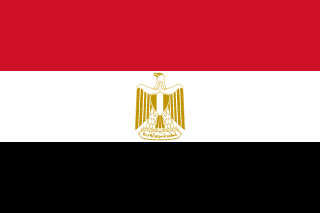
| Flag | Egypt Flag |
|---|---|
| Country | Egypt |
| Capital | Cairo |
| Continent | Africa |
| Official Languages | Arabic |
| Currency | Egyptian Pound (EGP) |
| Dialling Code | +20 |
Egypt Flag Meaning
National Flag Design
The Egyptian flag consists of three equal horizontal stripes of red, white, and black from top to bottom, in a 2:3 ratio. A golden Eagle of Saladin emblem is centered on the white stripe, facing left, with a shield bearing the country’s name on its chest. This tricolor design is known as the “Liberation Flag” series, with layouts similar to flags of countries like Yemen, Syria, and Iraq.
Symbolism
Red symbolizes the blood of those who fought for the country’s independence and liberation around the 1952 July Revolution, representing strength and hope. White stands for purity and peace. Black represents the dark years of colonialism and oppression, as well as the determination to overcome them. The Eagle of Saladin, a symbol of the Arab hero Saladin, stands for dignity, sovereignty, and unity in the Arab world.
History and Legal Status
The Egyptian flag has undergone several changes in modern times: during the 1919 revolution, a green flag with a crescent and cross symbolized unity between Muslims and Copts. After the 1952 revolution, the red-white-black Liberation Flag was adopted. From 1958 to 1961, during the United Arab Republic, two green stars were added at the center. From 1972 to 1984, a federal flag with a golden eagle was used. In 1984, Egypt reinstated the tricolor horizontal design with the current Eagle of Saladin emblem, which remains in use today. The flag is prominently displayed on national days, at government institutions, embassies, consulates, and sporting events.
Egypt Overview
Country Details »Egypt Overview
Egypt (Arab Republic of Egypt) spans the northeastern corner of Africa and the southwestern edge of Asia, bordered by the Mediterranean Sea to the north, the Red Sea to the east, Sudan to the south, and Libya to the west. It covers an area of approximately 1.002 million square kilometers. Over 90% of the country consists of desert and semi-desert, with the population heavily concentrated along the Nile Valley and Delta—areas that account for only about 5% of the land but are home to the vast majority of Egyptians. The capital, Cairo (Cairo), located at the southern end of the Nile Delta, is one of the largest cities in Africa and the Arab world. Arabic is the official language.
Egypt is a presidential republic and one of the most populous countries in the Middle East and North Africa, as well as a significant regional power. The Suez Canal connects the Mediterranean and Red Seas and is one of the world’s busiest shipping lanes, with toll revenues forming a key source of foreign exchange.
Geography and Climate
The Nile River runs the length of the country from south to north, serving as Egypt’s lifeblood; the construction of the Aswan High Dam created Lake Nasser. The Sinai Peninsula in the east lies east of the Suez Canal, with security conditions in the northern part and some border areas being complex. Travelers should follow official advisories. The western region includes the Libyan Desert and a cluster of western oases (such as Siwa, Bahariya, and Dakhla), while the south is home to the Nubian region, where Aswan and Abu Simbel are located.
Most of the country has a tropical desert climate, with hot, dry summers (May to September)—daytime temperatures in Luxor and Aswan can exceed 40°C—and mild, pleasant winters (November to February). The Red Sea coast and southern Sinai Peninsula (around Sharm El Sheikh) have warm winters, making them popular destinations for diving and winter holidays in the Northern Hemisphere.
Historical Background
Egypt was one of the first regions in the world to form a unified state. Around 3100 BCE, Upper and Lower Egypt were united, launching a pharaonic civilization that lasted more than three thousand years. The Old Kingdom saw the construction of the Giza Pyramids, while the Middle and New Kingdoms are represented by landmarks such as the Karnak Temple and Valley of the Kings in Luxor (ancient Thebes), and Ramses II’s grand rock-cut temple at Abu Simbel. Egypt was later ruled by Persians, Greeks (the Ptolemaic Dynasty, with Cleopatra VII as its final ruler), and Romans.
In 641 CE, Arabs conquered Egypt, gradually establishing Islam as the dominant culture. From 1517, Egypt was a province of the Ottoman Empire, and during the 19th century the Muhammad Ali Dynasty drove modernization efforts. The British occupied Egypt in 1882, nominal independence was achieved in 1922, and in 1952 the Free Officers Movement launched a revolution. The Republic was established in 1953, the Suez Canal was nationalized in 1956 under Nasser, and in 1979 Egypt signed a peace treaty with Israel. Since then, it has long been an important political and cultural hub in the Middle East.
Economy and Currency
Egypt is a major economy in North Africa, with tourism, Suez Canal tolls, remittances, and oil and gas exports as its four primary sources of foreign exchange. Agriculture focuses on cotton, wheat, and sugarcane, while industries include textiles, food processing, building materials, and automobile assembly. In recent years, Egypt has invested heavily in Red Sea and Mediterranean coastal resorts and cultural tourism, ranking among the top tourist destinations in Africa.
The official currency is the Egyptian Pound (EGP), issued by the Central Bank of Egypt. The EGP has experienced significant exchange rate fluctuations in recent years. Travelers are advised to carry U.S. dollars or euros in cash for onshore exchange, and to use banks and authorized exchange services rather than informal street traders.
Culture and Society
Egypt is predominantly Arab and Islamic, but also home to a Coptic Christian community. Historically, multiple civilizations have layered upon one another, leaving a unique landscape where temples, mosques, churches, and synagogues coexist. Cairo’s café culture is deeply rooted, and Khan el-Khalili bazaar is a classic spot to experience local life and handicraft traditions. Music, calligraphy, and belly dance are key components of Egyptian performing arts.
The diet is based on legumes, bread, and vegetables. A popular national snack, koshari—a mix of rice, pasta, lentils, and tomato sauce—is inexpensive and filling. Roast pigeon, grilled fish, tahini, and the dessert um ali each have their fans. Egyptians are warm and talkative, but visitors should be cautious of overly helpful individuals in tourist areas, as they may expect tips.
Tourism Overview
Egypt is one of the world’s premier cultural tourism destinations: the Giza Pyramids and Sphinx are the sole surviving wonder of the ancient world, and the newly built Grand Egyptian Museum enhances the visiting experience in Cairo. The Valley of the Kings, Karnak Temple, and Colossi of Memnon in Luxor showcase the heights of the New Kingdom. Aswan, Philae Temple, and Abu Simbel form the Nubian cultural corridor. Nile cruises between Luxor and Aswan are a classic way to travel slowly through history. The Red Sea resorts of Hurghada and Sharm El Sheikh are world-class diving destinations. Alexandria attracts visitors with its seaside, library, and Greco-Roman ruins.
Security is relatively tight in Egypt’s main tourist sites, and standard itineraries are generally safe. However, parts of the northern Sinai Peninsula and remote areas of the western desert present complex security conditions. Check safety advisories from your home country’s foreign ministry before traveling, avoid border and high-risk zones, and consider purchasing travel insurance that covers medical care and emergency evacuation.
Egypt Travel Guide
All Guides »Egypt Solo Travel Quick Guide: Visa, Season, Budget & Local Etiquette & Taboos
How to get a visa on arrival, the most comfortable time to visit, daily spending...
Classic 8-Day Egypt Itinerary: Cairo — Aswan — Nile River Cruise — Luxor 8 days
See the pyramids, temples, and the Nile all in one trip, with a cruise connectin...
Egypt 4-Day Short Trip Itinerary: A Deep Dive into Cairo, Giza, and Historic Downtown 4 days
Staying only in Cairo lets you experience 3,000 years of civilization: from the ...
Essential attractions in Egypt: the Pyramids of Giza, temples, the Red Sea, and Alexandria
A regional guide to Egypt’s top cultural landmarks and natural destinations, fro...
The Ultimate Guide to Egyptian Street Food: Koshari, Roast Pigeon & Cairo’s Best Eats
From the national dish koshari to roast pigeon and street kebabs, explore authen...
Complete Guide to Transportation in Egypt: Airport Transfers, Ride-Hailing Apps, and Nile River Cruises
For getting around Cairo, Uber is the most hassle-free option. For longer distan...