United States Flag
The proportions, colors, and history of United States's flag - a banner that tells United States's own story.
| Flag | United States Flag |
|---|---|
| Country | United States |
| Capital | Washington, D.C. |
| Continent | North America |
| Official Languages | English |
| Currency | U.S. Dollar (USD) |
| Dialling Code | +1 |
United States Flag Meaning
Flag Design
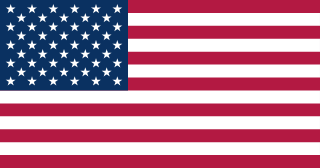
The U.S. flag, commonly known as the “Stars and Stripes,” is officially called the “Flag of the United States.” It consists of 13 horizontal red and white stripes and a blue canton in the upper left corner containing 50 white five-pointed stars arranged in nine offset horizontal rows of six and five stars. The flag has a length-to-width ratio of 1.9:1 (10:19), and the official color values for red, white, and blue are strictly defined.
Meaning
The 13 stripes represent the 13 original colonies that declared independence and formed the nation in 1776; the 50 stars represent the current 50 states, with the star field updated as new states join. Red symbolizes valor and hardiness, white represents purity and innocence, and blue stands for vigilance, perseverance, and justice. The Stars and Stripes are thus referred to as a “moving map of the nation,” with a new star added to the flag each time a new state joins the Union.
History and Legal Status
On June 14, 1777, the Second Continental Congress passed the Flag Resolution, establishing the design of the flag with red and white stripes and a blue star field. June 14 is now celebrated as Flag Day in the U.S. As the country expanded, the flag underwent 26 changes: the number of stars changed most frequently around 1859, with 49 stars after Alaska joined in 1959 and 50 stars after Hawaii joined in 1960, the version that has been in use the longest.
The U.S. has the Flag Code (Flag Code) regulating the use of the flag, including protocols such as raising it at sunrise and lowering it at sunset, not letting it touch the ground, and flying it at half-staff for mourning. Recent legal debates over whether burning the flag is protected under free speech further illustrate its symbolic importance in American society. Today, the Stars and Stripes are displayed at government buildings, schools, and homes, and are also the most prominent national emblem on NASA missions and overseas embassies and consulates.
United States Overview
Country Details »United States Overview
The United States (United States of America) is located in the central part of North America, bordered by the Atlantic Ocean to the east, the Pacific Ocean to the west, Canada to the north, and Mexico and the Gulf of Mexico to the south. It also includes Alaska in the northwest corner and Hawaii in the central Pacific. Covering approximately 9.83 million square kilometers, the country consists of 50 states and Washington, D.C. The capital, Washington, D.C., is the seat of the federal government, while New York serves as a global hub for finance and culture.
The U.S. is the world’s largest economy and a highly urbanized immigrant nation, with a population of about 335 million. Immigrants from around the world have shaped its diverse culture. Under its federal system, states vary significantly in laws, taxation, and consumer habits. The tourism industry is highly developed, with well-established infrastructure for everything from theme parks to national parks.
Geography and Climate
The U.S. mainland features a geography where the eastern and western sides are high, and the central region is low: the east has the Appalachian Mountains, the west has the Rocky Mountains, Sierra Nevada, and Coast Ranges, and the central area is a vast Great Plains, with the Mississippi River running north-south and the Great Lakes being the world’s largest group of freshwater lakes. Notable natural wonders include Yellowstone National Park, the Grand Canyon, Niagara Falls (shared with Canada), and California’s Yosemite.
The mainland spans four time zones and has a highly diverse climate: the Northeast has four distinct seasons with cold, snowy winters; California in the West has a Mediterranean climate with dry, sunny summers; the Southwest desert regions experience extremely hot summers; the Southeast along the Gulf of Mexico is humid and rainy, with hurricanes common in summer and fall; Alaska has a subarctic climate, while Hawaii enjoys year-round warmth, making it suitable for travel at any time.
Historical Background
The U.S. was originally inhabited by Indigenous peoples. In the 17th century, Britain established 13 colonies along the East Coast. On July 4, 1776, these 13 states issued the Declaration of Independence, and after winning the Revolutionary War in 1783, the nation was founded. In the 19th century, it expanded its territory significantly through the Louisiana Purchase, westward expansion, and the Mexican-American War. The Civil War from 1861 to 1865 preserved the union and abolished slavery.
In the 20th century, the U.S. rose to superpower status after World War I and World War II. The Apollo moon landing, Silicon Valley’s tech revolution, and Hollywood pop culture have had a profound global impact. The Statue of Liberty in New York, a gift from France to commemorate independence, has become an iconic symbol of American spirit; Times Square is known as “The Crossroads of the World.”
Economy and Currency
The U.S. is the world’s largest economy, with industries spanning finance, technology, entertainment, aerospace, agriculture, and defense. Silicon Valley and Wall Street are global centers of technological innovation and financial capital. The official currency is the U.S. Dollar (USD), issued by the Federal Reserve, and it is the world’s primary reserve and settlement currency. International airfares, hotels, and major purchases are typically priced in USD. Sales tax is usually added at the point of sale, and tipping is deeply ingrained in the culture—travelers should budget for these additional costs.
Culture and Society
American culture is known for its diversity and inclusiveness: Hollywood films, jazz, rock music, Broadway musicals, and sports events like the NBA and Super Bowl are major cultural exports. Each city has its own unique vibe—New York’s fast pace and Broadway, Los Angeles’ sunshine and film industry, San Francisco’s tech and free-spirited atmosphere, and New Orleans’ jazz and French flair all offer distinct appeals.
Cuisine includes hamburgers, hot dogs, barbecue ribs, tacos, and a wide variety of ethnic restaurants. National park culture is deeply rooted, with over 60 parks managed by the National Park Service. Annual free admission days at national parks provide a great opportunity to experience America’s natural beauty.
Tourism Overview
The U.S. is a comprehensive travel destination: iconic sights like the Statue of Liberty, Times Square, and Central Park in New York; the Capitol and Smithsonian museums (most free) in Washington, D.C.; the casinos and shows in Las Vegas; the theme parks in Orlando; California’s Highway 1; the dramatic geology of Yellowstone’s geysers and the Grand Canyon; and Hawaii’s island charm offer a mix of urban shopping, family-friendly attractions, road trips, and nature exploration. Due to the country’s vast size, travel often involves flying or long road trips, so it’s recommended to explore regions in depth rather than trying to cover too much.
United States Travel Guide
All Guides »Quick Guide Before Traveling to the U.S.: B1/B2 Visa, EVUS, Seasons & Budget
How to book a visa interview, how to register for EVUS, how much to spend per da...
Classic 7-Day Itinerary in the USA: New York — Washington — Las Vegas — Grand Canyon 7 days
A classic combination of East Coast cities and West Coast canyons, connected by ...
4-Day Short Trip in the USA: In-Depth Exploration of New York City 4 days
You can still experience Manhattan thoroughly even with just a few days: explore...
Must-visit attractions in the USA: urban landmarks and national parks
From the Statue of Liberty to Yellowstone’s geysers, here’s a list of the top pl...
A Guide to American Cuisine: From Burgers and Steaks to Immigrant Flavors
The U.S. is not a culinary desert: know your categories and regions, and you can...
Travel Guide to Transportation in the U.S.: Flights, Car Rental, and City Transit
The U.S. is a car-dependent country: understanding the three layers—long-haul fl...