Senegal Flag
The proportions, colors, and history of Senegal's flag - a banner that tells Senegal's own story.
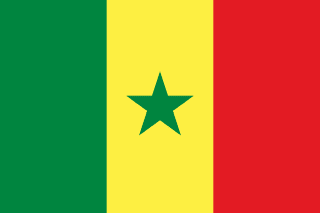
| Flag | Senegal Flag |
|---|---|
| Country | Senegal |
| Capital | Dakar |
| Continent | Africa |
| Official Languages | French |
| Currency | West African CFA franc (XOF) |
| Dialling Code | +221 |
Senegal Flag Meaning
Flag Design
The flag of Senegal is rectangular, with a 3:2 width-to-length ratio, consisting of three vertical equal-width bands of green, yellow, and red, from left to right. At the center of the yellow band is a green five-pointed star. The three bands are equally sized, and the green star is centrally aligned, creating a simple yet striking design. This flag was officially adopted on August 20, 1960, replacing the earlier version used during the Mali Federation that lacked the central star.
Symbolism
The Senegalese flag uses Pan-African colors: green represents hope, nature, agriculture, and aspirations for the future; yellow symbolizes the land, wealth, and the fruits of labor, positioned at the center; red stands for life, the sacrifices made for freedom and independence, and the blood shed. The central green star signifies unity and hope, and is also a universal symbol of African freedom and solidarity, representing the unity of all ethnic groups under a common ideal. The combination of the three colors and the star reflects the nation’s pursuit of independence, unity, and development.
History and Legal Status
The precursor to Senegal’s flag dates back to 1959, when Senegal and French Sudan (now Mali) formed the Mali Federation, which used a tricolor vertical flag of green, yellow, and red with a kanaga (stylized human figure) symbol in the center. After the federation dissolved in 1960 and Senegal gained independence, the country retained the tricolor design but replaced the kanaga with a central green star, resulting in the current flag, officially adopted on August 20, 1960. The flag has remained largely unchanged since, widely used in government buildings, national celebrations, schools, and sporting events, and is a powerful symbol of Senegalese national identity.
Senegal Overview
Country Details »Overview of Senegal
Senegal (officially the Republic of Senegal) is located at the westernmost point of Africa, bordering the Atlantic Ocean to the west, Mauritania to the north across the Senegal River, Mali to the east, and Guinea and Guinea-Bissau to the south, while also surrounding The Gambia, forming a unique border. The country covers an area of about 196,700 square kilometers, with its capital Dakar situated on the Cap-Vert Peninsula along the Atlantic coast, making it one of West Africa’s most important port cities and regional hubs. Senegal is seen as the gateway to West Africa and is a key member of both the Economic Community of West African States (ECOWAS) and the West African Monetary Union.
Senegal is a presidential republic with French as its official language, though Wolof is widely spoken in daily life. The country is known for its relatively stable politics, open stance, and warm hospitality. Football, music, and wrestling are among its most iconic cultural elements.
Geography and Climate
Senegal’s terrain is generally low-lying, with coastal plains and sand dunes in the west, typical Sahelian savannah in the central region, and a gradual rise toward the edge of the Fouta Djallon Plateau in the southeast, where the highest point is under 600 meters. Major rivers include the Senegal River in the north, the Casamance River in the south, and the Gambia River, with coastal areas featuring lagoons, sand spits, and wetlands. The northern part of Senegal has a semi-arid Sahelian climate, while the southern Casamance region is more humid with denser vegetation.
The climate is divided into dry and rainy seasons: from November to May is the dry season, with little to no rain in the north, cool and dry weather, and abundant sunshine—ideal for sightseeing and birdwatching. From July to October is the rainy season, with concentrated rainfall and higher humidity, particularly in the southern Casamance. Temperatures remain high year-round, with coastal areas moderated by the ocean—Dakar enjoys relatively mild conditions—while inland and northern areas experience greater diurnal temperature variations.
Historical Background
The West African coastal region, including present-day Senegal, was historically home to kingdoms such as the Wolof and Tukulor. From the 15th century onward, Portuguese, Dutch, and French traders arrived along the coast. In 1659, the French established Saint-Louis at the mouth of the Senegal River, which became a key French stronghold in West Africa for many years. Dakar was founded in the 19th century and became the capital of French West Africa in 1902, while the nearby Gorée Island carries the heavy legacy of the transatlantic slave trade.
In 1958, Senegal became an autonomous republic within the French Community, and it gained full independence on April 4, 1960, with poet and statesman Léopold Sédar Senghor as its first president. Senghor voluntarily stepped down in 1980, marking one of Africa’s earliest examples of peaceful power transfer. Since then, Senegal has been governed by multiple democratically elected presidents, maintaining overall political stability. It also contributed troops to regional peacekeeping efforts in the 1990s, solidifying its role as a stabilizing force in West Africa.
Economy and Currency
Senegal’s economy is service-oriented, with tourism, finance, telecommunications, and port trade playing significant roles. Agriculture employs a large portion of the population, with peanuts, cotton, rice, and fisheries as traditional pillars. Dakar serves as a major financial and shipping hub in West Africa, and recent offshore oil and gas exploration has brought new development prospects. Remittances and tourism are important sources of foreign exchange.
Senegal uses the West African CFA franc (XOF), a common currency of the West African Economic and Monetary Union (WAEMU) and issued by the Central Bank of West African States (BCEAO). The country does not issue its own independent currency. The CFA franc is pegged to the euro at a fixed rate, ensuring relative currency stability, and is widely accepted throughout Senegal.
Culture and Society
Senegal is famed for its concept of “teranga”—a Wolof term meaning hospitality and generosity—which is considered a core part of the national spirit. Society values family and community ties, with warm and polite hospitality often extended to visitors. Islam is the predominant religion, with Sufi brotherhoods (such as the Mouride order) exerting significant influence on social life, and Touba serving as an important religious center.
Music and sports are highlights of Senegalese culture: the mbalax rhythm blends traditional drumming with modern pop, and internationally renowned singer Youssou N’Dour hails from Senegal. The national football team, nicknamed the “Lions of Teranga,” enjoys widespread support, while traditional wrestling (laamb) is a wildly popular national sport. The national diet centers around rice, fish, and peanuts, with thieboudienne and yassa being iconic dishes.
Tourism Overview
Senegal is one of the more developed tourist destinations in West Africa. Its capital, Dakar, blends colonial charm with modern urban energy, and landmarks such as the African Renaissance Monument and the University of Dakar are worth visiting. Nearby Gorée Island, a UNESCO World Heritage Site, bears witness to the history of the transatlantic slave trade. Lake Retba (also called Lac Rose), northeast of Dakar, is famous for its pink hue caused by salt-loving algae and minerals, with local salt harvesters offering a classic cultural sight.
Northern Saint-Louis, another UNESCO World Heritage Site, features colonial architecture set against estuary scenery. Nearby Djoudj National Bird Sanctuary is a crucial waterfowl habitat in West Africa, hosting pelicans, flamingos, and migratory birds—best visited in the dry season. Other regions such as Thiès, Touba, Ziguinchor, and Casamance also offer unique attractions. Dakar was once the starting point of the famous Dakar Rally, which, although now held elsewhere, remains part of the city’s legacy.
Senegal Travel Guide
All Guides »Senegal Travel Quick Guide: Visa, Best Time to Visit, Budget & Teranga Etiquette
Get the basics on visas, seasons, budget, and teranga etiquette to make your tri...
7-Day Senegal Itinerary: Dakar — Lac Rose — Saint-Louis — Djoudj 7 days
Starting from Dakar and traveling north along the Atlantic coast, this itinerary...
Senegal 4-Day Short Trip: Dakar City and Gorée Island World Heritage Site 4 days
This short trip is based in Dakar, connecting city landmarks, historical sites o...
Must-visit attractions in Senegal: Gorée Island, Lake Retba, and Djoudj
From Dakar’s UNESCO World Heritage Sites to northern bird sanctuaries, here’s a ...
Senegal Food Guide: Thieboudienne, Yassa & Street Eats
Discover the flavors of Senegal, centered around rice, fish, and peanuts — every...
Senegal Transport Guide: Dakar BRT, Taxis, and Ferries
Public transport in Dakar, ferries, and long-distance travel – understand how to...