Thailand Currency Thai BahtTHB
What money to use in Thailand, how notes and coins break down, and the best ways to exchange - get the local cash sorted before you go.
| Currency Name | Thai Baht |
|---|---|
| Currency Code | THB |
| Currency Symbol | ฿ |
| Issuing Country | Thailand |
| Time Zone | UTC+7 |
| Dialling Code | +66 |
About Thai Baht (THB)
Currency Overview
The official currency of Thailand is the Thai Baht (currency code THB, symbol ฿, also written as Baht). 1 Thai Baht = 100 satang, though satang coins are rarely used in everyday cash transactions. The Thai Baht is issued by the Bank of Thailand, and its exchange rate has remained relatively stable over the long term, making it one of the most commonly held currencies by travelers in Southeast Asia.
Denominations
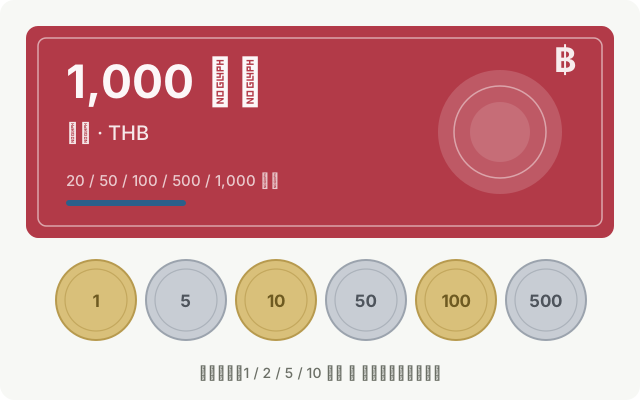
Banknotes come in denominations of 20, 50, 100, 500, and 1,000 Thai Baht. The front of each note features a portrait of King Rama IX (Bhumibol Adulyadej) or King Rama X, with different colors distinguishing the denominations: 20 Baht (green), 50 Baht (blue), 100 Baht (red), 500 Baht (purple), and 1,000 Baht (greyish-brown). Coins are issued in 1, 2, 5, and 10 Thai Baht, as well as 25 and 50 satang, often featuring portraits of the king or royal family members. Respect should be shown when using these coins.
Cash and Payment Habits
Thailand remains a cash-heavy society. Street food, night markets, songthaews (shared taxis), tuk-tuks, convenience stores, and temples generally only accept cash. The BTS/MRT in Bangkok accept single-journey tickets or Rabbit Cards. Convenience stores like 7-Eleven and FamilyMart are widespread across the country and support cash withdrawals with international debit cards. Local e-wallets like PayPrompt and TrueMoney have higher barriers for foreign users.
It is recommended to carry enough cash: around 800–1,500 Thai Baht per person per day is sufficient for general meals and transport, while island and night market spending may require a bit more. Currency can be exchanged at airports, banks, and authorized exchange counters such as Super Rich, which typically offer better rates. ATM withdrawals incur a fee of around 220 Thai Baht per transaction, so it is advisable to withdraw larger amounts to reduce costs.
Traveler Tips
- Modest clothing is required when entering temples or royal palaces; avoid shorts and sleeveless tops, and remove shoes before entering main prayer halls.
- The Thai royal family is deeply respected. Avoid any disrespectful actions toward currency, the king’s image, or the national flag.
- Street vendors and night markets only accept cash, so carry small bills like 20, 50, and 100 Thai Baht.
- A passenger service fee may be required when departing from the airport; keep some small Thai Baht notes handy.
- Tipping is not mandatory in Thailand, but it is customary to give 20–50 Thai Baht to hotel porters or massage therapists as a token of appreciation.
Thailand Overview
Country Details »Overview of Thailand
Thailand (officially the Kingdom of Thailand) is located in the central part of the Indochinese Peninsula in Southeast Asia. It borders Myanmar to the west, Laos and Cambodia to the east, and Malaysia to the south. The southern part extends onto the Malay Peninsula, with coastlines along the Andaman Sea and the Gulf of Thailand. The country covers an area of approximately 513,000 square kilometers. Its capital, Bangkok, is situated in the lower delta of the Chao Phraya River and serves as the national center for politics, economy, culture, and transportation. It is also one of the largest cities in Southeast Asia.
Thailand is a constitutional monarchy, with the king serving as the head of state. The country is divided into 77 provinces (changwat). Tourism is a key pillar of the national economy, accounting for around 20% of GDP for many years, making Thailand one of the largest international tourism destinations in Southeast Asia.
Geography and Climate
Thailand’s terrain can be divided into four regions from north to south: the mountainous and forested north, where Chiang Mai and Chiang Rai are located; the central plain of the Chao Phraya River basin, which is the main rice-producing area; the northeastern plateau (Isan region); and the narrow Malay Peninsula in the south, with the Andaman Sea (Phuket, Krabi) on one side and the Gulf of Thailand (Koh Samui, Pattaya) on the other.
The climate is tropical monsoon, with three distinct seasons: the hot season from March to May, when temperatures can reach 40°C; the rainy season from June to October, with frequent afternoon showers and rougher seas on the southwestern side of the islands; and the cool season from November to February, which is sunny and pleasant, making it the best time to travel. The rainy seasons on the eastern and western sides of the southern islands differ: the best time to visit Phuket is from November to April, while Koh Samui is ideal from January to September.
Historical Background
Thailand’s recorded history dates back to the 13th century with the establishment of the Sukhothai Kingdom, considered the cradle of Thai civilization and script. From 1350, the Ayutthaya Kingdom rose and thrived for over 400 years, engaging in extensive trade with Europe, China, and Japan. After Ayutthaya was captured by Burma in 1767, the Chakri Dynasty (Bangkok Dynasty) was founded in 1782 and continues to this day.
In the late 19th century, Kings Rama IV and Rama V used diplomacy and reform to make Thailand the only Southeast Asian nation never colonized. A constitutional monarchy was established in 1932, and although the political landscape has seen many changes since then, the monarchy has remained highly revered in Thai society. Following the passing of King Rama IX Bhumibol Adulyadej in 2016, King Rama X ascended the throne.
Economy and Currency
Thailand is the second-largest economy in Southeast Asia. Its manufacturing sector focuses on automobiles and parts, electronics, and food processing. In agriculture, it is one of the world’s largest exporters of rice and natural rubber. The economy is supported by three main pillars: tourism, services, and exports. The official currency is the Thai Baht (THB), issued by the Bank of Thailand. Exchange rate management tied to the U.S. dollar has kept it relatively stable over the long term.
Culture and Society
Thailand is a Theravāda Buddhist country, with about 95% of the population practicing Buddhism. Temples (Wat) are found throughout urban and rural areas, and monks hold a revered status. It is common for men to become temporary monks at some point in their lives. Thai society values the “wai” greeting (สวัสดี) and the “Thai smile,” and shows deep respect for the monarchy, Buddha images, and monks. Section 112 of the Thai Criminal Code protects the dignity of the monarchy, and visitors should be mindful of related taboos.
Thai cuisine is famous for its sour, spicy, sweet, and aromatic flavors. Dishes like Tom Yum Goong (spicy shrimp soup), Green Curry, Mango Sticky Rice, Pad Thai (stir-fried noodles), and a variety of street foods are globally renowned. Thai massage, Loy Krathong (Festival of Lights), and Songkran (Thai New Year water festival) are must-experience aspects of Thai culture.
Tourism Overview
Thailand’s tourism infrastructure is well-developed and offers great value: Bangkok’s Grand Palace and floating markets, Chiang Mai’s ancient city and hill tribes, the Andaman Sea islands of Phuket and Krabi, the resort vibes of Koh Samui and Koh Phangan, and the historical sites of Ayutthaya and Sukhothai combine to offer a full range of experiences from cities and islands to cultural heritage. Convenient visas, frequent flights, and moderate costs make it a top choice for independent travel in Southeast Asia.
Thailand Travel Guide
All Guides »Thailand Pre-Trip Quick Guide: Visas, Seasons, Budgets & Cultural Taboos
Visa policies, off-peak travel seasons, sensible budgets, and key etiquette rule...
Classic 7-Day Thailand Itinerary: Bangkok – Chiang Mai – Phuket 7 days
Experience Thailand’s city, ancient capital, and island vibes all in one trip, w...
Thailand 4-Day Short Trip: In-Depth Bangkok City Tour 4 days
Explore Bangkok Without the Islands: Four Routes Covering Temples, Markets, Mall...
Must-visit destinations in Thailand: Bangkok, Chiang Mai, and southern islands
Palaces and markets in Bangkok, temples and mountains in Chiang Mai, white-sand ...
A Guide to Thai Cuisine: From Tom Yum to Street Food
The flavor profile of Thailand is a balance of sour, spicy, sweet, and salty—unl...
Thailand Transportation Guide: BTS, Songthaews, and Island Hopping
Thailand’s transportation explained in one go: Bangkok’s rail system, songthaews...