Gambia Currency Gambian dalasiGMD
What money to use in Gambia, how notes and coins break down, and the best ways to exchange - get the local cash sorted before you go.
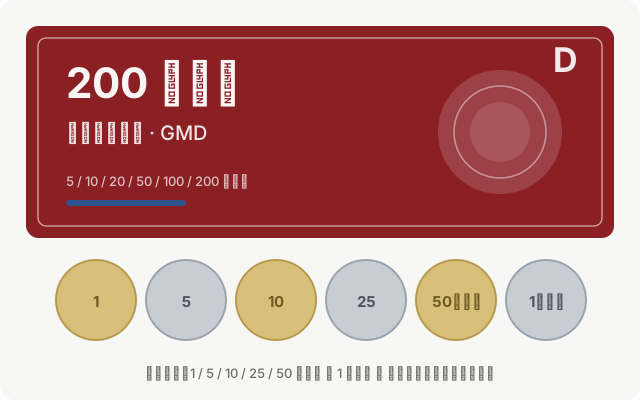
| Currency Name | Gambian dalasi |
|---|---|
| Currency Code | GMD |
| Currency Symbol | D |
| Issuing Country | Gambia |
| Time Zone | UTC+0 |
| Dialling Code | +220 |
About Gambian dalasi (GMD)
Currency Overview
The official currency of The Gambia is the dalasi (currency code: GMD, symbol: D, English: Dalasi). Issued by the Central Bank of The Gambia, 1 dalasi is equal to 100 butut. It is one of the younger currencies in West Africa. The dalasi was introduced in 1971, replacing the Gambian pound that had been in use after independence, and has since undergone several denomination adjustments and exchange rate fluctuations.
Denomination System
The currently circulating dalasi banknotes mainly come in denominations of 5, 10, 20, 25, 50, 100, and 200 dalasi. Different denominations vary in color and design, often featuring national landmarks, riverside life scenes, and important figures. Coins most commonly in use are 1, 5, 10, 25, 50 butut, and 1 dalasi. Due to inflation, lower-denomination butut coins are less frequently used in everyday small transactions, and travelers typically deal mainly with dalasi banknotes.
Cash and Payment Habits
The Gambia is a predominantly cash-based society. Markets, small shops, shared taxis (known as gelegele), regular taxis, street vendors, and rural areas generally only accept cash. Credit cards are mainly accepted in high-end hotels and a few tourist-oriented restaurants and travel agencies. There are bank branches and ATMs in Banjul, Serekunda, and Kololi where local currency can be withdrawn, but their availability and reliability are not as good as in larger cities. It is recommended to carry enough cash when arriving at the airport or in major cities.
Exchange rates for the dalasi against major currencies fluctuate. Always check the daily rates at local banks or authorized exchange counters, and be cautious with private street money changers.
Traveler Tips
- Carry small-denomination dalasi banknotes for convenience when using gelegele minibuses, buying snacks, or making change at markets.
- ATMs are scarce in rural areas. Carry enough cash before traveling to areas upstream on the Gambia River or to nature reserves.
- Foreign currencies such as euros and US dollars can be exchanged at banks and authorized exchange counters, but be cautious with street money changers.
- If carrying a large amount of foreign currency upon departure, be aware of customs declaration requirements and keep the entry declaration form.
Gambia Overview
Country Details »Overview of The Gambia
The Gambia (officially the Republic of The Gambia) is located in West Africa and is one of the smallest countries on the African continent. The country extends east-west along both banks of the Gambia River and is very narrow from north to south. Its western tip borders the Atlantic Ocean, while the remaining three sides are almost entirely surrounded by Senegal, giving it the shape of a narrow strip embedded within Senegal. The country covers an area of approximately 10,689 square kilometers. Its capital, Banjul, is situated on an island at the mouth of the Gambia River and serves as the political and administrative center of the nation. However, the main population and commercial hubs are located in the Serekunda and Kanifing areas east of Banjul.
The Gambia is a presidential republic with English as its official language. The country is divided into several administrative regions, and its major ethnic groups include the Mandinka, Fulani, Wolof, and Jola. Despite its small size, the country has a unique geography due to the Gambia River, which runs through the entire territory and is navigable to the sea. The river’s floodplains and mangrove wetlands form the country’s geographical lifeline and shape its economy, which is based on agriculture, fishing, and tourism.
Geography and Climate
The Gambia has a generally flat terrain, with its highest points only a few dozen meters above sea level. Except for a short section of coastline in the west, the country is almost entirely surrounded by Senegal to the north, east, and south. The Gambia River flows from east to west across the country and empties into the Atlantic Ocean. It is the most important natural feature of the country and serves as the main channel for the movement of goods and people, as well as for birdwatching and river cruises. The riverbanks are lined with extensive swamps, mangroves, and rice fields, while the inland areas consist of tropical grasslands and shrubland. Peanuts, millet, rice, and cassava are the main crops.
The climate is tropical savanna, with only a dry season and a rainy season throughout the year. The dry season from November to May is characterized by cool, dry weather, abundant sunshine, and low humidity, making it the most comfortable time to visit. The rainy season from June to October sees concentrated rainfall, high humidity, and higher temperatures, with some dirt roads and rural paths becoming difficult to navigate. Due to its proximity to the Atlantic Ocean, the coastal areas are slightly cooler due to sea breezes.
Historical Background
The Gambia River basin had trade connections with West African empires such as Ghana and Mali as early as the Middle Ages, with ethnic groups like the Mandinka settling in the region. Starting in the 15th century, Portuguese navigators were the first to reach the mouth of the Gambia River. Later, British and French colonial powers competed for control over the river’s trade and shipping rights. The 1783 Treaty of Versailles awarded the areas on both sides of the Gambia River to Britain. In the 19th century, The Gambia became a British colony and protectorate. In 1889, Britain and France established the current borders, resulting in the long, narrow shape of the country that is almost entirely surrounded by Senegal.
On February 18, 1965, The Gambia gained independence from Britain and became a republic in 1970. For many years, the country was led by Dawda Jawara. In 1994, Yahya Jammeh came to power through a coup and ruled for over two decades. During his rule, The Gambia withdrew from the Commonwealth in 2013 and rejoined in 2018. In the presidential election at the end of 2016, Adama Barrow won, but Jammeh initially refused to accept the results. Eventually, he transferred power peacefully under mediation by regional organizations, ushering in a relatively stable period of development for The Gambia.
Economy and Currency
The Gambia is traditionally an agricultural country, with peanut (groundnut) cultivation and export long serving as a key pillar of the national economy. Rice, millet, maize, and fishing also play important roles. Tourism is one of the main sources of foreign exchange income. Each year during the dry season, a large number of tourists from Europe flock to coastal resorts, boosting the hotel, catering, transportation, and handicraft industries. In addition, re-export trade and remittances also contribute significantly to the economy. Due to its small size, limited resources, and fluctuations in external demand, The Gambia has a relatively modest economy and is highly dependent on agriculture, international aid, and tourism revenue.
The official currency of The Gambia is the dalasi (currency code: GMD, symbol: D), with 1 dalasi equal to 100 butut. It is issued by the Central Bank of The Gambia. The dalasi was introduced in 1971, replacing the Gambian pound used after independence, and is one of the younger currencies in West Africa.
Culture and Society
Gambian society is composed of multiple ethnic groups. The Mandinka, Fulani, Wolof, and Jola each have distinct languages, clothing, music, and festivals, but they coexist harmoniously, and the overall social atmosphere is mild and friendly. Islam is the predominant religion, with mosques and daily prayers forming part of life in both urban and rural areas. Traditional beliefs and customs also persist in festivals and ceremonies. Music and drumming are important aspects of Gambian culture, with the sounds of the kora and various types of drums often heard during celebrations and family gatherings.
The staple food is rice, usually served with peanut stew, fish, okra, and cassava leaves. The flavors tend to be salty, savory, and slightly spicy. Black tea, mint tea, and a sweet tea known locally as attaya are common beverages in social settings. Due to its history as a British colony, English is widely spoken in daily life and tourism services, making communication relatively convenient for foreign visitors.
Tourism Overview
The Gambia is a niche but distinctive travel destination in West Africa. With its rich wetlands and forests along the Gambia River, the country is known as a birdwatching paradise, with over 500 species of birds recorded. Abuko Nature Reserve and riverside wetlands are must-visit spots for bird enthusiasts. The coastal areas around Kololi and Bakau feature numerous beach resorts, suitable for winter escapes and beach holidays. The Janjanbureh area upstream on the Gambia River retains colonial-era architecture and scenic river views.
In addition, The Gambia is home to a UNESCO World Heritage Site related to the transatlantic slave trade — James Island (now called Kunta Kinteh Island) and its associated sites — which serve as a reminder of the country’s unique role in the history of the Atlantic slave trade. The dry season (November to May) offers ideal conditions for birdwatching, river cruising, and beach holidays. During the rainy season, some rural roads may be difficult to navigate, so it is advisable to plan routes in advance.
Gambia Travel Guide
All Guides »Gambia Travel Quick Guide: Visa, Best Time to Visit, Budget Tips & Etiquette
Get your visa, travel season, budget, and etiquette sorted before you go—this en...
7-Day Gambia Itinerary: Banjul – Coast – Gambia River – Janjanbureh 7 days
Traveling from west to east along the coast and the Gambia River, this itinerary...
Gambia 4-Day Short Trip: In-Depth Exploration of Banjul and Coastal Resorts 4 days
Based in Banjul and the coastal areas around Kololi and Bakau, this short trip f...
Top Attractions in The Gambia: A Birdwatcher’s Paradise, River Cruises, and Historic Sites
From Banjul’s Old Town to UNESCO-listed river journeys along the Gambia River, h...
Gambia Food Guide: Peanut Stews, River Fish, and Street Eats
The flavors of Gambia—centered around rice, peanuts, and river fish, paired with...
Gambia Transportation Guide: Airport Transfers, Gelegele Minibuses, and River Ferries
Public transportation in The Gambia primarily consists of gelegele minibuses and...