Yemen Currency Yemeni RialYER
What money to use in Yemen, how notes and coins break down, and the best ways to exchange - get the local cash sorted before you go.
| Currency Name | Yemeni Rial |
|---|---|
| Currency Code | YER |
| Currency Symbol | ﷼ |
| Issuing Country | Yemen |
| Time Zone | UTC+3 |
| Dialling Code | +967 |
About Yemeni Rial (YER)
Currency Overview
The official currency of Yemen is the Yemeni Rial (currency code: YER; symbol: ﷼). One rial is equal to 100 fils, though fils coins are largely out of circulation. The Central Bank of Yemen is responsible for issuing currency. However, due to the fragmented domestic situation, different regions have varying currency management practices and exchange rates. Multiple exchange rates exist in the market, so travelers should exercise caution when exchanging money. The prolonged conflict and economic difficulties have led to a continuous and significant depreciation of the rial, with noticeable fluctuations in prices and exchange rates.
In some parts of Yemen, the US dollar and the Saudi Riyal are widely accepted and even used as primary transaction currencies, especially for large transactions and market purchases. When bringing foreign cash into the country, comply with local customs regulations and keep it secure.
Denominations
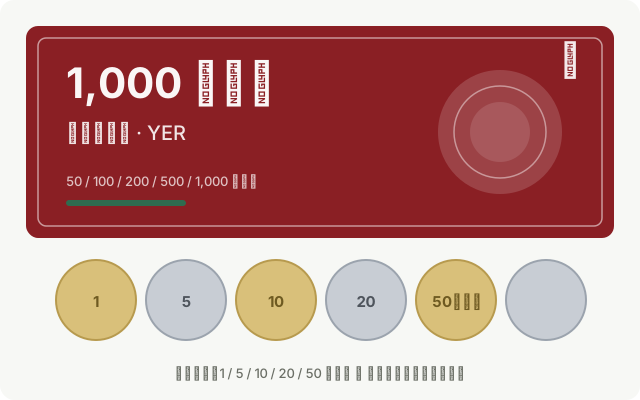
Common banknote denominations of the Yemeni Rial in circulation include 50, 100, 200, 500, and 1,000 rials. Different editions printed in various periods and regions are all in circulation simultaneously. Coins (such as 1, 5, 10, and 20 rials) are rarely used in practice due to inflation and cash shortages.
Because banknotes are often worn and various editions are mixed, pay attention to the note’s condition and edition when conducting transactions. When shopping at markets or small shops, it is advisable to carry small denominations to avoid complications due to a lack of change.
Cash and Payment Habits
Yemen is a cash-dependent economy with very low penetration of bank cards and electronic payments. Banking services and ATMs are unreliable due to the impact of conflict, and foreign bank cards are almost impossible to use in Yemen. Travelers will generally need to rely solely on cash for local transactions, preferably in the local currency or commonly accepted US dollar bills.
Due to security concerns and limited infrastructure, mobile payments, online payments, and international remittance channels are very limited in Yemen. Commercial activities mostly depend on cash and personal trust. If you must travel there, prepare sufficient cash in advance and make arrangements for secure storage and protection against theft or robbery.
Traveler Tips
- Travel warnings have been issued by diplomatic missions of various countries advising against travel to Yemen. If you must go, stay updated on the latest consular advisories.
- Cash and banking services in Yemen are highly unstable, and foreign bank cards are rarely usable. Be sure to carry enough cash and emergency funds in advance.
- Multiple exchange rates and various editions of banknotes exist. Always double-check when exchanging money or receiving change to avoid losses.
- Purchase travel insurance that includes emergency medical treatment, rescue, and evacuation coverage, and keep contact information for embassies/consulates and emergency services handy.
- In case of emergencies, prioritize personal safety and promptly contact the nearest embassy or consulate for assistance.
Yemen Overview
Country Details »Overview of Yemen
Yemen (officially the Republic of Yemen) is located at the southwestern tip of the Arabian Peninsula, bordered by Saudi Arabia to the north, Oman to the east, the Red Sea to the west, and the Gulf of Aden and the Arabian Sea to the south. It controls the strategic Bab-el-Mandeb Strait, which connects the Red Sea and the Indian Ocean, making its geographic position highly significant. With a land area of about 528,000 square kilometers, its capital Sana’a lies in the western highlands and serves as the nation’s political and historical center. The official language is Arabic, and the population is predominantly Arab, with both Sunni and Shia branches of Islam present. Yemen is one of the oldest regions on the Arabian Peninsula and was historically renowned for its spice and coffee trade. It is important to note objectively that since 2014, Yemen has been embroiled in continuous armed conflict, resulting in fragmented governance, damaged infrastructure, and a severe security situation. Travel warnings have been issued by diplomatic missions of various countries.
Yemen’s economy is primarily based on oil, natural gas, agriculture, and remittances. The prolonged conflict and humanitarian crisis have severely impacted the economy, leading to substantial currency devaluation and shortages of essential goods and public services.
Geography and Climate
Yemen’s terrain can be divided into three main parts: the western highlands, the eastern desert, and the coastal plains. The western highlands, where the capital Sana’a is located, sit mostly above 2,000 meters in elevation and enjoy a relatively mild climate. The eastern region consists of extensions of the Rub’ al Khali (Empty Quarter) desert, which is arid and receives little rainfall. The coastal Tihama Plain along the Red Sea and the southern areas along the Gulf of Aden are hot and humid. Yemen also has islands of unique value, among which Socotra Island in the Arabian Sea is famed for its rare plants like the dragon’s blood tree and frankincense trees, as well as its highly endemic ecosystem, earning it recognition as an ecological wonder of the Indian Ocean.
The climate is predominantly tropical desert, with cooler conditions in the highlands and hot, humid weather along the coast. Rainfall mainly occurs from April to September, often in the form of short but heavy downpours. The mountainous areas in the southwest can form temporary rivers and support oasis agriculture during the rainy season, forming some of the more densely populated regions in Yemen.
Historical Background
Yemen has long been a key node along the ancient spice routes. The Kingdom of Saba (or Sheba), which emerged around the 8th century BCE, was known for its incense and myrrh trade as well as the Great Dam of Marib, and is frequently mentioned in ancient texts. Subsequently, Christianity, Judaism, and Islam were introduced to the region, with Yemen converting to Islam in the 7th century. From the 16th century onward, the Ottoman Empire and local powers vied for control over the area. In 1839, the British occupied Aden and established the Aden Protectorate, keeping the southern part of Yemen under British influence for a long time.
In 1918, North Yemen gained independence from Ottoman rule and established the Mutawakkilite Kingdom. After the North Yemen Revolution in 1962, a republic was formed. South Yemen became independent in 1967 and established the People’s Democratic Republic of Yemen. In 1990, North and South Yemen unified to form the Republic of Yemen. A civil war broke out in 1994, large-scale protests occurred in 2011, and since 2014, the country has been trapped in ongoing armed conflict and fragmentation.
Economy and Currency
Yemen’s economy once relied heavily on oil exports. Following the decline in oil production, agriculture, fishing, and remittances have become important sources of income. Coffee (especially Mocha coffee, historically exported through the port of Mocha), honey, and frankincense are among the region’s notable products. The prolonged conflict has damaged oil fields, ports, roads, and power facilities, resulting in prominent issues of unemployment and poverty, as well as a heavy reliance on imports for food and fuel.
The official currency of Yemen is the Yemeni Rial (currency code: YER; symbol: ﷼). Due to the fragmented political situation and economic challenges, different regions of Yemen have varying exchange rates and currency management practices. Cash availability is limited, banking services are restricted, and foreign currencies (such as the US dollar and Saudi Riyal) are widely used as mediums of exchange in certain areas.
Culture and Society
Yemeni society is rooted in Arab tribal traditions and Islamic culture, where family and clan relationships play a crucial role in social life. Etiquette and hospitality are highly valued. The Yemeni diet primarily consists of flatbreads, rice, lamb, and spicy stews. One of the most iconic dishes is saltah, a stew-based dish topped with whipped fenugreek. Other specialties include mandi (a type of rice dish) and honey-based desserts. Coffee culture has a long history in Yemen, and the port of Mocha was once a major hub for exporting coffee to the world.
Yemen also boasts remarkable architectural achievements: the mud-brick tower houses and painted window frames of Sana’a Old City, as well as the mud-brick skyscrapers of Shibam, are listed as UNESCO World Heritage Sites. Chewing qat leaves is a common social practice among locals and forms part of social interaction. Travelers should remain respectful and mindful of their behavior.
Tourism Overview
Yemen possesses highly attractive cultural and natural heritage: Sana’a Old City is one of the best-preserved ancient cities on the Arabian Peninsula, with its mud-brick towers and traditional markets leaving a lasting impression. Socotra Island is a world rarity for its dragon’s blood trees, bottle trees, and pristine white-sand beaches. Shibam Old City is known as the “Manhattan of the Desert.” Historic cities like Zabid and Sana’a carry legacies of Islamic scholarship and architecture. The ancient city of Marib and its historic dam sites bear witness to the glory of the ancient spice kingdom.
It must be stated objectively that the ongoing armed conflict has made travel conditions in most parts of Yemen extremely unsafe. Travel warnings have been issued by diplomatic missions of various countries advising against travel to Yemen. If travel is absolutely necessary, it is essential to monitor the latest consular advisories, avoid conflict zones and border areas, and make comprehensive plans—including insurance, communication, and emergency evacuation—with professional assessment and arrangement.
Yemen Travel Guide
All Guides »Yemen Travel Snapshot: Safety Alerts, Visa, Seasons, Budget & Etiquette Taboos
Yemen remains in a state of ongoing unrest. Multiple safety alerts have been iss...
7-Day Cultural Road Trip in Yemen: Sana’a Old City – Shibam – Socotra Island 7 days
This itinerary connects the mud-brick towers of Sana’a, the desert skyscrapers o...
4-Day Short Trip to Yemen: In-Depth Highlights of Sana’a Old City and Nearby Mountain Villages 4 days
This 4-day short trip centers around Sana’a Old City, covering its mud-brick tow...
Must-visit attractions in Yemen: Old City of Sana’a, Socotra Island, and Shibam’s mud-brick tower houses
Yemen’s three most renowned heritage sites: the mud-brick towers of Old City of ...
Yemeni Food Guide: A Deep Dive into Saltah Stew, Mandi Rice, and Honey Desserts
From bubbling saltah stew to mandi rice slow-cooked in underground pits and Yeme...
Travel Guide to Transportation in Yemen: Getting Around Cities, Long-Distance Travel, and Safety Tips
This guide covers transportation options within Yemeni cities, between cities, a...