Grenada Currency Eastern Caribbean DollarXCD
What money to use in Grenada, how notes and coins break down, and the best ways to exchange - get the local cash sorted before you go.
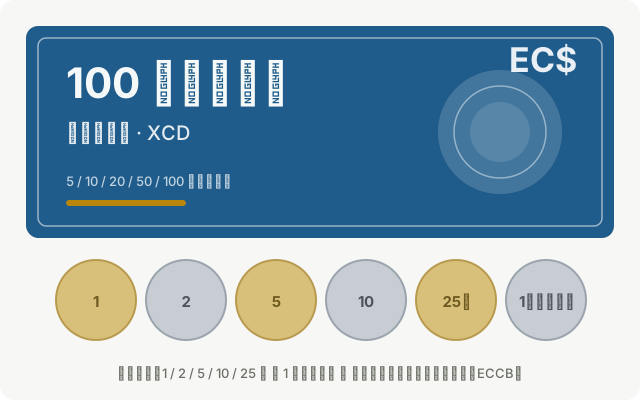
| Currency Name | Eastern Caribbean Dollar |
|---|---|
| Currency Code | XCD |
| Currency Symbol | EC$ |
| Issuing Country | Grenada |
| Time Zone | UTC-4 |
| Dialling Code | +1 473 |
About Eastern Caribbean Dollar (XCD)
Currency Overview
The official currency of Grenada is the Eastern Caribbean Dollar (currency code XCD, symbol EC$), issued by the Eastern Caribbean Central Bank (headquartered in Saint Kitts) and used in eight Eastern Caribbean countries and territories, including Grenada. Since 1976, the Eastern Caribbean Dollar has been pegged to the U.S. dollar at a fixed rate of approximately 2.70 XCD to 1 USD. This stability has made U.S. visitors and remittances a significant influence on the local economy. While the Eastern Caribbean Dollar is the primary currency, U.S. dollars are widely accepted in hotels, resorts, and some shops.
Denominations
Eastern Caribbean Dollar banknotes come in denominations of 5, 10, 20, 50, and 100, featuring designs and landmarks from the member islands, with Grenada-related imagery on some notes. Coins are issued in 1, 2, 5, 10, 25 cents, and 1 dollar, with a 50-cent transitional denomination. One Eastern Caribbean Dollar equals 100 cents, and coins often bear the Eastern Caribbean Central Bank logo and island emblems. As multiple islands share the same currency, it’s normal to see different island designs on notes and coins.
Cash and Payment Habits
In Grenada, both cash and card payments are common. Supermarkets, hotels, restaurants, car rental companies, and larger businesses generally accept international credit cards like Visa and Mastercard, with some also taking UnionPay. However, traditional markets, food stalls, rural shops, buses, and ferries typically only accept cash. ATMs are widely available in St. George's and tourist areas, dispensing Eastern Caribbean Dollars or U.S. dollars, but fees and withdrawal limits apply. U.S. dollars are often accepted in tourist zones, but change is usually given in EC$, with an approximate exchange rate of 1 USD to 2.70 EC$. Travelers should check the denominations and rates for fairness.
Traveler Tips
- 1 USD ≈ 2.70 EC$; when paying in USD, confirm the exchange rate and check the change currency.
- Large hotels and restaurants often accept cards, but small vendors, buses, and ferries only take cash—carry some EC$.
- ATMs charge per transaction; withdraw larger amounts at once. Try to spend leftover EC$ before leaving, as it may be difficult to exchange locally.
- Tipping is customary in the Eastern Caribbean. Restaurant bills often include ~10% service charges, but extra cash tips may be given for good service.
Grenada Overview
Country Details »Grenada Overview
Grenada is an island nation located at the southern end of the Windward Islands in the eastern Caribbean Sea. It consists of the main island of Grenada and smaller islands such as Carriacou and Petite Martinique, covering an area of about 344 square kilometers with a population of approximately 110,000. It borders Saint Vincent and the Grenadines to the north and is not far from Trinidad and Tobago to the south. The capital, St. George's, is situated on the southwestern coast of the main island, nestled beside a horseshoe-shaped natural bay, and is considered one of the most beautiful port cities in the Caribbean.
Grenada is a member of the Commonwealth, with English as its official language and the Eastern Caribbean Dollar as its currency. Known as the "Spice Isle," it is renowned for its production of nutmeg, cinnamon, cloves, and other spices, consistently ranking among the world's top nutmeg producers.
Geography and Climate
The main island of Grenada is a volcanic island with a central highland and surrounding lowlands. Its highest peak, Mount St. Catherine, rises about 840 meters above sea level. The island features tropical rainforests, volcanic crater lakes, and numerous waterfalls. Grand Etang National Park, located in the central mountainous region around a crater lake, is a great spot for rainforest hikes and monkey sightings. The coastline is rugged, with famous white-sand beaches like Grand Anse on the southwestern shore. Nearby, coral reefs and shipwrecks provide excellent opportunities for snorkeling and diving.
The climate is tropical maritime, warm year-round, with an average annual temperature of about 26–28°C. The dry season from December to May brings cool weather and calm seas, making it the ideal travel period. The rainy season from June to November coincides with the Atlantic hurricane season, with potential for heavy rainfall and storms, so travelers should closely monitor weather and flight updates.
Historical Background
Grenada was originally inhabited by the indigenous Kalinago people (also known as Caribs). Christopher Columbus arrived during his second voyage in 1498, and the island was later contested by Spain, France, and Britain for centuries. French colonization began in 1650, leaving behind French place names (such as Petite Martinique and Gouyave). In 1763, the Treaty of Paris ceded Grenada to British rule. A major uprising by indigenous people and enslaved Africans occurred in 1795 but was suppressed, leading to strengthened British control. Slavery was abolished in 1834, and the plantation economy gradually shifted toward spice crops like nutmeg.
Grenada gained independence from Britain on February 7, 1974, becoming a Commonwealth member. A coup occurred in 1979, followed by foreign military intervention in 1983 due to political instability. Since then, the country has regained stability and pursued development focused on tourism and agriculture.
Economy and Currency
Grenada's economy relies primarily on tourism, agriculture, and remittances. Key agricultural exports include nutmeg, cocoa, and bananas, with nutmeg and mace among the world's top producers. The nutmeg motif even appears on the national flag. Tourism contributes significantly to GDP, with cruise ships and holidaymakers as the main sources of visitors. The official currency is the Eastern Caribbean Dollar (XCD), issued by the Eastern Caribbean Central Bank, which maintains a fixed exchange rate with the U.S. dollar.
Culture and Society
Grenadian culture blends African, indigenous Caribbean, French, and British traditions. English is the official language, though a French-based Creole dialect is also commonly spoken. Music and dance are integral to life, with steelpan, calypso, and soca music prominent during festivals. The annual August carnival, Spicemas, is the year's biggest event, featuring vibrant J’ouvert morning parades and costume processions. Carriacou Island retains stronger African and seafaring traditions, known for boat-building and Big Drum music.
The local cuisine is spicy and flavorful, with oil down as the national dish—a stew made with breadfruit, dasheen, vegetables, salted cod, and coconut milk. Other popular dishes include spiced meats, curry chicken, grilled fish, and tropical fruits. The island also produces renowned chocolate and rum, with cocoa and sugarcane cultivation dating back to the colonial era.
Tourism Highlights
Grenada's tourism focuses on island getaways and natural ecosystems. St. George's iconic horseshoe bay and Carenage harbor are must-see landmarks. Grand Anse Beach is famed for its fine white sand and tranquil waters. The Molinere Underwater Sculpture Park off Morne Rouge Bay is one of the world's first underwater sculpture parks, ideal for snorkeling and diving. Grand Etang Rainforest, Annandale Falls, and sulfur springs showcase the island's volcanic and tropical landscapes. With more time, take a ferry to Carriacou Island to experience a more traditional Caribbean way of life. Overall, Grenada is safe, laid-back, and perfect for honeymoons, diving, and relaxing vacations.
Grenada Travel Guide
All Guides »Grenada Travel Snapshot: Visa, Seasons, Budget & Island Essentials
Find out how to explore Spice Island, when to go, and how much to budget per day...
Grenada 7-Day Itinerary: St. George’s, Rainforest, Waterfalls & Carriacou 7 days
A mix of main-island nature and beaches plus off-island slow living—experience t...
Grenada 4-Day Itinerary: Main Island Highlights – Beaches & Rainforest 4 days
Even with limited time, experience the best of the main island: bays, white-sand...
Must-visit attractions in Grenada: bays, rainforests, and underwater sculptures
From horseshoe-shaped bays to the world’s first underwater sculpture park, explo...
Grenada Food Guide: Spiced Stews, Cocoa, and Rum
Nutmeg, cocoa, and coconut milk form the flavor foundation of Grenadian cuisine,...
Grenada Transportation Guide: Airport, Buses, Ferries, and Car Rentals
Arriving at Maurice Bishop International Airport, getting around the main island...