From Christmas and New Year’s, the “double holidays,” all the way to the Spring Festival holiday, the nearly two-month period is considered a peak season for outbound travel by Chinese tourists. For those considering traveling abroad, the most frustrating issue might not be language barriers in foreign countries, but the “visa.” Indeed, for the average traveler, it’s often difficult to quickly understand the various terms involved in the visa application process. Although most travel agencies and companies nowadays can handle various visas on behalf of clients, the fees are quite high, which is a pain point for budget travelers. Moreover, even when using professional services, visa rejections can still happen. Therefore, knowing some visa application tips and being aware of new visa policy changes becomes very important.
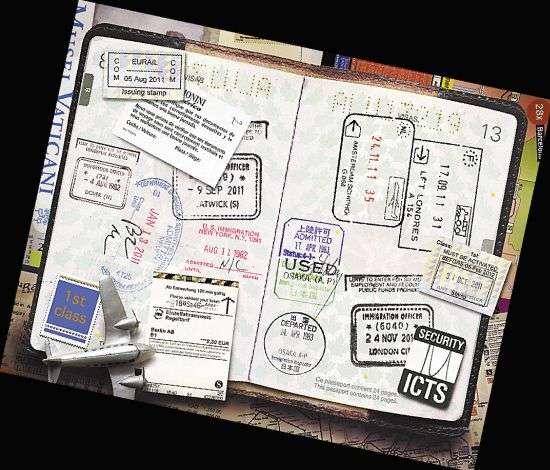
Visa Application Tips for Tourism
Regarding how to apply for a tourist visa, seasoned travelers suggest tailoring your approach based on your travel experience.
If you’re a first-time international traveler, you may choose countries where visa applications are relatively easier (such as Southeast Asian countries) as your destination. This way, applying for visas to Europe or America later will be more feasible compared to having no prior travel record.
Once you have more experience traveling to countries that offer visa-free entry or visa-on-arrival, applying for a visa to Europe or America is no longer out of reach. As long as you’re familiar with the visa steps and procedures, know the requirements of “Schengen” countries and similar destinations, and possess a certain level of English communication skills, traveling freely around Europe is not difficult. That is, once you obtain a Schengen visa issued by any member country, you can travel freely within all Schengen member countries during the validity and stay duration of the visa.
When you’ve become a seasoned “travel veteran,” you might as well take advantage of the cross-region visa policies allowed by many countries. With proper preparation, you can secure one visa in your home country, then apply for others while on the trip. This not only saves a lot of hassle but also allows flexible planning of your itinerary. The success rate for cross-region multi-country visas is currently quite high. The most common example is multi-country tours in Southeast Asia, where you can apply for the visa of the second country after arriving in the first.
However, remember to carry all original documents and notarized copies required for the visa when departing, and check the validity of your passport in advance. Since multi-country trips take longer, by the time you reach your final destination, your passport must have at least six months of validity remaining—otherwise, you could be denied entry even if you have a visa. The basic materials required for visas in different countries are largely similar, and typically include: passport, employment and leave authorization letters, bank statements, insurance, itinerary plan, flight booking confirmation, and local accommodation reservation, among others. Additionally, when applying for a visa in another country overseas, if your passport has already been submitted to the visa embassy, prepare photocopies of the passport’s main page and the visa pages from your current country in advance. It’s also wise to keep the receipt for the visa fee paid to the embassy, which can serve as proof when you need to show your passport.
For applying to more difficult countries such as the United States, seasoned travelers also offer advice: during the interview, “materials are static, but conversation is the best method—you can demonstrate your motivation for the visa.” Facing an intimidating visa officer, there’s no need to be nervous. Clearly state your visit purpose and explain your itinerary, and your chances of approval will naturally improve. Of course, using a professional agency can help applicants avoid some detours—for example, different countries have undocumented requirements that only become clear through years of visa processing experience. Sometimes, even the stacking order of materials or the standard of filling out forms can affect visa success rates. For instance, “the same birth certificate notarization can have different meanings depending on the version.”
■ Glossary
[Visa] Refers to the document required to enter one country from another. Depending on diplomatic relations and levels of people-to-people exchange between countries, they are classified as easy-visa countries or countries with tightened visa policies. A tourist visa is one type of visa, with some countries specifically issuing tourist visas, known as a “tourist visa.” The characteristics of a tourist visa are short duration of stay, usually 30 days and a maximum of 90 days, generally non-extendable. Holders of a tourist visa are not allowed to work locally or engage in activities unrelated to tourism.
[Visa-Free] Means entering one country from another without needing a visa, with allowable stays ranging from 7 days to 6 months. This is usually bilateral.
[Visa on Arrival] Means entering one country from another without a visa in advance, but the applicant needs to present their passport and an entry permit issued by the relevant authorities of the destination country upon arrival at the port, where the visa is then issued. Visa on arrival is usually unilateral, and applicants are advised to contact the embassy of the destination country beforehand to clarify the requirements before departure. Avoid acting blindly to prevent being denied a visa upon arrival.
[Easy-Visa Countries] These are countries where visas are easy to obtain—even if a visa is required, as long as you submit the proper materials, approval is likely. Examples include Cambodia, Thailand, Malaysia, Singapore, and others. The materials required for visas in these countries are also relatively simple.
[Schengen Visa] According to the Schengen Agreement, member countries issue a unified format of visa for short-term stays. Once an individual obtains a Schengen visa issued by any member country, they can travel freely within all Schengen member countries during the visa’s validity and stay period.
[Cross-Region Visa] This refers to applying for a visa for a third country while not in your country of origin. Nowadays, many countries allow cross-region visa applications. As long as you prepare in advance regarding the visa policies of the countries on your travel route, the success rate of cross-region visa applications for multi-country travel is quite high.
Summary of Recent Visa Policy Changes in Various Countries
■ UK to Introduce New Policy Soon
According to reports, the UK Cabinet is dissatisfied with the Home Office’s long-term inaction in simplifying the visa process for Chinese tourists. On December 4th, UK Prime Minister David Cameron rejected a warning from Home Secretary Theresa May and urged the quick simplification of visa procedures for Chinese tourists to attract more affluent visitors to spend in the UK. Media have disclosed that the UK Border Agency is about to announce a new policy allowing Chinese tourists to use the same form to apply for both a Schengen visa and a UK tourist visa. Upon successful approval, they will receive both visas. Currently, Chinese tourists need to fill out a 30-page application form in English and submit a range of identity documents including property certificates, employment verification, and the original household registration book. Furthermore, since the UK is not part of the Schengen Agreement, even if a Chinese tourist's application is approved, they will only receive entry permission for the UK.
■ Australia to Promote Online Applications in the Next Two Years
According to The Australian, the Australian federal government has decided to change the visa application process and gradually introduce an online application system for tourist visas for all countries, including China, over the next two years. Currently, Chinese tourists have to wait 5–7 days to get a visa to visit Australia. The new project will make the visa application process simpler and faster for foreigners. At the same time, the Australian government is also considering introducing longer-validity tourist visas and issuing multiple-entry visas for low-risk travelers.
■ Cameroon Now Allows Group Tours
According to a notice recently released by the National Tourism Administration, starting December 1, 2012, Cameroon has been approved as an outbound group tourism destination for Chinese citizens. Travel agencies qualified to operate outbound tours can now organize group trips from China to Cameroon. It is particularly important to note that Chinese citizens traveling in groups to Cameroon must enter and exit as a group, and tourists are not allowed to leave the group or stay abroad without authorization.
■ Russia Offers Group Visa-Free Entry
On October 17, the website of the Russian Embassy in China announced that China and Russia have signed a reciprocal agreement on group tourist visa exemption. Chinese citizens can now visit Russia visa-free as part of a group tour. According to the agreement, a group tour consists of 5 to 50 (inclusive) tourists traveling abroad for tourism purposes. Previously, Russia had only implemented visa-free policies for Chinese group tourists in a few areas of the Far East. Other countries offering visa-free group tourism to China include Vietnam, South Korea, and others. 2012 was designated as China’s “Year of Russian Tourism.” However, travel to Russia from China has long been limited due to high costs, limited routes, and complicated procedures.
■ Italy Removes Peak-Season Visa Limits
According to media reports, Jovanovic, a counselor at the Italian Embassy’s visa office, recently revealed that Italy has streamlined the process for issuing tourist visas to Chinese citizens and has removed the quota limits for visa issuance during peak seasons. The country can even issue five-year multiple-entry tourist visas. However, it is understood that not every traveler may qualify for the five-year multiple-entry visa. In addition to meeting the basic visa documentation requirements set by the Italian consulate, those with relatives living, working, or studying in Italy are more likely to obtain this long-term visa.
■ Germany Exempts Visa Applicants from Interviews
Starting mid-October this year, the visa application process for Germany has eliminated the interview requirement. Industry insiders explain that every year toward the end, with lower travel prices, the strong Christmas atmosphere across European countries, and abundant, affordable shopping events, it becomes peak season for Chinese tourists visiting Europe. With the new German visa policy in place, it is expected that the number of Chinese tourists traveling to Germany in the second half of this year will increase by at least 20%.
■ South Korea Expands Eligibility for Multiple-Entry Visas
South Korea has recently expanded the range of individuals eligible for multiple-entry visas. Previously, such visas were limited to national public officials such as doctors, lawyers, accountants, teachers, entertainers, and athletes, as well as honest customers holding gold-tier or higher international credit cards. Starting August 1, 2012, the following groups became eligible to apply for a three-year multiple-entry tourist visa to South Korea: tour guides leading group travelers into the country; individuals who have visited South Korea or other OECD countries twice or more; those who have entered under a medical tourism visa; individuals who can prove personal assets—including real estate, financial holdings, or business ownership—exceeding five million RMB; Chinese civil servants or employees of state-owned enterprises; employees of companies that have invested over one million USD (100 million RMB) in South Korea; and individuals aged 55 or older receiving a pension.
Additionally, South Korea’s Ministry of Justice will soon begin a pilot program allowing foreign transit passengers at Incheon International Airport to enter the country visa-free for 12 hours. Specifically, foreigners transiting through Incheon Airport to another country and Chinese tour groups visiting Jeju Island will be permitted visa-free entry for 12 hours. However, travelers heading to a third country must join a cultural program designated by the Ministry of Culture to be eligible, while Chinese tour groups going to Jeju Island must stay in the capital region.