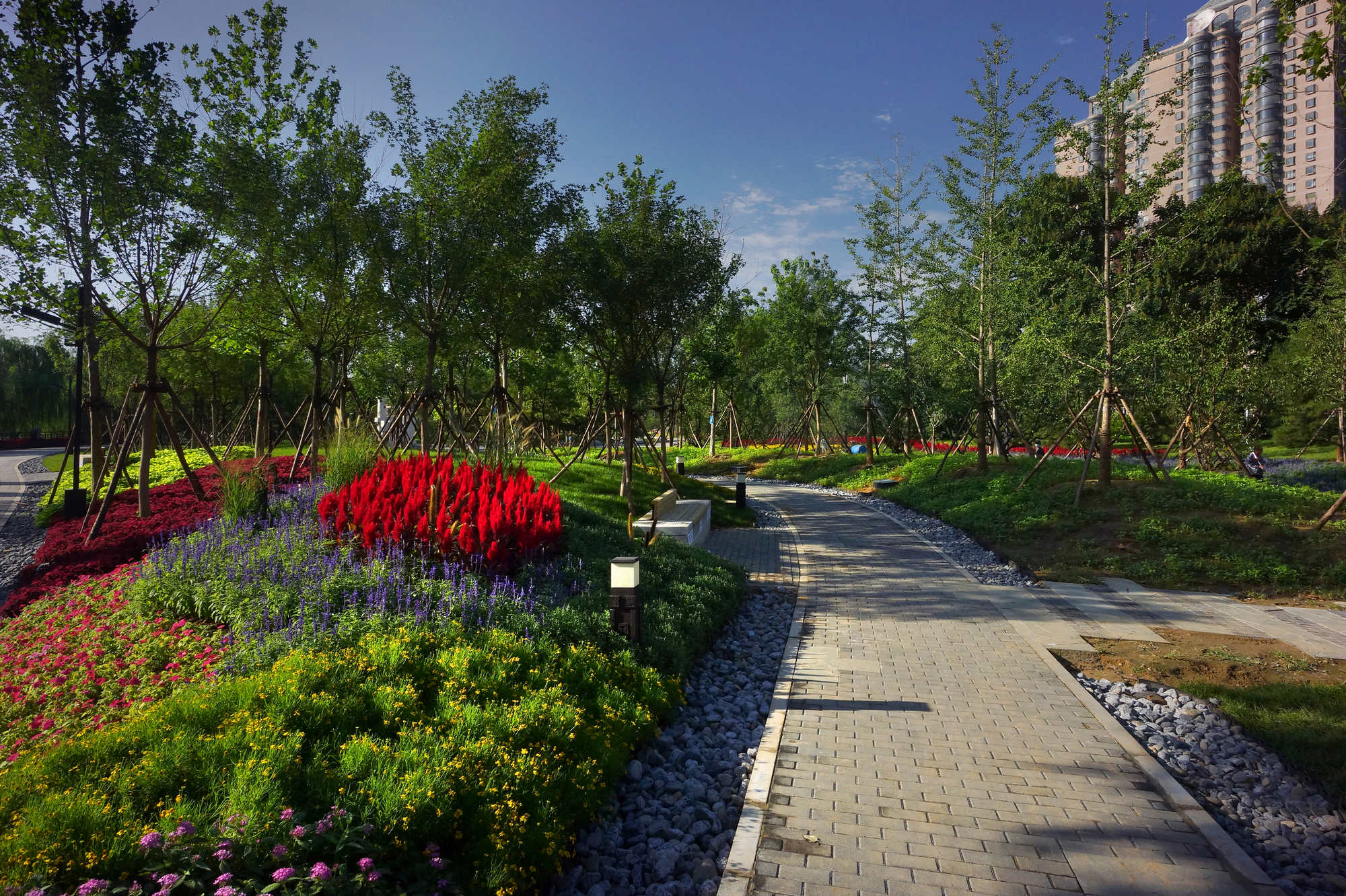
The second phase of the greenway, implemented in 2013, extends about 5 kilometers from Baizhifang Bridge in the north to Yongdingmen in the east, covering an area of approximately 150,000 square meters. This section passes by numerous historical sites and cultural landmarks, including Fengxuan Park, Grand View Garden, Taoranting Park, the Altar of Agriculture, and Yongdingmen. While continuing the overall design philosophy of the Yingcheng Jiandu Riverside Greenway, this phase also builds on lessons learned from the first phase, focusing on showcasing the core cultural theme of the Jin Dynasty.
Prior to the greenway's construction, we specifically invited representatives from nearby residents for discussions, solicited opinions from district-level People’s Congress deputies and CPPCC members, visited community residents and tourists, extensively gathered input from all sectors of society, carefully analyzed feedback, and continuously refined the plans to ensure thorough preparation for the greenway project.
Throughout the construction of the entire greenway, guided by the principles of “enhancing quality, showcasing history, connecting with residents, and serving people’s livelihoods,” we focused on several key aspects: landscape gardening, historical and cultural exploration, slow mobility system planning, service facility development, and innovative technology application. Through meticulous planning and construction, we aimed to make tangible changes that residents could experience firsthand. The overall greenway project features the following highlights:
First, in terms of creating beautiful landscapes and improving environmental quality:
As the first completed waterfront greenway in central Beijing, the Yingcheng Jiandu Riverside Greenway serves as a leading example for greenway development across the city. In constructing the greenway, Xicheng District was committed to optimizing the ecological environment and enhancing landscape quality. By making full use of existing terrain, water systems, and vegetation, the district overcame the challenge of narrow and steep river embankments by employing new stone reconstruction technology to build various flower beds and planters. These efforts increased overall greenery and enriched the riverside landscape. Thirty-four new scenic viewing platforms were constructed, offering residents closer views of the riverbanks and expanding resting areas for visitors. In addition to preserving existing large trees, over 7,000 new trees, more than 60,000 shrubs, and 90,000 square meters of flowering plants were planted. Pedestrian pathways were renovated and observation platforms added, resulting in over 20,000 square meters of new green space. Beautiful night lighting was also introduced, forming a waterfront greenway landscape that features “continuous greenery and unbroken scenery.”
Second, in terms of exploring cultural heritage and showcasing Xicheng’s history:
Guided by the principles of protecting and utilizing Xicheng District’s historical and cultural resources, as well as enriching Beijing’s park system, the greenway project delves into the historical culture along both sides of the river. With “one river, two paths, and ten scenic spots” forming the overall structure of the “greenway,” landscape design techniques were employed to organically link important historical and cultural sites along the waterfront—including the White Cloud Taoist Temple, the Jicheng Memorial Pillar, the Jiandu Memorial Archway, the Site of the Jin Dynasty’s Central Capital, and the Altar of Agriculture—into a cohesive route. This transforms the greenway into a cultural corridor that carries the historical imprints of Beijing and offers a journey to trace the city’s roots. Visitors can experience Xicheng’s history of city-building and capital-establishment, as well as the evolution of Beijing’s over 3,000-year history while strolling along the greenway.
Third, in terms of building a slow mobility system and promoting a healthy lifestyle:
The greenway provides an ideal setting for slowing down the pace of urban life and advocating green transportation, making it the first district in Beijing to introduce a greenway slow mobility system—an outstanding highlight of the project. A 26.2-kilometer pedestrian pathway and an 8.5-kilometer cycling trail were developed along the river. Additionally, four leisure service stations were newly built, seamlessly integrating the slow mobility system with the greenway. This approach allows the greenway to not only fulfill its ecological and scenic functions but also create a pleasant, healthy, and relaxing environment for slow travel, giving residents a taste of the comfort and ease that comes with a slower pace of life.
Fourth, in terms of constructing supporting facilities and serving residents’ lives:
Aimed at creating a healthy greenway that integrates recreation, fitness, and sightseeing, the Yingcheng Jiandu Riverside Greenway includes 34 new viewing platforms, one museum dedicated to the Jin Dynasty’s Central Capital, and the renovation of three public restrooms. Furthermore, 74 Wi-Fi access points have been installed at viewing platforms, service stations, and riverside parks to facilitate internet access and provide digital services. A public broadcasting system has also been added alongside surveillance facilities. These initiatives truly bring the greenway closer to the people and serve their daily needs.
Fifth, in terms of applying innovative technology and promoting a low-carbon lifestyle:
During its construction, the Yingcheng Jiandu Riverside Greenway adopted various types of low-carbon and environmentally friendly technologies. By promoting these resource-recycling demonstration projects, the initiative helps raise environmental awareness and encourages green living across society. With the completion of the entire greenway, numerous important historical and cultural sites along the river have been organically connected, creating a riverside landscape belt that showcases Xicheng District’s modern urban face and serves as a recreational space for residents. The greenway has become a cultural corridor that carries the historical legacy of Beijing’s ancient capital and offers a journey to explore the city’s roots, allowing visitors to experience Xicheng’s history of city-building and capital-establishment, as well as the evolution of Beijing’s over 3,000-year history. It has emerged as a new and vibrant symbol of Xicheng District.