Can't tell Japanese "shrines" and "temples" apart? Here's how to pay your respects the right way
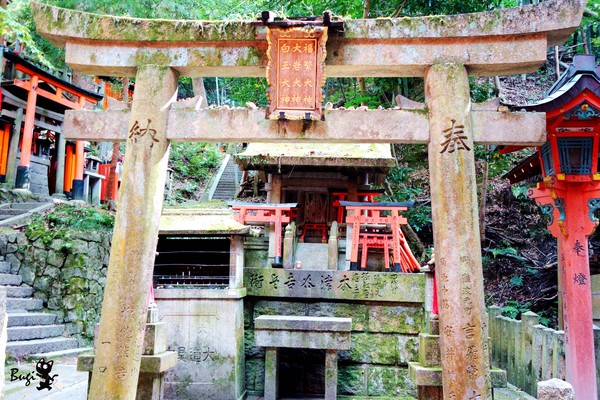
Text and photos /Bujī (Unrestrained)
When traveling in Japan, it’s common to visit famous local "temples," "shrines," or "shrines" (jingu), where you can make wishes to various deities. But do you really understand the differences among the three? Do you know how their worship methods differ? It’s not too hard to grasp—let’s break it down for you.
I. Differences Among “Shrines,” “Imperial Shrines,” and “Temples”
1. Shrines
Shrines usually have a large torii gate at the entrance, and they enshrine a wide and diverse array of deities. The Japanese believe that all things in nature are worthy of reverence—from inanimate objects (like stones inhabited by kami), various animals (such as tengu or foxes), to legendary or historical figures (like Sakamoto Ryōma or war-dead officers).They follow Japan’s unique indigenous religion called “Shinto.”Ordinary shrines don’t cover a large area, but if they arelarge-scale, they may be referred to as “taisha” (grand shrines), such as the famous Fushimi Inari Taisha known for its thousands of torii gates.
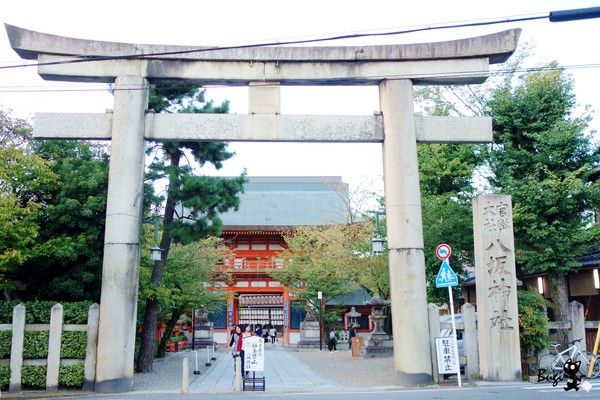
▲ Torii gate at Kyoto’s Yasaka Shrine. Torii gates are usually made of stone or wood. Some wooden torii gates are left in their natural color, while others are painted vermilion red for greater visibility.
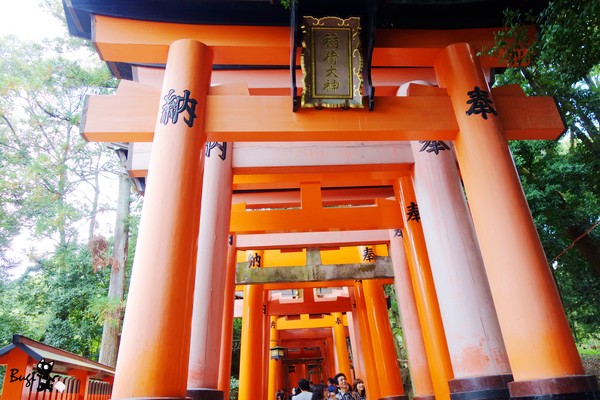
▲ The thousands of torii gates at Fushimi Inari Taisha stretch across the entire mountainside and are a famous UNESCO World Heritage Site.
2. Imperial Shrines
If a shrineenshrines ancestors of the Japanese imperial family or individuals closely related to the imperial household, it is called a “jingu” (imperial shrine). Due to the connection with the imperial family, imperial shrinesare usually much larger in scale and more grandly designed and well-maintainedthan ordinary shrines—for example, Tokyo’s Meiji Jingu and Kyoto’s Heian Jingu. Sincethey are a type of shrine, imperial shrines also have torii gates.
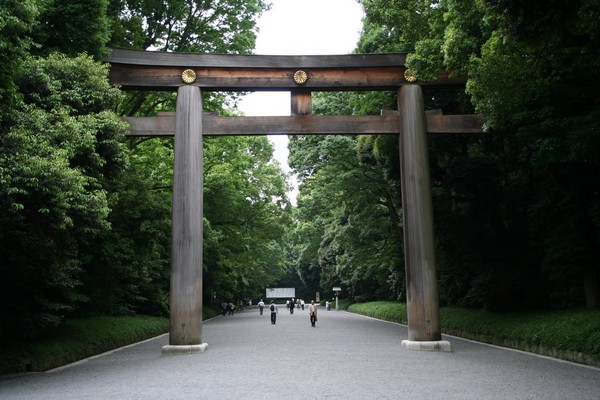
▲ The torii gate at Meiji Jingu (Photo / Wikipedia, photo by Fanghong).
3. Temples
Japanese temples differ from shrinesin that they do not have torii gates at the entrance, and what they enshrine inside are “Buddhist” deitiesThe offering is made to the "Buddhist" deity yGsuch as Sakyamuni, Guanyin Bodhisattva, Tathagata, and others,where worshippers can offer incense and pray. The temple has ordained monksand you may also see gravestones. Japan has many famous temples, such as Senso-ji in Tokyo and Kiyomizu-dera in Kyoto.
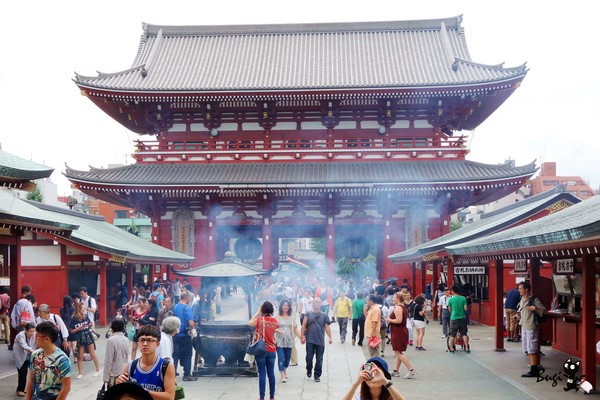
▲ Incense wafts through the air at Asakusa Kannon Temple in Tokyo.
In general,if there is a torii gate and the deities worshipped are Shinto gods, it is a "shrine"; a "shrine palace" (Jingu) is a type of shrine, but on a larger scale, typically enshrining imperial ancestors or deities closely related to the imperial family; if there is no torii gate, the deities worshipped are Buddhist, incense can be offered, and there are monks, it is a "temple."
II. How to Worship
1. Shrines and Shrine Palaces
Since a shrine palace is considered a larger-scale shrine, the worship method is similar to that of a regular shrine.
●Before entering the shrine: There is a torii gate at the entrance of the shrine, which is a symbol of the shrine, and seeing the torii gate means you have reached the dwelling place of the deity. You may bow slightly in front of the torii gate, as if informing the deity that you are about to enter for worship. Passing through the torii gate signifies entering the realm governed by the deity, so special caution is required in your behavior.It's a bit like informing the deities that you are about to enter for worship—once you pass through the torii gate, it signifies that you have entered the realm governed by the kami, so your behavior must be especially respectful.
●Before worship: There is usually a small basin in the shrine with a ladle on it, called a"temizuya," where you must wash your hands and rinse your mouthbefore praying to the deity, to cleanse yourself and show respect.And this hand-washing and mouth-rinsing must not be done carelessly — there is a specific order:
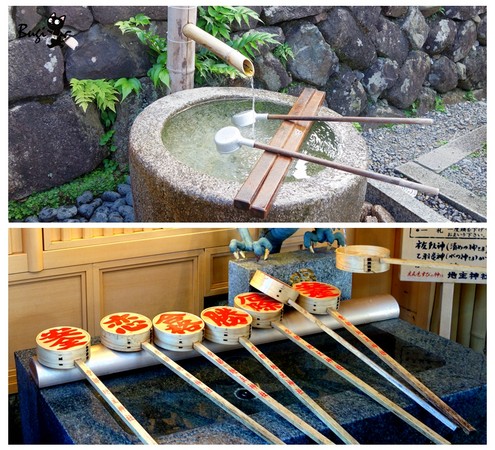
And this hand-washing and mouth-rinsing must not be done carelessly, as there is a specific order to follow:
(1) Hold the ladle in your right hand to scoop water,and wash your left hand first;
(2) Hold the ladle in your left hand to scoop water,and wash your right hand;
(3) Hold the ladle in your right hand to pour water into your left hand,and use the water in your left hand to rinse your mouth. Under no circumstances should you put the ladle directly to your mouth;
(4) Hold the ladle upright and let the remaining water inside flow from top to bottom to clean the handle, then place the ladle back in its original position.
Only use the water from the same ladle for all four of the above steps.This is something to keep in mind.
If you wish to follow more traditional etiquette, the path from the torii gate to the main hall is called the “sandō” (参道),try to walk along the edges of the sandō, as traditional Japanese belief holds that the center of the path is reserved for the deities.The sandō is usually covered with small pebbles, which are meant to help worshippers cleanse their feet of dirt before approaching the sacred space to pray.
In addition, the eaves of shrines and the area under torii gates are often adorned with“shimenawa”—ropes woven from straw—that may also be found around large trees or stones within the shrine grounds.These ropes serve as a reminder that these areas are inhabited by the divine, and should not be approached or touched casually.。
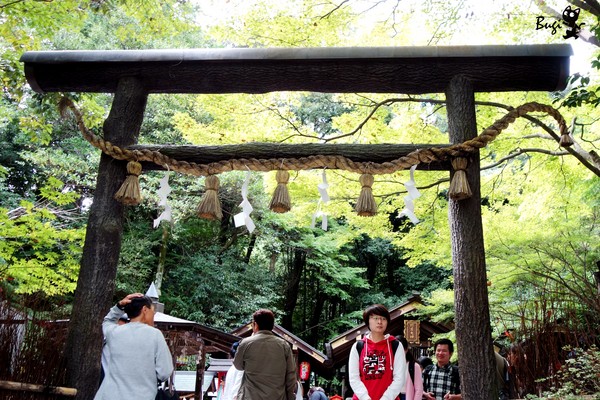
▲ The shimenawa rope woven from straw on the torii gate of Arashiyama Miyano Shrine.
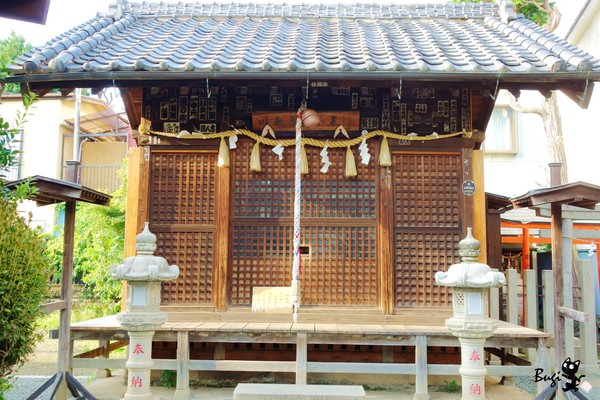
▲ The shimenawa rope on the eaves of Kawagoe Yakushi Shrine.
●Prayer (O-mairi)::
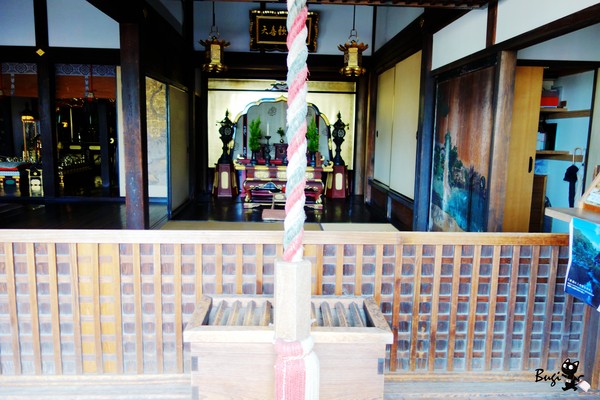
(1) First, put away any items you’re holding into your bag or place them by your feet,then bow respectfully to the deity;;
(2)Toss a coin as quietly as possible into the “saisen-bako” (offering box),typically a five-yen coin, as the Japanese word for “five yen” (go-en) sounds similar to “good fortune” or “connection.” If you don’t have a five-yen coin, any amount is fine—the key is sincerity.
(3) If there is a bell on the offering box, you can ring it at this time.If there’s a bell on the offering box, you mayring it one to three times, which is said to call the attention of the deity.
(4) Then,Next,bow twice, clap twice, press your hands together to pray, and then bow once.The rhythm goes:“2 bows, 2 claps, 1 bow.”
Simply put, that means => 1 gift → insert money → ring the bell → 2 gifts → 2 claps → make a wish → 1 gift.
2. Temples
●Before entering the main gate of the temple: Put your palms together and bow toward the main hall.
●Before worshiping:
If there is a temizuya (hand-washing pavilion), the method for washing hands and rinsing the mouth is the same as at a Shinto shrine. If there is a bell tower beside the hall, do not ring the bell on your own.

▲ If the temple has a bell tower, do not ring the bell without permission.
●Worship:
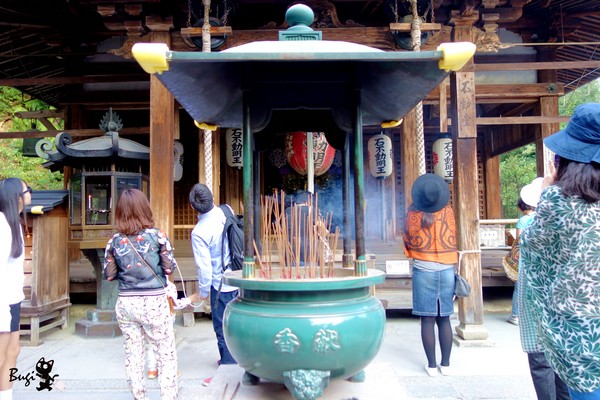
Enter the worship hallBuy incense, light it, offer prayers, and toss in some monetary offerings (known as "kaenkin"). After praying, place the incense stick in the incense burner. At this point, you may cup your hands around the rising smoke from the burner and bring it toward your body — it’s believed to ward off bad luck.
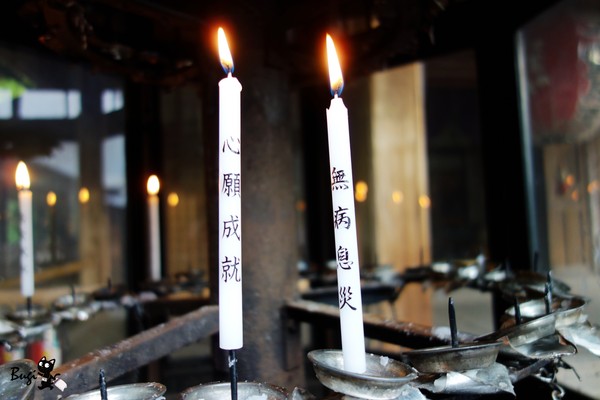
Some temples also offer candles for purchase. Lighting a candle is said to dispel misfortune, but you can only light your own candle — lighting one for someone else implies accepting their bad luck.
The biggest difference between how Japanese temples and shrines are worshipped, aside from the incense offering,is that there is no need to clap your hands.
That’s the explanation for distinguishing between shrines, sanctuaries, and temples, as well as the steps for worshipping at shrines and temples. Now you won’t get them confused the next time you’re in Japan, Up!
Welcome to jointhe Unrestrained Fan Pageandthe Unrestrained Blog
Share
This article is published by HowToTrip. Sharing and reposting are welcome — please credit the source.
Article URL: https://www.howtotrip.net/views-8475
Related Articles
- Shaoxing's "Grandpa Gourd" hangs the gourds back up: "If there are too many people, we'll interact less — just take a quick look from afar"
- Chinese authorities announce "reciprocal adjustment" to Japan visa fees — single-entry visa jumps from 2,250 to 16,750 yen!
- The "health stones" carried by a traveler were found to have radiation levels exceeding safety limits by a thousand times, potentially endangering fellow passengers on the same flight. Customs issues warning!
- Shenzhen Airport Issues Late-Night Notice: Unidentified Aerial Object Detected, Causing Widespread Flight Delays!
- “They only said it cost money after I opened the box and washed it!” 200g of grapes sold for 60 yuan on a high-speed train—12306 responds!
- Can't buy an airline ticket? Denied exit? Blocked from boarding? A large number of Chinese tourists have mysteriously become "discredited individuals"
- Adverse weather and economic fluctuations impact Colombia's coffee market
- Beach bathing area responds to 2 yuan/30 seconds fee for freshwater foot rinsing: Clearly priced!
- Taking off with an improperly closed cabin door? Wing malfunction? Multiple flights made emergency returns mid-journey!
- Experience the gifts of nature! A countdown of the world’s ten most stunning coastlines