The Whimsical World of Gua Bao: Resembling Blue-and-White Porcelain and Marble in Striking Colors
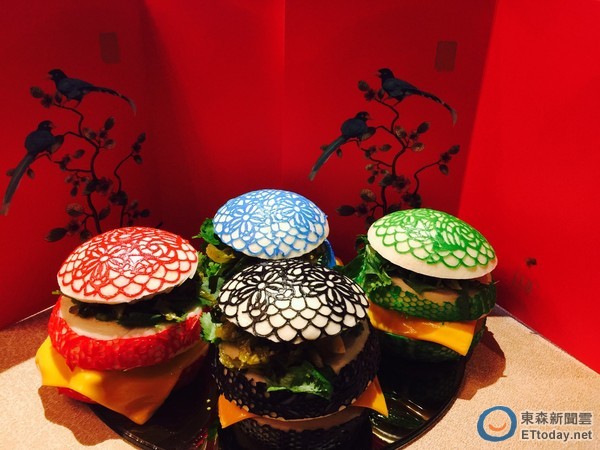
▲ Xinzhuang Yiping Hotel – Blue-and-White Porcelain Gua Bao. (Photo / Provided by Yunlang Tourism, the same below)
Reported by Huang Shiyuan, Taipei
One of Taiwan’s most famous snacks, gua bao typically features fillings such as braised pork belly, pickled mustard greens, peanut powder, and cilantro. Eaten like a burger, it’s also known as the “Taiwanese hamburger.” Traditional gua bao comes with white dough and savory pork belly fillings, but chefs from Yunlang Tourism have gotten creative—transforming the ordinary gua bao into blue-and-white porcelain versions adorned with four lace-like sugar coatings in red, black, blue, and green. There are also marble gua bao, gold-leaf gua bao, and even “mudslide scallop gua bao.” However, Yunlang Tourism notes,that these creative gua bao are only available at special banquet venues or year-end parties at their seven hotels, so they apologize to the general public for the limited access.
Xinzhuang Yiping Hotel – Blue-and-White Porcelain Gua Bao
Chefs Zhang Zhaoyu from Xinzhuang Yiping Hotel and Lin Zhan Yi, the dessert chef, collaborated to develop the creatively East-meets-West “Blue-and-White Porcelain Gua Bao.” The inspiration for this gua bao comes from traditional Chinese blue-and-white porcelain art. The bao features eye-catching lace-like sugar coatings in red, black, blue, and green, each naturally dyed with raspberry, bamboo charcoal, blueberry, and pistachio, then lightly sugared and baked at 90°C for 40 minutes—a single coating takes one hour to complete. The filling includes a mildly spicy, traditional chewy pork, cilantro, and pickled mustard greens, with the usual peanut powder replaced by peanut butter and a touch of cheese added for a Western burger twist.
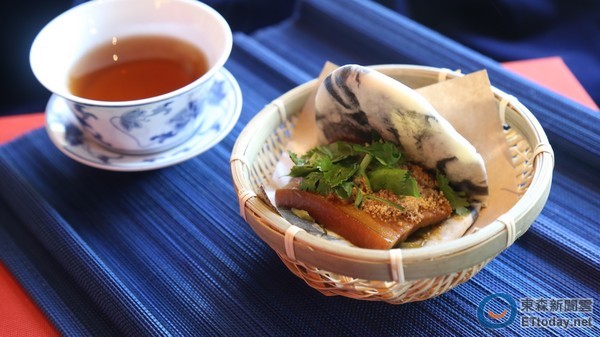
▲ Taipei The Luxury Collection – Marble Gua Bao.
Taipei The Luxury Collection – Marble Gua Bao
What inspired the marble gua bao? It turns out Chef Chen Ganshing, after visiting Taroko Gorge in Hualien, was struck by the majestic canyon landscape. On a whim, he incorporated bamboo charcoal into the dough to create marble-like patterns and formed the bao into palm-sized pieces. These are paired with a Hong-Kong-style soul food star—the “pork belly”—which has a melt-in-your-mouth texture. The Hong-Kong-style braising sauce brings an extra layer of aroma compared to Taiwanese versions, along with added rock sugar to balance the saltiness.
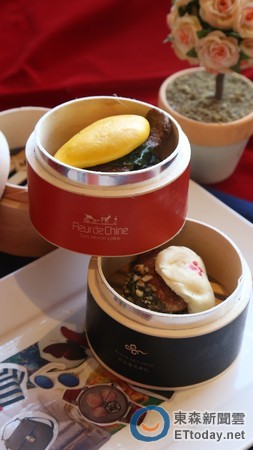
▲ Yunping Hot Spring Resort Sun Moon Lake – Gold-Leaf Bao vs. Little Scent Bao.
Yunping Hot Spring Resort Sun Moon Lake – Gold-Leaf Bao vs. Little Scent Bao
Yunping Hot Spring Resort Sun Moon Lake sent out Western chef Bai Jiahao and teppanyaki sous-chef Li Jiaying to present two wildly different gua baos—one sweet, one savory—named “Little Scent Bao” and “Gold-Leaf Bao,” respectively. The Little Scent Bao replaces the traditional gua bao dough with bread for a softer texture, and is filled with a smooth, chewy 70% Valrhona hazelnut chocolate mousse and custard. Chef Li uses pumpkin, goji berries, and longan to give the Gold-Leaf Bao its golden crust. It’s paired with teppanyaki-seared, medium-rare American prime beef short rib, pickled pepper strips, pickled mustard greens, and raisins, with Thai basil replacing the usual cilantro.
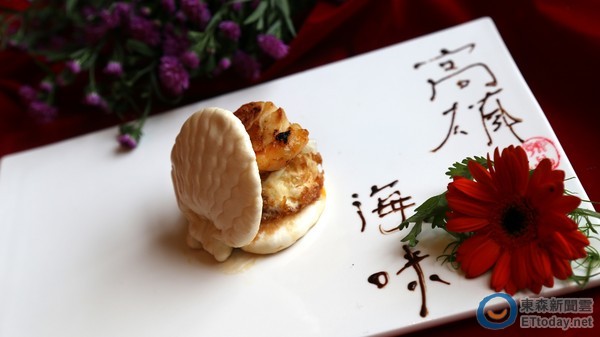
▲ Hilton Kaohsiung – Mudslide Scallop Gua Bao.
Hilton Kaohsiung – Mudslide Scallop Gua Bao
Chef Zhu Junjie once spent three months exchanging ideas with chefs at Rome’s Grand Hotel in Italy and discovered that sweet-and-sour dishes are very popular abroad. When conceptualizing his creative gua bao, he incorporated sweet-and-sour flavors, replacing scallop lips with shrimp. Both are brushed with teriyaki sauce and grilled, then served with a sweet-and-sour fried egg made using Taiwanese sweet-and-sour sauce, all generously wrapped inside seashell-shaped handmade gua bao with shredded iceberg lettuce.
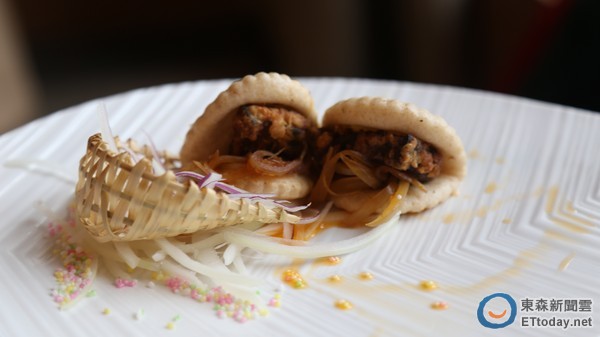
▲ All-Wheat One-Bite Sukiyaki Gua Bao.
Hilton Xinzhua – All-Wheat One-Bite Sukiyaki Gua Bao
This all-wheat gua bao contains braised pork belly marinated in Sichuan peppercorn sauce, then deep-fried. It's paired with caramelized onions seasoned with sukiyaki sauce, all wrapped in a conveniently sized one-bite bao. The result is a richly layered flavor. Additionally, Chef He Qiwei provides red onions, whose crispness helps cut through the richness.
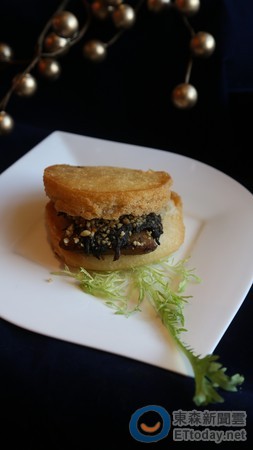
▲ Hilton Taoyuan – Crispy Fried Gua Bao.
Hilton Taoyuan – Crispy Fried Gua Bao
Chef Li Zhongpei from Hong Kong, accustomed to eating crispy fried silver thread rolls or spiral rolls, came up with the idea of first frying the gua bao until golden and crunchy, highlighting its varied textures. The pork filling is cooked in a Hong-Kong style using red fermented tofu and Chu Hou sauce to bring out the unique “Hong-Kong-style gua bao” flavor—rich yet not greasy, and melt-in-the-mouth.
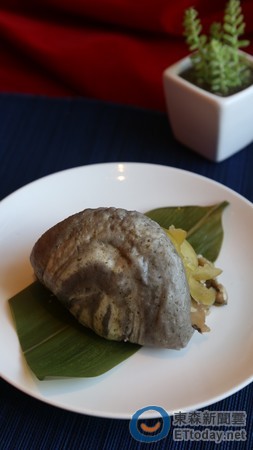
▲ Hilton Hualien – Qixingtan Stone-Pattern Gua Bao.
Hilton Hualien – Qixingtan Stone-Pattern Gua Bao
While reflecting on creative dishes and collecting his thoughts by the seaside, Chef Hong Guoyi was inspired by the beautiful stones of Qixingtan in Hualien and envisioned crafting a stone-patterned gua bao with local character. The chef replaces traditional pork belly with chicken thigh meat from grass-fed chickens in Xincheng, and substitutes traditional pickled mustard greens with chopped seedless dried plums from Fenglin, Hualien. The classic peanut powder is swapped out for cheese powder and shredded cheese from Ruisui.
Share
This article is published by HowToTrip. Sharing and reposting are welcome — please credit the source.
Article URL: https://www.howtotrip.net/views-8251
Related Articles
- Shaoxing's "Grandpa Gourd" hangs the gourds back up: "If there are too many people, we'll interact less — just take a quick look from afar"
- Chinese authorities announce "reciprocal adjustment" to Japan visa fees — single-entry visa jumps from 2,250 to 16,750 yen!
- The "health stones" carried by a traveler were found to have radiation levels exceeding safety limits by a thousand times, potentially endangering fellow passengers on the same flight. Customs issues warning!
- Shenzhen Airport Issues Late-Night Notice: Unidentified Aerial Object Detected, Causing Widespread Flight Delays!
- “They only said it cost money after I opened the box and washed it!” 200g of grapes sold for 60 yuan on a high-speed train—12306 responds!
- Can't buy an airline ticket? Denied exit? Blocked from boarding? A large number of Chinese tourists have mysteriously become "discredited individuals"
- Adverse weather and economic fluctuations impact Colombia's coffee market
- Beach bathing area responds to 2 yuan/30 seconds fee for freshwater foot rinsing: Clearly priced!
- Taking off with an improperly closed cabin door? Wing malfunction? Multiple flights made emergency returns mid-journey!
- Experience the gifts of nature! A countdown of the world’s ten most stunning coastlines