Don’t leave any regrets in life—riding a 125cc motorcycle around Japan for 82 days (Part 1)
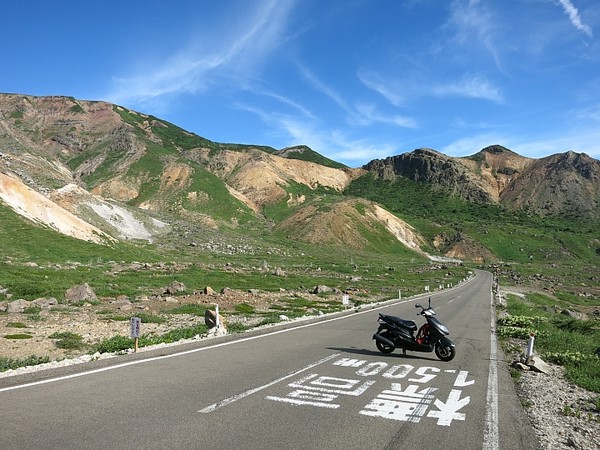
Photos and text byHsieh Hsiao-Cheng
Never leave regrets in life—even if things don’t turn out as hoped, don’t let the word “regret” define your journey.
Motorcycle travel is all about keep moving forward—eat when you’re hungry, sleep when you’re tired, and just remember to fill up the gas tank. It’s that simple.
The idea of riding a motorcycle around Japan didn’t take long to go from concept to action—about three months. The inspiration came from a holiday last year when I rode a motorcycle around Okinawa. Since that trip went smoothly, planning my next journey naturally led me to consider riding a 125cc motorcycle around the entire Japanese archipelago. Timing-wise, I aimed for a period within the three-month visa-free window with affordable flights. And just like that, the idea for my “Riding a 125cc Motorcycle Around Japan” trip was born.
As for whether 82 days is too long or not long enough to circle Japan—that didn’t really concern me. Just being able to ride a motorcycle solo through Japan for 82 days felt incredibly “cool” to me. After all, my Japanese only goes as far as “konnichiwa” (hello), “arigatou” (thank you), “chotto matte” (wait a moment), and “sayonara” (goodbye). My English is roughly limited to “yes,” “no,” “I don’t know,” “I don’t speak English,” and “cool.” The only two English phrases I know for sure are “I do not speak English” and “I can not believe it.”
Though my foreign language skills are limited, my job situation was stuck in a “low salary, low position, low ability” rut, so I didn’t hesitate for long before booking my flight. As for planning the trip, I had one simple concept: “go around the country,” and ideally, stick to the coastline to trace Japan’s shape as much as possible.
Next came renting a motorcycle. The information I found online wasn’t as abundant as I’d hoped. I assumed many people would choose to ride motorcycles in Japan—it sounds like such a dream. Coming from Taiwan, where the roads are bumpy and full of potholes, riding on smooth roads in Japan seemed like it would be a real treat.
Though the information was limited, the key points were enough. Based on what I found, I rented a motorcycle in Tokyo for three months—and it was even a Taiwanese YAMAHA JiaZhan, a familiar model that felt safer. Of course, renting wasn’t as straightforward as I thought. Since I planned to travel long distances around the country, some rental companies wouldn’t allow it, restricting how far you could ride due to concerns about wear and tear or accidents in unfamiliar areas. After contacting several places and using Google Translate to communicate via email, I finally found this JiaZhan in Tokyo. The monthly rent was about NT$10,000, with a mileage limit of 1,000 km per month. Any distance over 3,000 km incurred additional fees.
This made me hesitate for a while. I even considered buying a motorcycle locally and selling it after the trip, but ultimately, factoring in language barriers, the time spent purchasing, insurance, and other issues, I decided to go with the “spend money to avoid trouble” approach and bit the bullet to rent.
Then there was the internet. In this day and age, you simply can’t function without it. Most importantly, I wanted to check in at every attraction I passed on Facebook, documenting every step of my journey in Japan. So, I bought a 12GB SIM card from So-net online, which should be more than enough. For accommodation, I used a mobile app to book youth hostels—my budget could only accommodate single-bed dorms, which also suited me as a solo traveler.
Initially, I booked three days in Tokyo. Later, a Japanese friend told me that early May is Golden Week in Japan, similar to China’s Golden Week, and hotels might fill up quickly. By the time I started looking again, it was hard to find cheap, decent lodging. This served as a wake-up call—if I wanted to save money, I couldn’t leave accommodation decisions too late. Otherwise, what was once a NT$700 youth hostel bed might turn into a NT$2,000 hotel room, blowing my budget.
And just like that, all the preparations for my round-the-country trip were complete—I’d booked my flight, rental motorcycle, internet, and accommodation. I quit my job, left Taiwan, and set off to ride a motorcycle in Japan for 82 days. Why a 125cc and not a larger bike? Simply because I’m not a die-hard motorcyclist. I just feel that riding a motorcycle is the most natural way for me to live. I hate waiting for buses and dislike figuring out bus routes. Many of the places I wanted to visit, like remote mountainous areas, weren’t accessible by bus. Also, renting larger motorcycles (over 250cc) is more expensive, and being vertically challenged, I was afraid I wouldn’t be able to touch the ground (sigh). Sure, they look cooler, but I value the pure freedom and peace of mind more. So, I chose a 125cc for the freedom of time and the lightness of spirit.
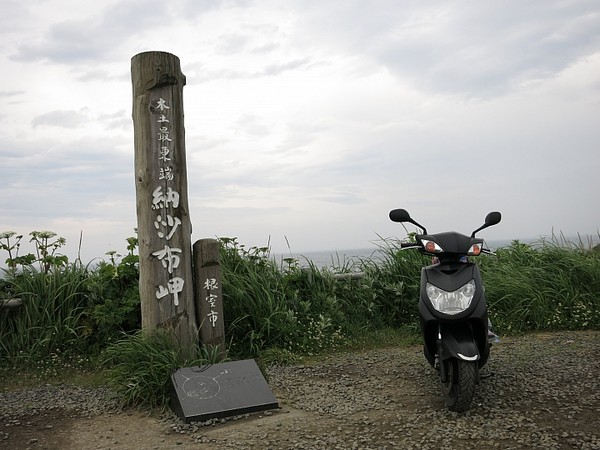
A 125cc scooter is the most suitable vehicle for me, though there were moments I wanted to smash it and upgrade to a larger bike. In Japan, 125cc scooters are classified as “original-powered vehicles,” meaning small city bikes that aren’t allowed on highways—a disappointment compared to my initial expectations. But many Japanese roads are only accessible via highways, and taking detours could mean hundreds of extra kilometers (a bit of an exaggeration). There were times, especially when rushing to reach a destination before dark, that I really wanted to zoom up alongside the cars and “race them.”
In Japan, I saw so many castles I became immune to them. It wasn’t until Shikoku that I realized just how many temples Japan has. In Kyushu, I experienced the rainy season and learned just how long and heavy Japanese rains can be. In Hokkaido, I encountered early July days so cold I had to wear a thick coat—even though Taiwan was in the middle of scorching summer. By the time I returned to Tokyo, I finally understood just how much bigger Japan is compared to Okinawa. During this time, I survived on just five Japanese phrases. There were days when I had no one to talk to, but I didn’t feel too lonely—every day brought new roads to chase, and there wasn’t even enough time to sleep. What insights or experiences did I gain? “Nothing much—it felt like I was living in a dream.”
This Japanese uncle sat by the window in the morning, staring outside pensively with a lit cigarette in hand. He looked at me very seriously and said:“Never leave regrets in life—even if things don’t turn out as hoped, don’t let the word ‘regret’ define your journey.””
Addendum-----
Quote:
Author: Silly Whale (original article)
Great travelogue, such a brave undertaking.
But the Japanese phrase “忘れ物しないでください” actually means “Please don’t forget your belongings”—it’s a reminder not to leave anything behind, not about avoiding regrets.
Hahaha, so Google Translate led to a funny mix-up... Thanks for sharing the correct Japanese translation. Looks like the almighty Google wanted me to have an adventure—translating something so profound into such a hilarious misunderstanding. Seeing the weary look of the innkeeper, I almost took it seriously. Language is truly fascinating—it can turn misunderstandings into something so uplifting.

For those considering “riding a motorcycle around Japan,” here’s a piece of advice I got from an uncle I met. I was bragging about my motorcycle trip around Japan at a hostel in Hokkaido when he said:“What’s so hard about that? Just keep riding forward, eat when you’re hungry, sleep when you’re tired, and remember to fill up the gas tank. That’s all there is to it.””
I stared at him dumbfounded, unable to retort.
The total cost of this trip was NT$220,000—NT$170,000 for travel expenses and NT$40,000 for other items (camera, phone, shoes, clothes).Most of the trip was spent staying in budget hostels, eating at Yoshinoya, and keeping costs ultra-low. Daily expenses averaged about NT$2,000 (exchange rate 0.27): NT$750 for accommodation + NT$250 for gas + NT$400 for motorcycle rental + NT$400 for food + NT$200 for miscellany.
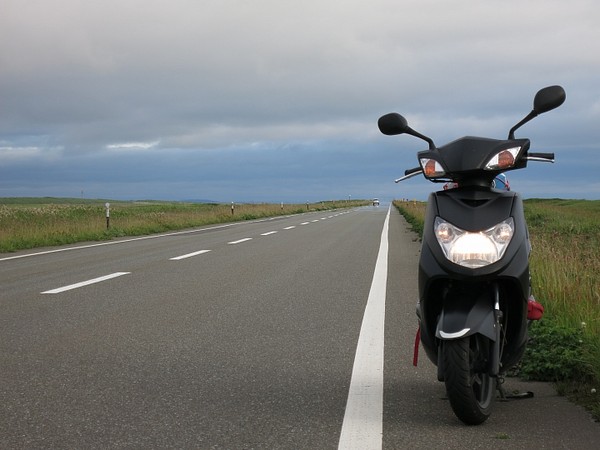
【My Experience Renting a Motorcycle in Japan】
When I arrived at the rental shop, I realized how busy the motorcycle store was. I thought that since not many people ride motorcycles in Japan, they must have been bored out of their minds. But surprisingly, though the shop was small, it had a huge volume of business—apparently, motorcycles are becoming more accepted among Japanese people.
Because I booked the rental well in advance, all I had to do was fill out some simple forms. Let me share what you need to do to rent a motorcycle in Japan. First, of course, is to make an online reservation. Basically, I found information about two shops. One was recommended by “Xiao Xue,” which I heard specializes in large motorcycles and is a top choice for Taiwanese riders looking for big bikes. The other one is the shop I chose—it’s known for offering lower prices if you rent for a week or a month, so it’s popular among those planning long-term rentals.
After booking online, the next step is bringing your driver’s license. Japan recognizes Taiwanese licenses, but besides bringing your Taiwanese license,you must apply for a Japanese translation of your license at the local vehicle inspection center if you want to ride a motorcycle in Japan.This document will clearly state the engine displacement you’re allowed to ride. For example, my Taiwanese regular large motorcycle license says I can ride bikes from 50cc to 250cc. Just remember not to apply for an international driver’s license—that’s a different thing. Also, you must pay by credit card, supposedly to verify your identity. Though I’ve heard some people paid in cash and the shops still accepted it, I didn’t confirm either way. I just played it safe and used my card. Luckily, I get cashback on overseas credit card transactions, which helped offset the transaction fees.
The two rental shops introduced in Xiao Xue’s motorcycle article
Rental Bike RENTAL819:http://www.rental819.com/
Best Bike BEST BIKE:http://www.bestbike.jp/
While the online rental page shows shops all over Japan, they are actually independent businesses with varying rental rules. For instance, some shops may restrict you to riding only within the Kansai region and not allow you to go too far. Most shops also set limits on how many kilometers you can ride within a month. Typically, for a 125cc bike it’s 1,000 km, and for a 250cc it’s 2,000 km—though this varies by shop. If you exceed the limit, you’ll be charged extra, which is something to factor into the overall cost of renting.
I rented for three months at 100,000 yen, plus an additional charge for potential extra kilometers. But the used Yamaha TMAX I got was 200,000 yen. Whether buying or renting is more cost-effective really depends on the math. In the end, I couldn’t find any information on how tourists can buy motorcycles in Japan, so I gave up on the idea. But honestly, that might’ve been for the best—dealing with the transfer of ownership and insurance would probably have been a hassle too.
【Riding a Motorcycle in Japan】
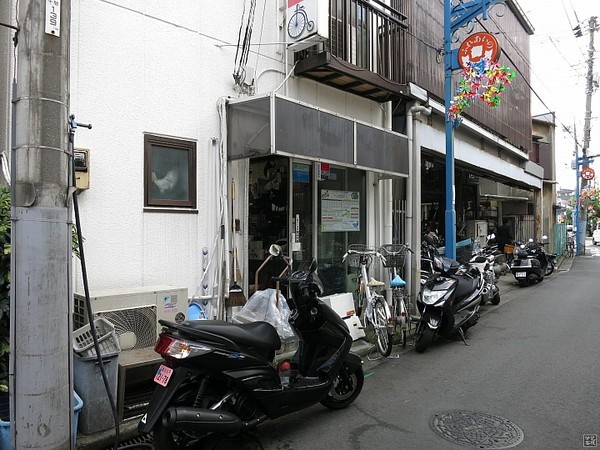
When I rode my motorcycle onto the streets of Tokyo, my heart was thumping with excitement—like the feeling of getting into a top school after exams. Even though I’ve never been academically successful, it felt like the same rush of joy. Floating along, I was ready to start my nearly three-month motorcycle journey. As for whether I’d get used to different traffic directions—no problem at all, k8 ! Just follow the flow of the vehicles ahead, and you’ll be fine.
But Japan doesn’t have dedicated motorcycle lanes, so you end up riding right behind cars. What confused me was where to stop at red lights. Do you stop behind the cars? I wasn’t sure because doing the same as cars felt strange—like I was taking up a whole car-length space. Other riders would often scoot up front, but I’d heard Japanese people are very law-abiding, so I just stayed behind the cars. I figured I’d figure it out once I got more comfortable.
Actually, Japanese drivers can be pretty aggressive. I always thought driving in Japan was slow and smooth, but that’s not always the case. Probably because the traffic lights are highly inefficient—they’re usually segmented into rigid sequences (+ + + + +), rarely integrated smoothly—and there's a strong focus on pedestrian safety, leading to multiple phases at each light. It’s safer, but red lights tend to last a long time. So when the light finally turns green, every car surges forward without hesitation, and speeds are actually quite fast. Since almost no one breaks traffic rules, you don’t have to worry about cars suddenly “flying out”—unlike Taiwan, where you always have to be prepared for the unexpected, so you drive more cautiously.
So when riding in Japan, if you’re not paying close attention, hesitate, or aren’t familiar with the road conditions, you risk being hit from behind by a fast-moving vehicle. To them, it’s like, “What are you doing?! No one does that!” Both you and the driver will get a shock. To put it simply, everyone in Japan follows the rules strictly, so speeds are consistent—and that means fast. But if you’re unsure or hesitant on the road, you might break the flow and put yourself in danger. The easy solution? Don’t try to look for directions while riding; it could lead to an accident.
Then there’s parking. In Japan, not only is parking a car difficult, but parking a motorcycle is tough too. The easiest option is to use paid parking spaces—even Tokyo has a few motorcycle spots. Trying to find an unattended empty spot to park your bike, like in Taiwan, is almost impossible. Urban spaces in Japan are used with extreme precision, leaving no vague areas where you could squeeze in a motorcycle. Even if you find what looks like a free spot that could fit a 125cc scooter, you’ll often find no one else parked there, making you wonder if it’s even safe. And getting a parking ticket in Japan? The fines are terrifying.
So if you’re planning to ride around Japan, parking costs are definitely something to include in your planning,otherwise it could really stress you out and raise your frustration levels. Most commercial areas in Japan offer parking services, and for 125cc motorcycles, most of the time it’s free—that’s one of the few perks of riding a 125cc scooter. But in cities, that advantage disappears.

【Memories of Entering Japan】
Wanting an affordable yet fulfilling trip, I bought a China Eastern Airlines ticket with a layover in Shanghai and ended up spending five days exploring Shanghai. But right after arriving in Japan, I ran into trouble.
At customs, I was asked why I, holding a Taiwanese passport, had arrived on a flight from Shanghai. Though I couldn’t understand English at all, the customs officer kept asking questions with an impatient expression, and I could tell from her face that something was off. Even someone who’s visited Japan several times like me started to panic. Why was I, with a Taiwanese passport, entering from Shanghai? I was completely baffled—I understood the question, but had no idea how to explain it to the immigration officer. I don’t speak English, let alone Japanese. At that moment, I deeply regretted using the automated exit gate in Taiwan. It was a new passport, and I probably looked like a mainland Chinese trying to sneak into Japan with a fake passport.
There was no exit stamp from Taiwan on it, and I had transited through Shanghai—where I hadn’t even needed my passport. A blank Taiwanese passport definitely raised red flags. I started regretting my naivety—I should’ve gotten my exit stamp from Taiwan before leaving. But all I could do was smile awkwardly and show any documents that could prove I was a “proud Taiwanese.” I hoped I could explain myself in a bit of English or Japanese. I showed my flight itinerary first, which included the flight to Shanghai and the return trip—this was the only evidence that I had transited through Shanghai from Taiwan. But the officer kept asking me questions in English... seriously? Still no luck. Was my trip to Japan going to end before it even began? I then showed my Taiwan Compatriot Permit. After about half an hour of this standoff, under the intense gaze of someone who clearly thought I was a sneaky mainland Chinese, I was finally granted entry. My emotions went through a rollercoaster—from excited to enter Japan to terrified of being deported. Thankfully, I was eventually allowed to continue my trip.
Little did I know, the shock wasn’t over yet. When exiting customs, I was questioned and my passport checked again—but this time, the customs officer was polite and smiled as he interacted with me, which put me more at ease. After the terrifying encounter with the stern, impatient young Japanese woman earlier, whose authority could’ve sent me packing on the first day of my trip, I was under immense stress. Not being able to speak the language made me regret traveling to Japan alone. What if something happened? And seriously, her face was so unpleasant.
But when the customs officer inspected my luggage, even though I couldn’t speak Japanese or English, he still smiled and used gestures. I used Google Translate on my phone, and he took out paper and pen to write Chinese characters to explain what he was doing—he wanted to open my luggage for a thorough check. Even my full-face helmet was taken aside for an X-ray scan. At that moment, I realized that English and Japanese aren’t necessarily the most important languages for travel. We communicated through gestures, phone translation, and handwritten Chinese characters on paper.
That taught me a lesson:if you don’t have access to voice-based online translation (real-time translation using speech), communication can still be a challenge.So, as soon as you leave the airport, install internet access. Second,you can still travel even without knowing the language—when you need to, you’ll find a way to communicate.And if you truly can’t communicate, you’ll back down—for example, the customs officer eventually stamped my passport and let me in, albeit reluctantly (in a less friendly country, maybe not). The conclusion? Get your internet sorted quickly, but even without internet or Japanese, I managed to survive in Japan.
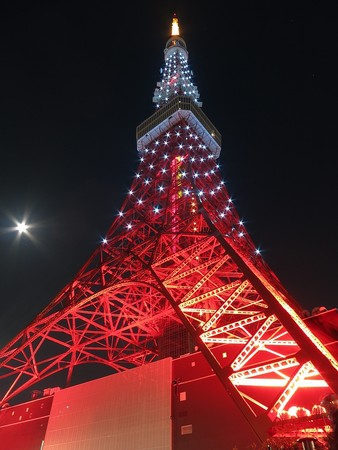
【Finally, the Journey Begins】
I arrived at the departure hall two hours later than I had expected. Right there in the hall, I registered for a mobile data SIM card. It’s great that Japanese airport terminals offer free Wi-Fi, but after an hour of trying, I still couldn’t get it to work. I started to worry about making it in time for the baseball game at Tokyo Dome that evening, so I just steeled myself and headed toward the youth hostel in Tokyo. That’s when my Tokyo journey truly began — less excitement, more frustration and anxiety over all the little things that weren’t going smoothly. Thankfully, I had done some homework the day before and saved a map of the subway and hostel location on my phone. Otherwise, timid little me might’ve ended up in tears at Tokyo Airport.
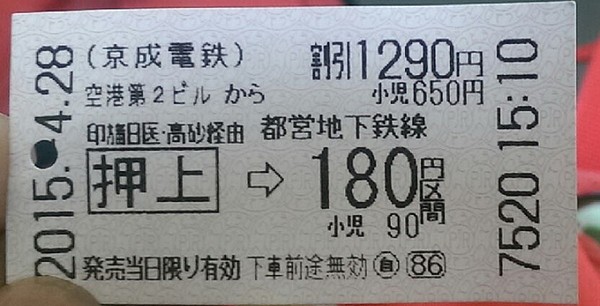
Buying a ticket made me feel even more like I was really in Tokyo — the fare of 1,290 yen could get you almost 300 kilometers in Taiwan, yet here it was just the subway fare for entering the city. It looked like I’d really need to tighten my belt if I didn’t want to go over budget in the days to come. When I first got into the subway, I had no idea which train to take, and I was scared to ask for help. If I took the wrong train, I’d definitely miss the game. But how was I supposed to ask...? I’m just that shy. I hesitated and stressed for several minutes before finally showing a screenshot on my phone to a passerby. All that worry, and the stranger only spoke some Japanese I couldn’t understand. But judging by their gestures, they were probably telling me not to take the first train but the next one. I still don’t know how I summoned the courage to come to Japan alone for three months, yet I was deathly afraid and too shy to even ask for directions. I needed to be braver — I absolutely couldn’t mess up and miss tonight’s game. So when the next subway train arrived, I double-checked with another passenger before getting on.
On the train to the youth hostel in Tokyo, I kept thinking about how many problems I’d run into since arriving in Japan — none of which I’d anticipated the day before. Even without internet, I figured I could still find the hostel and then take the subway to the dome. Eventually, I arrived at Asakusa Station. I think the initial shock was just so intense that nothing afterward felt all that hard. With the help of Google’s offline GPS map, I managed to find the hostel with relative ease.
The highly rated hostel was amazing — most of the guests were Westerners, and all the staff were super friendly. Even when there was a language barrier, we managed with hand gestures and phone translation apps. They even asked where I was headed and drew a subway map to show me how to get to Tokyo Dome. That’s why I wasn’t afraid and felt I could complete this motorbike trip around Taiwan — because I believed help would come when I faced difficulties. I remember not knowing the English word for baseball, so I acted out swinging a bat. Who knew the person I asked wasn’t even a baseball fan and couldn’t understand (maybe my acting was just that bad?). After a couple of wrong guesses, I had to use my phone’s translator. Let’s just say Google is my best friend.

By the time I reached the stadium, the game was just about to start. YAHHH!! After traveling 2,400 kilometers today, I finally achieved my goal. Watching a game at Tokyo Dome has always been a pilgrimage site for baseball fans, and today they were even giving away replica jerseys — one of the reasons I had to come today. The current Yomiuri Giants team didn’t have any players I recognized, so I was purely there for the fun and to experience what it feels like to watch a game in a dome.
At first, there weren’t many people around me. It wasn’t until the third inning that the stadium slowly filled up, and the free jerseys were placed on the seats for spectators to pick up themselves. That was such a cool system. If someone had arrived early and taken all the nearby jerseys, it would’ve been tough to prove, so it’s really a system based on trusting people. I bought the cheapest ticket, which meant I was a bit far from home plate but still had a clear view. The seats were high up, giving me a bird’s-eye perspective. Since I didn’t know any players on either team, I cheered for the home team, the Giants. But the fun of watching the game didn’t diminish — I found the most energetic fans weren’t in the infield, but the cheer squads in the outfield. Every time their team was up to bat, they’d all stand up and cheer loudly.
Next to me were couples on a date watching the game, on my left was what looked like a 50-year-old dad, behind me were three elderly people in their 70s or 80s, and there were also two mother-daughter pairs — the moms looked to be in their 50s. Japan’s baseball fandom spans all age groups, and there were even plenty of mother-daughter combos. Not to mention the elementary and middle school teams that came from afar to watch and learn — it’s truly the national sport. Everyone shared one belief: winning the game. People who didn’t know each other would start clapping or giving high-fives when their team scored, quickly bonding like old friends. The most enthusiastic cheerers were the fans of the visiting team, the Chunichi Dragons. Though they were a minority in the stands, each one was eagerly hoping for a win. There were also beer-selling girls who looked super exhausted, running up and down non-stop, drenched in sweat, smiling as they asked if anyone wanted to buy a drink — even kneeling down to pour it for you. That went on for over three hours. If I weren’t so broke, I would’ve definitely bought a drink. In the end, the home team won, and everyone was happy. But I felt like I hadn’t come just to watch a baseball game — I had come to observe and understand Japanese baseball culture.
The Tokyo subway system is really complicated. Unlike Taipei, where you can use one ticket to reach your destination, here you have to buy another ticket when transferring (maybe I just don’t get it yet). And I had to pay a not-so-small base fare just for riding two stops — not worth it at all. So I ended up walking the streets of Tokyo, enjoying the night, and closing out my first action-packed day.
Part 2 >>>>Don’t Leave Regrets in Life: Riding a 125cc Motorcycle Around Japan for 82 Days (Part 2)

▲ GPS record of the Japan loop ride.
%Strong section of the full trip map%


Share
This article is published by HowToTrip. Sharing and reposting are welcome — please credit the source.
Article URL: https://www.howtotrip.net/views-8126
Related Articles
- Shaoxing's "Grandpa Gourd" hangs the gourds back up: "If there are too many people, we'll interact less — just take a quick look from afar"
- Chinese authorities announce "reciprocal adjustment" to Japan visa fees — single-entry visa jumps from 2,250 to 16,750 yen!
- The "health stones" carried by a traveler were found to have radiation levels exceeding safety limits by a thousand times, potentially endangering fellow passengers on the same flight. Customs issues warning!
- Shenzhen Airport Issues Late-Night Notice: Unidentified Aerial Object Detected, Causing Widespread Flight Delays!
- “They only said it cost money after I opened the box and washed it!” 200g of grapes sold for 60 yuan on a high-speed train—12306 responds!
- Can't buy an airline ticket? Denied exit? Blocked from boarding? A large number of Chinese tourists have mysteriously become "discredited individuals"
- Adverse weather and economic fluctuations impact Colombia's coffee market
- Beach bathing area responds to 2 yuan/30 seconds fee for freshwater foot rinsing: Clearly priced!
- Taking off with an improperly closed cabin door? Wing malfunction? Multiple flights made emergency returns mid-journey!
- Experience the gifts of nature! A countdown of the world’s ten most stunning coastlines