A Dreamy Cherry Blossom Spot: The Elegant "Oriental Temple" on Yangmingshan
Text & Photos /Little White Whale
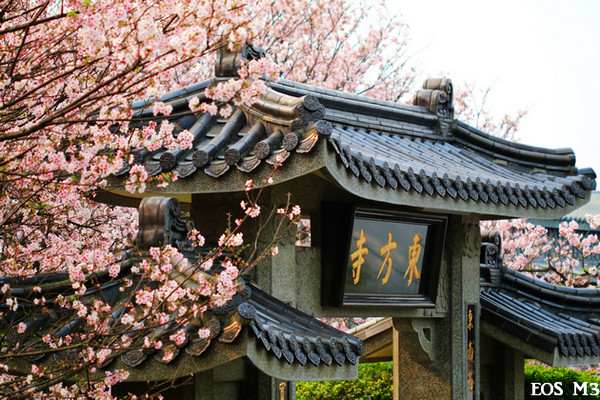
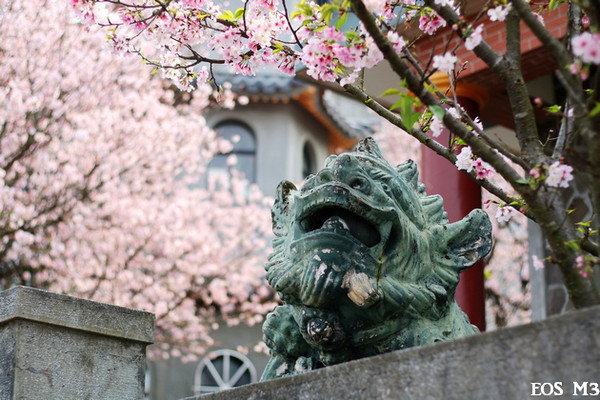
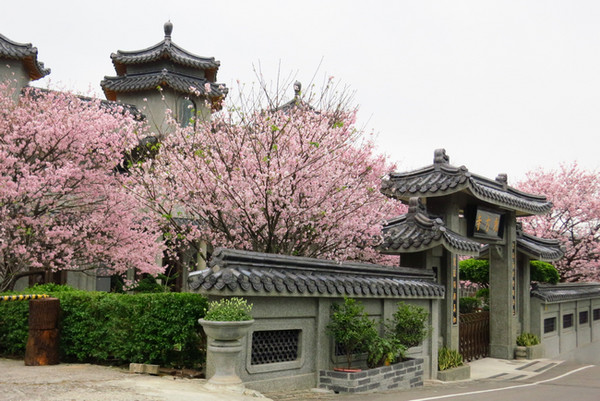
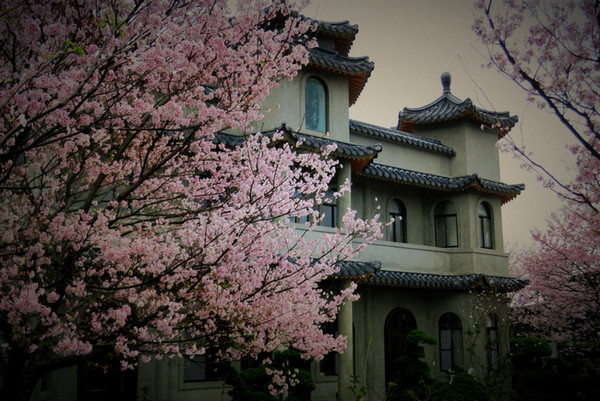
Built in 1972, the Oriental Temple features an architectural style reminiscent of Kyoto temples. Every March, when the Yoshino cherry blossoms are in full bloom, the temple attracts crowds of flower enthusiasts. Turning off Yangde Boulevard onto Yongguang Road, you’ll spot a breathtaking profusion of Yoshino cherry blossoms spilling over the temple walls. Nestled peacefully amidst green hills and fields, the Oriental Temple is dedicated to Sakyamuni Buddha but exudes a distinctly different ambiance from typical Buddhist temples. Without a gaudy exterior or ornate carvings, its simple yet elegant design purifies the hearts of visitors.
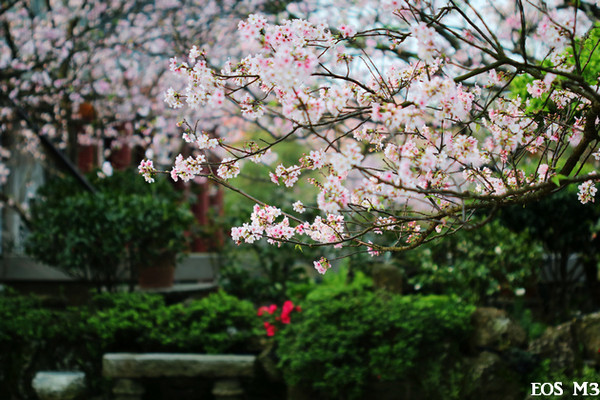
Were it not for the Yoshino cherry blossoms, the Oriental Temple would remain a secluded sanctuary on Yangmingshan, waiting quietly for those with good karma to form a connection.
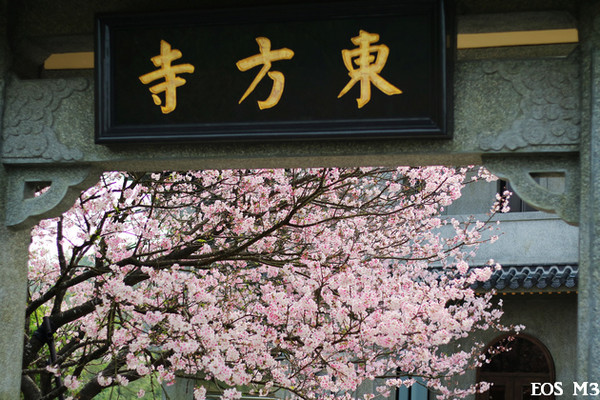
The Oriental Temple is far from the hustle and bustle. The most beautiful cherry blossoms aren’t in some distant place—they’re in the garden of our hearts. When the heart blooms, so do the flowers~
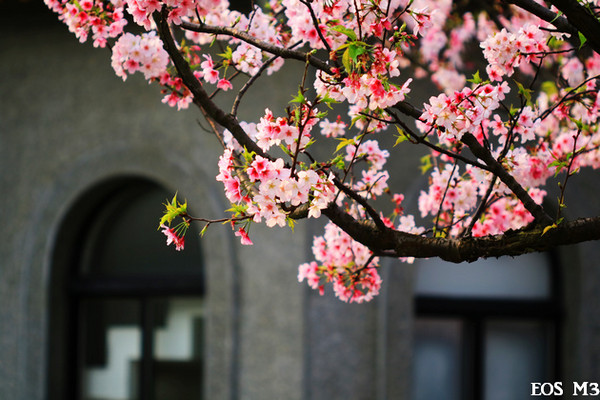
Among temples and renowned spots for viewing Yoshino cherry blossoms, people often compareTianyuan Templewith the Oriental Temple.
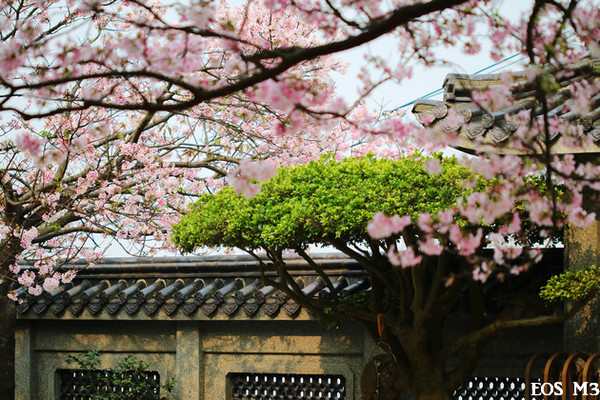
Tianyuan TempleIf Tianyuan Temple is a refined lady, the Oriental Temple is a charming village maiden—each with its own unique allure. Personally, I prefer the serene elegance of the Oriental Temple.
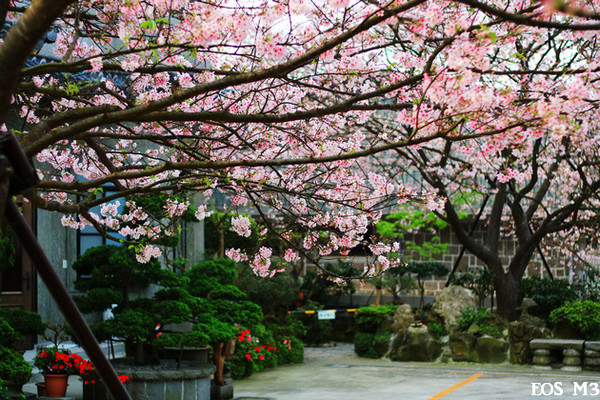
I don’t follow any particular religion, nor did I come to worship. I came for the Yoshino cherry blossoms, but I was captivated by this temple filled with Zen charm.
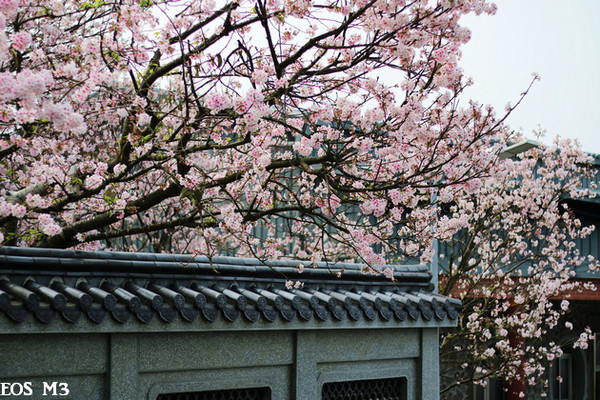
Quietly immersing yourself in the Zen elegance of the Oriental Temple allows you to pause your hurried steps, admire the beautiful blossoms, and reflect inward...
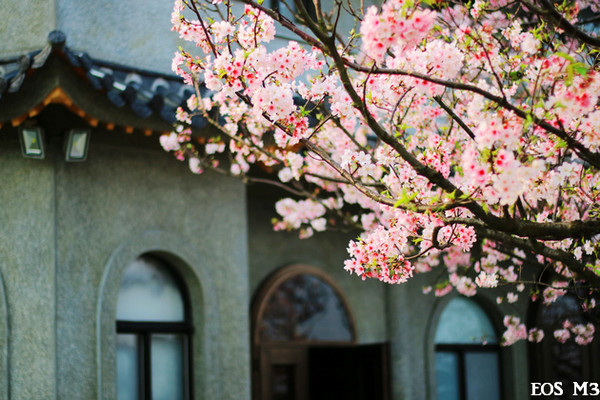
In previous years, the Yoshino cherry blossoms at the Oriental Temple would have faded by the end of March. This year, the blooming season was unpredictable. On April 3, 2016, I visited out of curiosity.
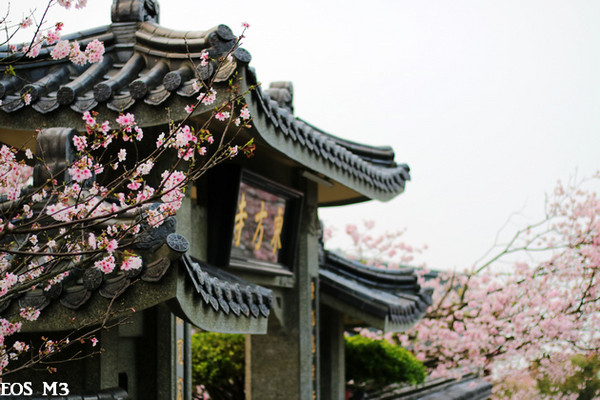
Riding my motorcycle along Yangde Boulevard, I didn’t expect to see the romantic sight of flourishing cherry blossoms in early April.
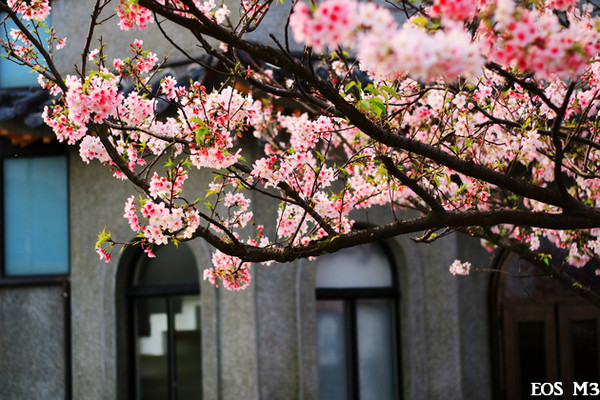
When I arrived at the Oriental Temple at exactly 8:00 AM, I was surprised to find many photography enthusiasts already happily capturing the scene.
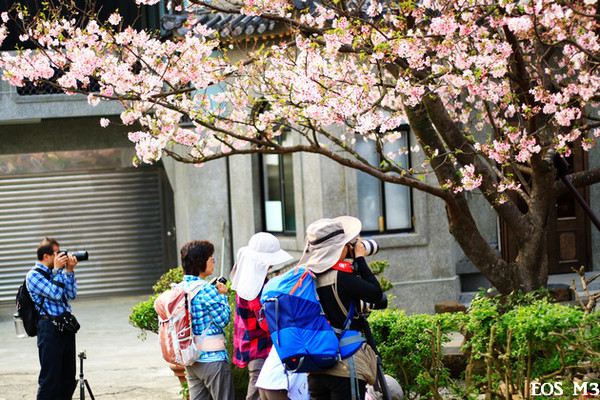
Last month, I bought the Canon EF 50mm f/1.8 STM lens again, and this time I brought it along specifically to shoot portraits and Yoshino cherry blossoms.
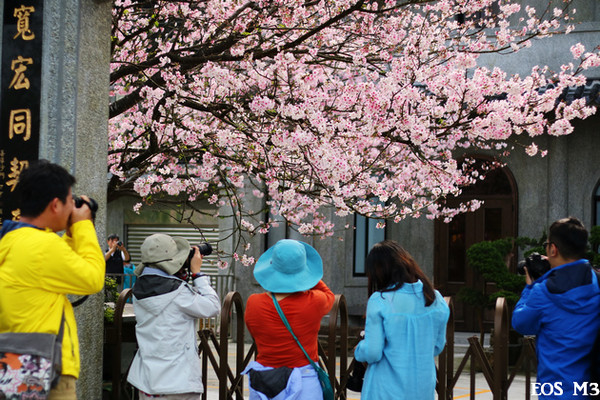
The EF 50mm f/1.8 STM, adapted toCanon EOS M3, produced unexpectedly excellent results for portrait shots with background elements.
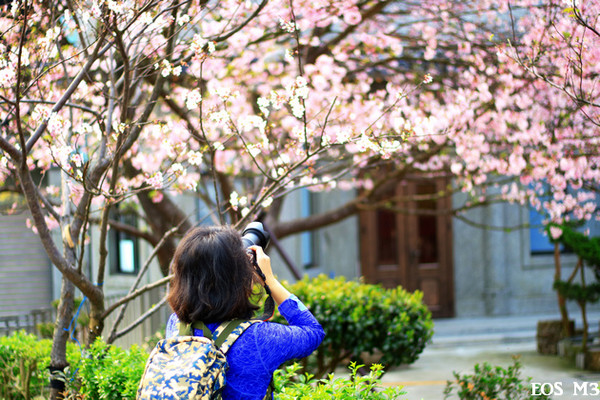
The 50mm lens, adapted to an APS-C sensor,Canon EOS M3has an equivalent focal length of 80mm, making it great for both distant and close-up shots of the Oriental Temple.
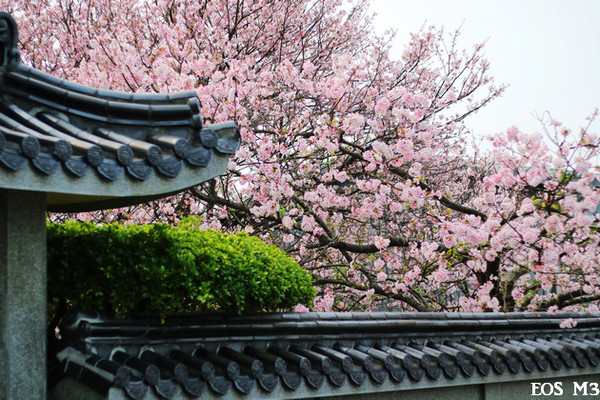
Besides the 50mm lens, I also brought my favorite for cherry blossom photography:the macro lens (Canon EF100mm f/2.8 Macro USM).
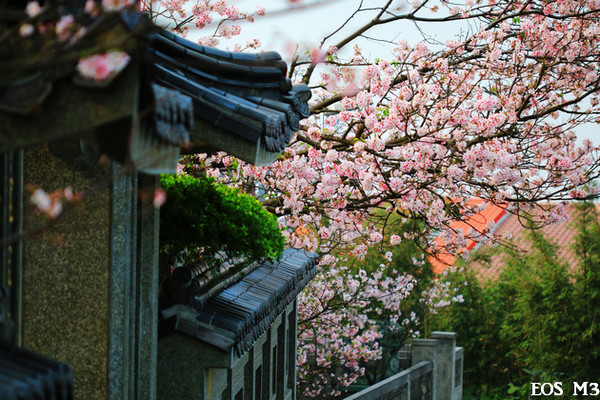
I also broughtEF-M 11-22mma lens, curious to see how the Oriental Temple would look through an ultra-wide 11mm perspective.
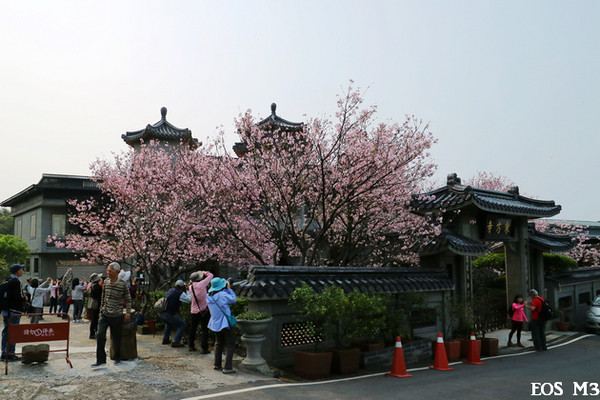
Unfortunately, the morning sunlight was behind the left side of the temple, and poor air quality meant the sky behind the blossoms wasn’t as blue as hoped.
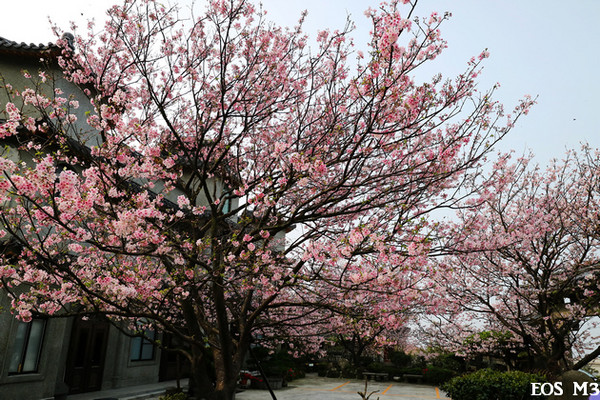
However, using EF-M 11-22mm ’s ultra-wide-angle lens to shoot upward at the sea of blooming cherry blossoms created a uniquely captivating scene.
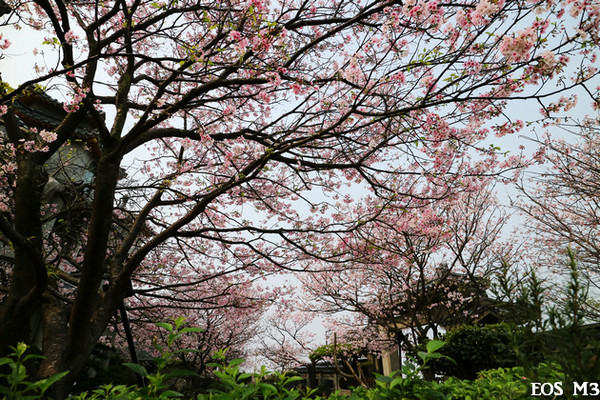
I brought four lenses with me, experimenting with different focal lengths, angles, and heights. Just then, I suddenly saw...
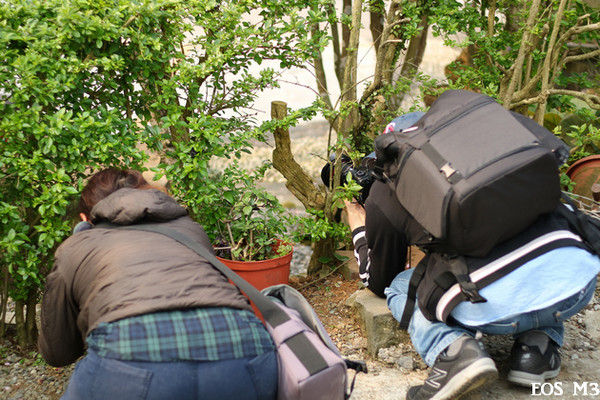
Huh? Why were there photographers one after another, either crouching or lying down, sticking their cameras under the bushes? What on earth were they all doing?
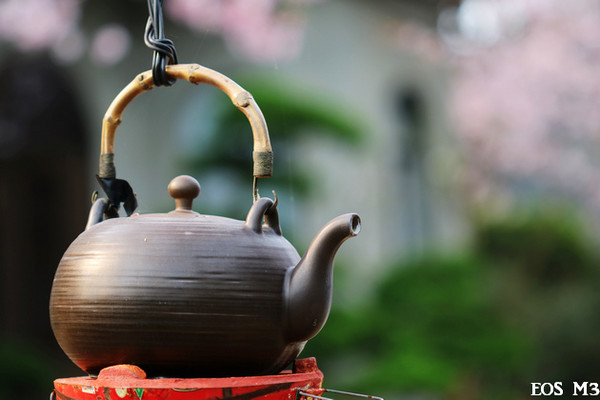
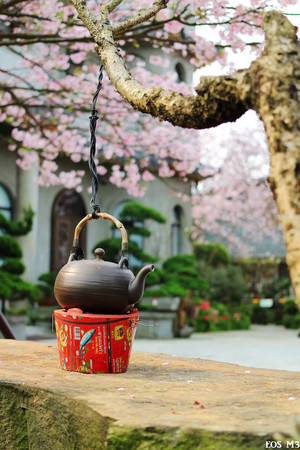
It turned out that on the stone table, there happened to be this tea pot full of Zen charm, stealing the spotlight from the cherry blossoms all over the tree.
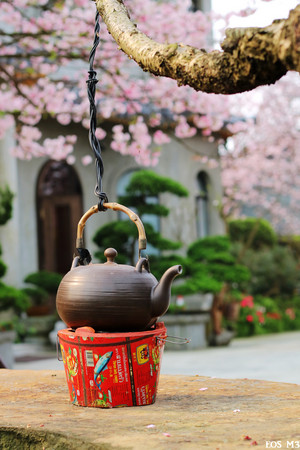
Taking this opportunity, I also compared two lenses with similar focal lengths. I wonder which composition, image quality, and bokeh you prefer?
(The top photo is taken with the EF 50mm f/1.8 STM, the bottom one is EF 40mm f/2.8 STM.)
After enjoying myself at Dongfang Temple for over an hour, I suddenly heard someone cheerfully calling out to friends: “Walk a few steps forward and go take pictures of the wisteria!”
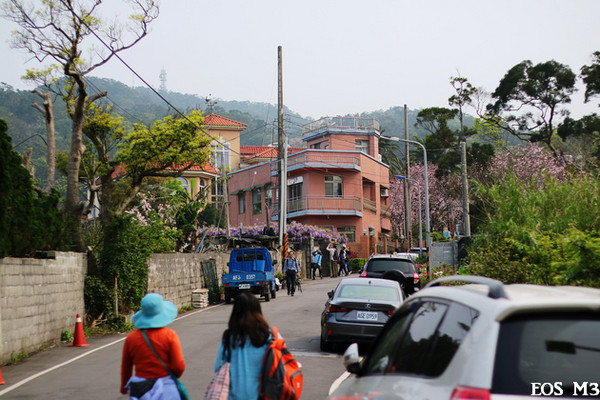
I was genuinely surprised. Back in 2013, when I photographed the wisteria, the Yoshino cherry blossoms weren’t in bloom; later, when the Yoshino cherries were in full splendor, the wisteria had already faded.
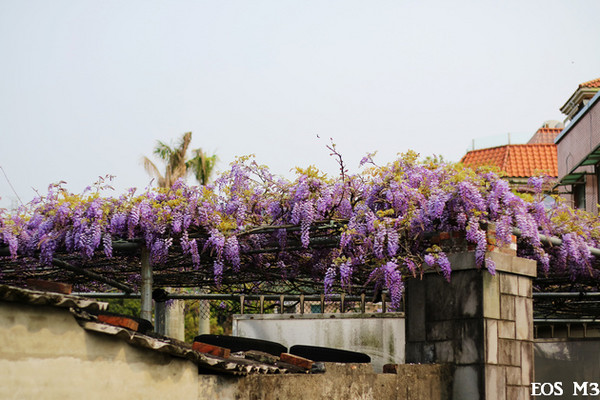
I never expected that in 2016, flower-loving guests would be able to hit two birds with one stone, enjoying both the Yoshino cherry blossoms and the wisteria at the same time!
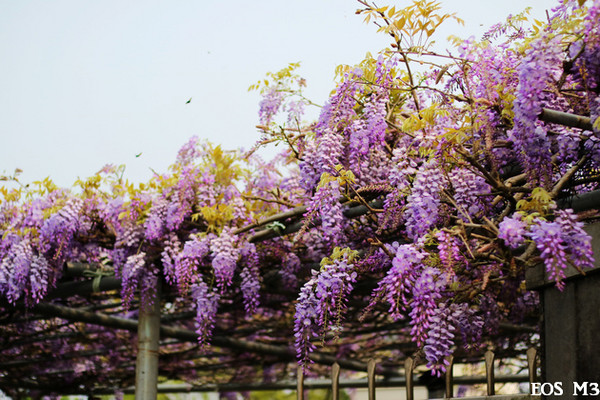
The wisteria, unseen for many years, was still as romantic as ever, bringing back fond memories of 2013 when I started learning photography on my own and took pictures everywhere.
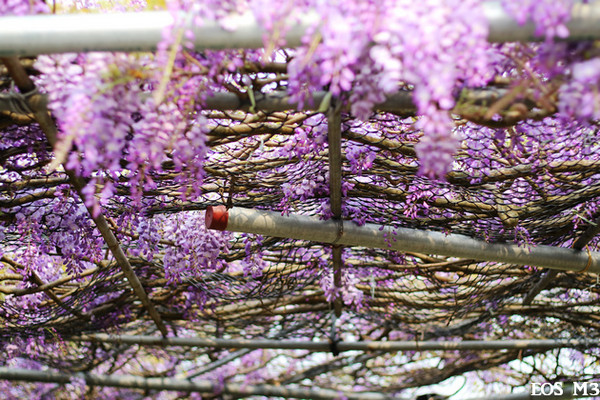
The hostess of the wisteria remained as warm-hearted as ever, opening her private home’s doors wide to welcome everyone to freely come in, admire the flowers, and take photos.
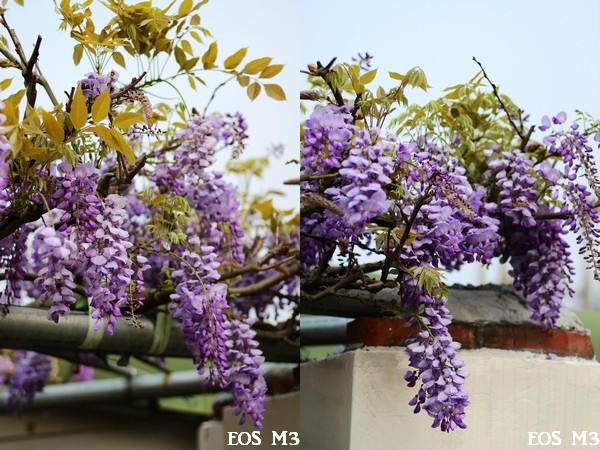
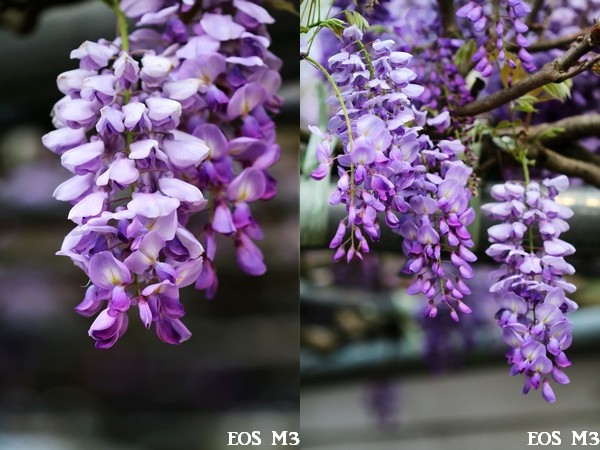
The wisteria photos above were taken with my new friend, the EF 50mm f/1.8 STM;
the following ones were shot with the 100mm macro (Canon EF100mm f/2.8 Macro USM) making an appearance.
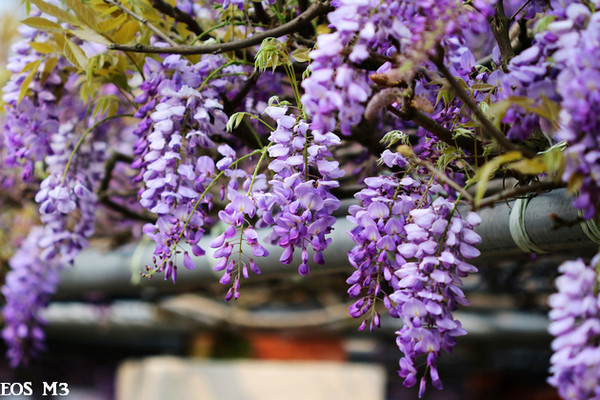
Can everyone clearly feel the difference that comes with the price of camera lenses? But the "little ones" have all run off now XD
The Yoshino cherry blossoms at Dongfang Temple are in full bloom, which also means the cherry blossom season at Yangmingshan is about to come to a brilliant close. Have you been to Dongfang Temple yet?
Below are my records from 2013, when I first explored Dongfang Temple with my Canon S100. Please continue enjoying them, thank you~
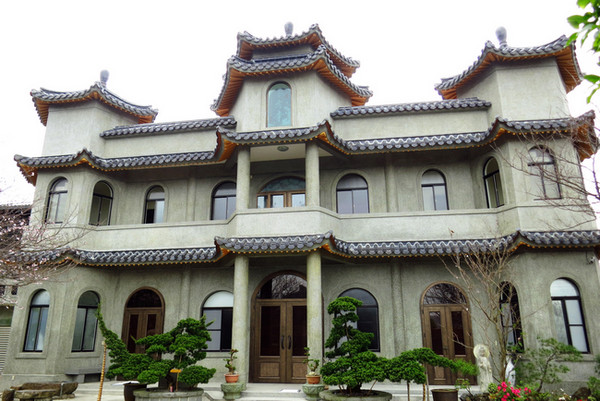
Although the day I came wasn’t ideal — with bare branches all around and gray, overcast skies — it made Dongfang Temple look just like an ink-wash landscape painting.
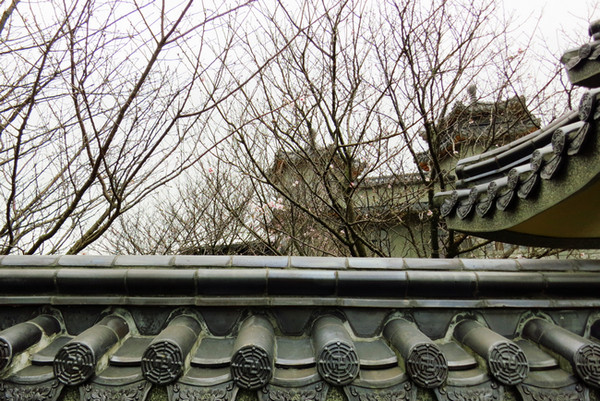
As I squatted by the water tank, carefully composing the shot, the bhikkhuni who had been watching me from a distance for a long time finally walked over and spoke: “Young man, what are you photographing? What’s so worth photographing? The flowers aren’t even blooming yet. Why don’t you go take pictures in front of the house over there?”
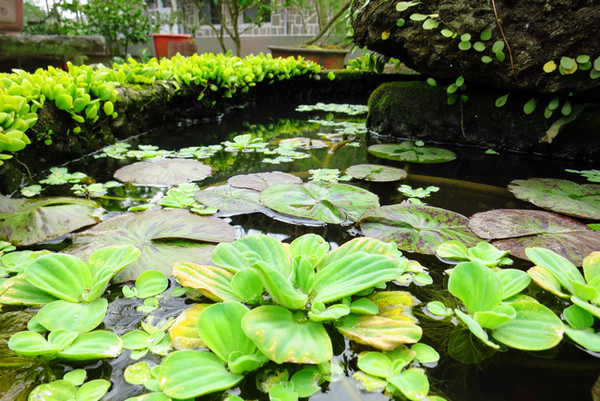
I could tell that this kind-looking bhikkhuni, who seemed like a sweet old granny from next door, was slightly annoyed. But I had been walking carefully and respectfully, quietly admiring the courtyard and taking photos in silence. Later, I chatted with the granny. It was only after hearing her story that I learned: this year, visitors are not welcome to take photos inside the temple courtyard.
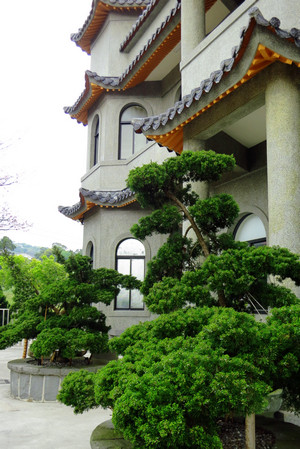
Because last year, some rude and inconsiderate people, in order to get a better shot, damaged cherry blossom trees that had been planted for at least 20 years. No wonder when I arrived, the temple gate was almost completely shut, leaving only a small gap for worshippers who truly wanted to pay their respects.
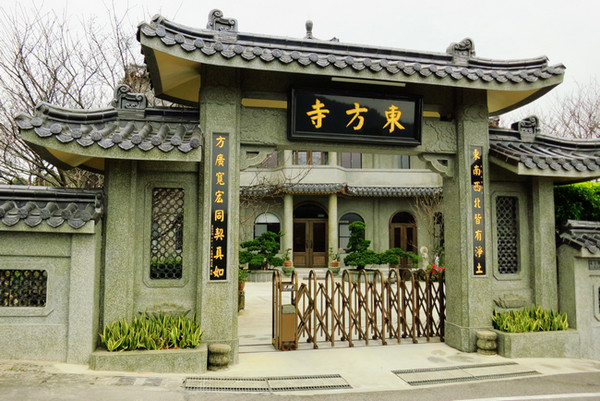
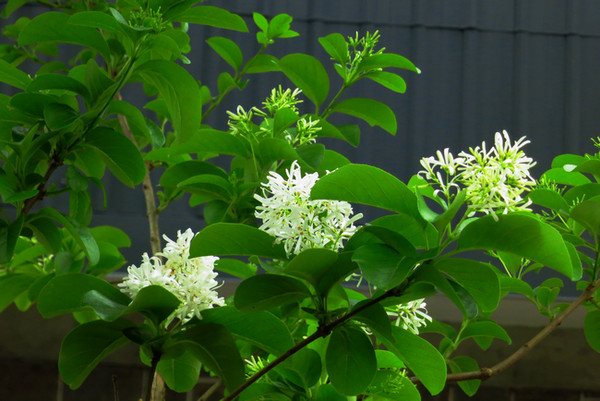
2013.3.13. My first visit to Dongfang Temple — I didn’t get to see the Yoshino cherry blossoms I had expected, but I was pleasantly surprised to discover that the Chinese fringe tree was in bloom. (And that’s how this article came about:“Chinese Fringe Tree + Chinaberry + Cosmos, A Romantic Flower Show at Baishi Lake”.)

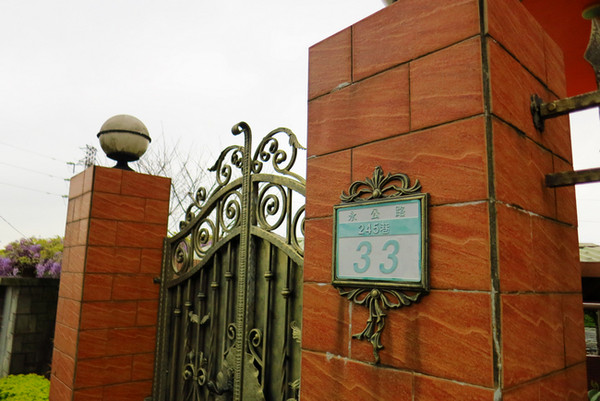
After leaving Dongfang Temple, I didn’t go straight back to the car but excitedly walked uphill for about two minutes to reach this residence at No. 33.
Last year, during my online research, it was this vast, richly purple and utterly enchanting wisteria that haunted my dreams all year long~~
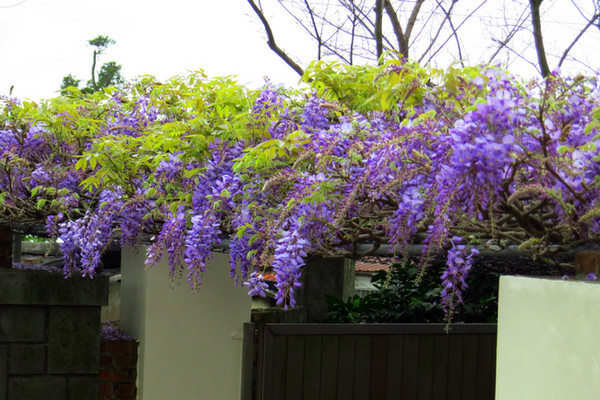
I had already heard from online articles that the owner of this house generously shares the beauty of their wisteria with visitors. Visiting in person, it truly lived up to its reputation!
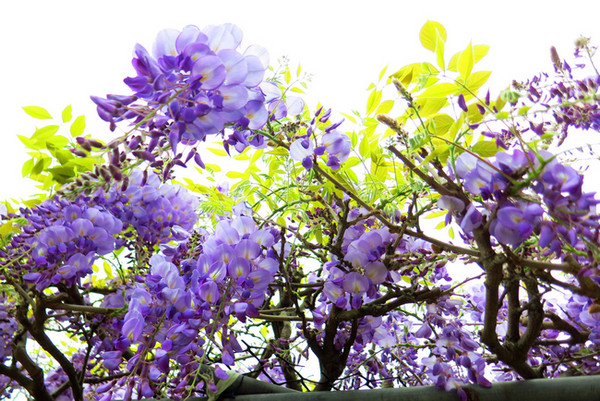
Not only did they allow strangers to look around freely outside the gate, they even opened both their doors wide to welcome us in to enjoy the flowers and take photos!
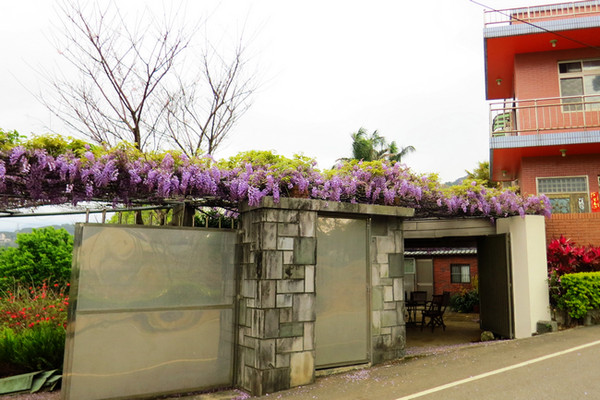
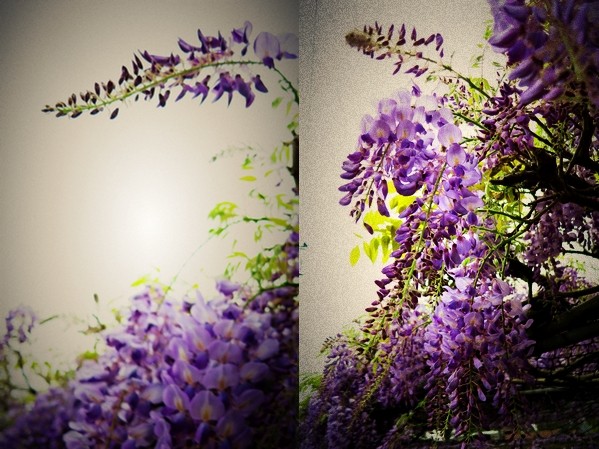
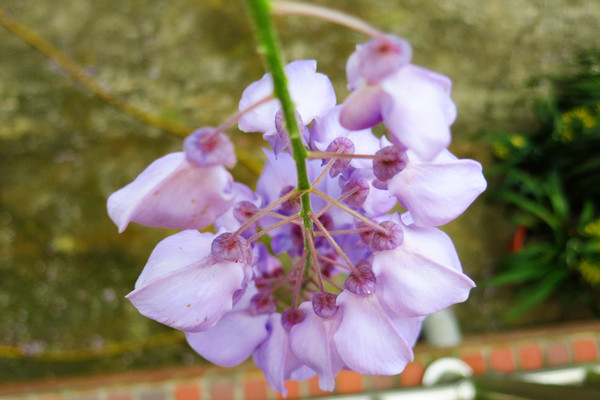
Wisteria, family Fabaceae. Origin: China, Japan. Pinnate leaves, racemes, legumes. Blooming period: March to June.
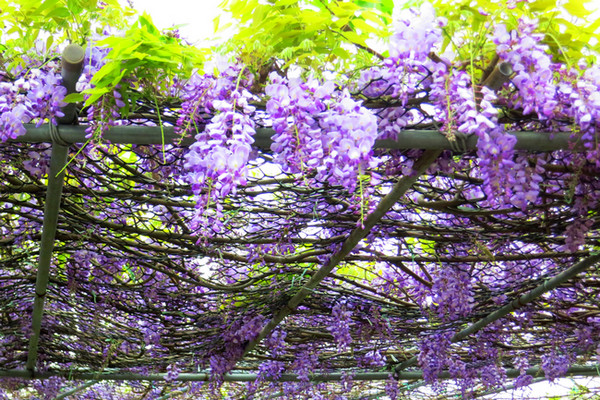
And listen to the verse Li Bai left for the wisteria: “Wisteria hangs on cloud-high trees, its blossoms suit the spring sunlight; dense leaves hide singing birds, fragrant breezes linger with beauties.”
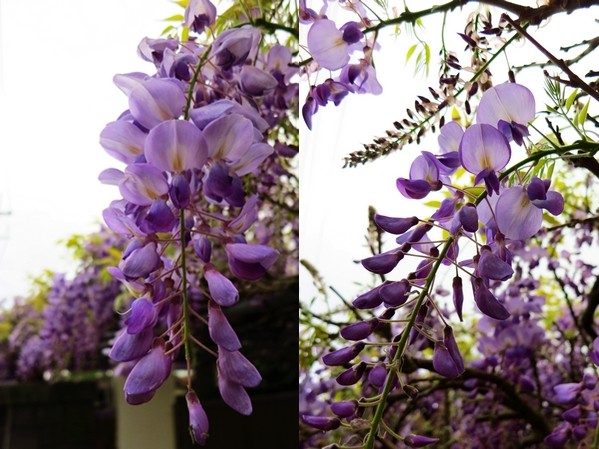
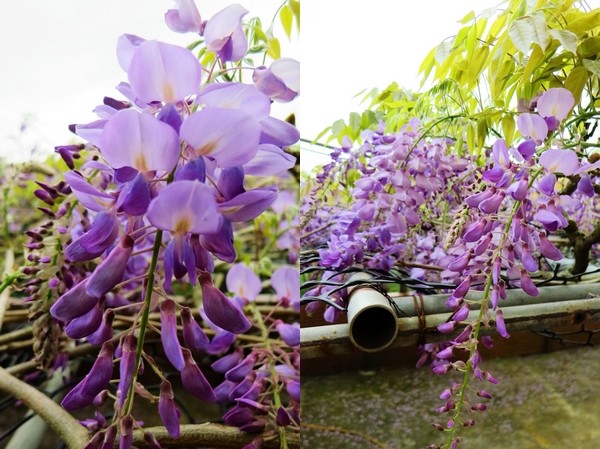
I don’t know why, but I’m just so enchanted by the wisteria and her green leaves in this backlight: the elegance of purple, the brightness of green.
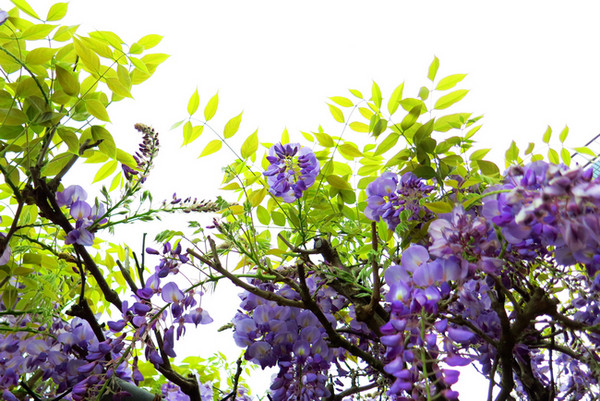
The cascading clusters of wisteria petals, graceful and charming, showcase the spring maiden’s exquisitely painted elegant artworks everywhere you look.
In the courtyard covered with wisteria trellises, right across the road there’s a small flower bed filled with all kinds of plants—you and I couldn’t possibly miss it if we tried.

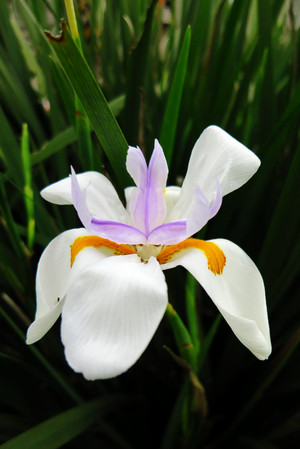
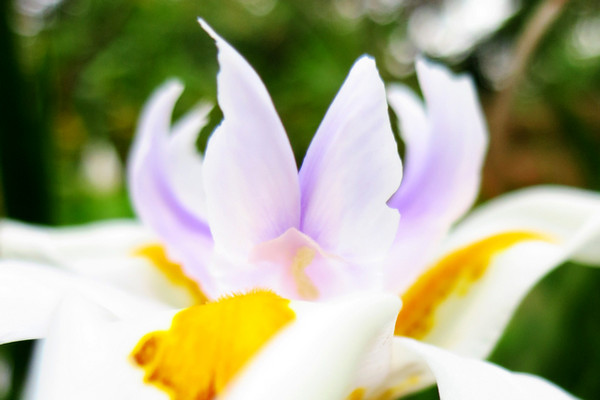
Has anyone seen this variety of iris before? Isn’t she beautiful? Isn’t she beautiful? Look at her—how fresh and refined she is.
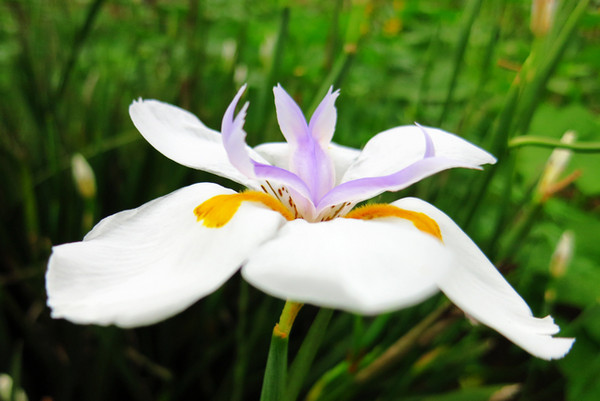
Her official name is [Black Leaf Iris], also known as: Dark Leaf Iris, Large Flower Wild Iris, or Dragon Gate Orchid. Her slender, upright green leaves and stems set off the flowers, making them appear delicate and elegant.
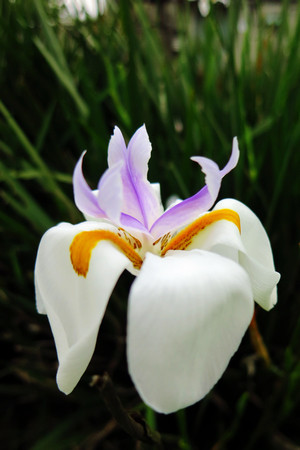
Blooming unpredictably year-round, the three yellow spots on her snow-white petals, along with that purple corolla, make this Black Leaf Iris the shining star of the spring ball.
Next, let’s play a guessing game—what kind of flower is this?
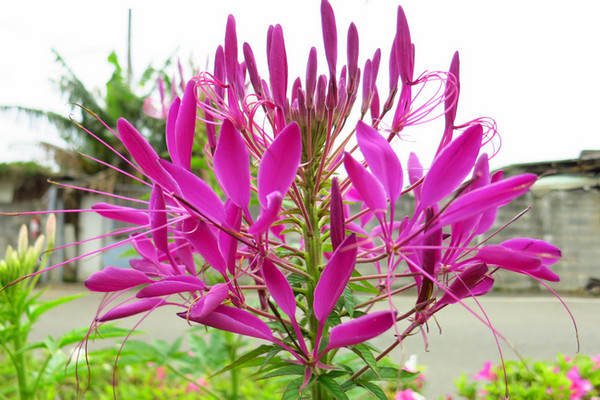
This is the Drunken Butterfly Flower, whose floral language is: “Not as bad as imagined.”
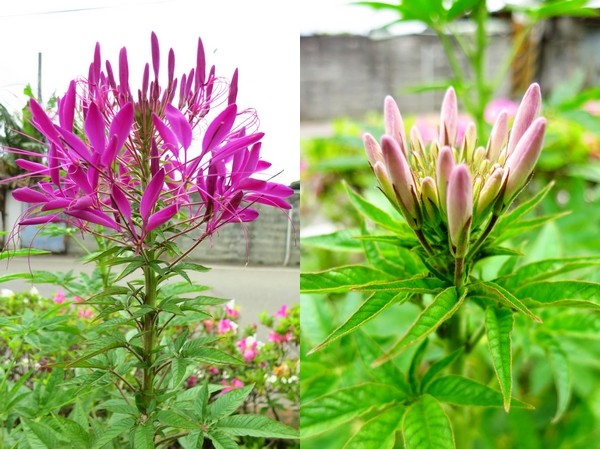
I once saw it at my friend A-Ling’s place on G.Golden Bell Tree, but I had never seen it in person. And yet, I had a delightful surprise encounter with it in the flower bed. The sky was overcast, the light soft and diffused, and the golden bells stood out brilliantly against the gray backdrop.

The best is saved for last. Drumroll, please—it’s showtime, Up ↑↑↑. Whose flower is this? Take a guess~~
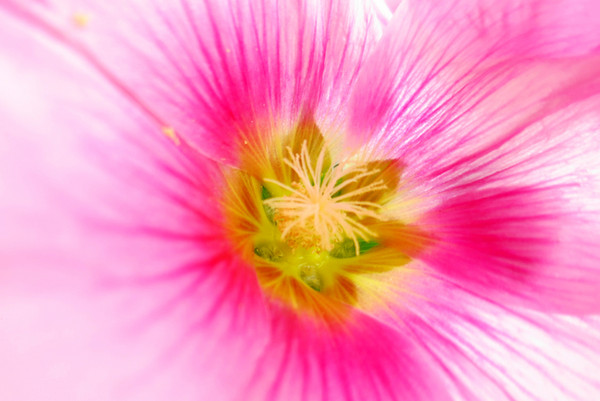
The answer is revealed: Hollyhock. I also saw it at my friend A-Ling’s place, brought back by her from the vibrant southern Taiwan.Hollyhock.
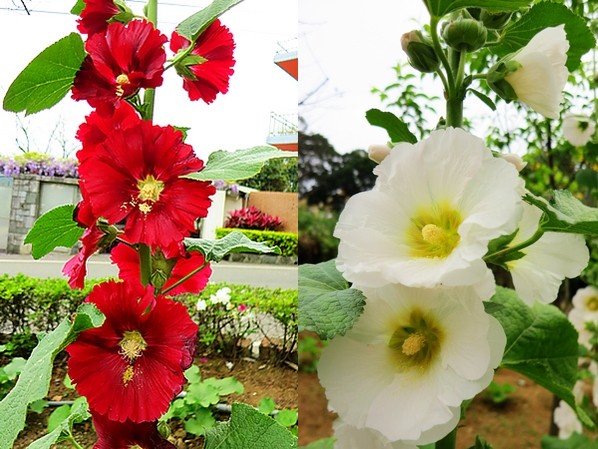
I had never seen a hollyhock in Taipei. Ignorant as I am, I always thought you could only see hollyhocks in southern Taiwan. So when I saw those little trumpet-like blooms, I never imagined they were hollyhocks... (Sorry, A-Ling~)
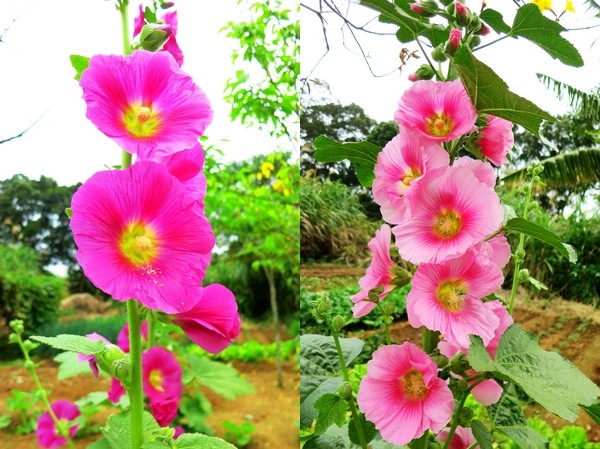
Whenever someone brought a camera close to the hollyhocks, they’d excitedly ask the person taking photos, “What kind of flower is this?” But no one knew the answer. (Me included~sigh~)
Just as I was immersed in the charm of the hollyhock petals, a warm voice suddenly came from behind me: “This kind of flower comes in eight colors...” I turned to see a modest-looking lady with a beaming smile, dressed as if she was about to head out to the estate for farm work.
I quickly asked the lady what kind of flower it was. With a smile, she told me it was a hollyhock, and then it hit me. I had thought she was just a passerby doing a good deed, but it turned out she was the one who planted all the flowers and plants in this garden. What’s more, completely unexpected: she was also the owner of that wisteria-filled house across the way, warmly welcoming visitors with open doors.
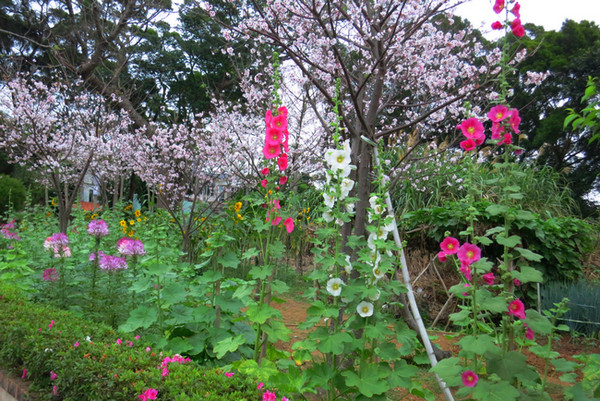
Following her through the gate, up the stairs, and onto the second-floor balcony near the trellis, the view overlooking the crape myrtle from this angle was simply delightful.
Once the lady got talking, there was no stopping her. Enthusiastically, she introduced her plants as if listing cherished treasures. “The iris was brought back from America; the maple tree from Japan; the newly planted wisteria will bloom white and yellow flowers next year...” The lady shared so much, and I, a little flower fanatic, was overjoyed listening and dazzled looking. Had she not been busy bagging peaches, we might have chatted until the stars shone bright and the night turned deep. Hehe~
March 13th, a day worth commemorating for me. In this emotionally distant city, this lady was willing to open not just her gate but also her heart, warmly hosting visitors from all over. I’m not sure whether the lady has any religious beliefs, but her heart is so gentle and beautiful. Her face is like that of a bodhisattva or the Virgin Mary. Her radiant smile, her warmth and kindness, spread along with the wisteria trellis, perfuming the whole yard...

【2013 Bonus Chapter】
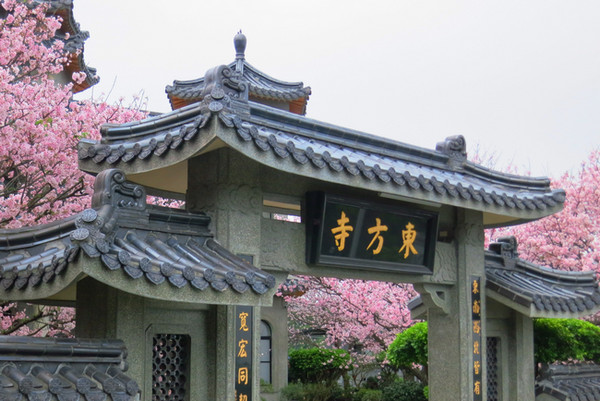
On March 26, 2013, in order to see the stunning Yoshino cherry blossoms with my own eyes~~
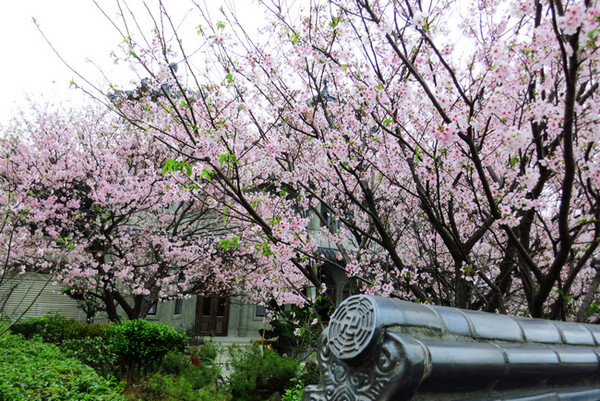
I had already planned to visit Dongfang Temple again next year... but my heart felt a faint sense of melancholy: Was last year’s promise really going to have to wait until next year?
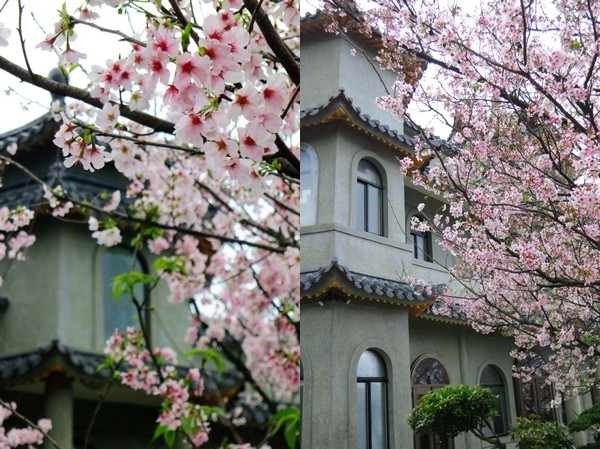
These past few days, while writing this article, I hesitated: should I rush up to Yangmingshan again just for the Yoshino cherries?
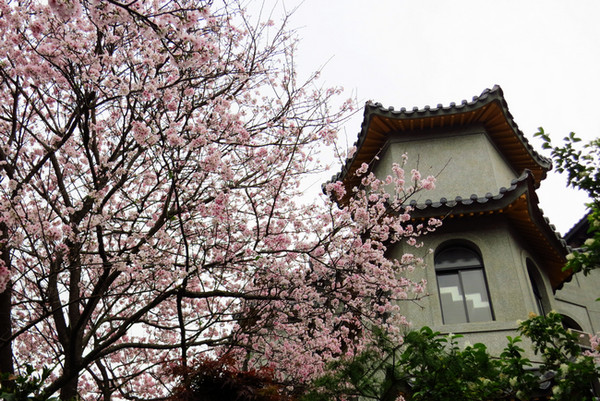
An inner voice grew stronger: “Give yourself another chance. Even if you don’t get to see them this year, you’ll have no regrets.”
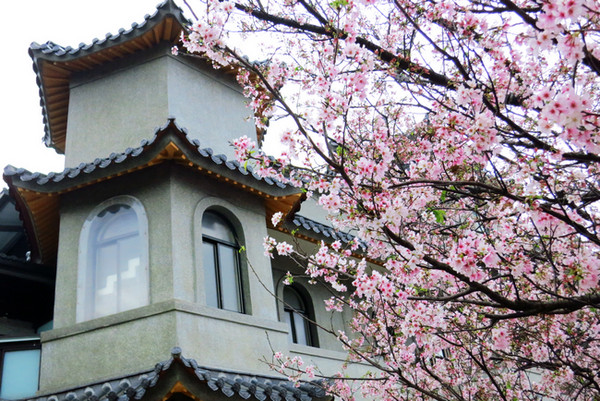
And so, Little White Whale charged up Yangmingshan again. Rushed to Dongfang Temple. Rushed to those unbelievably beautiful cherry blossom trees, and just stood there, lost in thought.
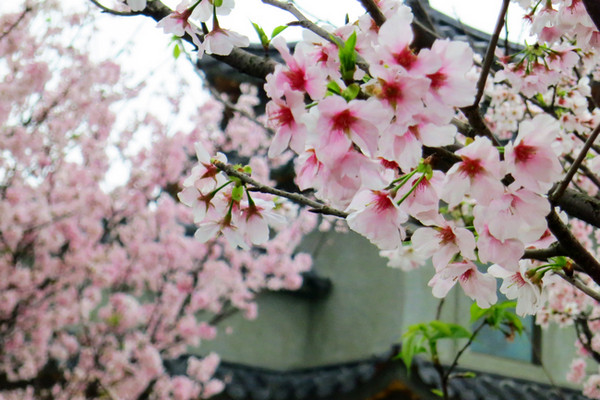
It turns out the Yoshino cherry blossoms at Dongfang Temple had long made a pact with spring: they would only burst into glorious bloom in late March every year.
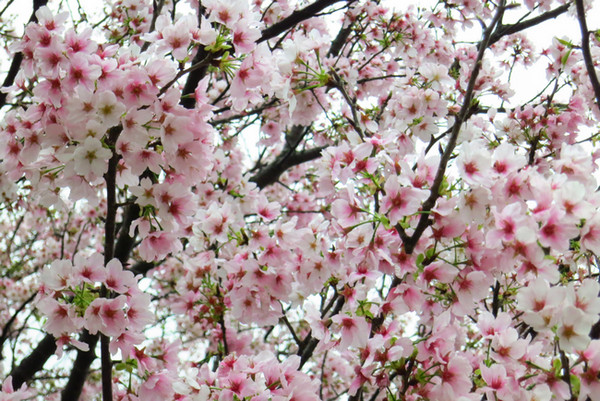
In March in Taipei, there are only a few days of good weather. I missed the azure sky at the Eastern Temple — it’s a pity, but I’m still content.
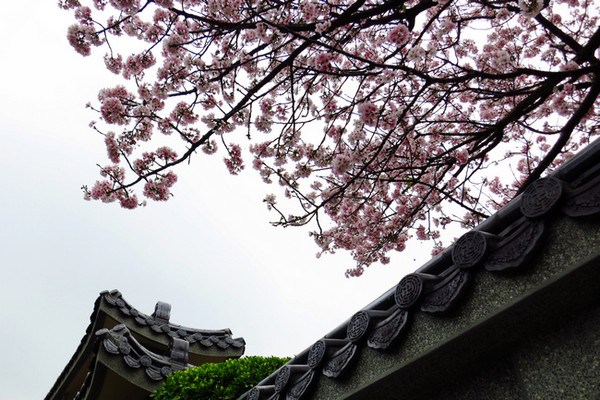
Finally!! The Zen-like beauty of the cherry blossoms at the Eastern Temple isn’t just in other people’s articles or in countless dreams!
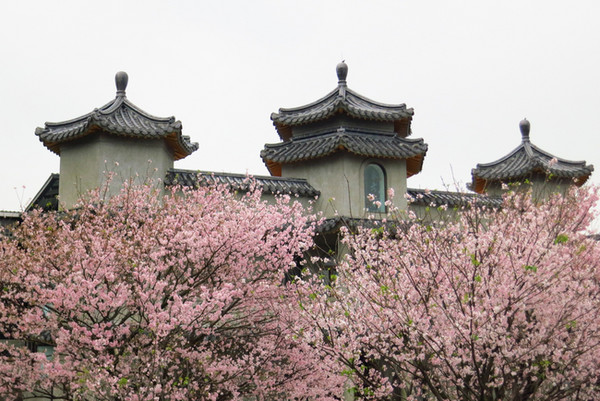
As evening approached, there weren’t many people around to enjoy the flowers or take photos — just small groups here and there, all speaking softly, careful not to disturb the tranquility of the mountain.
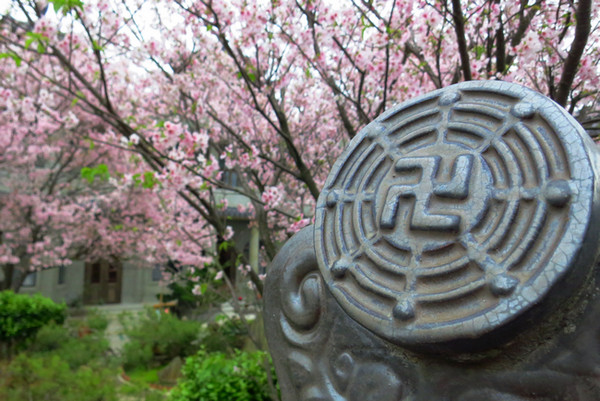
Just as the nun had said on March 13th, the main gate and side gate of the Eastern Temple were both closed, and no one was allowed to enter the courtyard freely.
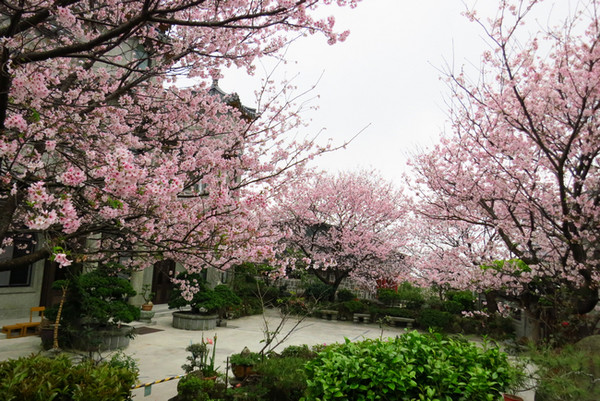
Although we could only shoot through the low walls and fences, everyone’s hearts were still filled with happiness.
While looking up at the cherry blossoms, don’t forget to look down and admire these adorable little greens: the [broadleaf Ledebouria], native to South Africa!
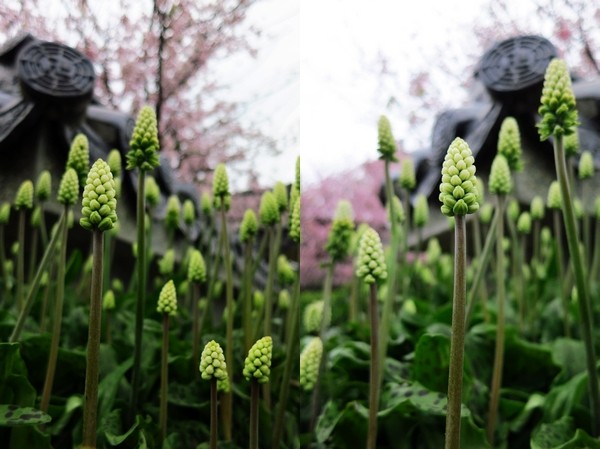
With hearts full of satisfaction, we bid farewell to the Eastern Temple and the Yoshino cherry blossoms, then curiously went to visit the elder sister’s home. The two big doors of her house were still wide open, and the hollyhocks and butterfly flowers in the flower beds were even more lush and beautiful than before. But… but… but where were those gorgeous wisteria vines? The wisteria that was supposed to be shared with the friends of Little White Whale? Oh—No!!
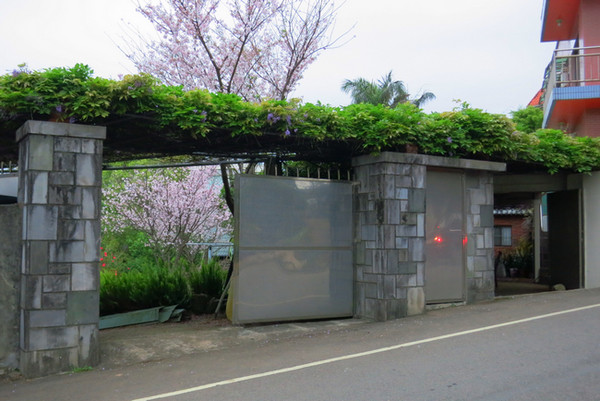
Sorry, my friends — Little White Whale forgot again: “When admiring flowers, seize the moment; when sharing, do it in time.”
Thirteen days ago, I saw the wisteria-covered trellis and met the elder sister, but didn’t see the Yoshino cherry blossoms; thirteen days later, I saw the full bloom of the Yoshino cherry trees, but the wisteria and the elder sister were gone again... If I could have seen both the wisteria trellis and the cherry blossoms on the same day, that would have been the perfect outcome, truly fulfilling. Coming early or late each brings its own regrets, yet it seems there’s some fate behind it all. Isn’t much of life just like this?
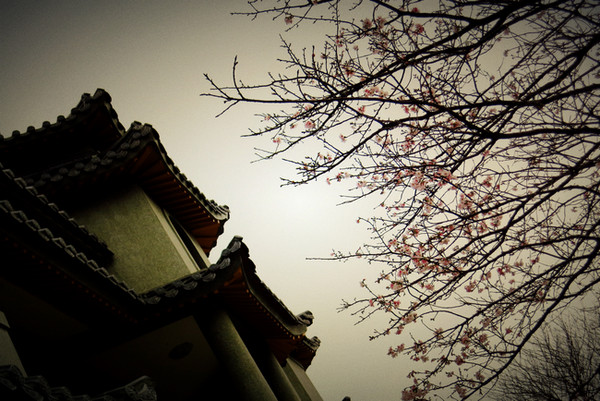
Perhaps this is exactly why the Eastern Temple brought me here — to let me glimpse some of life’s deeper truths~~~
Transportation Information
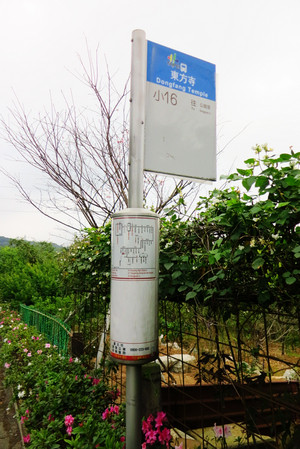
Bus: Take small shuttle bus Route 16 (from Jiantan MRT Station) directly to the Eastern Temple; get off at the “Fuyin Station” on Yangde Boulevard via buses 310 or 206, then walk along Yonggong Road for about 15 minutes or more.
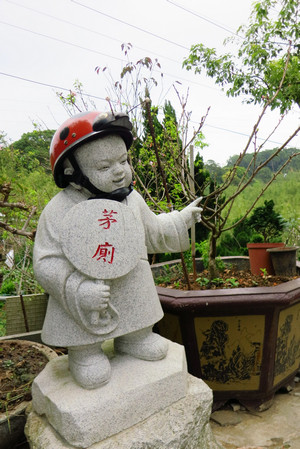
Car/Motorcycle: From Yangde Boulevard, after passing Fuyin Garden, take the right downhill fork just past the traffic light — that’s Yonggong Road. Turn right onto Yonggong Road, and when you reach the fork leading toward Qingtian Gang, you’ll be on Yonggong Road Lane 245. Go straight uphill to reach the Eastern Temple. (Easy street parking available)
Note: During the Yangmingshan Flower Festival or consecutive holidays, there is traffic control on Yangde Boulevard from 8:00 to 15:00 for uphill traffic.
Eastern Temple
Address: No. 24, Lane 245, Yonggong Road, Taipei City
Little White Whale — loves sharing, photography, and travel
Learning photography joyfully allows me to see the world from different perspectives; enjoying food happily lets me savor the world through ordinary moments of happiness.
Share
This article is published by HowToTrip. Sharing and reposting are welcome — please credit the source.
Article URL: https://www.howtotrip.net/views-7786
Related Articles
- Shaoxing's "Grandpa Gourd" hangs the gourds back up: "If there are too many people, we'll interact less — just take a quick look from afar"
- Chinese authorities announce "reciprocal adjustment" to Japan visa fees — single-entry visa jumps from 2,250 to 16,750 yen!
- 旅客携带的“保健石”核辐射超标千倍,同机人员或遭殃!海关提醒!
- 深圳机场深夜通报!出现不明升空物,航班大面积延误!
- “拆盒洗了才说要钱!”高铁200克葡萄卖60元,12306回应!
- 买不了机票?出境被拒?登机被拦?一大波中国游客莫名成了“失信人”
- 不利天气和经济波动影响哥伦比亚咖啡市场
- 海边浴场回应冲脚淡水收费2元/30秒:明码标价!
- 舱门没关好就起飞?机翼出现问题?多个航班途中紧急折返!
- 感受大自然的馈赠!盘点世界十大唯美海岸线