The plane can't take off with just 15 passengers — was the delay really due to "too few passengers"?
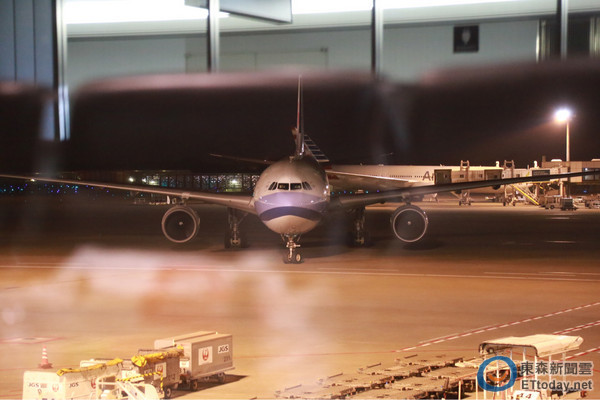
▲ The China Airlines flight taken by netizen as981134 was allegedly delayed due to too few passengers. (Photo / Authorized use by netizen as981134)
Online community group / Comprehensive report
Frequent travelers abroad often encounter flight delays, most commonly due to reasons like flight scheduling, mechanical issues, or runway control. But one netizen shared the reason for a flight delay in Tokyo — could it be “too few passengers?”
Netizen as981134 posted on PTT that they were taking a round-trip China Airlines flight to Tokyo, but when returning from Tokyo to Taiwan, there were only 15 passengers waiting to board. During the wait, seven passengers were asked by ground staff to change seats. After boarding, rows 1 through 35 of economy class were all sealed off with tape. As981134 said that if passengers requested seat changes, they could only move to the back, not the front. Although everyone boarded in less than five minutes, ground staff continued taping around the cabin for about 20 minutes before finally completing the process and closing the cabin door for departure. They speculated that the delay in takeoff was due to the small number of passengers and the need to solve weight distribution issues.
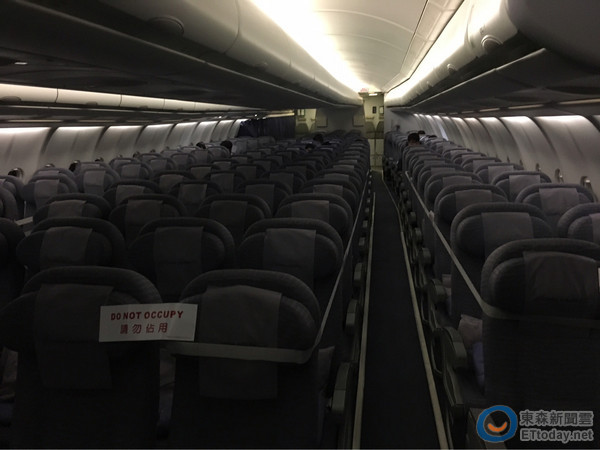
▲ To prevent passengers from moving forward, seats in the front section of economy class were taped off. (Photo / Authorized use by netizen as981134)
Regarding this phenomenon, another PTT user howard6101 commented that A330 series aircraft tend to be nose-heavy when empty, with the center of gravity located very far forward. Therefore, load controllers typically adjust cargo or baggage to shift the center of gravity backward — both to make flying easier for the pilot and to save fuel. However, on the CI flight taken by as981134, there were too few passengers, causing the center of gravity to be too far forward, making it impossible for the plane to take off. Since there was no cargo and little luggage, the solution was to adjust passenger seating to add weight to the rear cabin.
Cabin balance management has always been a crucial aspect of flight safety. In April of this year, Japan Airlines once affected thousands of passengers due to a malfunction in the weight balance system. In response to howard6101’s analysis, some netizens commented, “Learned something new!” and “If those seats weren’t taped off, a bunch of unaware passengers would definitely sit in the front.” Others humorously suggested allowing passengers to bring up to 100 kilograms of luggage for free.
Full text of "CI109: Too Few Passengers, Weight Imbalance Causes Delay" by author howard6101 (authorized for use)
A330 series aircraft have one issue: they are nose-heavy when empty, with the center of gravity located very far forward.
So load controllers usually shift cargo or baggage to the rear cabin based on which side is heavier, trying to move the center of gravity backward.
This makes it easier for pilots to fly and saves fuel (pilots don’t like it when the center of gravity is too far forward).
On the CI flight taken by the original poster, there were too few passengers, so the center of gravity must have been very far forward — what is commonly referred to as out-trim. In such a situation, the aircraft simply cannot take off. In these cases, load controllers will place cargo or baggage in the rear cabin to act as ballast. But it seems there was no cargo on this flight, and only 230 kilograms of luggage, so they had to adjust the passengers instead. Passengers were moved to add weight to the rear cabin. Generally speaking, moving passengers is a last resort because cargo and baggage won’t complain — but passengers will...
As for comments asking why newly delivered planes with only ten-some passengers on board don’t face weight balance issues — it’s simple. When a plane is brand new and being delivered, the manufacturer installs aviation materials or discarded pallets in the rear cabin to serve as ballast. A new plane delivery is not comparable to actual commercial passenger flights...
Both the A321 and A330 series have this issue — they’re not afraid of having too many passengers, but too few. Load controllers usually become alert when they see too few booked passengers.
That’s roughly it.
In response to the netizen’s description, China Airlines explained the actual situation of this flight as follows:
On May 5th, CI109 flight from Tokyo to Taipei experienced an abnormal warning light on door number three. With no replacement parts available and considering passenger safety, adjacent seats were closed according to maintenance safety protocols before the flight. The flight was delayed by 55 minutes.The cause was unrelated to having only 15 passengers or weight balance.
China Airlines’ average passenger load rate on flights from Taiwan to Tokyo exceeds 90%. This particular flight happened to coincide with the end of Japan’s Golden Week holiday, and the overall average passenger load rate for Japanese routes was 80%..
Share
This article is published by HowToTrip. Sharing and reposting are welcome — please credit the source.
Article URL: https://www.howtotrip.net/views-7475
Related Articles
- Shaoxing's "Grandpa Gourd" hangs the gourds back up: "If there are too many people, we'll interact less — just take a quick look from afar"
- Chinese authorities announce "reciprocal adjustment" to Japan visa fees — single-entry visa jumps from 2,250 to 16,750 yen!
- The "health stones" carried by a traveler were found to have radiation levels exceeding safety limits by a thousand times, potentially endangering fellow passengers on the same flight. Customs issues warning!
- Shenzhen Airport Issues Late-Night Notice: Unidentified Aerial Object Detected, Causing Widespread Flight Delays!
- “They only said it cost money after I opened the box and washed it!” 200g of grapes sold for 60 yuan on a high-speed train—12306 responds!
- Can't buy an airline ticket? Denied exit? Blocked from boarding? A large number of Chinese tourists have mysteriously become "discredited individuals"
- Adverse weather and economic fluctuations impact Colombia's coffee market
- Beach bathing area responds to 2 yuan/30 seconds fee for freshwater foot rinsing: Clearly priced!
- Taking off with an improperly closed cabin door? Wing malfunction? Multiple flights made emergency returns mid-journey!
- Experience the gifts of nature! A countdown of the world’s ten most stunning coastlines