Top 10 Must-Visit Ghost Towns in Japan!The Enigmatic Beauty “Sayuri” Who Charmed Many Men on Hashima Island
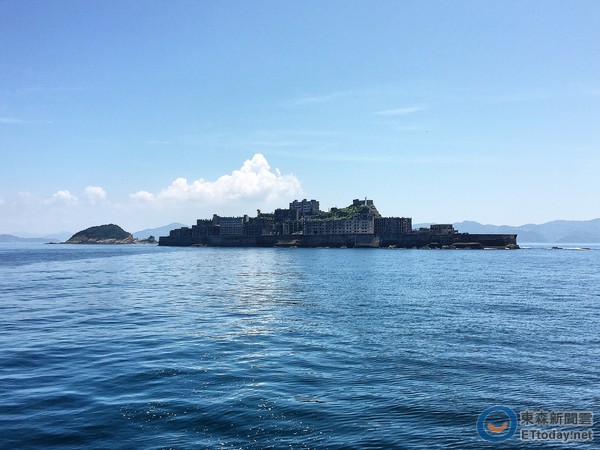
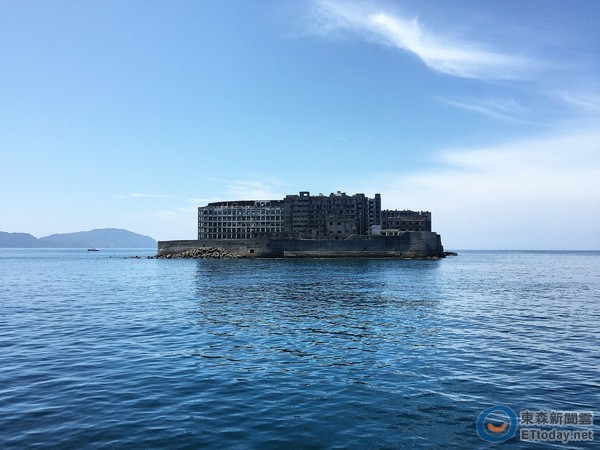
▲ Hashima Island is called “Gunkanjima” (Battleship Island) because of its battleship-like shape.
Reported by Chen Xinru / Nagasaki
Japan’s Kyushu region “Hashima Island,” also known as “Gunkanjima” (Battleship Island), is an artificial island located 20 kilometers from Nagasaki Port. It was once the most densely populated place in the world. However, with the decline of the coal industry, evacuation of residents, and closure of the island, Gunkanjima has lain dormant for nearly 40 years. Cloaked in a mysterious and eerie veil, it was even listed by the British newspaper The Guardian as one of the “World’s 10 Most Haunted Cities.”
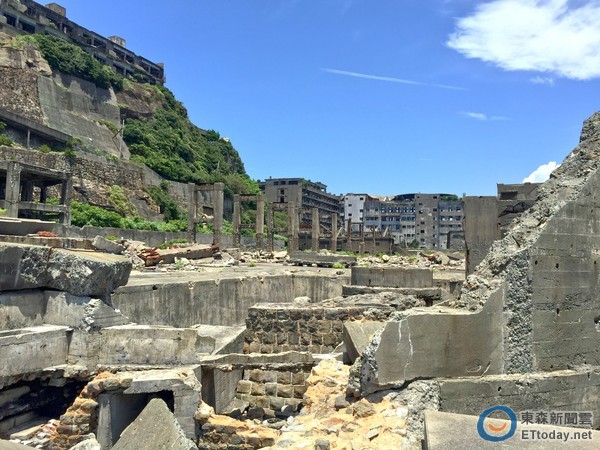
Hashima Island was originally just a shallow reef of water-formed rock until 1887, when undersea coal mining began, leading to land reclamation and expansion that transformed it into a semi-artificial island. It’s said the island was initially only one-third of its current size. With a land area of about 6.3 hectares and a small foundation, the island saw a population boom due to the thriving coal industry at the time, as many miners moved their families there to work and live. By 1960, the population had skyrocketed to 5,300, making it the most densely populated place on Earth. As a result, Japan’s first reinforced concrete building was constructed on the island to accommodate the large population. In addition, the island had elementary and middle schools, a police station, a cinema, shops, a barbershop, a shrine, and even a swimming pool and a bar—truly a self-contained community.
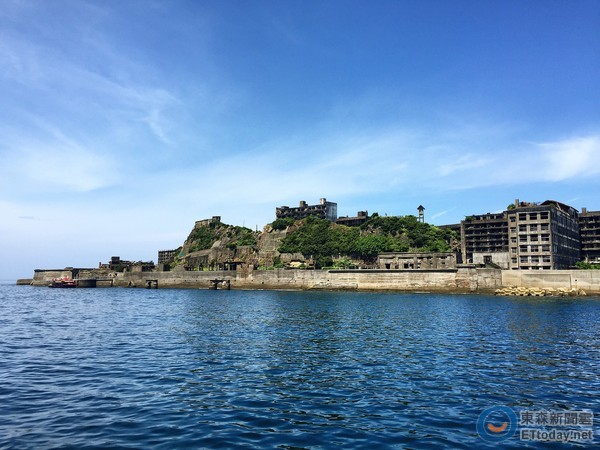
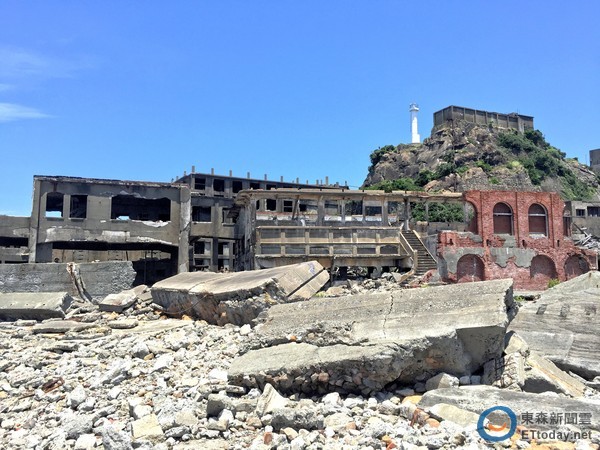
▲ The red brick wall is part of the former general affairs office.
However, as times changed, after 1960, Japan shifted its energy consumption from coal to oil, leading to a gradual stagnation in the development of Gunkanjima. Coal production sharply declined, and on January 15, 1974, the mine was officially closed. This turned the once most densely populated place on Earth into a deserted island overnight. It remained closed until 2009, when it was reopened to the public as part of the UNESCO World Heritage Tentative List. However, due to years of abandonment, most of the buildings have deteriorated and pose collapse risks. For safety reasons, only certain areas are open to visitors. But don’t worry—even though many parts are off-limits, there are three main viewing plazas along a 220-meter-long safe walking path, all accompanied by guides providing comprehensive commentary (in Japanese).
The first viewing plaza features ruins and buildings such as elementary and middle schools, coal conveyor belts, and the residence of the highest-ranking official. The second plaza showcases the general affairs office, warehouses, and the trestle of Shaft No. 2. The third plaza includes the reinforced concrete residences numbered 30 and 31. Number 30 is said to be the first reinforced concrete house, while the basement of No. 31 has a communal bath and the first floor houses a post office and barbershop. Notably, before landing on the island, the tour boat circles around Hashima, offering a unique sea-view perspective of the island.
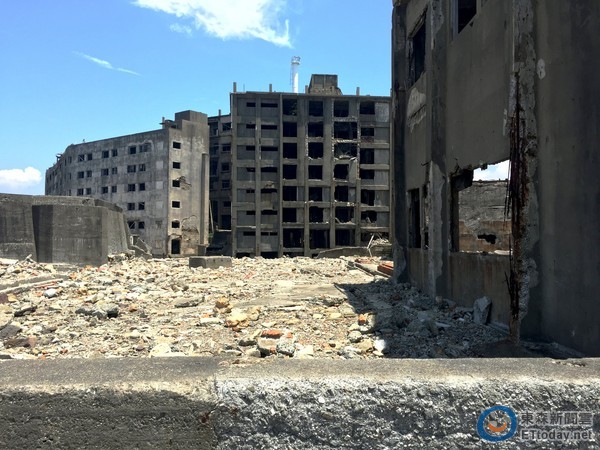
▲ Japan’s first reinforced concrete residential building (right).
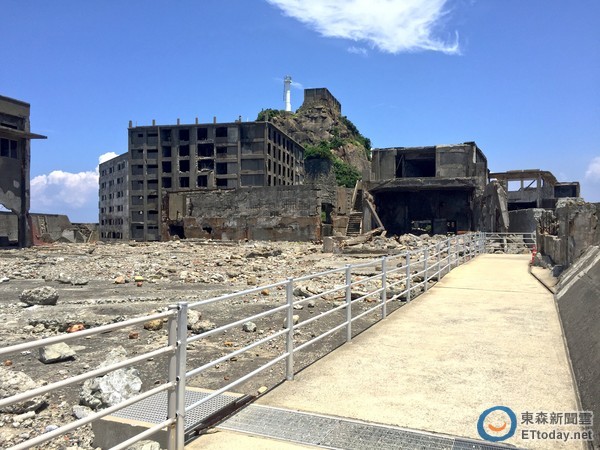
Regarding life on the island back then, tour guide Kibata Tomotsugu shared:Miners had to work 600 meters underground (the Taipei 101 building is 508 meters tall), and the round-trip commute alone took four hours. With temperatures nearing 40°C and humidity at 95%, working in such harsh conditions for long periods was extremely grueling.As a result, when the coal industry declined, miners across Japan took to the streets to protest unemployment. Yet, the workers on Gunkanjima calmly accepted reality, left Hashima, and returned to a “normal” life.
In addition, Kibata Tomotsugu also mentioned:There was a woman on Gunkanjima named “Sayuri” who captivated many men with her stunning looks and became a legendary figure among the island’s residents.However, much like Hashima itself, Sayuri remained mysterious, and few had actually seen her beauty. It wasn’t until she suddenly appeared at an event on the island that people realized how much time had passed. Kibata recounted, “They say the wrinkles on her face were more numerous than the waves!”
Having been abandoned for over 40 years, Hashima’s appearance gives off an air of mystery and an eerie vibe, making it a popular setting for movies and stories. For example, the Japanese drama “Idol Bakeneko Den” used Hashima as a filming location, “Battle Royale 2” was set on the island, and the villain’s lair in “Skyfall” (007), the abandoned island of Raoul Silva, was modeled after Hashima. However, none of these productions filmed on the island itself—except for a distant shot of Hashima in “Skyfall.”
By the way, before heading to Hashima, visitors might want to take a two-minute walk from Nagasaki Port to the nearby “Gunkanjima Digital Museum.” This four-story digital museum features a massive 30-meter-wide projection screen that uses cutting-edge digital technology to depict the rise and fall of Hashima. Additionally, precious historical materials and exhibits provide an immersive experience, taking visitors back to life during the island’s prosperous days.
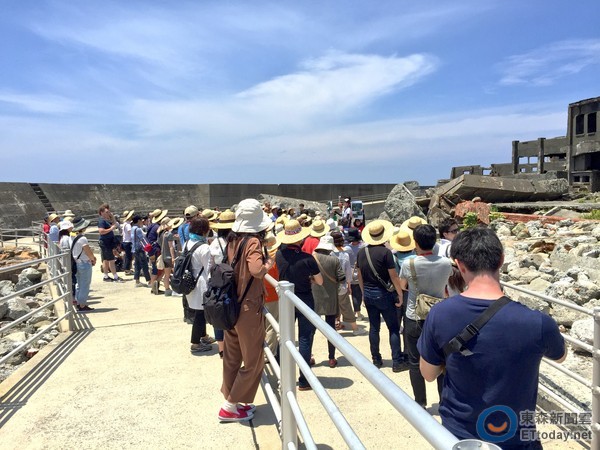
▲ Hashima Island has three viewing plazas, each with guides offering comprehensive commentary.
Share
This article is published by HowToTrip. Sharing and reposting are welcome — please credit the source.
Article URL: https://www.howtotrip.net/views-6211
Related Articles
- Shaoxing's "Grandpa Gourd" hangs the gourds back up: "If there are too many people, we'll interact less — just take a quick look from afar"
- Chinese authorities announce "reciprocal adjustment" to Japan visa fees — single-entry visa jumps from 2,250 to 16,750 yen!
- The "health stones" carried by a traveler were found to have radiation levels exceeding safety limits by a thousand times, potentially endangering fellow passengers on the same flight. Customs issues warning!
- Shenzhen Airport Issues Late-Night Notice: Unidentified Aerial Object Detected, Causing Widespread Flight Delays!
- “They only said it cost money after I opened the box and washed it!” 200g of grapes sold for 60 yuan on a high-speed train—12306 responds!
- Can't buy an airline ticket? Denied exit? Blocked from boarding? A large number of Chinese tourists have mysteriously become "discredited individuals"
- Adverse weather and economic fluctuations impact Colombia's coffee market
- Beach bathing area responds to 2 yuan/30 seconds fee for freshwater foot rinsing: Clearly priced!
- Taking off with an improperly closed cabin door? Wing malfunction? Multiple flights made emergency returns mid-journey!
- Experience the gifts of nature! A countdown of the world’s ten most stunning coastlines