Aso Geothermal Food Research Institute: Aso creates delicious cuisine using geothermal energy!

Text & Photos / Joel Fukuzawa
The active volcanic activity beneath Mount Aso brings frequent tremors to prefectures like Kumamoto and Oita, but it also provides abundant water and geothermal resources. The region is home to dozens of hot spring resorts, some of which are enveloped in steam year-round, regardless of season or weather, creating a heavenly atmosphere.

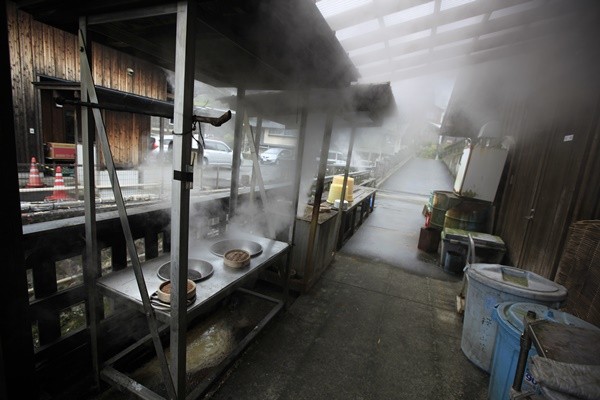
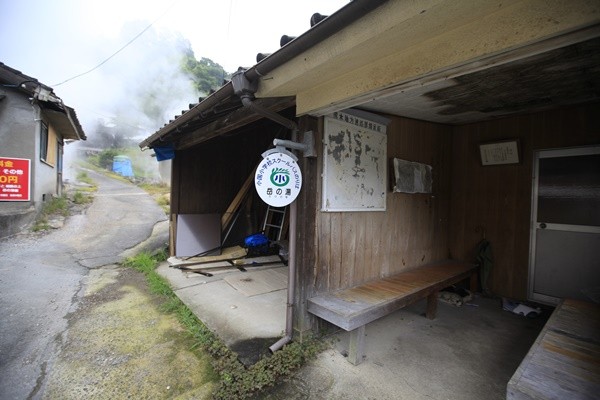
Among them, the "Yama no Yu" area, known as "Wakagai Onsen," is a prime example. As you drive up the industrial road, you can see steam rising from the village in the distance. Once inside the village, another unique sight awaits: almost every household has an outdoor steam cooker used for preparing food, creating a lively scene.
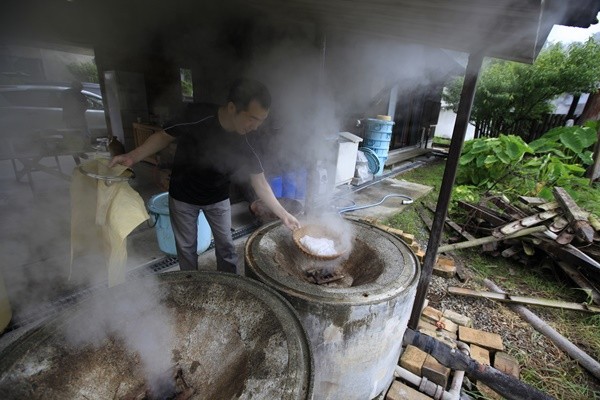
At the Yama no Yu Tourist Information Center, there are also steamed meals available, but unfortunately, we arrived too late and were told they had all sold out. With camera in hand, I strolled along the path nearby and came across the Geothermal Gourmet Research Institute previously visited by Yamaguchi Reiko. It was previously closed, but this time there were many people busily working inside. Upon inquiry, I learned that Yamaguchi Reiko was busy making geothermal steamed dishes. Although her research institute is located in a remote area, she is a well-known local figure.
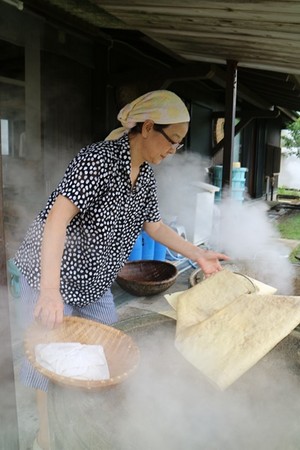
Let me first introduce her background. Mrs. Yamaguchi currently holds the official title of the tenth-generation master brewer at Yamaguchi Sake Brewery in Kurume City, Fukuoka Prefecture. She is also a world-renowned quilt artist. Now 72 years old, her greatest goal is to seamlessly integrate food, clothing, shelter, and daily life. For nearly 30 years, she has been researching geothermal-steamed foods at the "Geothermal Food Research Institute" in Yama no Yu, Kokonoe Town, Oguni District, Aso County, Kumamoto Prefecture.
"Since Japan's Jomon period, people in this area have known how to cook using geothermal energy," said Mrs. Yamaguchi, who was born in Oyama Town, Oita Prefecture, adjacent to Kumamoto Prefecture. She grew up near Tawarayu Onsen, not far from here. "In the past, we mostly used hot springs to boil onsen tamago (hot spring eggs), and that was about it."
"But my mother was different. She would steam vegetables like spinach and radishes freshly picked from the fields. Then she’d add a bit of katsuobushi (dried bonito flakes) and soy sauce. The flavor was simple, but absolutely delicious—far better than cooking with gas," Mrs. Yamaguchi recalled. As she spoke, I carefully observed her skin. Despite being over 70 years old, her skin was smooth and had a healthy, rosy glow, rivaling that of much younger women. I jokingly asked her if it was the effect of working daily with steam and sake lees. She laughed heartily and said, "Maybe it is."
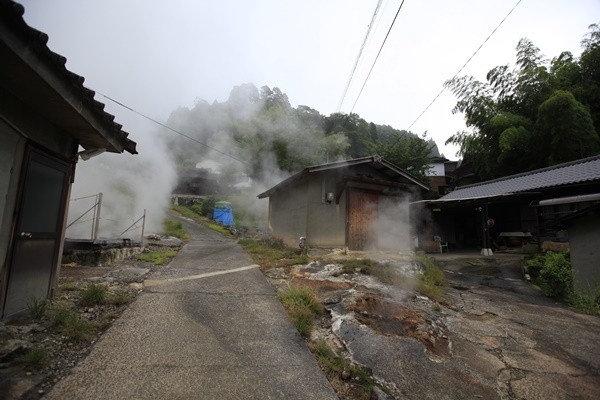
Wakagai Onsen is located at the foot of Mount Wakagai and is surrounded by one of Japan’s few well-known geothermal zones. It is also part of the area where Kyushu Electric Power operates the Ohne Geothermal Power Plant. Due to the limited locations where geothermal steam vents naturally occur in Japan—and most of them being within national parks—the development and utilization of such resources have been relatively slow. The Yama no Yu area around the "Geothermal Food Research Institute" happens to be a safe and usable location, so Mrs. Yamaguchi designed adjustable valves here to regulate geothermal steam, effectively utilizing it for the most environmentally friendly food preparation.

"Recently, many people have been discussing energy issues or space exploration, but I’m more interested in our own planet—how much energy has been bestowed upon the land we live on that we haven’t properly utilized? Geothermal steam is one of those resources. Using this energy directly from nature, without relying on nuclear power, to sustain life is what fascinates me the most," Mrs. Yamaguchi explained. The biggest advantage of the "onsen geothermal foods" she began developing 30 years ago is that the volcanic steam rising from the earth contains sweet-tasting amino acids and has antibacterial properties. This means no chemical additives are needed to preserve the food’s deliciousness for extended periods. As a result, Mrs. Yamaguchi formed a "Yamaguchi Team" dedicated to effectively using local Kyushu ingredients in geothermal cooking methods.
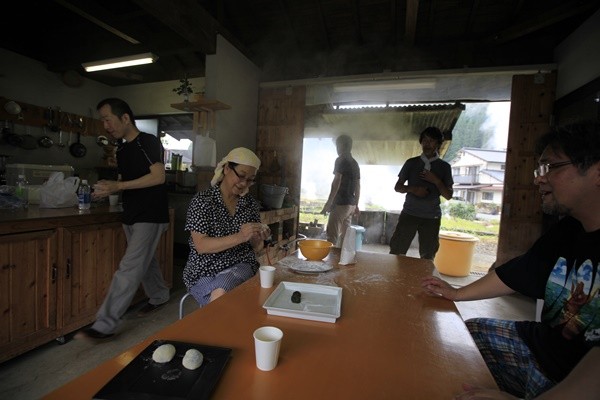
"Take onions, for example. The steaming temperature and time will alter their sweetness, and all of this can be precisely calculated using a brix meter," Mrs. Yamaguchi showed me around her institute, where shelves were lined with jars and bottles labeled with various numbers, some circled and others not. The circled numbers indicated the optimal steaming times, while the others did not yield the best flavor. These numbers were the result of Mrs. Yamaguchi’s extensive research over many years, compiling big data on how ingredients respond to different temperatures and humidity levels. "If you just follow these numbers and the corresponding time charts, you might not even need sugar on your dining table," she said proudly. For her, food without additives is the right way to go.
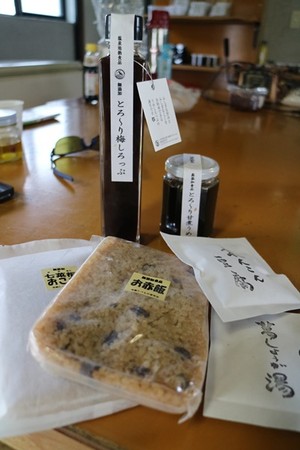
However, at this moment, Mrs. Yamaguchi revealed another of her creations: "emergency relief food." She held up a pack of sekihan (red bean rice) and a pack of mountain vegetables, asking me, "Are they soft?" I said yes. She explained that this was "emergency relief food" that could be stored at room temperature for ten years. "Ten years!!!!!!" she laughed. "Yes. Unlike the emergency food we often see, which may include dried meals, mine doesn’t require water—you can eat it directly."
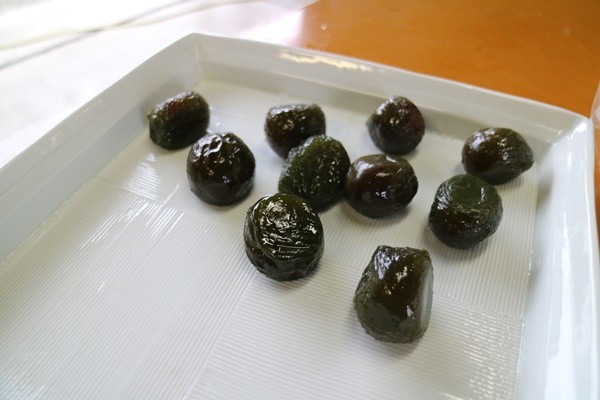
"This is also food made using the sterilizing effect of sulfuric steam and has been certified to last for ten years. But we hope that if it hasn’t been used after five years, it can be returned to us from customers." "Why?" "In developed
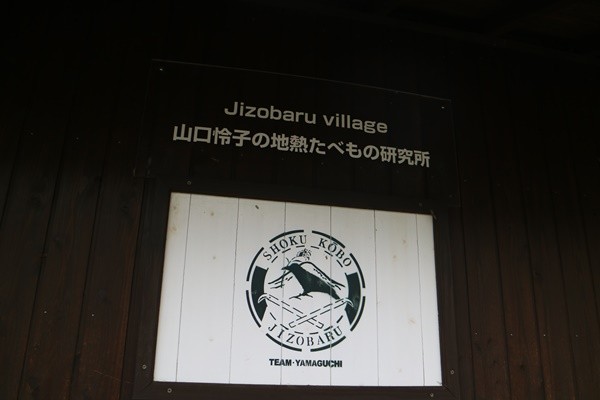
I met with Mrs. Yamaguchi and we chatted a lot—it was such a joyful conversation. She even specially made me plum mochi, where both the outer skin and filling were made using steam geothermal energy. She said cheerfully, “You’re luckier than Mr. Xie, Taiwan’s ambassador to Japan. Yesterday I served him some that was made here but sent to Oita, but what you’re eating was wrapped fresh on the spot.” The sound of Mrs. Yamaguchi’s smiling voice still lingers in my ears. Perhaps I should find some time to visit her homestay, “Jizōbara Village” or her sake brewery in Kurume,Yamaguchi Sake Brewery— and check out her updates.
Share
This article is published by HowToTrip. Sharing and reposting are welcome — please credit the source.
Article URL: https://www.howtotrip.net/views-6140
Related Articles
- Shaoxing's "Grandpa Gourd" hangs the gourds back up: "If there are too many people, we'll interact less — just take a quick look from afar"
- Chinese authorities announce "reciprocal adjustment" to Japan visa fees — single-entry visa jumps from 2,250 to 16,750 yen!
- The "health stones" carried by a traveler were found to have radiation levels exceeding safety limits by a thousand times, potentially endangering fellow passengers on the same flight. Customs issues warning!
- Shenzhen Airport Issues Late-Night Notice: Unidentified Aerial Object Detected, Causing Widespread Flight Delays!
- “They only said it cost money after I opened the box and washed it!” 200g of grapes sold for 60 yuan on a high-speed train—12306 responds!
- Can't buy an airline ticket? Denied exit? Blocked from boarding? A large number of Chinese tourists have mysteriously become "discredited individuals"
- Adverse weather and economic fluctuations impact Colombia's coffee market
- Beach bathing area responds to 2 yuan/30 seconds fee for freshwater foot rinsing: Clearly priced!
- Taking off with an improperly closed cabin door? Wing malfunction? Multiple flights made emergency returns mid-journey!
- Experience the gifts of nature! A countdown of the world’s ten most stunning coastlines