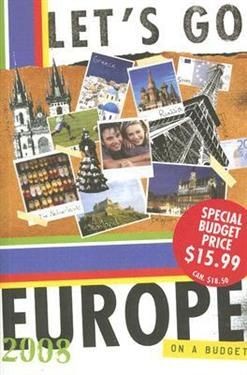
In 1960, a group of Harvard University students returned from a trip to Europe and compiled their money-saving experiences into a booklet, publishing "Let’s Go Europe." The series has now expanded to all continents, with cost-saving tips for every destination thoroughly explored and shared by students. Its biggest advantage is that it gets updated every year?
The high status of "Lonely Planet" among domestic backpackers is largely due to the influence of foreign travelers in China.
In the 1990s, backpacking became popular in China. A new generation of young backpackers met fellow travelers from abroad during their journeys. Through these shared experiences, they discovered that almost every foreigner carried a travel guide called "Lonely Planet." This blue-toned book was densely packed with information on attractions, people, history, snacks, accommodations, and transportation across China. It almost overnight became a hit among the backpacking community, and its slightly edgy name alone was enough to captivate those with an appreciation for life’s finer tastes. Carrying a copy of "Lonely Planet" when traveling quickly became a symbol of the younger generation’s lifestyle and taste.
The high status of "Lonely Planet" among domestic backpackers is largely due to the influence of foreign travelers in China: "Lonely Planet" excels in covering third-world countries, so foreign travelers coming to China often choose "Lonely Planet" as their first option. As a result, many domestic travelers naturally assumed that "Lonely Planet" was the only choice for international trips.
But that’s not the case. There are many influential travel guide series around the world, each with its own unique features. Every traveler has distinct preferences and needs, and should choose the most suitable read based on specific requirements.
For example, the "Frommer’s" series leans more toward the tastes of the middle-to-upper mainstream society when it comes to selecting hotels, restaurants, and attractions. Its recommendations carry more cultural depth and focus on in-depth introductions to well-known sites. This series is ideal for families aiming to save money, and it’s a good choice if you’re traveling with family to major cities in North America or Europe.
Similar to "Frommer’s," the "Fodor’s" series is also highly popular among Western middle-class readers, and it is particularly noted for in-depth business travel content. Compared to other travel guides, this series places greater emphasis on the taste of travel. If you have a certain level of financial stability and want to take a romantic trip to Hawaii, "Fodor’s" can be a great travel companion.
There are guides on how to spend money, and there are also guides on how to save it. In fact, the most "budget-friendly" travel guide isn’t "Lonely Planet," but the "Let’s Go" series written by hundreds of students. In 1960, a group of Harvard University students returned from a trip to Europe and compiled their money-saving experiences into a booklet, publishing "Let’s Go Europe." The series has now expanded to all continents, with cost-saving tips for every destination thoroughly explored and shared by students. Its biggest advantage is that it gets updated every year, so if you really want to go on a "budget trip," take a "Let’s Go" guide with you.
When choosing the right travel guide, besides considering economic factors, you should also consider your destination. If you’re going to Asia or Africa, then "Lonely Planet" remains the best choice. If you’re heading to Europe, besides the "Let’s Go" series, there are two other excellent options. One is the "Rough Guides" series, primarily authored by British writers, which covers European cities comprehensively, catering to backpackers’ needs while encapsulating thousands of years of European cultural heritage. It’s regarded by industry insiders as the best guidebook for traveling in Europe.
The other is the "Rick Steves" series, aimed at middle-aged and elderly travelers. Rick Steves himself has traveled extensively across Europe and has an in-depth understanding of the region’s cultures and customs. He presents his interpretation of European civilization through the perspective and tone of a middle-class intellectual. Unlike those "comprehensive" guidebooks, "Rick Steves" focuses on highlighting the attractions he finds meaningful, and will intentionally skip others. His books are highly subjective but written with humor, and can even serve as practice material for English reading.
If your destination is Mexico or Pacific island nations, then the "Moon" series can be considered a rising star. Its overall style is similar to "Lonely Planet," but it breaks the geography down even further. Each province in Mexico has its own dedicated version, and the Pacific island series is even more meticulously detailed. The "Moon" series features a simple layout, is lightweight and portable, and is very pleasant to read.
The region geographically farthest from Chinese tourists is South America, and the "Footprint South America Handbook" might also be the most unfamiliar English travel guide for us. But this travel handbook boasts a long history, wide influence, and excellent reviews—qualities unmatched by any other guide. First published in 1921 and updated nearly every year, it reached its 88th edition by 2012. For nearly a century, despite the constant rise and fall of various guides, the "Footprint South America Handbook" has remained the top choice for English-speaking travelers in South America.
In short, if you have a basic level of English, bringing along an English travel guide can make overseas travel much more convenient. Don’t just stick to "Lonely Planet"—choose the guide that best suits you, and it will be your best travel companion.