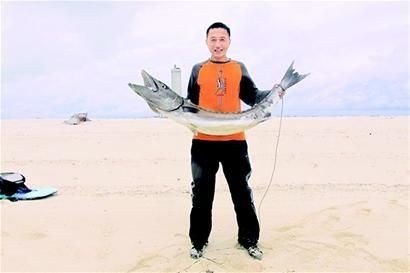
Guo Lilong hopes to practice low-carbon and environmental protection concepts by hiking around the world.
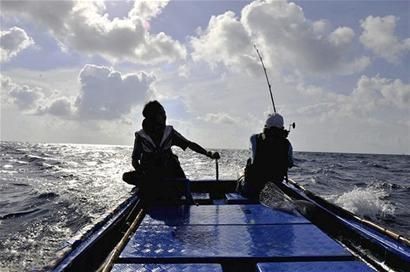
Every day after breakfast, Chen Xu would set sail for Yongxing Island, where he could enjoy trolling along the way. Catching one or two fish was enough—each weighing at least 20 jin—and he would sell them upon arriving at Yongxing Island.
The palm-fringed shadows, crystal-clear water, and white sands, the endless sea changing into mesmerizing colors... After news broke that cruise tourism from Haikou to Sansha might open within the year, photography enthusiasts and backpackers began dreaming of this paradise-like scene. But for Chen Xu, a native of Chengdu who spent four years as a "fisherman" in the Paracel Islands, the place offered not just breathtaking views but also lifelong treasures.
【Memories】
An Unimpressive First Visit, A Heavenly Return
In 2006, Chen Xu, then working in securities, had traveled to many places before arriving at Yongxing Island in the Paracels. But this trip didn’t leave the impression he had hoped for. "I was somewhat disappointed," Chen Xu said. The buildings on Yongxing Island were from the 1970s and 1980s, all concrete structures, just like a small county town. "It lost the most primitive charm and character of an island."
It was Chen Xu’s second trip to the Paracels that truly brought him to his idea of paradise. "Paradise is only eight nautical miles from the human world." On his revisit, Chen Xu accidentally landed on Zhaoshu Island. Strolling along the beach, he could see frigatebirds and seagulls flying overhead. "This is the Paracels in my mind," Chen Xu exclaimed.
The endless and mysterious ocean captivated Chen Xu. "Stay here and experience the local way of life!" The idea of becoming a fisherman in the Paracels emerged in his mind.
【Story】
Life as a Fisherman: Fishing, Diving, and Stargazing
In 2007, Chen Xu gave up his respectable and well-paid finance job and officially began his life as a fisherman on Zhaoshu Island. "I built a wooden house and spent my days fishing and diving."
What urbanites might consider a dull and monotonous life, Chen Xu found full of joy. "Fishermen usually go back home every two or three months, but I stayed for ten months in 2009—that was rare peace and quiet for me."
Every day after breakfast, Chen Xu would set sail for Yongxing Island, where he could enjoy trolling along the way. Catching one or two fish was enough—each weighing at least 20 jin—and he would sell them upon arriving at Yongxing Island. Sometimes he would find a spot for diving and see the colorful corals on the underwater reef flats. At night, he would fall asleep to the sound of waves under a sky full of stars.
This lifestyle allowed Chen Xu to accumulate a wealth of marine knowledge—about tides, currents, and different fish species—and his trolling skills improved significantly. To other fishermen, Chen Xu was an amateur but capable "fisherman."
【Gains】
Lessons from Fishermen: Don’t Follow the Crowd, Don’t Lose Yourself
Besides fishing for self-sufficiency, another essential activity for Chen Xu on the island was chatting with the fishermen. "From their stories, you gain unique insights and feelings." "On Zhaoshu Island, in Qilianyu Village where I lived, many fishermen have been abroad," Chen Xu said. They had been to Malaysia, Indonesia, for work, but might never have been to Sanya. "Their thoughts were very simple—they just wanted to survive. But sometimes, when your desires are simple and you know what you want, you see things more clearly and live more freely and confidently."
Another kind of bond in the fishing village also moved Chen Xu. One fisherman’s grandfather went to Australia in the 1950s to seek a living, spent decades there, and built a career, but returned to the fishing village in old age with nothing. Chen Xu said, "Later I understood—material wealth can no longer fulfill human needs. Family is what matters most to the elderly."
Staying in the Paracels felt like traveling back in time, Chen Xu summarized his fisherman life. "I saw my own life more clearly. Happiness is what I want most. Adapt to the environment, but don’t lose yourself in desire, don’t follow the crowd, and don’t let others’ opinions and values dictate your life."
A Painful Realization>>>
The Sea “Swallows” Islands, Corals Die
On June 21, Sansha City was established. Covering 13 square kilometers of land and over 2 million square kilometers of sea, it became China’s largest prefecture-level city by area and the least populated.
The establishment of Sansha City thrilled Chen Xu, who was in Hainan conducting research with Chinese National Geography magazine, but beyond joy, he also felt deep concern for the islands’ environment.
Feeling: Urgent Need for Fishing Village Development
With his experience of island life, Chen Xu felt even more genuine joy upon hearing the news of "Sansha City’s establishment." "First, it asserts sovereignty; second, it can improve the fishing villages."
Of course, Chen Xu hopes more for the construction and renovation of the island fishing villages. "Current renovations only build houses, solving surface issues, but the real factors affecting the islands and people’s lives haven’t truly changed," Chen Xu said. Housing facilities are incomplete, and hidden problems like sewage discharge, garbage disposal, and reservoir construction still exist. "Island garbage is buried, leading to some areas being littered, and when those spots fill up, waste is dumped into the sea. Though the amount is small, it still affects the environment, so fishing village development is urgent."
"The livelihoods of island fishermen also urgently need to change. People cut down the island’s unique goat-horn trees for firewood, leading to large swaths of these trees being felled. Without the goat-horn trees, soil stabilization is lost, and if this continues, the entire island will become desertified."
Hope: Transitioning from Fishing to Tourism Services
In a 2010 media interview, Chen Xu also firmly stated that he wanted to save more money for environmental protection efforts and hoped everyone would work together to protect underwater resources. But in August 2011, he left this place, which he had called home for four years, feeling disappointed.
Chen Xu’s disappointment stemmed from the lack of response to his marine conservation efforts. “I moved once while on Xisha. The first house I lived in has already been submerged by the sea, and the one I left in was not far from the water either. The seawater erodes the island at a rate of about one meter per year. I don’t even know if the island will still exist 15 years from now.”
What pained Chen Xu the most was the state of the marine environment. “When I first went there, seventy to eighty percent of the coral underwater was still alive, but by the time I left last year, there was almost no coral left around Yongxing Island.” The growing demand for seafood has also led to a rapid decline in marine life. “Last year, when we went out fishing by dragging hooks, we could hardly catch any fish.” “I just hope the environment in the South China Sea can get better, so that future generations can still enjoy beautiful seascapes.” Chen Xu now hopes that after the establishment of Sansha City, efforts can be made to advance environmental assessments and professional research in the South China Sea, and help transform over 600 fishermen from fishing to tourism services.
A Kind of Longing>>>
Sansha Travel: Don’t Miss Offshore Trolling
Xisha has abundant tourism resources, but due to its fragile ecological environment, low environmental carrying capacity, and transportation being affected by typhoons (with the typhoon season lasting 4–5 months each year), it is not suitable for large-scale sightseeing tourism. Instead, it is better suited for small-scale, high-end models, with development and visitor access scales needing to be limited. — This is Chen Xu’s suggestion for the opening of tourism in Sansha.
And if you travel to Sansha, you definitely can’t miss offshore trolling and diving with an adventurous edge.
Trolling: Take a fisherman’s boat out to sea for trolling. As the boat moves, fish will start biting, and hooking a fish over a meter long will be an exciting surprise.
Diving: It carries some risk. You take a boat out 20–30 nautical miles, then dive into the water. The surrounding seawater is extremely clear, with visibility reaching up to 40 meters at its best. Compared to diving near the shore, you’ll get to see a more colorful underwater world.
Their (the fishermen’s) thoughts are very simple—they just want to survive. But sometimes, when thoughts are simple, and you know what you want, you actually see things more clearly and live more freely and confidently.
— Chen Xu