For riders, riding a flexible horse is enjoyable, while riding a stiff horse is bumpy and uncomfortable. From the horse’s perspective, they dislike stiff riders and prefer those who are flexible and allow them to move freely.
Poor riding can cause stiffness in horses, but it is not the only reason. Improper or insufficient training exercises can result in some muscles not being exercised and some joints not being relaxed. To achieve flexibility, certain forms of regular training are essential.
Flexibility can be significantly improved by performing bending exercises. This is the best way to stretch muscles and relax joints.
Horses can bend not only to the left and right, such as when circling or turning, but also longitudinally, such as when asked to lengthen or shorten their strides. When doing bending exercises, it is best to combine lateral and longitudinal movements.
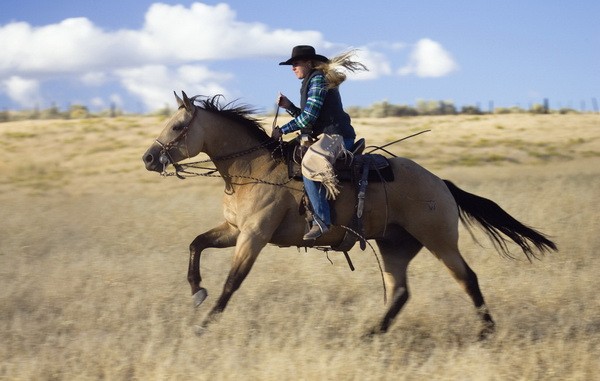
Lateral Bending
Trainers have many ways to get horses to perform lateral bending, such as making them circle, spiral, or perform serpentines—lateral movement is highly beneficial.
The extent to which a horse can bend laterally depends on its training level. Young horses may not be able to execute tight turns or small circles well. If the rider insists on sharp turns, the horse may take short, disjointed steps or move in a twisted and uncoordinated manner.
Training results show that there is a limit to how much a horse can bend laterally. The most advanced horses can attempt a volte, the smallest circle in equestrianism, with a radius equal to the horse’s body length.
Longitudinal Bending
Longitudinal bending exercises enable the horse to stretch its body and arch its back, relax and extend the joints of the hind legs, and shift the weight onto the hindquarters.
There are two main ways to train longitudinal bending. Initially, without changing the gait, the horse can lower its head and neck and lengthen its overall frame when the rider gives with the reins. This can be done at the walk, trot, or canter, as well as during any exercise including lateral bending.
The second method keeps the horse’s overall frame unchanged while asking it to lengthen or shorten its strides. This form can also be practiced during any movement, including lateral bending.
As training progresses, the horse will gradually expand the limits of lengthening and shortening.
Teaching the horse to back up and perform transitions, such as from trot to halt or from walk to canter, also exercises its longitudinal flexibility.
Flexibility is closely related to strength. A flexible horse can perform difficult movements, which also helps develop its muscle structure.
If the rider keeps the principles of training in mind, balances exercises in both directions, and gradually increases demands with care, they will train a relaxed and flexible horse. Flexibility is an important criterion for evaluating the success of training.
Natural Crookedness
Like humans, horses are not equally balanced or agile on both sides. They tend to bend and turn more easily in one direction, often carry different weight loads on their hind legs, and favor using one side more, causing their hindquarters to lean and their posture to become crooked.
Crookedness in a horse can lead to many problems:
Uneven contact on one side of the bit while the other side is loose;
Leaning toward one shoulder;
Avoiding bearing weight on the weaker hind leg, resulting in incomplete turns;
Preferring a particular leading leg during the canter;
Keep the horse straight
The rider should keep the horse’s shoulders aligned with its hindquarters and avoid letting the horse lean toward the side where the reins and bit make firmer contact.
There are many exercises that can help develop balance on both sides of the horse and reduce twisting. Bending exercises are the most effective—straightness cannot be achieved without them.
Lateral movements can be used to strengthen weaker hind leg joints. Trotting also helps to engage the weaker hind legs, and transitions to the right trot can strengthen the left hind leg.