The Relaxed Spirit of Baiyun Mountain
Guangzhou, the Relaxed Spirit of Baiyun Mountain
Outdoor activities are not a new concept in Guangdong, and the people here’s dedication and passion for outdoor sports are unmatched. Back in the early 1990s when I was climbing Mount Everest in Tibet, I met a petite girl from Guangzhou at the base camp who had come all by herself. Later I found out she was a student from Guangzhou Normal University. Then I heard that a handsome guy from Lugu Lake was “taken” by a certain Guangzhou girl—truly enviable, their forward-thinking lifestyle and passion for the outdoors.
Baiyun Mountain is located to the north of Guangzhou city, adjacent to the urban area. Though not very high in elevation, it is covered with lush green trees and is truly the “lungs” of Guangzhou. Every weekend, it becomes a popular spot for locals to go hiking and exercise, with thousands coming here to “enjoy” the fresh air. Many arrive early in the morning to hike, while residents nearby often come to collect mountain spring water for brewing tea—it tastes excellent. It’s also common to see companies organizing team-building hiking competitions, with red flags flying all over the mountain. People come here to play badminton, kick shuttlecocks, throw frisbees, and more. The extreme sports center on Baiyun Mountain even offers activities like bungee jumping and grass sledding.
In fact, Baiyun Mountain is a real destination for new outdoor experiences. On the northern side of the mountain, near Mingzhu Building, there are several steep cliffs that have become the playground for Guangzhou’s outdoor enthusiasts. The most common activity here is rock climbing. Thanks to nearly six years of development by both Chinese and foreign climbers, there are now over a dozen climbing routes of varying difficulty and length. On sunny weekends, the cliffs are often crowded with climbers. The lively atmosphere often attracts many onlookers. At one point, due to liability concerns, the Baiyun Mountain management banned climbing here, but when they found it impossible to enforce, they simply put up a stainless steel warning sign: “Climbing is dangerous—proceed at your own risk.”
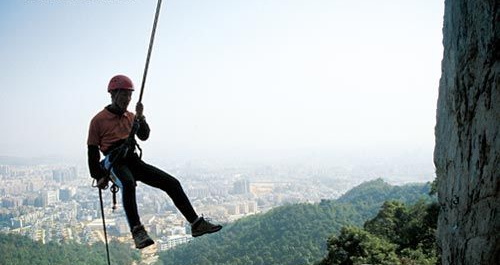
Besides rock climbing, there are several other thrilling activities: “Cliff Zip-lining” involves stretching a static rope between two nearby cliffs, using pulleys and specialized knots to keep it as taut as possible. Participants wear a harness, helmet, and gloves, attach to the static rope via a pulley, and are secured with a dynamic rope for double protection as they glide from the higher cliff to the lower one. Since the cliffs are relatively close, it doesn’t take long to reach the other side—the thrill and excitement can only be truly felt in person. Another activity is “Storming the Luding Bridge,” which simulates the scene from the movie “The Long March: Storming Luding Bridge.” A static rope is stretched between two cliffs, with two dynamic ropes above for safety. Participants stand on a single rope and walk across to the opposite cliff. “Divine Troops Descending from Heaven” is the most adrenaline-pumping activity on Baiyun Mountain. Participants wear full safety gear, including harnesses and helmets, use specialized descenders, and rely solely on professional climbing ropes under their own control to descend to the ground. A large part of the descent is completely suspended with no footholds—a true experience of free-falling.
The Adventurous Spirit of Islands
Zhuhai, the Adventurous Spirit of Islands
Zhuhai, this beautiful coastal city surrounded by mountains and water, is also a paradise for outdoor activities. As early as 1995, diving clubs began offering services here, started by experts from the Guangzhou Salvage Bureau. They opened many diving routes around nearby islands, where you can see stunning coral reefs and colorful tropical fish.
In recent years, local outdoor sports have grown considerably, with Zhuhai No Limits Sports Club being among the most well-known. No Limits built an outdoor training base in the secluded valleys of Jiangjun Mountain in Nanping, Zhuhai. The base features two sizable inland lakes surrounded by various tropical fruits—so you can enjoy fresh seasonal fruit while doing outdoor activities. The base offers standard high-altitude challenges such as the ladder climb, bridge gap, aerial bar, rope nets, and a 4-meter survival wall. One particularly unique high-altitude challenge is “Walking on Air”: participants, secured by ropes, climb ladders, scramble up steep slopes, and scale vertical walls, with dizzying drops below that are truly heart-stopping. Traditional water activities like bamboo raft building can also be done in the lake.
There are nearly a hundred islands of various sizes near Zhuhai. The more developed ones for tourism include Dong’ao Island, Wailingding Island, Wanshan Island, and Guishan Island. The closest island to Zhuhai is Jiuzhou Island, which has three hills, with the main peak at 56 meters above sea level. The flat, rocky summit is accessible via stone steps. A navigation tower for Macau Airport stands on the northern hill, becoming a scenic landmark. Years ago, this was a military maritime base for the People's Liberation Army but has now been returned to civilian use. Some fishermen have already set up shelters here, fishing and cultivating oysters—living a carefree life.
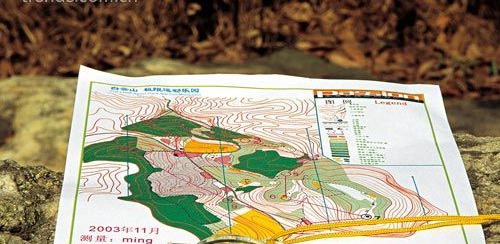
Island orienteering is another classic activity, involving navigating rugged terrains across small islands. Beyond the orienteering, you can enjoy scenic views along the way: beaches, waves, and cacti are constantly in sight. The island is covered in lush forests like a sea of green, with fresh, invigorating air that makes you feel truly connected to nature. On the eastern side of the island are two beaches with fine, medium-grained sand, where the sea and sky blend in color. There are also large rock formations clustered together, with shaded paths perfect for taking cover from the sun and wind. These spots have become paradises for local climbers and rappellers.
Kayaking competitions, sailing, and diving are all well-suited outdoor activities in the waters near Zhuhai. The coastal waters close to Zhuhai city are relatively safe for kayaking. Jiuzhou Island, the nearest, can be reached in about half an hour by kayak, while the slightly farther islands can be accessed in two to three hours. Gliding across the waves and admiring the city skyline from the sea offers a unique experience. Sailing is a rather exclusive sport—boats alone can cost over a hundred thousand yuan, not to mention equipment and fixed facilities like docks. But the feeling of sailing the open seas is truly unparalleled. In Zhuhai, you can make that dream come true, though it comes with a higher price tag. Diving, on the other hand, has become a fairly popular outdoor activity in Zhuhai, with several clubs offering related services. Due to the murky coastal waters, most dives require taking a boat out to nearby islands for deep-sea exploration to see coral reefs, catch fish and crabs—your luck will play a part.
The Pioneering Spirit Along the Coast
Shenzhen, the Pioneering Spirit Along the Coast
It’s no exaggeration to say that in recent years, Shenzhen has been one of the fastest-growing regions in China when it comes to outdoor activities. Just look at the number of participants from Shenzhen in major national mountaineering events organized by the China Mountaineering Association: Xuebao Ding, Yuzhu Peak, Muztagh Ata, Mount Everest… Their footprints span famous mountains and great rivers. Though tragic mountaineering accidents serve as warnings, they have also inspired more people to join the thriving outdoor sports scene in Shenzhen.
Although the Shenzhen Mountaineering Association was established as recently as 2003, it has played a crucial role in promoting outdoor sports in the city. Many of its key figures are elites in the national outdoor community, such as Cao Jun from Peking University’s Mountain Eagle Club and “Eleven” from Vanke. Online platforms and specialty stores like Shenzhen Mofang, Fire Fox, and Walker have also significantly contributed to boosting local outdoor activities.
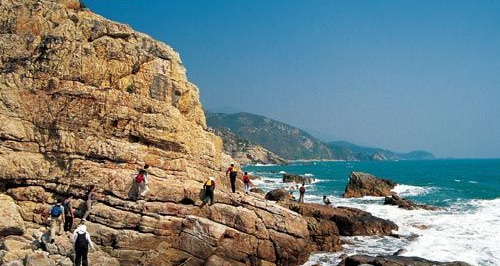
Coastal trekking is the simplest and most popular form of outdoor activity in Shenzhen. Along Shenzhen’s long coastline, five coastal trekking routes have been developed, varying in length and difficulty. The closest is a route starting from Yantian and crossing both Big and Small Meisha Beaches. The most classic is the trail from Dongchong to Xichong in Dapeng New Area, Nanao, stretching about 8 kilometers with moderate difficulty and taking around five hours to complete. Every weekend, these routes are bustling with hikers, and some busy sections even experience “traffic jams.”
Nanshan, Paiya Mountain, Phoenix Mountain, and Qiniang Mountain are also frequently visited by hiking enthusiasts. During holidays like Labor Day and National Day, it’s not uncommon to hear about hikers getting stranded, but nowadays Shenzhen’s hikers are becoming more rational and experienced. If you plan to explore these areas, it’s advisable to consult with local hikers for advice.
Shenzhen’s long coastline has also created many beautiful beaches and abundant diving resources. Many diving clubs have set up direct service booths at beaches like Big and Small Meisha, as well as East and West Chong, offering on-site diving training. The mountain-and-sea scenery also provides ideal locations for paragliding. The small hills by East Chong Beach are perfect for beginners and intermediate paragliders. Launching from the hilltop, you can enjoy breathtaking sea views from high above before gently landing on the beautiful beach.