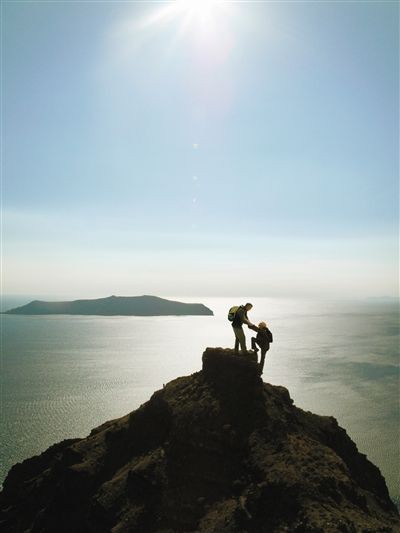
Commercial Mountaineering: An Upward Way of Life.
Explorer Wang Bing frequently participates in outdoor mountaineering activities. Among the groups he leads, there is a segment known as "commercial mountaineers." Unlike independent climbers, those who opt for commercial mountaineering pay for services to assist them. Some celebrities and entrepreneurs take on high-difficulty peaks through this approach, bringing commercial mountaineering into the public eye. Due to the high cost of services, it has earned the reputation of being "only for the wealthy."
Guides Are Not Nannies
Nima Ciren, the principal of the Tibet Mountaineering School, has a good understanding of the rise and development of commercial mountaineering. According to him, before 2003, most mountaineering in China was state-sponsored, focused on setting new routes or achieving first ascents. However, starting around 2005—especially after the Olympic torch reached the summit of Everest in 2008—commercial mountaineering gradually began to rise.
Commercial mountaineering in China is mainly concentrated in the southwestern regions rich in mountain resources, such as Tibet, Sichuan, and Qinghai, with Everest naturally being the most attention-grabbing. Because of its high costs, commercial mountaineering is seen as an “elite sport.” The significant expenses are mainly used for equipment, services, and preparations that begin well before the climb. Currently, after several years of development, climbing routes in China have become relatively mature. Clients who purchase climbing services will have guides scout the route in advance to ensure safety before departure.
However, having a guide does not mean clients can simply wait to reach the summit. Guides play the role of leaders and decision-makers during the climb, directing the team along safe routes, monitoring weather changes, and selecting camp locations. Still, many detailed tasks remain the individual’s responsibility—such as training climbing techniques, improving physical fitness, and more. Li Weidong, deputy secretary-general of the Qinghai Mountaineering Association, also mentioned that many people who have summited Everest still lack essential climbing skills. Skills such as how to tie knots, ascend or descend, and how to respond to various situations need to be thoroughly prepared in advance.
Money Can’t Buy Everything
Although commercial mountaineering allows you to buy services, it can’t buy everything. To climb high mountains, one must first improve physical fitness, as the prolonged physical exertion and the challenge of altitude sickness demand a very high level of health. Physical training varies from person to person—some may need to build endurance, others lung capacity. “If the climb itself is a test of a person, then the preparation beforehand tests willpower and perseverance even more,” said Nima Ciren. “For example, to climb Everest, you need to make a meticulous plan two to three years in advance, undergo physical training, and participate in climbing activities both domestically and internationally. This requires not only financial support but, more importantly, mental endurance.”
In addition to improving physical fitness, technical training—such as knot-tying, using safety harnesses, and self-rescue methods in special situations—is also crucial, according to He Yiyuan, secretary-general of the Sichuan Mountaineering Association. Since the development of commercial mountaineering in China is still relatively recent, its popularity remains limited, and few people truly master climbing techniques. In contrast, other countries with longer histories have developed mature climbing systems and large communities of enthusiasts. “Take Nepal, which borders China, as an example. They’ve had commercial mountaineering for 50 to 60 years. Climbing is common there, the skill base is broad, and naturally, more people have mastered climbing techniques. Moreover, climbing skills require regular practice to maintain. Therefore, regularly engaging in outdoor activities like mountaineering and rock climbing helps accumulate experience and pave the way to reaching summits.”
Commercial Mountaineering Also Has an Experience Threshold
Some say Everest is a mirror that reveals one's true nature. In life-or-death moments, human instincts are magnified, and willpower and teamwork are put to the ultimate test.
In the climbing community, altitude is a common topic of discussion. Different heights come with varying requirements for equipment, physical fitness, and technical skills. For instance, a 6,000-meter peak demands slightly less in terms of gear—regular down jackets may suffice—but above 7,000 meters, tents must be windproof, and clothing and sleeping bags need to be much thicker. Additionally, the physical demands differ. Nima Ciren emphasized that climbing is a gradual, step-by-step process—you shouldn’t rush. “To tackle high-altitude peaks, start with lower-altitude snow mountains. Prepare yourself technically and physically, then gradually take on higher altitudes.” As a result, some outdoor adventure companies now set specific requirements for commercial clients—for example, to climb a 7,000-meter peak, you must have prior experience on a 6,000-meter mountain.
After several years of development, commercial mountaineering has become relatively mature, especially the Everest climbs in Tibet, where a complete industry chain has formed. However, due to volatile local weather and extreme altitudes, various unpredictable risks still exist during climbs. Despite this, every year many people are drawn to Everest—not just to conquer the mountain, but to challenge and conquer themselves, finding tranquility in the shadow of these towering peaks.
>>> Tips
Domestically,
all-inclusive services are the norm
As a commercial service, the cost of commercial mountaineering determines the range of services provided. In some countries where commercial mountaineering is more developed, clients can choose different levels of service based on their needs—such as full-service packages, permit acquisition, campsite services, hiring guides, and using communication and weather equipment. Prices can range from a few thousand euros to fifty or sixty thousand euros. But in China, the range of commercial mountaineering services is currently limited, often following an all-inclusive model, which makes the cost relatively high. It is understood that the guide-to-client ratio in China’s commercial mountaineering is generally 1:3, and if you want a one-on-one guide, the price is even higher.