Water is the source of life and one of the most essential resources indispensable to human survival and development. A survey by the World Health Organization (WHO) found that 80% of human diseases are related to water. The human body is composed of 70% water, and the quality of water determines the quality of life. Your current drinking habits will also determine your health condition ten years from now.
Professor Li Fuxing, President of the World Water Culture Research Association and Director of the Healthy Drinking Water Professional Committee of the China Health Promotion Foundation, pointed out that while safe water is necessary for survival, healthy water is essential for a better life. With the concept of healthy drinking becoming more widely accepted, how should we choose healthy water?
Among the standards for healthy water proposed by the World Health Organization, the first specifies mineral content in water—that is, an appropriate and scientifically proportioned level of minerals required by the human body. Speaking of minerals, we must mention three types of water related to them: purified water, mineral-enhanced water, and natural mineral water that emphasizes certain minerals.
First, regarding purified water, Professor Li Fuxing noted, “The biggest misconception people have about drinking water is that the purer the water, the better. Purified water is not normal drinking water for humans. Many scientific studies have now shown that long-term consumption of purified water can produce some negative physiological effects on the human body. Purified water, stripped of trace elements and minerals beneficial to health, is functionally degraded ‘dead water.’”
Now let’s look at mineral-enhanced water. This is purified water with artificially added minerals. The latest edition of the National Food Safety Standard for Packaged Drinking Water (GB19298-2014) stipulates that the term “mineral water” is no longer to be used.
Finally, regarding natural mineral water that emphasizes certain minerals, Professor Li Fuxing pointed out that higher mineral content in water is not necessarily better. When mineral levels exceed standards, they can also harm human health.
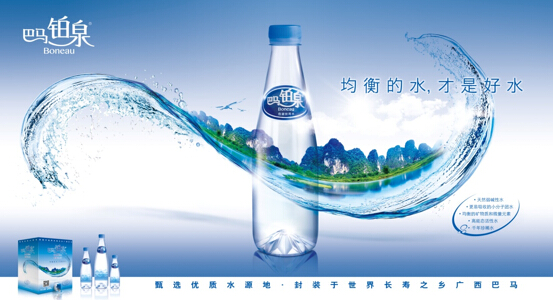
Regarding healthy water, here we introduce you to Bama Platinum Spring—an excellently balanced water from a longevity region.
Bama Platinum Spring originates from the world-famous longevity destination—Bama in Guangxi. Bama has four times as many centenarians as the international standard for longevity regions, earning it the title of the top among the world’s five major longevity villages. The water here has nurtured generations of long-lived elders. Bama Platinum Spring is sourced from Liangbie Spring in Bama, Guangxi, and is rich in over 30 essential minerals required by the human body. Its mineral content and proportions closely match those needed by the human body, aligning with the balanced wellness philosophy advocated in modern traditional Chinese medicine. From birth to old age, the human body has a relatively high demand for calcium, which is the most commonly deficient mineral. The calcium content in Bama water ranges from 50 to 80 mg/L, making it an important source of calcium for the people of Bama. In Bama, many centenarians can not only stand and walk but also perform manageable physical tasks because they do not lack calcium. Moreover, Bama water is rich in “longevity elements” such as manganese, zinc, and selenium, which are also among the reasons for the health and longevity of Bama’s elderly. Therefore, Bama Platinum Spring not only provides essential minerals but is also suitable for long-term consumption.