One day in 1638,
a great traveler in Chinese history entered the territory of Leye County,
continuing his journey of exploring the mysterious.

It truly lives up to the myths.
Shaped like a funnel, from afar it looks like a massive volcanic crater.
The cliffs around it are as steep as if cut by a knife, extraordinarily precipitous,
exuding an intangible yet powerful aura that subtly sends chills down one’s spine.
Just imagine,
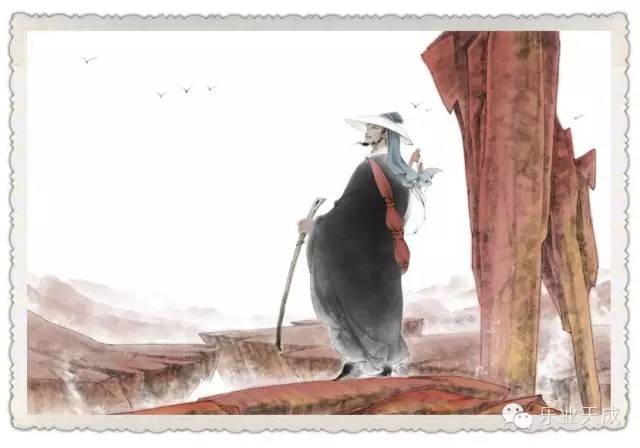
the geographer Xu Xiake climbing to the summit one evening,
gazing out at this spectacular scene...
He would have been absolutely stunned!
Not to mention, what lies beneath is even more incredibly breathtaking.
Stemming from distant legends,
hidden within the rugged, craggy cliffs,
it seems to still carry the essence of that bygone era.
Water has flowed through millennia,
day after day whispering to the earth,
the tenderness and imperceptibility of time.
Its secrets lie deep within,
preserved for millions of years, perhaps waiting only for a destined soul.
Yet, ultimately, it is not something mortals can fully comprehend.
Clearly, Xu Xiake, a uniquely passionate figure obsessed with geography and exploration in his lifetime,
failed to witness this legend several centuries earlier.
This hidden paradise thus remained silent within Leye for nearly another 500 years.
It wasn’t until modern times that it was finally discovered by geologists in Guangxi and brought to light.
By then, it had evolved into a world-class “geological museum.”
And it also acquired its own name: Dashiwei Tiankeng (Dashiwei Sinkhole).
Ever since its discovery, stories and anecdotes about it have never ceased.
Since then, the secrets at the bottom of the Dashiwei Tiankeng have been gradually uncovered.
The traces of giant pythons crawling on the pit floor,
the uncanny coincidence between the underground primeval forest and China’s land area,
as well as the unpredictable weather,
remain difficult for modern science to fully explain.
The primeval forest is lush and overgrown with thickets,
and no one knows how many species that have survived for tens of thousands of years live within it,
which remains a profound mystery to this day.
There are two underground rivers at the bottom of the tiankeng,
with rapid currents that remain an intense shade of blue year-round and are extremely cold.
But the most astonishing thing is,
that one river is hot and the other cold, yet their origins are unknown.
Yet, the most astonishing thing in this mysterious tiankeng is not any of these.
A cave hidden deep in the cliffs
was found to contain relics of nitrate refining from the Song Dynasty.
But while the miraculous cave has been discovered, the secret passage remains unseen.
As for how people entered at that time and how goods were transported out,
those remain unsolved mysteries.
Clearly, with the outdoor equipment available in the Ming Dynasty, Xu Xiake would not have been able to discover it.
Thus, this secret cave remained hidden far longer than the tiankeng itself.
Eventually, it was discovered by the agile Flying Cat Exploration Team from Leye County.
And for the study of karst geology in southwestern China,
the Leye Dashiwei Tiankeng Cluster
may well be able to replace those more than 270 karst caves.
Because of its all-encompassing representativeness,
and its absolutely unique status in the world.
So at this moment, I really want to ask sadly:
“Teacher Xu, since you came all this way, why didn’t you explore more in Leye?”