On September 20, 72 nominated routes of the 2016 China Self-Drive Tour Routes Selection were announced in Wenjiang, Chengdu. That afternoon, "Wenjiang Driving Forum II," supported by Zhujiang International Center, was held at the Four Points by Sheraton Chengdu, Wenjiang. Representatives from the selection organizing committee, opinion leaders, top 100 self-drive clubs in China, along with Sichuan Chengdu tourism resource managers and tourism enterprises, engaged in lively discussions on how to create ultimate self-drive tour products, the 318 Most Beautiful Scenic Byway tourism industry belt, and how to reconstruct the profit model of China's self-drive clubs.
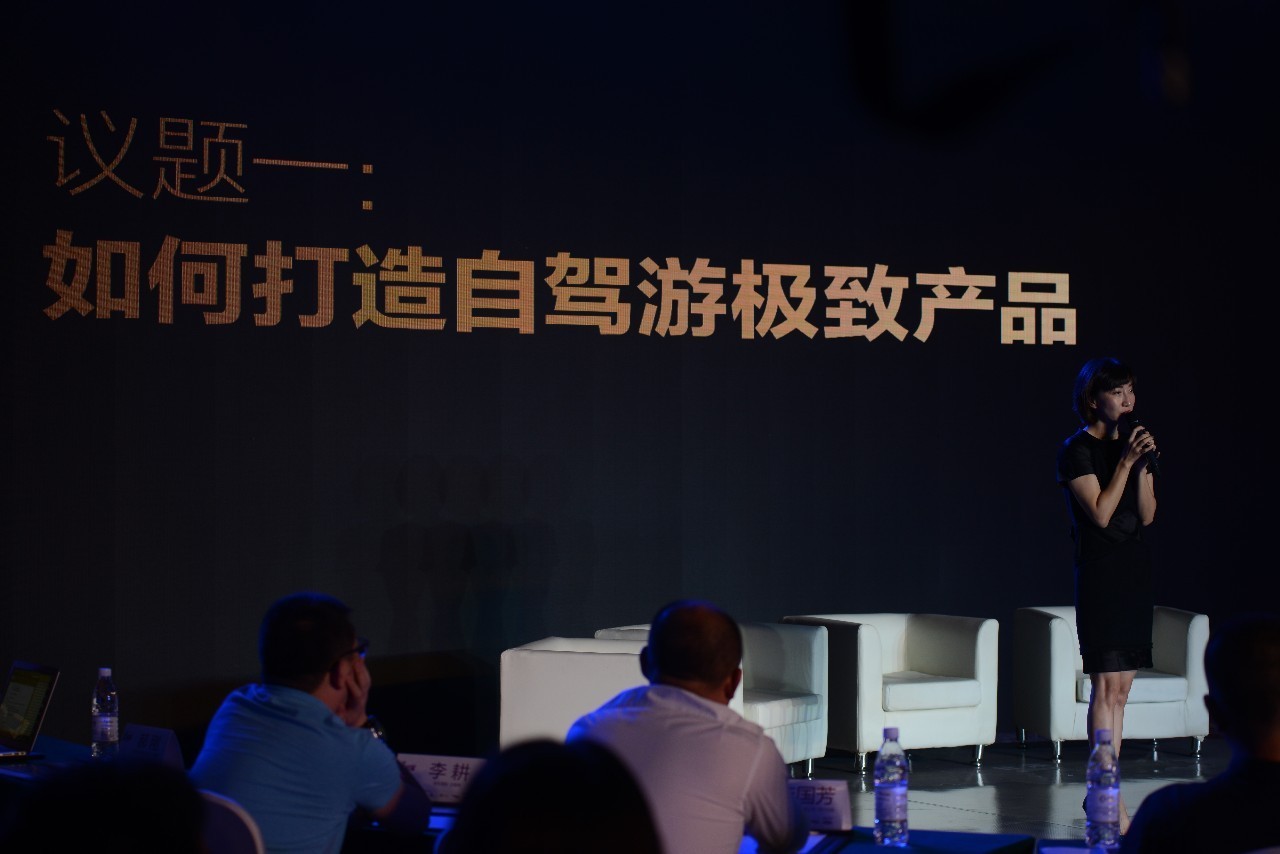 Today, Lunjia (lunjia360) has compiled the speeches from the session “Topic One: How to Create Ultimate Self-Drive Tour Products” for our readers.
Chen Jun, moderator of Wenjiang Driving Forum and PR Director of Aijia Media
Moderator: Today we are holding Wenjiang Driving Forum II. The first Wenjiang Driving Forum took place when the selection was launched on June 6, inviting 36 partners of the selection committee to Chengdu to get a first glimpse of Wenjiang and discuss it as a hub for self-drive tours in Western China. Today, with the announcement of the nominated routes, the first phase of the selection—completing the industry profile of the Western self-drive hub—has been accomplished. The second phase will be more user-oriented and will delve deeper into various self-drive tour related issues. From the 72 nominated routes announced this morning to the final 36 ultimate annual routes, it’s a process of continuously enriching content and gradually developing products. What you see now are just 72 images, 72 titles, and 72 essay outlines—the substance is still missing. Therefore, the derivative activities announced at this morning’s launch, such as route ambassador vehicles and homestay recommendations, aim to leverage the strengths and platforms of each partner. Based on the three essential needs of self-drive tours—transportation, touring, and accommodation—they will integrate collected data and user participation into the routes to enrich their content. Aijia’s product, “36 Must-Drive Routes in a Lifetime for Aijia Drivers,” is also a stepping stone we’re presenting to the industry: self-drive tour demands are extensive, and the industrial chain is long. How do we collaborate resources and develop products that meet users’ needs? First, let’s welcome Li Lun, General Manager of the Homestay Platform at Home Inns Group, to talk about the challenges, issues, or opportunities in the process from routes to products, particularly from the accommodation perspective. Please share your insights.
Li Lun: Mobile Hotels, Home Inns Town – Ultimate Products Evolved from Basic Needs
Li Lun, General Manager of the Homestay Platform at Home Inns Group
Hello everyone, I’m very happy—it’s my third time in Wenjiang. I was here on June 6. Before that, Chen Jun asked me a question: what is there to invest in Wenjiang? For me, Wenjiang is not unfamiliar. It’s a land of talent and natural beauty, with green spaces, schools, many resources, and Happy Valley. Now it also has a new positioning: “Starting Point of the Westward Journey,” because National Highway 318 starts from Wenjiang. So Wenjiang has a dual positioning, which provides a great landmark for self-drive tourism. Therefore, Wenjiang as the starting point for heading west is absolutely right.
Speaking of accommodation products, that is, how to create ultimate self-drive products. Everyone is familiar with Home Inns. I’ve worked at Home Inns for ten years and have deep feelings for the brand because I understand it well. Although Home Inns is an economy hotel chain, it is actually closely tied to our daily lives—everyone’s rational consumption choices—just like today’s farmers markets, it is closely related to our daily life. That’s the type of product Home Inns used to offer.
Today’s topic is “ultimate products.” To talk about the ultimate, first, it must be a product that satisfies basic needs. Home Inns’ previous product lines included Home Inns, Motel 168, and other hotel series that could meet your basic needs: allowing you to stay in a hotel, take a shower, have a good breakfast, good Wi-Fi—that’s the fulfillment of basic products.
What are ultimate products? Two years ago, the company had already started developing in this direction. Meeting basic needs alone cannot satisfy all the new demands of people, so Home Inns’ product line has changed significantly. We began researching mid-to-high-end products, leading to the creation of Home Inns Select and Yitel hotels. This November, we’ll release some new products, including a variety of mid-to-high-end themed offerings. If we talk about the close relationship between self-driving and accommodation, what is it? Transportation, lodging, and dining—I can only speak about lodging. Home Inns’ 2016 new products are homestays and mobile hotels. So I’d like to share with you that in the next two months, we will launch a new product that will show how Home Inns is evolving from traditional fixed accommodation into something new. What is this new thing? The core of Home Inns’ products is to ensure your room is comfortable, so we will introduce a product called “customized rooms.”
Beyond satisfying rooms, there is the larger demand for hotels. So for our hotel products, we place all these mobile rooms along national highways, at key points or midway stops for self-drivers, creating the concept of mobile hotels. By consolidating all rooms together, we form a community where you can interact and communicate. That’s the second type of mobile hotel product.
If we satisfy fixed, lodging, and mobile needs, we also need to meet entertainment and shopping needs—this is where campsites come in. Home Inns will also soon launch a campsite product, which we call “Home Inns Town.” It will be placed along national highways or near tourist attractions as a complex, a mall concept. Here, you can experience car rentals, parking lots, RV refueling, and more. When we offer these products, they will certainly serve as perfect destinations on every ultimate route. We hope that in the future, Home Inns’ products can meet users’ needs. That’s the concept of Home Inns regarding ultimate products. Welcome to follow Home Inns.
Yu Xiao: General Aviation + Campsites Let You Drive and Fly
We are a company under the Aviation Industry Corporation of China. Here, we’d like to share our ideas and practices. This idea relates to the “drive” in the Driving Forum. This morning, after listening to the announcement, I learned that all-for-one tourism has gone beyond the traditional concept of scenic areas. Previously, when chatting with Xiao Jiang from Guizhou Daily Group, she mentioned a phenomenon: this year, the number of visitors to Huangguoshu Waterfall in Guizhou has decreased. I found that this is not necessarily a bad thing—it might even be a good thing—because people are moving away from purely sightseeing tourism. Even for self-drive tours, they used to drive to national scenic spots, natural heritage sites, and similar places. Can this be called all-for-one tourism?
From my personal perspective, current self-drive tours may still lack something—they remain grounded. So can we broaden the scope a bit, extending it to the sea and sky? Therefore, for our company, originally we did want to create the third new product that Li Lun mentioned—“campsites.” He is doing Home Inns campsites; we are doing AVIC Aitourist campsites. We planned to establish various ground-based auto camps in the Beijing-Tianjin-Hebei region, Yangtze River Delta, Yunnan-Guizhou-Sichuan-Tibet, Guangxi, and Xinjiang. Self-drive tourists wouldn’t always need to find hotels in cities—campsites would suffice. That was our initial idea, but now this idea is gradually fading.
Li Lun actually has a personal hobby—he is a well-known paraglider pilot. So I wonder, if one day in the sky, on a self-drive route, whether in Wenjiang or elsewhere, we suddenly see paragliders, several hot air balloons, and four or five helicopters in the sky—wouldn’t that feel even better? Since the second half of this year, the group has started emphasizing aviation. So in the past, AVIC Aitourist focused on ground-based self-drive. Now we can also do self-drive in the sky.
Moderator: Camping is especially popular now. It’s also another entry point for self-drive tours, full of infinite possibilities. Transportation is a particularly important part of self-drive tours. Now, let’s welcome Ms. Wang Zibing, Co-founder of Baojia Travel, a new platform. As a solution for meeting the needs of self-drive tour scenarios, how does Baojia Travel approach this?
Wang Zibing: Time-Shared Leasing Covering Scenic Areas Makes Self-Drive Travel Easier
After listening to the talks by Mr. Li and Mr. Yu, as a woman in the audience, I had one feeling: men don’t need to go home—they’re either on the ground or flying in the sky. I’m Wang Zibing, Co-founder of Baojia Travel. Baojia has been deeply involved in the car travel field for a long time. This field underwent significant changes from 2015 to 2016—whether it was Didi merging with Uber or the rising stock price of eHi. I believe China’s travel market is on an upward trend. Why? Because more and more people are eager to drive themselves.
My self-drive tour experience probably started in 2000. Back then, I read a book written by Liang Qing’er, who studied abroad and wandered in the U.S. for a year. She wrote a book called “I Drove a Truck in the U.S.” She drove a truck from the east coast to the west coast. She was a 1.5-meter-tall girl who said she loved the feeling of being on the road. Not only men, but women love it too. I’ve self-driven through Spain, Portugal, France, Italy, and domestically through Hunan, Yunnan, Jiangxi, and Guangdong—all by self-drive. I consider myself a seasoned self-drive tour enthusiast.
My first entrepreneurial project was car-related. In 2014, we launched Baojia Car Rental. At that time, Baojia Car Rental was a newborn in China’s travel platform. We were doing shared travel—we were asset-light, meaning we allowed car owners to make full use of their vehicles while giving those without cars access to one. If any of you have idle cars, you could list them on our platform. Open Baojia Travel, search for nearby parked cars, and use them by the hour. This aimed to solve the issue of 90% of private cars being idle in China—a utopia for the car travel market.
Time-shared leasing is the springtime for car manufacturers. Everyone is discussing new energy vehicles. Many self-drive tour groups and scenic spots have approached Baojia Travel, hoping we can establish shared travel stations near attractions. Baojia Travel is an asset-light company—we don’t engage in the heavy asset practice of owning vehicles. So the cars on our platform are still from major rental companies. On our platform, you can find a wide variety of vehicle types. These vehicles are parked in batches at various locations. Most importantly, it solves the issues of vehicle usage and parking. When you travel again, you can choose a car to continue your journey.
This is the interconnected platform we aimed to build in 2016. To realize this dream and save everyone costs in using cars, we also specially developed automatic smart keys for over 180 types of travel vehicles via app, reducing labor costs. Now, no matter how many manufacturers are involved in time-shared leasing, their cars can only be maintained and operated by themselves and parked at their own stations. Baojia Travel, however, connects everything, maximizing vehicle sharing and usage, making it the most economical and practical option.
From 2014 to 2016, we developed end-to-end solutions whether for business travel, self-driving trips, or any vehicle-related issues. Although times were tough during the capital winter — before 2015, we were probably one of the companies in China’s internet sector that spent the most money, but in 2016 we buckled down to make profits, and we achieved profitability in the first half of this year. We hope that when the new nomination routes are announced, everyone will think of Baojia Travel for their end-to-end needs, and that our time-share rental vehicles at various tourist attractions will be available for those who want to drive themselves. Thank you all.
Host: Thank you, Baojia Travel, for sharing your innovative concept. Just now I also heard that Baojia Travel firmly does not own vehicles and follows a light-asset path. Now we’d like to invite Cai Lihong, Executive Vice President of eHi Car Services, to hear how eHi Car Services — which owns vehicles and takes a heavy-asset approach — views self-driving tourism? And how is the route ambassador car selection campaign announced this morning progressing?
Cai Lihong: Farewell to Wild Growth, Focus on Consumption Upgrading
Just now Ms. Wang shared her self-driving experience, so I’ll start by sharing mine. My first self-driving trip was in 1992, driving a very beat-up Honda Accord. The experience was quite unique — I was alone in the car, and driving in the desert felt very lonely. It was also extremely hot in the summer, but the infrastructure for self-driving in the U.S. was very well done, which left a deep impression on me: every two to three hours of driving, there would definitely be a rest stop with water and restrooms. They weren’t as good as China’s service areas, but they gave you a lonely yet unforgettable experience. That’s my personal self-driving story.
I returned to China from the U.S. in 2006 and started working in car rentals. eHi is different from Baojia — we’re a heavy-asset company. China’s travel industry has undergone tremendous changes over the past two years. From Uber entering China in the summer of 2013 to the emergence of over ten ride-hailing apps like Didi and Kuaidi in the autumn of 2013, we invested heavily in Kuaidi and made a fortune — we put in 25 million USD and earned back seven times that in a year. Such opportunities are rare. Now Didi has acquired Uber, and the Ministry of Transport has introduced ** new regulations allowing private cars to join ride-hailing services, but they are still subject to local traffic authorities.
eHi Car Services has been around for ten years, but we never seriously focused on “self-driving tourism.” We were basically growing wildly — we bought cars, opened stores, and advertised for people to rent from us. We didn’t give people a reason to rent a car, nor did we promote routes like National Highway 318 heading west to inspire consumers. So now, I personally place great importance on this.
In Europe or the U.S., when you rent a car, you usually have a specific destination in mind — like traveling around Rome, visiting southern France, taking Route 1, or going to Alaska. There’s always a clear purpose. Our industry hasn’t done that in the past, but now we plan to. Currently, our financial statements don’t have a line item for “self-driving tourism” revenue, but in the future, there will be — and it will grow significantly.
China’s tourism resources are mostly in the west, while the population and consumption power are concentrated in the east. So naturally, people travel from east to west for leisure. For the 36 selected routes announced by Aijia Media, we hope to conduct research and match each route with the most suitable vehicle model. For example, if you're driving from Chengdu along National Highway 318 to Lhasa, we’d recommend high-performance, hill-climbing-capable vehicles like the Toyota Prado or Volvo XC90. For the Hulunbuir Grassland, we’d suggest more refined and maneuverable vehicles like Range Rovers or the Land Rover Evoque. This would offer a great consumer experience and excellent value, so that’s what we aim to do next.
Just now Mr. Li Lun mentioned creating China’s future Route 66 — National Highway 318 — stretching from Shanghai all the way to Tibet. How will accommodation needs along the way be met? Beyond lodging, there’s a need to generate a lot of IP content: local homestays, cultural experiences, influencers, etc. Last year, a group of us from a business school went to Tengchong. We played there for three days but were very dissatisfied. We spent a lot of money and hired a professional planning firm, but found that we lacked understanding of the local culture and resources.
To develop National Highway 318, local cultural homestays must be supported by local influencers who can share insights. For this route to thrive, I believe such elements are indispensable. It shouldn’t just be a “check-in” trip. The content development for the 36 routes will reveal such richness in future collaborations — for instance, village elders sharing their community’s stories, each place having its unique history. Compared to the U.S., China’s self-driving tourism — starting from Shanghai on National Highway 318 — is incredibly diverse. Drive just two kilometers, and you’ll find different food habits, dialects, and cultural features. Whenever I come to Sichuan, I always watch Sichuan opera face-changing — but outside Sichuan, such opportunities are rare. So we hope to see culturally rich content.
I hope this represents consumption upgrading and an improved lifestyle. Chinese people excel in many areas, but one issue is that we don’t know how to enjoy life. I hope to influence the next generation starting with us — to know how to live, to earn money and also enjoy life. Enjoying life doesn’t necessarily mean spending a lot. Many foreigners abroad earn modest incomes but lead wonderfully colorful and storied lives. So I hope that if the number “318” comes to represent many things in the future, it ultimately elevates to a lifestyle concept.
Finally, I’d like to touch on one point that also puzzles Mr. Li Lun: the challenge of seasonal demand fluctuations in the tourism industry. With National Day coming up soon, once the holiday ends, our parking lots are full of unused cars. This is frustrating because we haven’t cultivated the habit of self-driving travel. So the peaks and troughs are a serious challenge. But if our self-driving tourism products are truly attractive, encouraging many people to take annual leave instead of traveling only during public holidays, it would greatly benefit the local economy. It would turn every day into a holiday, boosting occupancy rates, car rental rates, and making everyone happy. So we need to think about what can attract target consumers — not just during statutory holidays and golden weeks. Most consumers feel frustrated during golden week due to inflated prices, so traveling off-peak is a great alternative.
Host: What Mr. Cai just described as the pain points of tourism seasonality are actually our opportunities. In recent years, Aijia Media has been advocating for March 6th to be designated as Self-Driving Day — a holiday for self-driving tourists. It falls right after the Spring Festival and before all the golden week holidays. We hope that on this day, partners in the self-driving tourism industry will offer products for users to book, not to encourage mass departures on that day, but to help users form the habit of planning their annual self-driving trips on that day. Mr. Cai said that self-driving today isn’t just about food, lodging, and transportation — it starts with a foundation of safety. There are many places you’d love to go, but fear holds you back due to safety concerns. Next, please welcome Wang Yi, CEO of Huibao Technology.
Wang Yi: Making Self-Driving Travel Worry-Free Is Our Greatest Wish
Whether it was the announcement of the nominated routes this morning or the discussions earlier, we’ve all been talking about how to have fun and enjoy ourselves. But no matter how much fun you have, you must have peace of mind on the road, which requires solid protection. Since December 23, 2014, when our product officially launched, and for over a year since then, Huibao Technology has been dedicated to one thing: how to maintain and protect your vehicle.
Hui Drive iMaintenance was initially a product jointly launched by Tencent, PICC, and Castrol. It was first available only in Shanghai, Xiamen, and Qingdao, offering free unlimited maintenance for a year with the purchase of a PICC auto insurance policy. Today, there are two ways to get free annual maintenance: one is by purchasing the corresponding insurance product to get the annual maintenance plan; the other, which started last November, is to pay for one maintenance session and get a card that entitles you to free unlimited maintenance for a year. For friends who love self-driving, many drive SUVs. For such models, you can pay 600 RMB to enjoy free unlimited maintenance for a year.
The iMaintenance service network has now expanded to cover all prefecture-level cities and districts in China except for Sansha City in the South China Sea. Over 80% of counties and all prefecture-level cities in China now have iMaintenance service points. This means that as the 36 self-driving routes extend, you can find an iMaintenance partner within a 50 km radius of almost every scenic spot — just draw a circle with a compass.
Additionally, when you go self-driving in unfamiliar places, you’ll likely do some research beforehand — finding out where the delicious food and interesting sights are. More meticulous travelers will also check the locations of service areas and gas stations along the way. But often, you’ll overlook the need to inspect your car before setting off. If a minor accident occurs on the road, your insurance may cover it, but if your car breaks down unexpectedly, insurance won’t help. What do you do then? In an unfamiliar environment, with no help in sight, it’s crucial to have a system that provides full protection. We believe this is really important.
Secondly, if a small part is missing at the repair shop, through the backend cloud inventory platform, you can see which nearby shop in the system has that spare part in stock, and it can be delivered to you as quickly as possible. Today’s logistics systems are highly developed, providing levels of support previously unimaginable.
Of course, even more importantly, once these issues are resolved and your car is fixed, you might find yourself at an unfamiliar repair shop in the middle of nowhere. A replacement part that costs 20 RMB from the manufacturer might be charged at 2000 RMB there — because without it, you can’t continue your journey. All of these services are under our supervision, forming a reliable credit evaluation system. We’ve also launched a financial product called “Cheche Baipiao” (Car Credit Note), allowing partnered repair shops to purchase parts on credit through our platform without paying upfront.
With this credit system in place, you can travel with peace of mind, knowing you won’t be overcharged for repairs. And if you’re still worried, our partners include insurance companies — you can opt to purchase vehicle accident insurance. In case of an accident, the insurance company will cover the costs. We can even break coverage into smaller timeframes. For example, ahead of this year’s National Day holiday, we launched the Aiche Bao (Car Protection) product at a minimum price of 40 RMB. Assuming you’re traveling for seven days during the holiday, spending 40 RMB on vehicle travel insurance means you won’t have to pay for repairs at iMaintenance service points.
Our greatest wish is that all Chinese car owners — especially those adventurous self-driving tourists — can travel happily, stay securely with brands like Home Inns, drive with vehicles provided by eHi, and if anything goes wrong with the car, iMaintenance will take care of all related issues.