You’ve climbed Tokyo Tower, hiked Mount Fuji, walked through Sapporo’s winter wonderland, and admired Kyoto’s cherry blossoms in spring... If you’re craving a different kind of Japan trip, discovering these lesser-known but unmissable destinations might make your journey more memorable than ever before.
KumamotoPrefecture・Amakusa City
Watching dolphins isn’t exactly a rare activity—whether at urban marine parks or in Australia’s Port Stephens. But in Amakusa, you’ll discover there’s always more beyond what you’ve seen. The sight of dolphins playing and leaping across the sea is truly breathtaking.
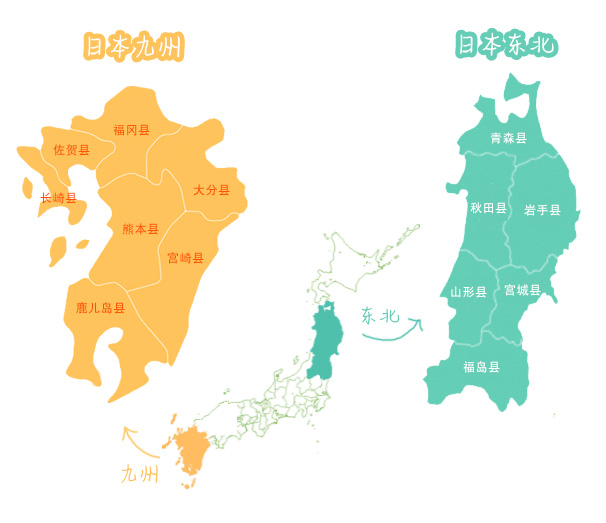
Located southwest of Kumamoto Prefecture, Amakusa is an outer island region made up of over 120 large and small islands. Though renowned for its natural beauty, it remains quite peaceful due to its limited accessibility.
The chances of seeing dolphins in Amakusa are as high as 95% any day of the year, ensuring that most visitors leave with a satisfying and joyful experience.
Another must-try in Amakusa is the Shimoda Onsen hot springs. This spot, known as the oldest hot spring in Amakusa, even has a legend behind it: over700years ago, an injured egret came here to heal, and afterward, hot springs began to flow from the site. The springs are mainly chloride water, believed to treat wounds, burns, scalds, neuralgia, skin diseases, and frozen shoulders. Even the Emperor once stayed at a hot spring inn here, and the inn still displays many old photographs from those times.
To reward yourself after a day of travel, try sakura tai hot pot. Amakusa is rich in sea bream, especially the sakura tai, which is famed for its delicate pink-tinged white flesh and light sakura-colored skin.
Oita Prefecture ・ Hita City
Hita City is a basin located in the western part of Oita Prefecture. During Japan’s Edo period, it was under direct shogunate control, and remnants of its former prosperity can still be found in the townscape of Shonai-machi, earning it the nickname “Little Kyoto of Kyushu.”
11If you visit Hita in the right season, you might also catch the “Hita Tenryou Matsuri” celebration. The people of Shonai area diligently craft3bamboo lanterns, placing them along the shores of the Hanamigawa River and the nostalgic streets of Shonai, casting a gentle glow to guide passersby.
Thanks to its dense forests and abundant timber, Hita became one of Japan’s leading producers of geta (traditional wooden clogs).~
But if you’re looking to escape the hustle and bustle of the city, seek a more unique and immersive travel experience, or simply desire a serene beauty that feels otherworldly, then these small towns are excellent choices. Here, you can enjoy fresh local cuisine, discover distinctive cultural landscapes, and uncover the charm of these hidden gems—marked by historical imprints, a sense of timelessness, and a subtle artistic allure just waiting to be explored.
Fukushima Prefecture ・Ouchi-juku
During the Edo period under the Tokugawa shogunate, Ouchi-juku served as a post town for merchants traveling through the region. Located in Fukushima in Japan’s Tohoku area, it’s somewhat off the typical tourist path, helping it retain its pristine scenery. The town features rows of around 50 to 60 thatched-roof houses lining the streets—structures preserved from the Edo period and over 500 years old.
Today, these traditional thatched buildings house small shops selling a variety of souvenirs, waiting for you to explore.
Fukushima Prefecture ・ Kitakata City
Kitakata City was once a major grain storage hub in Japan, leading to the construction of numerous storehouses. Today, the city still retains 2000many of these traditional warehouse buildings.
The entire street has been preserved in its original form from those days, with many of its buildings now serving as museums, art galleries, and restaurants.
Fukushima Prefecture · Aizu-Wakamatsu City
Aizu-Wakamatsu City, the central city of the Aizu region. During the Edo period, it was the castle town of the Aizu Domain. Thanks to factors such as being spared from Allied air raids during World War II, the area retains many historical sites and boasts abundant sightseeing resources. Historically a strategic battleground, it is also known as“the Land of the Samurai”, with the whole city exuding a strong historical atmosphere. Nearby, you can also enjoy the rich and beautiful natural scenery of Mount Bandai and Lake Inawashiro.
Iwate Prefecture · Oirase Gorge Farm
Spacious Iwate is a major agricultural and forestry prefecture in Japan, and Oirase Farm is Japan’s largest private farm with a history of over a hundred years. Its long history gives some of the farm buildings a distinctly historic feel.
In autumn, Oirase Farm resembles a palette spilled by the gods, bursting with vibrant colors.~
Ouchi-juku·Welsh Onion Soba
Ouchi-juku was once famous for its many inns that came with soba noodle shops. When visiting Ouchi-juku, soba noodles are a must, especially “Welsh Onion Soba.” A single welsh onion is used in place of chopsticks — talk about creativity. The flavor isn’t spicy or pungent at all; instead, it neutralizes the greasiness of the broth, making the taste even better. Additionally, green onions offer various health benefits, such as detoxification, flavor enhancement, and even cancer prevention.
Aizu-Wakamatsu · Cherry Blossom Hot Pot
Japanese hot pots often go by code names. For instance, Botan Nabe (Peony Hot Pot) gets its name because wild boar meat, with its red and white hues, looks like blooming peonies when served on a plate. Cherry Blossom Hot Pot refers to horse meat hot pot, named so because thinly sliced horse meat resembles cherry blossom petals.
Fresh raw horse meat has a melt-in-your-mouth texture, and horse sashimi along with fat and offal is equally delicious. Japan even has horses bred specifically for consumption.
Iwate Prefecture · Daido-en Maesawa Beef
Daido-en Maesawa Beef is among Japan’s most renowned beef. The selection process is strict, limited to Japanese Black cattle, and there is a comprehensive individual cattle identification and management system. How can you visit Iwate Prefecture without trying Maesawa beef?~
Natural Scenery
Fukushima Prefecture · Koriyama · Lake Inawashiro
Lake Inawashiro, located within Koriyama, is Japan’s4fourth-largest lake. Formed tens of thousands of years ago by volcanic activity from Mount Bandai, the lake has acidic water and is an oligotrophic lake with sparse aquatic plants and no large fish. This helps maintain its crystal-clear waters, earning it the nickname“"Heaven’s Mirror Lake."”Moreover, the scenery around Lake Inawashiro is also stunningly fresh and clean, making it a perfect spot to enjoy solitude with nature.
Fukushima Prefecture · Abukuma Cave
Abukuma Cave is a massive limestone cave formed over 80 million years. It features a wide variety of stalactites and stalagmites. The cave’s lighting enhances the already spectacular rock formations, creating a breathtaking visual experience.
Not only does the interior of the cave give a feeling of stepping into a fantasy world, but the surrounding landscape outside the cave is also worth experiencing in detail.
Miyagi Prefecture · Naruko Gorge
Naruko Gorge features numerous striking rock formations. Every year from late10to11Early October is the best time to view the maple leaves, but it often gets crowded. Streams, waterfalls, canyons, walking trails... the breathtaking scenery will make you linger.
Not only are there dazzling red leaves covering the mountains, but also the spectacular golden foliage. This is an intoxicating season and landscape where you can have the closest contact with nature, feel its gifts, and cherish the beauty before your eyes.
Hanamaki Onsen, Iwate Prefecture
Hanamaki Onsen is a hot spring town with alkaline spring water that gushes out along the valleys of the Ou Mountains, with a total of11springs.The hot spring town is full of warmth and has distinct Tohoku characteristics.Come here to experience a rich variety of hot springs, enjoy traditional Japanese tatami mats, and savor fresh, abundant local cuisine — it’s truly a rewarding trip. If you visit inwinter, you can also catch the annual ski festival. After skiing, soaking in the hot springs here will be the perfect remedy to relieve fatigue.
Naruko Onsen, Miyagi Prefecture
The "Naruko Hachi-yu" (Eight Hot Springs of Naruko) in the northwest of Miyagi Prefecture, together with the adjacent "Shin-yu" (New Hot Spring), form the Naruko Onsen area — a hot spring resort with over a thousand years of history. Among them, Naruko Onsen is the most famous. The "sulfur spring" is not only effective in controlling arteriosclerosis and high blood pressure, but also leaves the skin smooth and glossy, offering cosmetic benefits. In Naruko Onsen, you can enjoy not only unparalleled hot spring water quality, but also beautiful natural scenery as well as healthy and hearty local cuisine. Additionally, taking a stroll down the retro streets after the hot spring is a very relaxing way to soak in Naruko's unique cultural atmosphere.