Gods Celebrate the New Year! Matsu’s "Baiming" Festival Features Divine Palanquins That "Come Alive"—People Can Only Be Dragged Along
Reported and photographed by Reporter You [Name Redacted] / Matsu
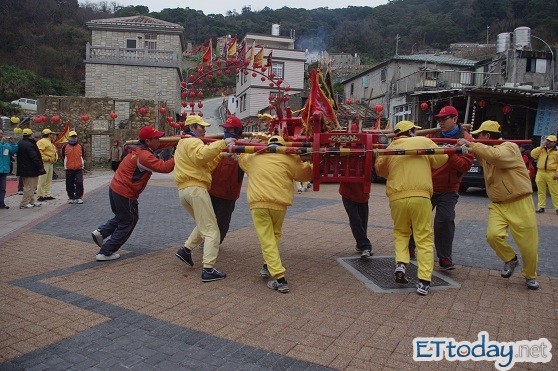
▲%伎吹搅缴窠谓艚簟梆ぁ痹谝黄穑?褪锹碜嫔衩髟诖蛘泻艉土奶炖玻〖/strong>
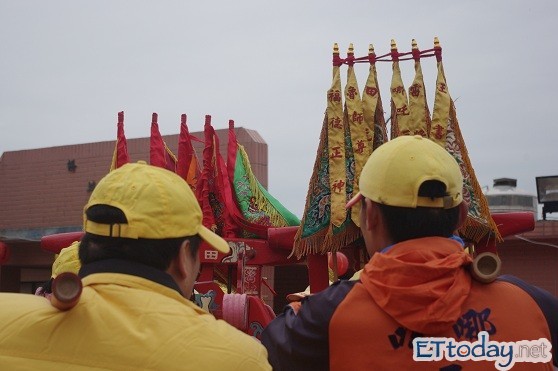
“The Goddess Mazu is here to wish you a happy new year!” As soon as I heard the shout, the crowd around me scattered in all directions. I was still admiring the sea view near the Matsu Temple Village when I couldn’t help but look up at the cry. A palanquin carried by four men came charging straight toward me. I hurriedly dodged aside and watched as the four bearers swiftly ducked into the nearby Xuantian Dadi Temple. They moved so quickly it was as if they were being “dragged” into the temple.
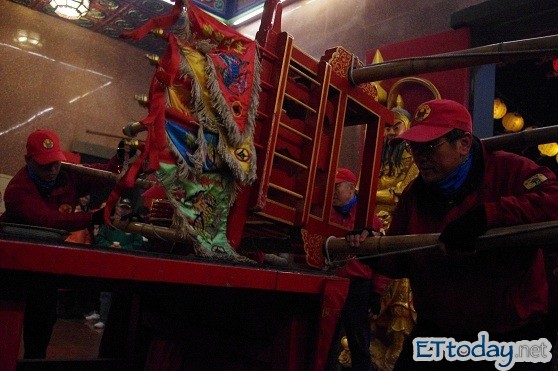
Peeking into the temple, I saw the four men furiously spinning and moving the palanquin inside. The tip of the palanquin struck the table, circling and drawing lines that seemed to form characters. Someone beside me explained, “That’s the deity telling everyone who he is or sending a message!” The force of the impacts was so strong that the whole table resounded with loud thuds, as if the wood might not hold up much longer. It was the 13th day of the first lunar month—Matsu’s annual “Baiming” Festival. The palanquin before my eyes was what locals call a “Kangjī” (divine medium palanquin).
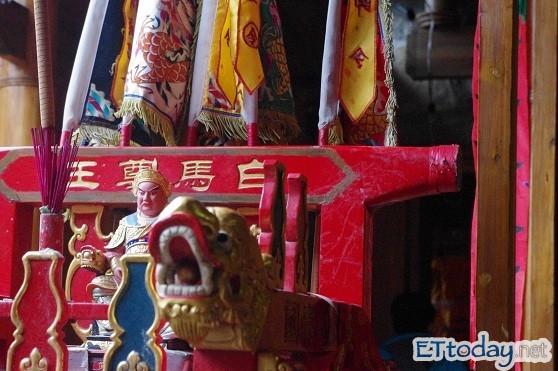
▲ The protruding pointed tip on the right side of the palanquin is what strikes the table to “write” poems and characters.
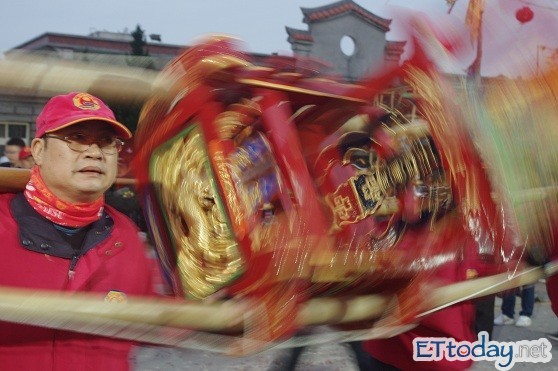
▲ The divine energy generated by the “Kangjī” creates a thrilling scene of “human-deity interaction,” as seen in the photo—the bearers put in little visible effort, yet the palanquin spins powerfully.
“Kangjī” is a unique and locally distinctive form of faith in Matsu’s Beigan area. The divine energy it generates leads to spectacular scenes of “human-deity interaction.” This tradition, with a history of over a hundred years, involves a team of five: four bearers and a “table head.” The divine palanquin is carried by four trained bearers, while the “table head” stands by to interpret the divine messages. Both the bearers and the table head may participate in divination, forming a triangular interaction with the deity. At this moment, you can see the palanquin striking the table and spinning. The bearers say they have no control—it’s as if they’re being “dragged” along by the deity on the palanquin, just as I witnessed.
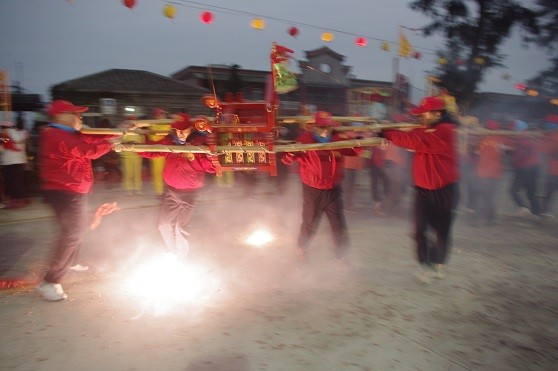
▲ As the ceremony begins, the four bearers of the “Kangjī” dart through firecrackers with the palanquin, often ending up with multiple holes burned in their pants.
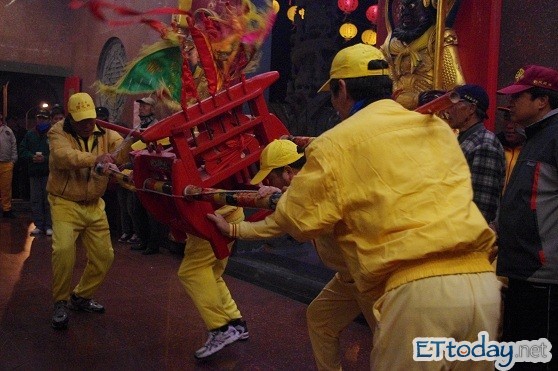
▲ %忌褙雷不髯烂妗⑿???嗫肛赖娜怂担?磺卸际巧聿挥杉海?拖裎已壑锌吹降模?荒鼙回郎系纳衩鳌巴稀敝?摺</strong>
Matsu’s “Baiming” Festival, also referred to by locals as the “Gods’ New Year,” is when divine palanquins “visit other temples to offer New Year greetings.” The Matsu Baiming Festival is a unique folk faith and blessing event in the Matsu region, as well as the area’s most traditional and significant cultural celebration. “Baiming” literally translates to “arranging the night.” Legend has it that most early Matsu settlers came from counties like Changle, Lianjiang, and Luoyuan in Fujian. During the fishing season each year, the Matsu archipelago became a refuge for fishermen. Due to the harsh winter seas, some fishermen unable to return home for the New Year would agree to hang lanterns on the night of the 15th day of the first lunar month as a signal to reassure their families back home.
Every year on the eve of the Lantern Festival, nearly the entire village mobilizes to prepare the “Baiming” decorations. This is also the best time of year to admire Matsu’s street art installations and performance art. If you visit Matsu at this time, many shops may be closed for Baiming preparations—don’t be upset. To the people of Matsu, the “Gods’ New Year” is a far more important celebration than the “mortals’ New Year.”
Deities from various villages take turns “Baiming” and “parading through the community.” Village processions welcome and send off one another, using these divine “public relations events” to foster inter-village exchanges. The spirit-medium troupes from various temples strengthen social ties and community belonging through “incense patrols” and “incense gatherings,” thereby enhancing social cohesion. As such, “Kangjī” plays a significant role in social integration in Beigan.
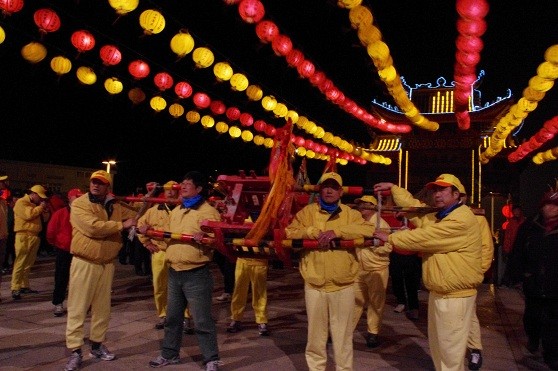
▲ During the Baiming Festival’s “community parade,” four bearers carry the palanquin.
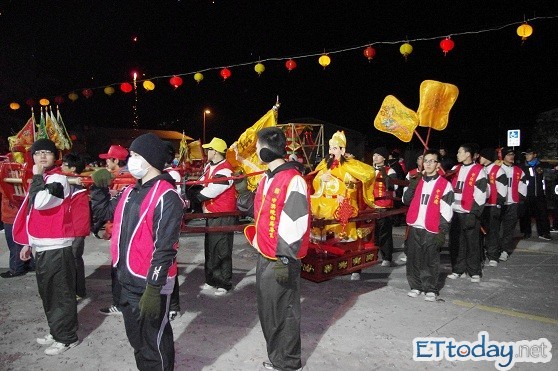
▲ The White Horse Prince.
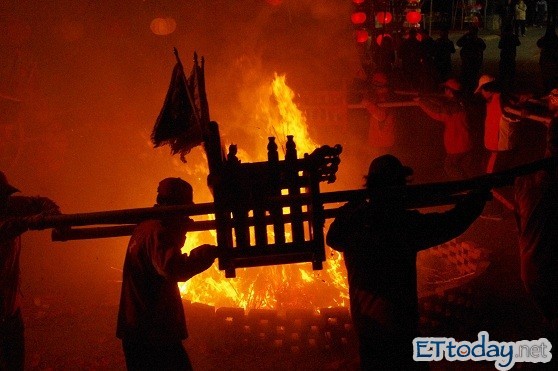
Following the divine parade, many people set off firecrackers and fireworks along the route to celebrate, and numerous Matsu residents join the procession to pray for peace. At the end of the parade, the Banli community in Beigan performs the unique “Horse Feed Culture” in tribute to the white horse beside the White Horse Prince. Residents along the street burn hay and set off firecrackers to welcome the deity. At the end of the road, locals set up a “horse feed brick stove” and burn the fodder. When large amounts of horse feed are set ablaze, you can see all the divine palanquins come alive, running around the stove and mimicking the act of eating the feed—an extraordinary and truly once-a-year spectacle worth experiencing.
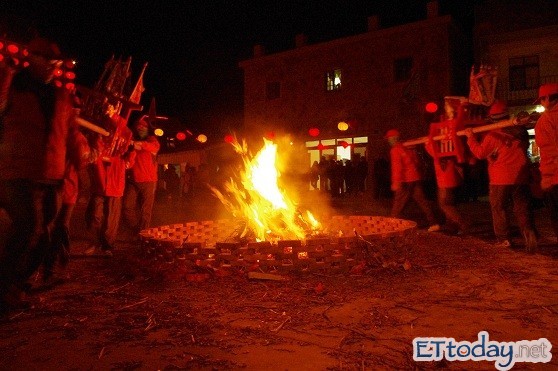
▲ %嫉贝罅柯砹缚?挤偕盏氖笨蹋?梢钥醇??猩褙懒槎??ё怕砹缸┞?寂埽?龀龀允陈砹傅亩?鳌</strong>
Share
This article is published by HowToTrip. Sharing and reposting are welcome — please credit the source.
Article URL: https://www.howtotrip.net/views-29107
Related Articles
- Shaoxing's "Grandpa Gourd" hangs the gourds back up: "If there are too many people, we'll interact less — just take a quick look from afar"
- Chinese authorities announce "reciprocal adjustment" to Japan visa fees — single-entry visa jumps from 2,250 to 16,750 yen!
- The "health stones" carried by a traveler were found to have radiation levels exceeding safety limits by a thousand times, potentially endangering fellow passengers on the same flight. Customs issues warning!
- Shenzhen Airport Issues Late-Night Notice: Unidentified Aerial Object Detected, Causing Widespread Flight Delays!
- “They only said it cost money after I opened the box and washed it!” 200g of grapes sold for 60 yuan on a high-speed train—12306 responds!
- Can't buy an airline ticket? Denied exit? Blocked from boarding? A large number of Chinese tourists have mysteriously become "discredited individuals"
- Adverse weather and economic fluctuations impact Colombia's coffee market
- Beach bathing area responds to 2 yuan/30 seconds fee for freshwater foot rinsing: Clearly priced!
- Taking off with an improperly closed cabin door? Wing malfunction? Multiple flights made emergency returns mid-journey!
- Experience the gifts of nature! A countdown of the world’s ten most stunning coastlines