Taiwan’s “Kobe Nishi Honganji” Complex Rises from the Ashes to Become a New Gem in Ximending

▲The “Shuxin Hall” was named after the plaque “Tree Heart Sacred Ground” bestowed by then-Governor-General Kodama Gentarō. (Photo / Provided by Taipei City Government)
Travel Center / Comprehensive Report
The ruins of Taiwan’s version of the “Kobe Nishi Honganji” temple complex have risen from the ashes. Located on the west side of Zhonghua Road in Ximending, the “Nishi Honganji Temple” was once the largest Japanese-style Buddhist temple in Taiwan. However, after being destroyed by a major fire in 1975, it fell into obscurity, its remains hidden among urban illegal structures. Now, designated as a municipal historical site by Taipei City and restored, it has reemerged as the brand-new “Wanhua 406 Plaza” to meet the public.
Situated at the intersection of Section 1, Zhonghua Road, and Section 2, Changsha Street, in Taipei’s Ximending area, Wanhua 406 Plaza features the ruins of Taiwan’s version of the “Kobe Nishi Honganji” temple complex. These include the base of the main hall of the Nishi Honganji Temple, the platform of the “Imperial Shrine,” the “Rotating Duty Office,” the “Shuxin Hall,” the “Bell Tower,” and the “Approach Path.” After restoration, these historic structures have emerged with an antique charm yet a completely renewed look, poised to connect with the nearby Red House and Ximending commercial district. Together, they will integrate modern, trendy culture with a serene corner of Taipei rich in heritage atmosphere.
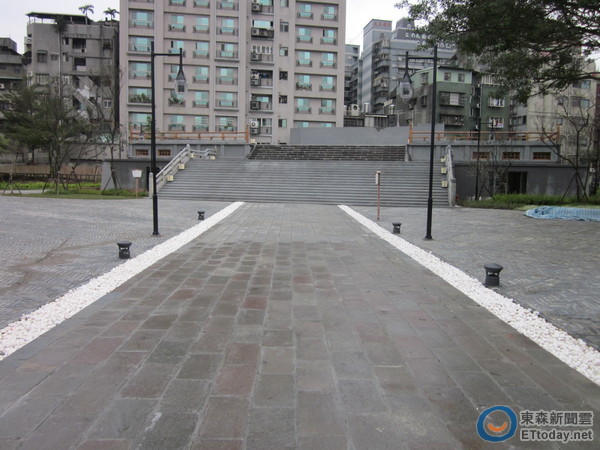
▲The “Approach Path” was the traditional path leading from the temple gate to the worship area in Japanese temples, originally paved with stone slabs. Some slabs were damaged or lost and have been replaced with similar stones. (Photo / Provided by Taipei City Government)
The Taiwan version of the “Kobe Nishi Honganji” temple complex was constructed between 1923 and 1934 and was the largest Japanese-style temple in Taiwan. After World War II, the temple served as the headquarters of the Garrison Command, a residence for immigrants from mainland China and central-southern Taiwan, and the location of the “Chinese Li Religion Headquarters,” reflecting Taipei’s political history, urban migration, and religious heritage. It was destroyed by a major fire in 1975 and later obscured by unauthorized urban structures until 2005, when the Taipei City Government demolished the illegal buildings and carried out preliminary landscaping, bringing the ruins back into public view.
Due to the long passage of time and severe deterioration, the Taipei City Department of Public Works’ Parks Division carried out revitalization planning and restoration work based on the original architectural features. These efforts included the “Shuxin Hall,” named after the “Tree Heart Sacred Ground” plaque given by Governor-General Kodama Gentarō. The hall was restored using original materials such as cedar and cypress wood. Its windows feature Western-style “lift-and-slide windows,” also known as “counterweight windows.”
The main hall of the Nishi Honganji Temple was destroyed by fire, but its base has been preserved and repurposed as a stage for performances. It will host a variety of modern, traditional, and musical events in the future. The “Approach Path,” traditionally used to reach the worship area from the temple gate, was originally paved with stone slabs. Some of these have been damaged or lost and have now been replaced with similar stones.
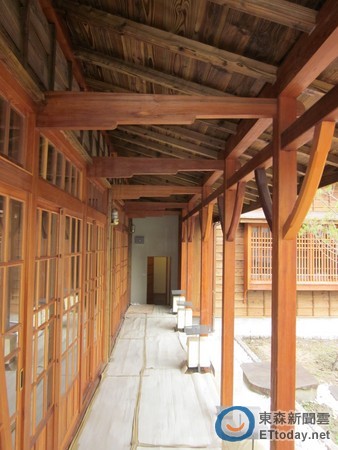
▲The “Rotating Duty Office,” formerly a residence for rotating temple staff, showcases authentic Japanese architectural style. (Photo / Provided by Taipei City Government)
The “Rotating Duty Office,” originally a residence for rotating temple staff, exhibits authentic Japanese architectural elements such as a traditional wooden frame system and bamboo-lattice plaster walls. Fully restored to its original appearance, it now serves as a hub for cultural and historical exhibitions and research, as well as a great spot for experiencing genuine Japanese-style architecture up close. The “Bell Tower,” located atop an artificial hill, will be one of the few in Taiwan that visitors can freely climb to admire the traditional architecture and plaza views. In the future, it will host various New Year bell-ringing blessing events in conjunction with the plaza.
Share
This article is published by HowToTrip. Sharing and reposting are welcome — please credit the source.
Article URL: https://www.howtotrip.net/views-27729
Related Articles
- Shaoxing's "Grandpa Gourd" hangs the gourds back up: "If there are too many people, we'll interact less — just take a quick look from afar"
- Chinese authorities announce "reciprocal adjustment" to Japan visa fees — single-entry visa jumps from 2,250 to 16,750 yen!
- The "health stones" carried by a traveler were found to have radiation levels exceeding safety limits by a thousand times, potentially endangering fellow passengers on the same flight. Customs issues warning!
- Shenzhen Airport Issues Late-Night Notice: Unidentified Aerial Object Detected, Causing Widespread Flight Delays!
- “They only said it cost money after I opened the box and washed it!” 200g of grapes sold for 60 yuan on a high-speed train—12306 responds!
- Can't buy an airline ticket? Denied exit? Blocked from boarding? A large number of Chinese tourists have mysteriously become "discredited individuals"
- Adverse weather and economic fluctuations impact Colombia's coffee market
- Beach bathing area responds to 2 yuan/30 seconds fee for freshwater foot rinsing: Clearly priced!
- Taking off with an improperly closed cabin door? Wing malfunction? Multiple flights made emergency returns mid-journey!
- Experience the gifts of nature! A countdown of the world’s ten most stunning coastlines