Beimen in Tainan: A White Snow Country Made of Salt & "Tile-Plate" Salt Pans Reflecting Sky and Sea
Reporter Tsai Meng-hsiu / Special Report
Salt is a common seasoning in daily life, but salt production is actually a labor-intensive and time-consuming "tough" job. The "Jingzijiao Tile-Plate Salt Fields" in Beimen Township, Tainan, are the oldest salt fields in Taiwan and currently the only remaining operational solar salt pans. With its stunning scenery, it’s a popular spot for photography enthusiasts to capture sunset views. Moreover, visitors can personally experience the joy of salt drying, salt carrying, and salt harvesting, making it ideal for those seeking an in-depth cultural travel experience.
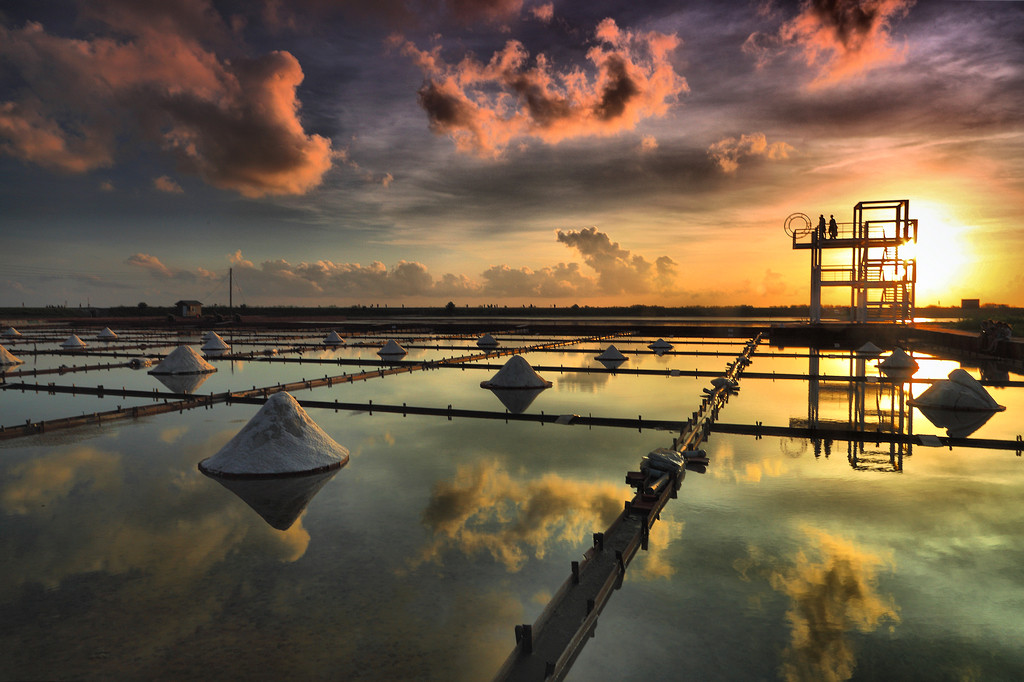
▲ Nowadays, as times have changed, the salt-drying industry has gradually declined. The images once seen in textbooks can only be truly witnessed through personal experience, allowing us to collectively remember this once-flourishing history. (Photo / Tainan City Government)
Just because you’ve eaten salt doesn’t mean you understand how it’s made. In traditional society, everything relied on manpower, and manual salt production was a rather grueling task. From water diversion to salt drying, it was not only time-consuming and laborious, but salt workers also spent their days under the scorching sun. Now that the "Jingzijiao Tile-Plate Salt Fields" are open to the public, visitors can personally experience the hardships of salt production, turning it into a hands-on educational activity about the "salt" trade.
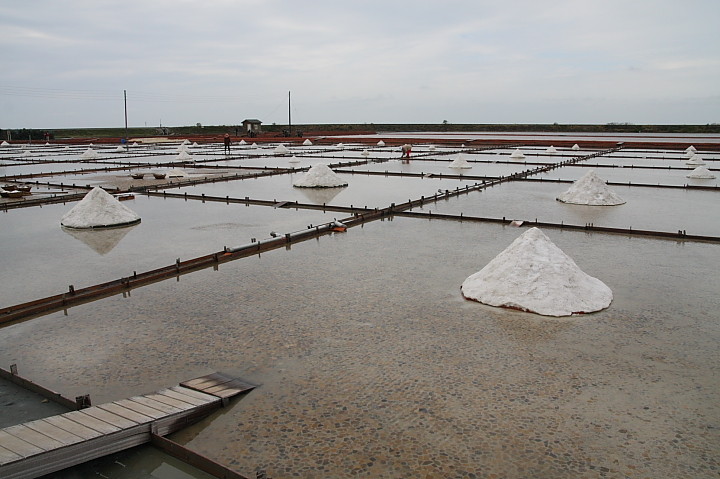
Arriving at the hometown of salt — "Beimen" — the vast landscape stretches all the way to the horizon, with the white expanse resembling a snow country. But in fact, this is the "Jingzijiao Tile-Plate Salt Fields," which has a history of nearly 200 years and is currently the oldest and the only still-operational solar salt field in Taiwan.
The Jingzijiao Tile-Plate Salt Fields were built during the Jiaqing era of the Qing Dynasty and were originally called the "Laiderg Field," located in Dalinpu, Fengshan County. Later, due to flooding, they were relocated near Waidutou in Jiali, Tainan. By the 23rd year of Jiaqing (1818 AD), after another bout of flooding, the site was finally moved to Beimen Township. It became the first salt field of the Beimen Salt Fields. Over time, as the times changed, the salt fields gradually declined and were later repurposed for tourism.
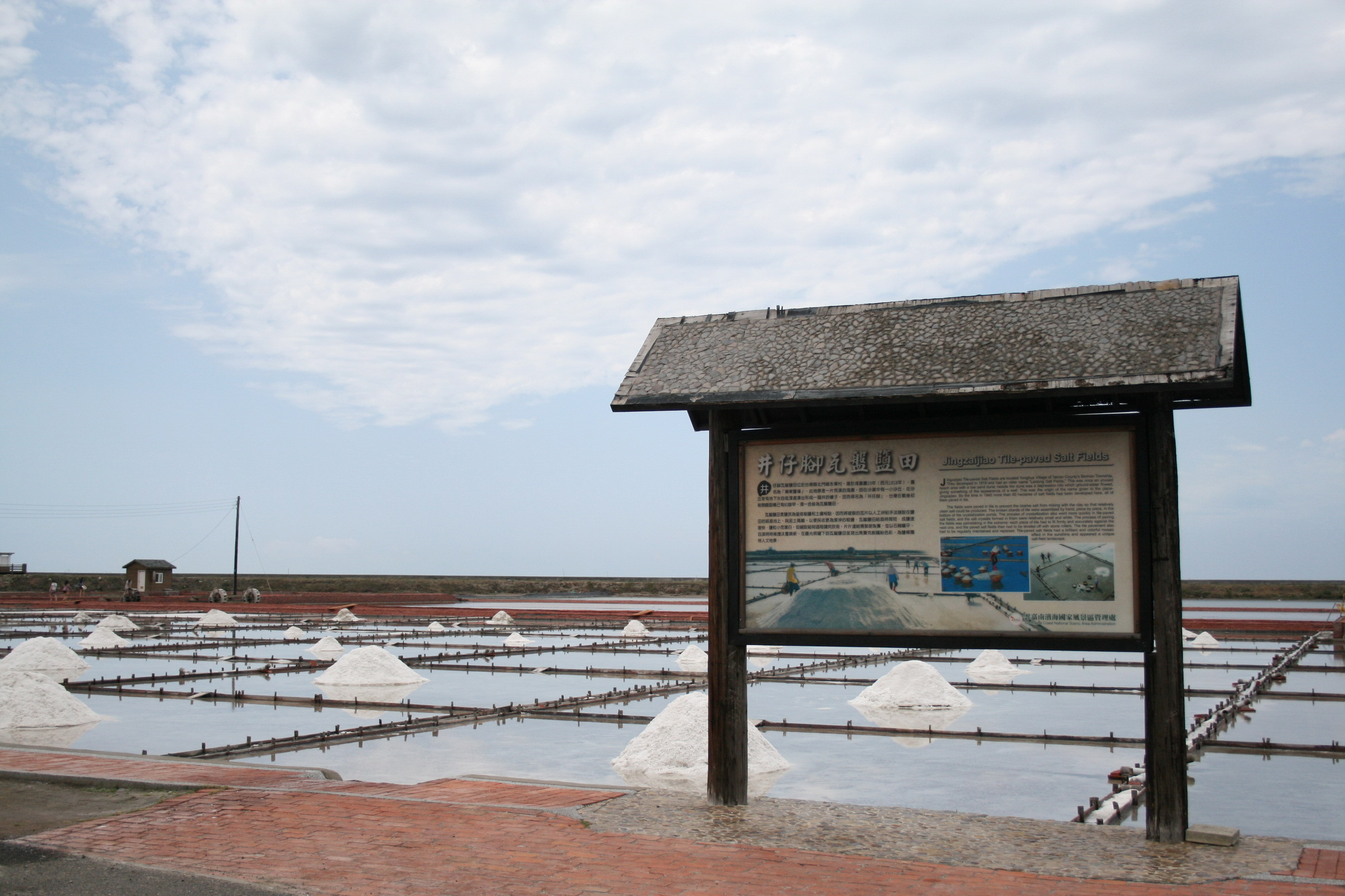
▲ The tile-plate salt fields date back to the 23rd year of Jiaqing (1818 AD), making them the oldest salt fields in Taiwan and the only traditionally operated solar salt fields still in use. (Photo / Tainan City Government)
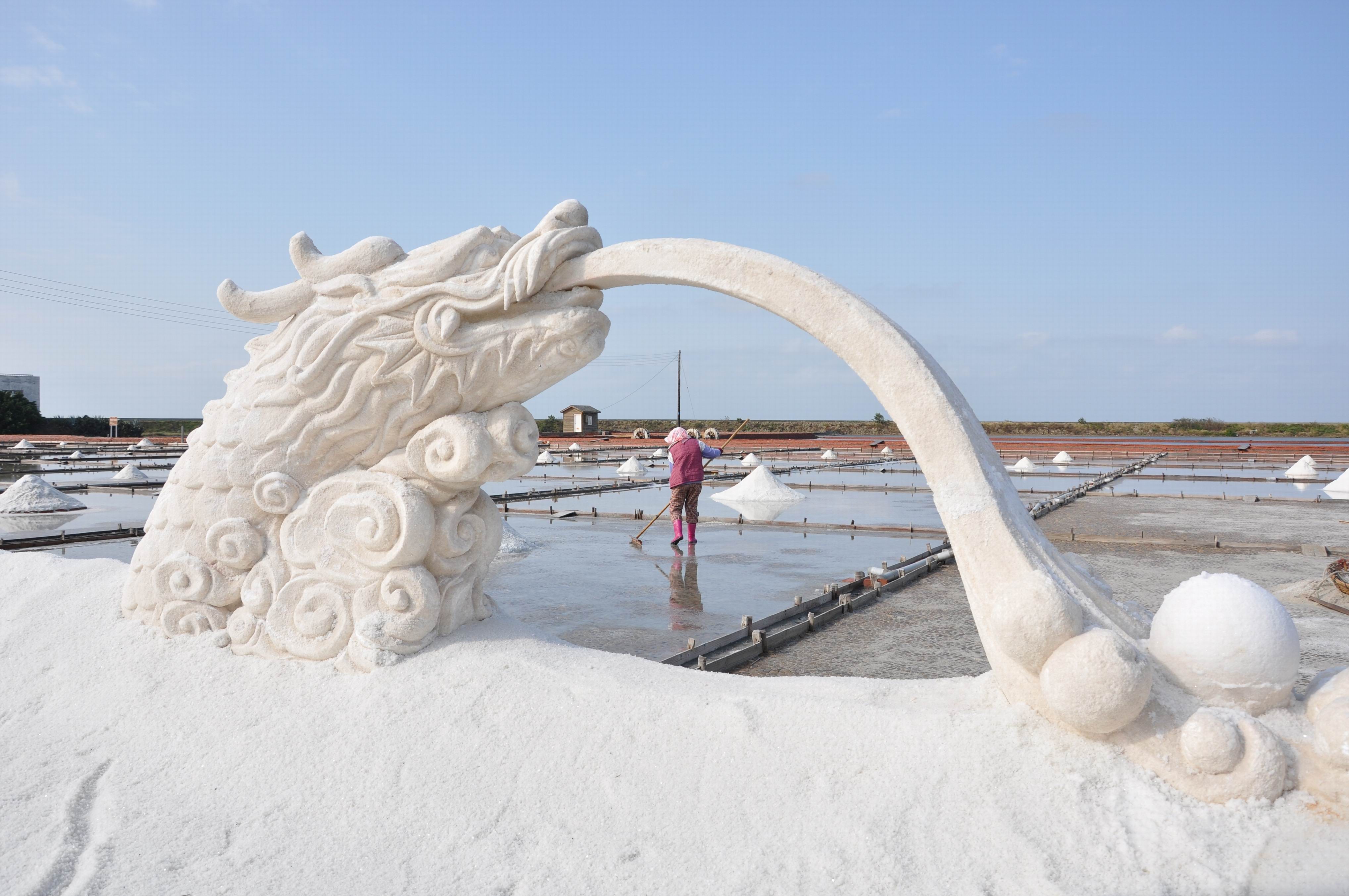
▲ When experiencing salt-making at the tile-plate salt fields, don’t forget to check out the local specialty — salt sculptures.(Photo / Tainan City Government)
This area was originally a desolate beach, where a sand dune sat amidst the sands and groundwater welled up resembling a well, hence the name "Jingzijiao" (Well-Foot). As for the name "Tile-Plate," it comes from the practice of laying broken tile fragments by hand over the salt pan crystallization pools to separate the coarse salt from the soil, ensuring cleaner salt harvests and preventing the ground from overheating. The mosaic-like appearance of the salt fields has become a unique cultural landscape of the salt-producing region.
To cater to tourism, many salt workers still perform tasks such as pushing, stacking, and carrying salt daily, allowing visitors to understand the working conditions of salt workers in the past. The site also provides various tools for visitors to try hands-on experiences. Many families visit on holidays, bringing their children to learn about this cultural history together.
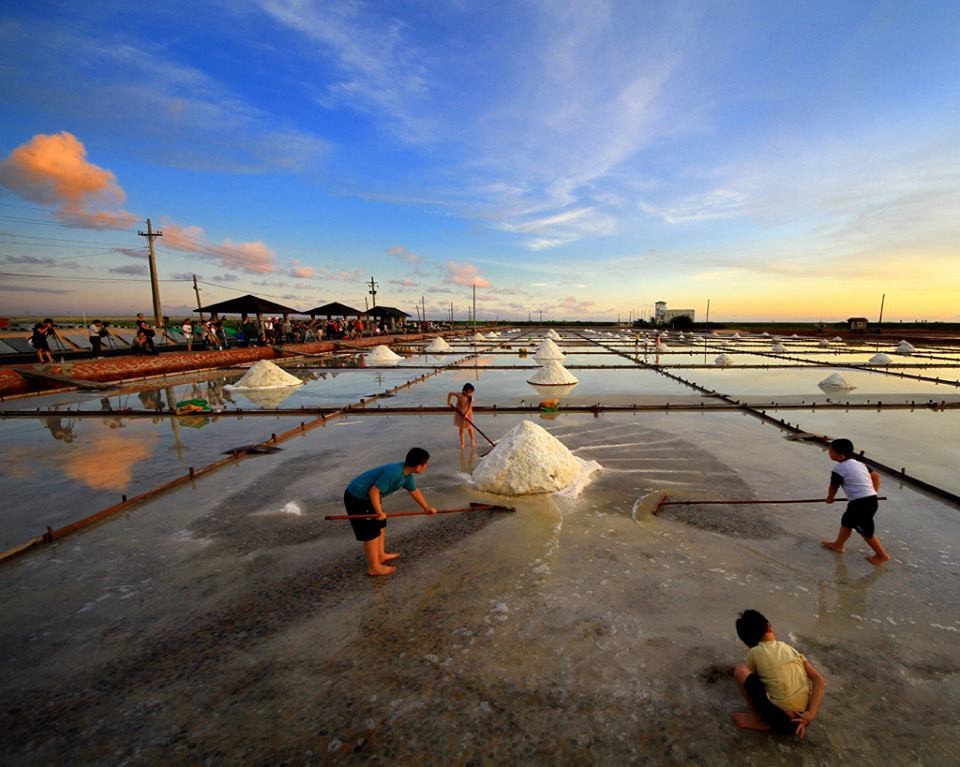
Beimen Township boasts not only cultural history but also natural landscapes that attract shutterbugs. The expansive "Jingzijiao Tile-Plate Salt Fields," close to the coastline, offer boundless views where visitors can enjoy the setting sun, colorful evening skies, and the reflection of saline water mirroring the dusk — a water-and-sky fusion that has made it a favorite photography spot for sunset chasers.
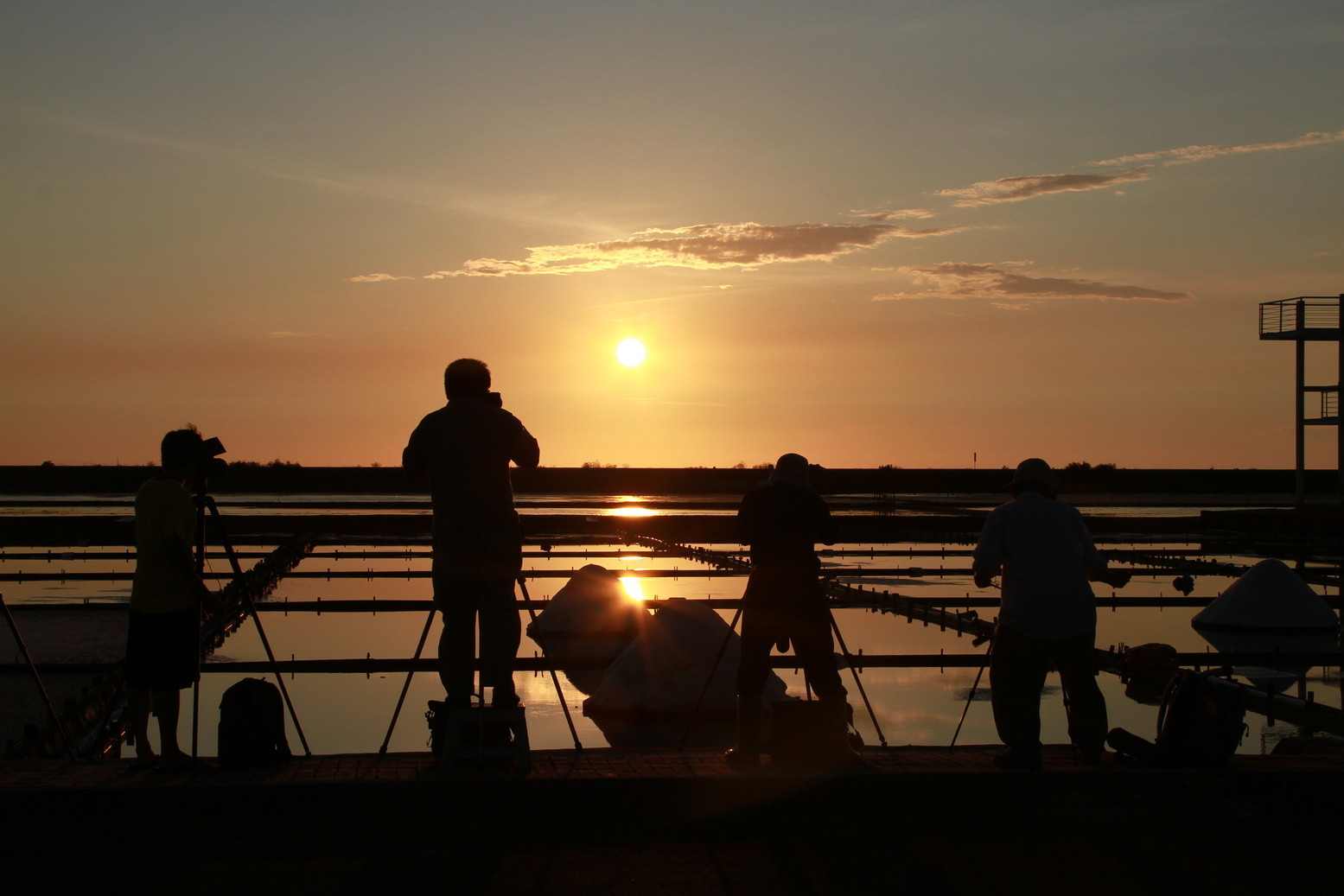
▲ The easily captured sunset glow at the tile-plate salt fields is a magnet for photography enthusiasts. (Photo / Tourism Bureau, Ministry of Transportation and Communications)
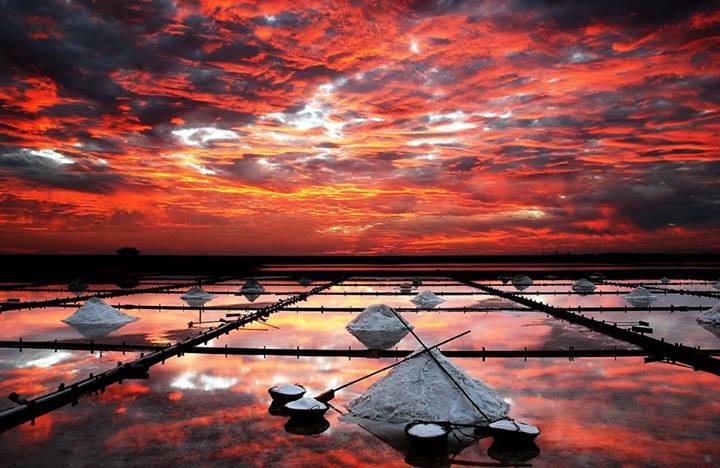
▲ The ever-changing hues of the evening sky reflected on the saltwater create a water-and-sky tableau that draws many tourists. (Photo / Tainan City Government)
With the vast salt fields offering no shade, the cool early autumn weather avoids the intense heat of the sun, making it the perfect time for a visit. Bring your kids along on a holiday to experience the fun of salt-making and appreciate the effort behind every beautiful white crystal.
Transportation Information:
Address:: Jingzijiao, Yonghua Village, Beimen Township, Tainan County
Transportation:: Take National Freeway No. 1 to the Xinying Interchange. Alternatively, take National Freeway No. 3, connect to Freeway 82 via the Shuishang System, then get on National Freeway No. 1 at the Xinying Interchange. After that, take Provincial Highway 172, followed by County Highway 163 to Provincial Highway 17 (Coastal Hwy) heading toward Beimen (turn right at 143.5 km).
Opening Hours:: All day
Ticket:: Free admission
Share
This article is published by HowToTrip. Sharing and reposting are welcome — please credit the source.
Article URL: https://www.howtotrip.net/views-26387
Related Articles
- Shaoxing's "Grandpa Gourd" hangs the gourds back up: "If there are too many people, we'll interact less — just take a quick look from afar"
- Chinese authorities announce "reciprocal adjustment" to Japan visa fees — single-entry visa jumps from 2,250 to 16,750 yen!
- The "health stones" carried by a traveler were found to have radiation levels exceeding safety limits by a thousand times, potentially endangering fellow passengers on the same flight. Customs issues warning!
- Shenzhen Airport Issues Late-Night Notice: Unidentified Aerial Object Detected, Causing Widespread Flight Delays!
- “They only said it cost money after I opened the box and washed it!” 200g of grapes sold for 60 yuan on a high-speed train—12306 responds!
- Can't buy an airline ticket? Denied exit? Blocked from boarding? A large number of Chinese tourists have mysteriously become "discredited individuals"
- Adverse weather and economic fluctuations impact Colombia's coffee market
- Beach bathing area responds to 2 yuan/30 seconds fee for freshwater foot rinsing: Clearly priced!
- Taking off with an improperly closed cabin door? Wing malfunction? Multiple flights made emergency returns mid-journey!
- Experience the gifts of nature! A countdown of the world’s ten most stunning coastlines