The cherry blossoms on Alishan are sick! The public fears there may be no blossoms to admire next year.
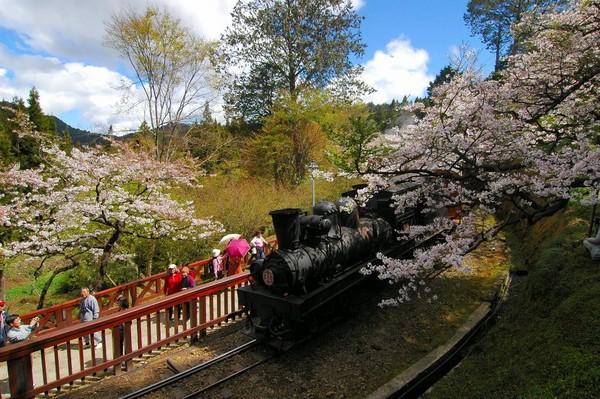
▲ When the cherry blossoms are in full bloom, taking the Alishan Forest Railway is a breathtaking experience. (Photo / Courtesy ofAlishan National Scenic Area official Facebook page)
Tourism Center / Comprehensive Report
Alishan Forest Recreation Area’s renowned “Feast of Flowers” spring cherry blossom season is now under threat of fading away! This year, the Forestry Bureau discovered that some cherry trees in the area are suffering from aging trunks, internal decay, and attacks by leaf cluster disease, which may affect the number of blossoms next spring. The Chiayi Forest District Office has called in “tree doctors” to treat them, hoping to restore vitality to Alishan’s cherry blossoms.
During the Japanese colonial period, the Japanese introduced Yoshino cherry trees to Alishan to ease their homesickness. By 1918, the number had expanded to 900 trees, and other varieties such as double-flowered cherry, peony cherry, and island cherry were subsequently planted. The spectacular sight of blooming cherry trees every March and April has made the Alishan Cherry Blossom Festival one of the best places to enjoy cherry blossoms in early spring.
However, as the trees age, issues such as decay and disease have emerged. The Chiayi Forest District Office stated that there are currently over 100 cherry trees in the area that are more than 70 years old. Climate warming and tree aging have also led to fewer blossoms this year compared to previous years, with about 37 trees having been affected by leaf cluster disease. Leaf cluster disease is caused by humid environmental conditions and pathogen infection, leading to smaller leaves, preventing plants from flowering, and causing trunk decay. In severe cases, it can even lead to the death of the tree.
Currently, the Forest District Office has engaged a team qualified in Japanese arboriculture to treat the 37 diseased cherry trees by removing sources of pests and disease, clearing decayed tissue, and applying medicinal coatings to wounds. Many members of the public, upon hearing that the Alishan cherry trees are sick, are worried there may be no blossoms to see next year. They have expressed hope that the Forest District Office will protect this rare natural scenery well, so that next year they can witness the cherry blossoms vibrant with life once again.
Share
This article is published by HowToTrip. Sharing and reposting are welcome — please credit the source.
Article URL: https://www.howtotrip.net/views-26131
Related Articles
- Shaoxing's "Grandpa Gourd" hangs the gourds back up: "If there are too many people, we'll interact less — just take a quick look from afar"
- Chinese authorities announce "reciprocal adjustment" to Japan visa fees — single-entry visa jumps from 2,250 to 16,750 yen!
- The "health stones" carried by a traveler were found to have radiation levels exceeding safety limits by a thousand times, potentially endangering fellow passengers on the same flight. Customs issues warning!
- Shenzhen Airport Issues Late-Night Notice: Unidentified Aerial Object Detected, Causing Widespread Flight Delays!
- “They only said it cost money after I opened the box and washed it!” 200g of grapes sold for 60 yuan on a high-speed train—12306 responds!
- Can't buy an airline ticket? Denied exit? Blocked from boarding? A large number of Chinese tourists have mysteriously become "discredited individuals"
- Adverse weather and economic fluctuations impact Colombia's coffee market
- Beach bathing area responds to 2 yuan/30 seconds fee for freshwater foot rinsing: Clearly priced!
- Taking off with an improperly closed cabin door? Wing malfunction? Multiple flights made emergency returns mid-journey!
- Experience the gifts of nature! A countdown of the world’s ten most stunning coastlines