Embark on a journey to the Western Regions, traversing thousands of miles — Xinjiang in the transition between autumn and winter exudes a unique desolate beauty.
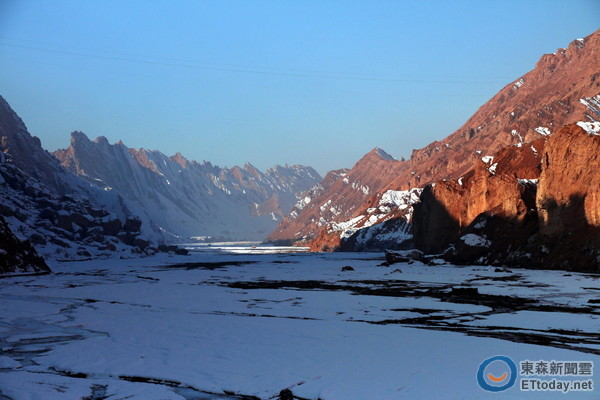
▲ Majestic mountains are a common sight in Xinjiang.
Reported and photographed by reporter Huang Shiyuan / Xinjiang field coverage
Xinjiang, referred to as the "Western Regions" from the Han Dynasty to the Ming Dynasty, is extensively documented in the "Great Tang Records of the Western Regions" for its diverse cultures, languages, and customs of the time. Having only read about Xinjiang in books, I never imagined I would one day set foot on this land. Though southern Xinjiang in the autumn-winter season isn’t as stunning as in summer, the magnificent mountains and endless deserts along the way still leave a profound impression.
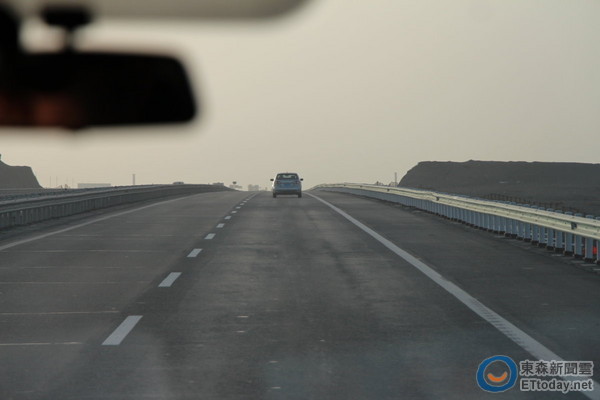
▲ Be prepared for 5 to 6 hours of driving per day if you’re joining a tour group to Xinjiang.
This 7-day journey could well be described as an "epic trek." Covering a round-trip distance of over 2,000 kilometers, the trip is a journey of discovering Xinjiang, whose vastness is one of its defining features. The distances between cities are measured in "hundreds of kilometers." Driving along the highways that connect these cities, you’re greeted by endless deserts on both sides, with the road ahead stretching as far as the eye can see. Don’t assume there’s little traffic on such roads — Xinjiang has a significant petrochemical industry, power plants, and is a major cotton producer. Coupled with the reliance on road transport for goods between cities, large trucks are a common sight. Should your vehicle break down, help is usually not far away.
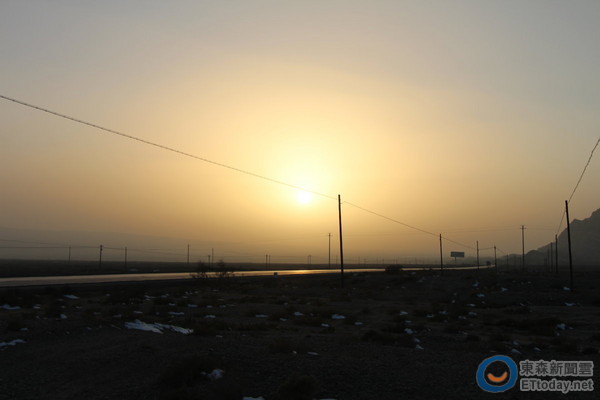
▲ The most frequent view in southern Xinjiang is the endless desert and distant horizon.
Xinjiang is nearly 50 times the size of Taiwan. From a Taiwanese perspective, the distances between cities are considerable, so be prepared for drives of 5 to 6 hours a day when traveling here. For instance, after taking a direct China Airlines flight to Urumqi and resting overnight, we headed the next day to Korla City, over 500 kilometers away — a 6 to 7-hour drive. Aside from a lunch break, we only stopped once en route at the Ahongkou Scenic Area, southwest of Bosten Lake.

▲ Bosten Lake resembles a boundless sea of reeds.<<更多芦苇图集>>
Bosten Lake is China’s largest inland freshwater lake, covering an area of 1,100 square kilometers. Known as "Bagrash Kol" in Uyghur, it was historically called the Western Sea. In addition to being rich in various freshwater fish, Bosten Lake is also an important production base for reeds. Although the reeds lose their lush green beauty in autumn, the golden-yellow stalks and milky-white seed fluff create another captivating scene. Especially notable are the 3-4 meter-tall reeds of Bosten Lake — walking along the wooden boardwalks in the scenic area feels like stepping into the land of giants from "Gulliver’s Travels," weaving through the grass.<<更多芦苇图集>>
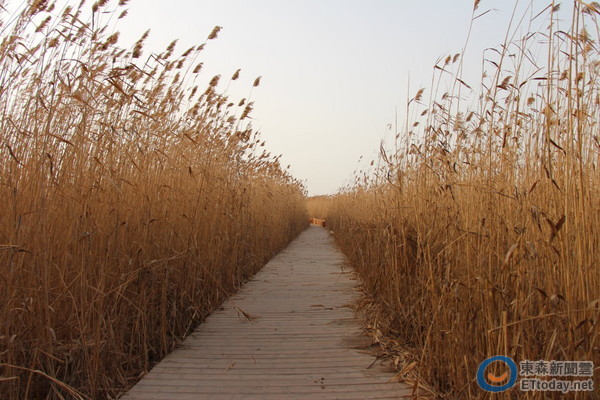
▲ The reeds at Bosten Lake stand 3–4 meters tall.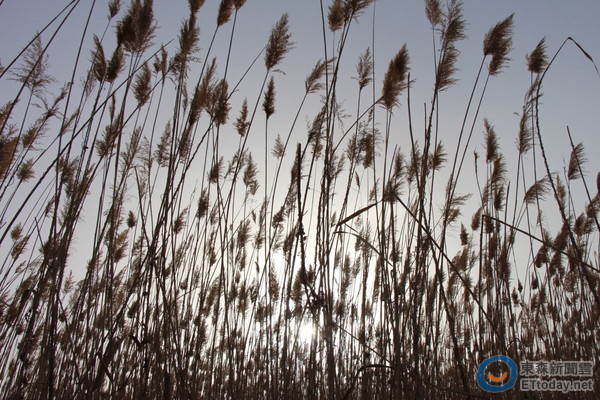
While the endless expanse of Bosten Lake and its vast fields of golden reeds are breathtaking, the downside is the bone-chilling winds on the lake in autumn and winter. After admiring the reeds, we drove again toward Korla City, where we would have dinner and stay overnight — another nearly 2-hour drive.
Xinjiang (Xinjiang Uygur Autonomous Region)
Capital: Urumqi
Population: 21.31 million
Area: 1.66 million square kilometers
Ethnic groups: Han Chinese are the majority in northern Xinjiang, while Uyghurs are the majority in southern Xinjiang
Climate: Continental climate with large diurnal temperature variations. Summer average temperatures reach around 26°C, while winter lows can drop to -16°C
Time zone: Shares the same time zone as Beijing (GMT+8), though theoretically it should be 2 time zones west (GMT+6). As a result, locals’ daily schedules are generally shifted about 2 hours later — for example, work starts at 10 a.m., and lunch is at 2 p.m.
Bosten Lake
View detailed map
Share
This article is published by HowToTrip. Sharing and reposting are welcome — please credit the source.
Article URL: https://www.howtotrip.net/views-25863
Related Articles
- Shaoxing's "Grandpa Gourd" hangs the gourds back up: "If there are too many people, we'll interact less — just take a quick look from afar"
- Chinese authorities announce "reciprocal adjustment" to Japan visa fees — single-entry visa jumps from 2,250 to 16,750 yen!
- The "health stones" carried by a traveler were found to have radiation levels exceeding safety limits by a thousand times, potentially endangering fellow passengers on the same flight. Customs issues warning!
- Shenzhen Airport Issues Late-Night Notice: Unidentified Aerial Object Detected, Causing Widespread Flight Delays!
- “They only said it cost money after I opened the box and washed it!” 200g of grapes sold for 60 yuan on a high-speed train—12306 responds!
- Can't buy an airline ticket? Denied exit? Blocked from boarding? A large number of Chinese tourists have mysteriously become "discredited individuals"
- Adverse weather and economic fluctuations impact Colombia's coffee market
- Beach bathing area responds to 2 yuan/30 seconds fee for freshwater foot rinsing: Clearly priced!
- Taking off with an improperly closed cabin door? Wing malfunction? Multiple flights made emergency returns mid-journey!
- Experience the gifts of nature! A countdown of the world’s ten most stunning coastlines